Care & storage
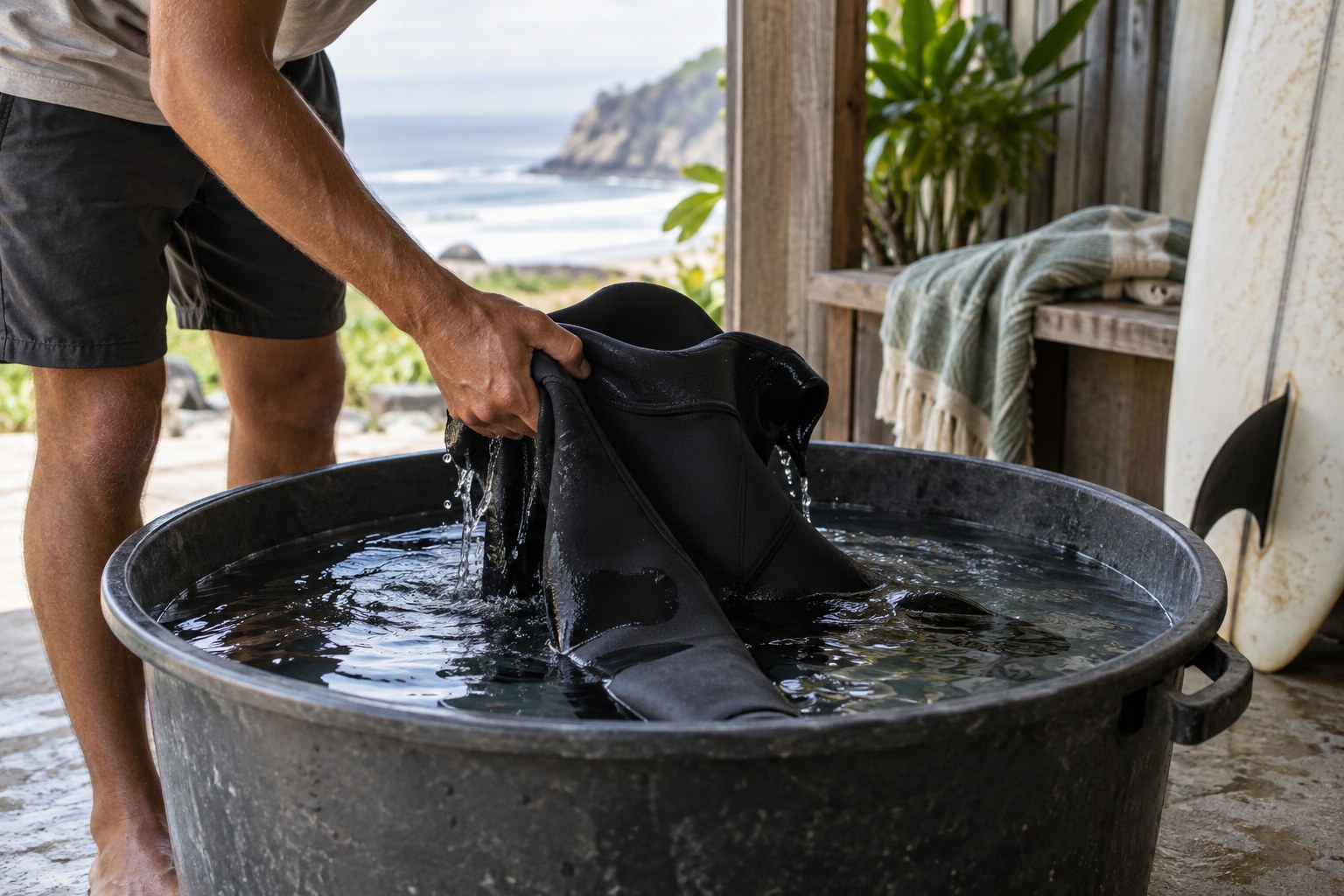
Rinse a wetsuit according to its care label
Identify the suit and its care instructions before setting up a rinse routine, especially when different wetsuits share the same household.
Care & storage
Keep enough information to identify the exact item and its compatible parts, without turning a simple equipment record into a complicated inventory project.
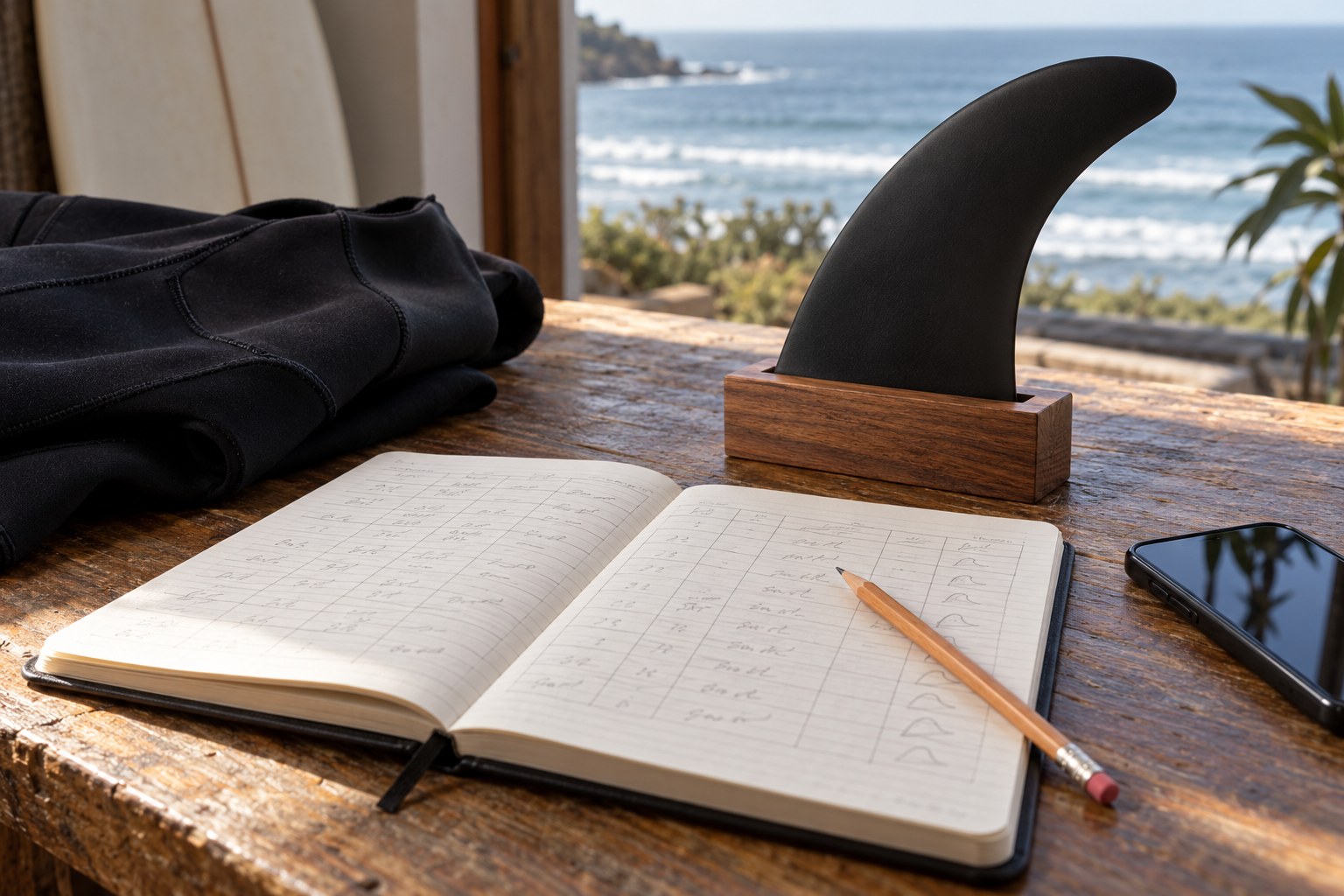
AI-generated illustration. Equipment details are illustrative; follow the instructions for your own item.
An equipment record is useful when a label fades, a small part goes missing or a repairer asks which model you own. It does not need a special application. A document, spreadsheet or folder of clearly named notes can work if it is easy to update and accessible when you need it.
Begin with the items that create the most identification problems: board, fins, leash, wetsuit and carrying system. Give each a short name that means something to you, such as the board's model and length or the suit's thickness and size. Avoid naming two different items simply 'blue board' if they could later be confused.
For a board, save the maker, model, dimensions printed on it and construction information you can verify. Photograph the full board and the identifying label or writing. Note the fin system separately. Do not infer compatibility from a similar-looking product photograph when the system can be confirmed directly.
For a wetsuit, keep the model, size, stated thickness, entry style and care-label photograph. The ordinary clothing size you wear is not a substitute for the suit's own size designation. If you have two versions from different years, record the distinction rather than assuming the same model name means identical construction.
For accessories, include the part identifier and the item they belong to. A replacement screw, rack fitting or zip component may be easier to locate through an exact reference than through a vague description. Photograph packaging when it contains useful specifications, but keep the receipt separately if it contains personal or payment details.
Save the relevant manufacturer's instructions and note when you accessed them. A product link can disappear after a range changes, so keep a permitted copy of the instructions supplied with your item or a photograph of the paper document. Label it clearly enough that it will not be mistaken for the manual for a newer model.
Write down what is confirmed and what remains unknown. If a shop has verified a compatible part, record the part and the context of that advice. If you are still unsure, leave a question rather than filling the gap with a guess. An explicit blank is more useful than a confident but incorrect specification.
Keep measurements with units and explain what was measured. '210 cm packed bag length' is different from 'board length 210 cm'. A record used for airline questions needs the packed dimensions, while a record used to compare board shapes needs the board's own specification.
Record repairs, significant impacts, replaced components and changes relevant to later assessment. Include the date, provider and any instructions received. An entry such as 'rail repair completed by shop; see attached care note' is more useful than a long account of the entire holiday.
Use photographs to show the before and after condition where appropriate. Keep them grouped with the event so a later inspection does not confuse an old damage image with the current board. Remove an item from the ready-to-use list if it is waiting for advice or replacement, and keep that status visible.
At the end of a trip, update only what changed. A new bag measurement, replacement leash or repair is worth recording; an unchanged item does not need a new page. This keeps the system small enough to maintain.
Before buying a part or contacting a provider, open the record and check that it describes the item in front of you. The record supports identification and communication. It does not certify condition, establish compatibility by itself or replace the inspection required before equipment is used.
For example, a useful fin entry might identify the board, confirmed box system, installed fin model, compatible replacement part reference and the instruction file. It need not contain a rating of how every session felt. A separate travel-bag entry could hold packed measurements for a particular load. Keeping these as different records prevents a hardware specification from being confused with a transport measurement.
Review access to the record too. A travel companion may need the bag dimensions but not the receipt containing your home address. Share the relevant extract rather than the entire folder. Back up the information in a way you can maintain, and remove outdated copies that could be mistaken for the current configuration.
Care & storage
Identify the suit and its care instructions before setting up a rinse routine, especially when different wetsuits share the same household.
Care & storage
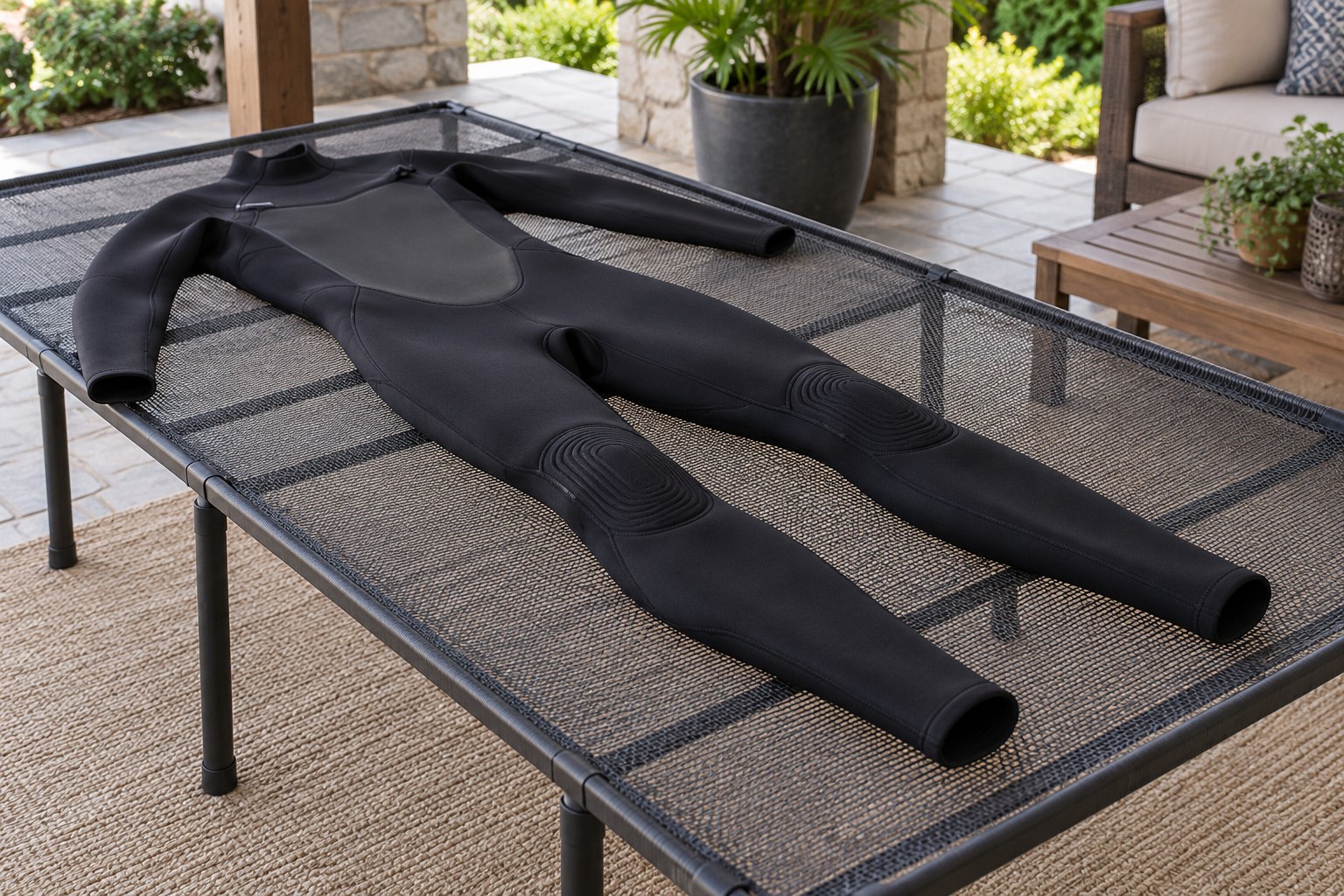
Support the wet suit over an appropriate broad support, and check the hanging arrangement before adding the garment's weight.