Care & storage
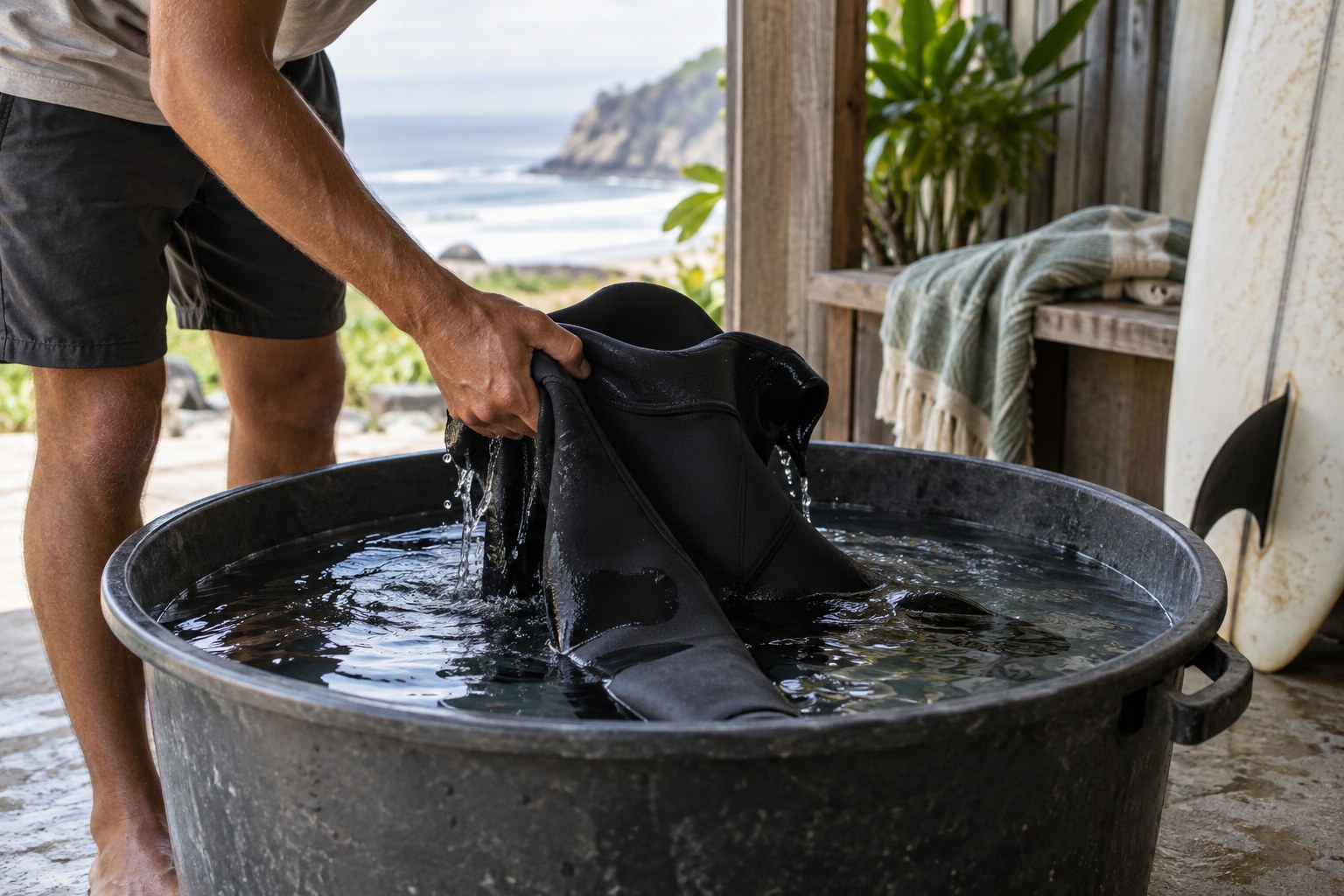
Rinse a wetsuit according to its care label
Identify the suit and its care instructions before setting up a rinse routine, especially when different wetsuits share the same household.
Care & storage
Lay out the carrying system between trips, identify worn or missing parts and resolve compatibility before it is needed on a vehicle again.
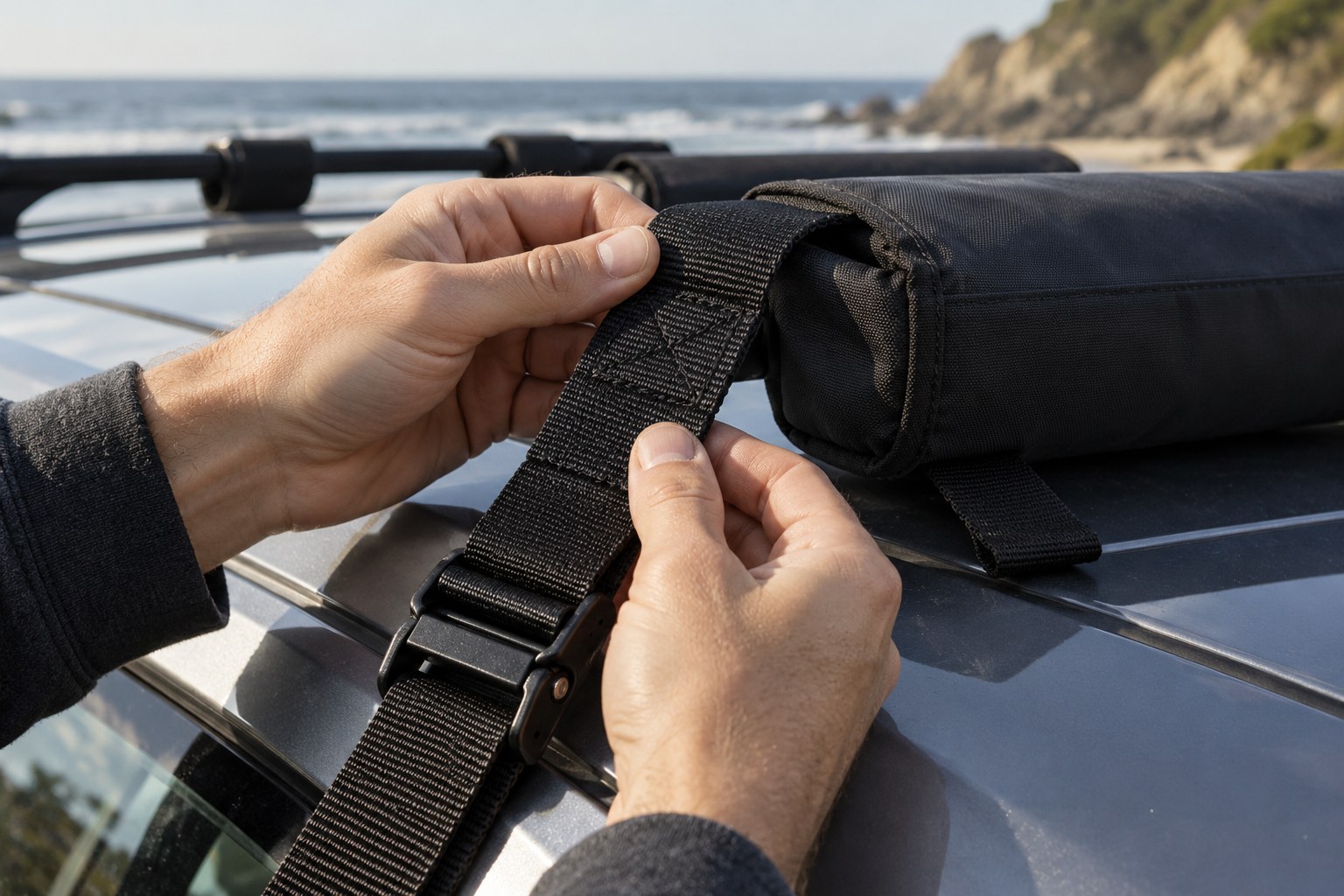
AI-generated illustration. Equipment details are illustrative; follow the instructions for your own item.
Roof-rack pads and straps deserve attention when they are off the vehicle, not only while a board is waiting to be loaded. Identify the exact system and retrieve its installation and care instructions. A collection of similar-looking straps from different products is not necessarily a complete compatible set.
Lay the components on a clean surface. Check the webbing, stitching, buckles, protective covers and contact pads for visible changes. Look along the full length of a strap rather than examining only the section normally visible after loading. Do not cut off a damaged part and assume the remaining length has the same intended use.
Follow the maker's cleaning directions and allow components to dry before storage. Sand or residue around a buckle can make inspection harder, but cleaning it away does not establish that a damaged buckle is serviceable. If wear is uncertain, seek the manufacturer's replacement criteria or advice.
Check that labels and part identifiers remain readable. They can help distinguish load-bearing straps from accessories intended for another purpose. Keep replacement parts matched to the actual system rather than selecting them solely by colour or approximate width.
Inspect the pads where they contact the vehicle or load. Note displaced material, damaged covers or embedded grit. Do not add a homemade layer that changes the system's fit without the maker's approval. The pad, rack, strap and vehicle arrangement need to work together as instructed.
A different vehicle, board bag or load changes the installation question. Check the instructions again rather than treating last season's setup as automatically valid. For a rental vehicle, obtain the rental company's permission and the required compatibility confirmation before departure.
Store the dry components together with their instructions, away from conditions the manufacturer prohibits. Separate anything awaiting replacement so it cannot be grabbed accidentally on a rushed morning. Keep a short note of missing parts and order the specified replacements in time to check them.
Before use, complete the system maker's installation and load checks. An off-vehicle inspection is one stage of preparation, not a guarantee that a later installation is correct. If the agreed equipment is incomplete or unsuitable, change the transport plan instead of improvising because the session is about to start.
Care & storage
Identify the suit and its care instructions before setting up a rinse routine, especially when different wetsuits share the same household.
Care & storage
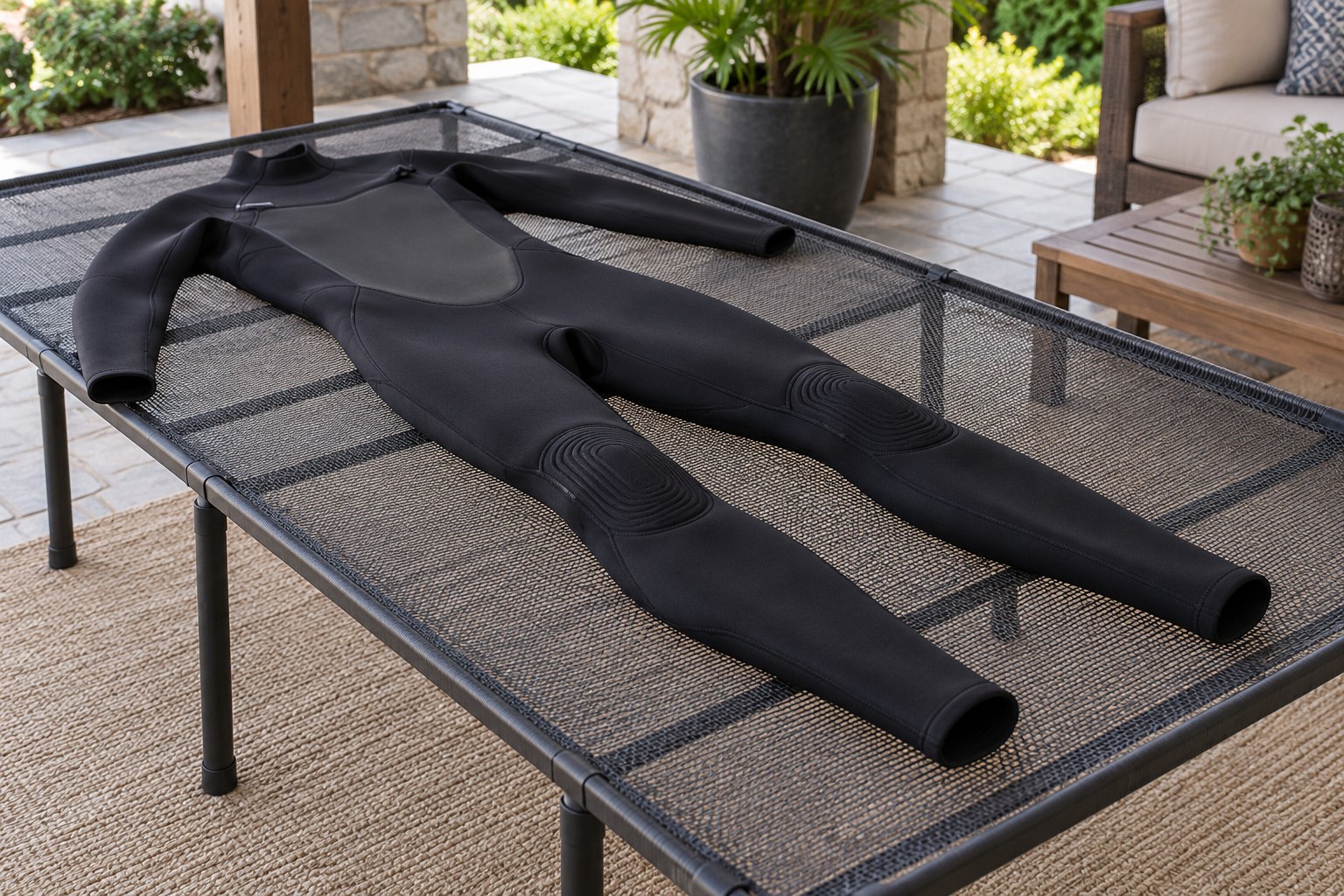
Support the wet suit over an appropriate broad support, and check the hanging arrangement before adding the garment's weight.