Starting out
What to ask a surf school before booking
Get clear answers about teaching, equipment and changes of plan before a surf school turns a provisional enquiry into a booking.
Starting out
Find a first lesson whose meeting arrangements, equipment and teaching format leave you ready to learn, rather than trying to solve everything on the beach.
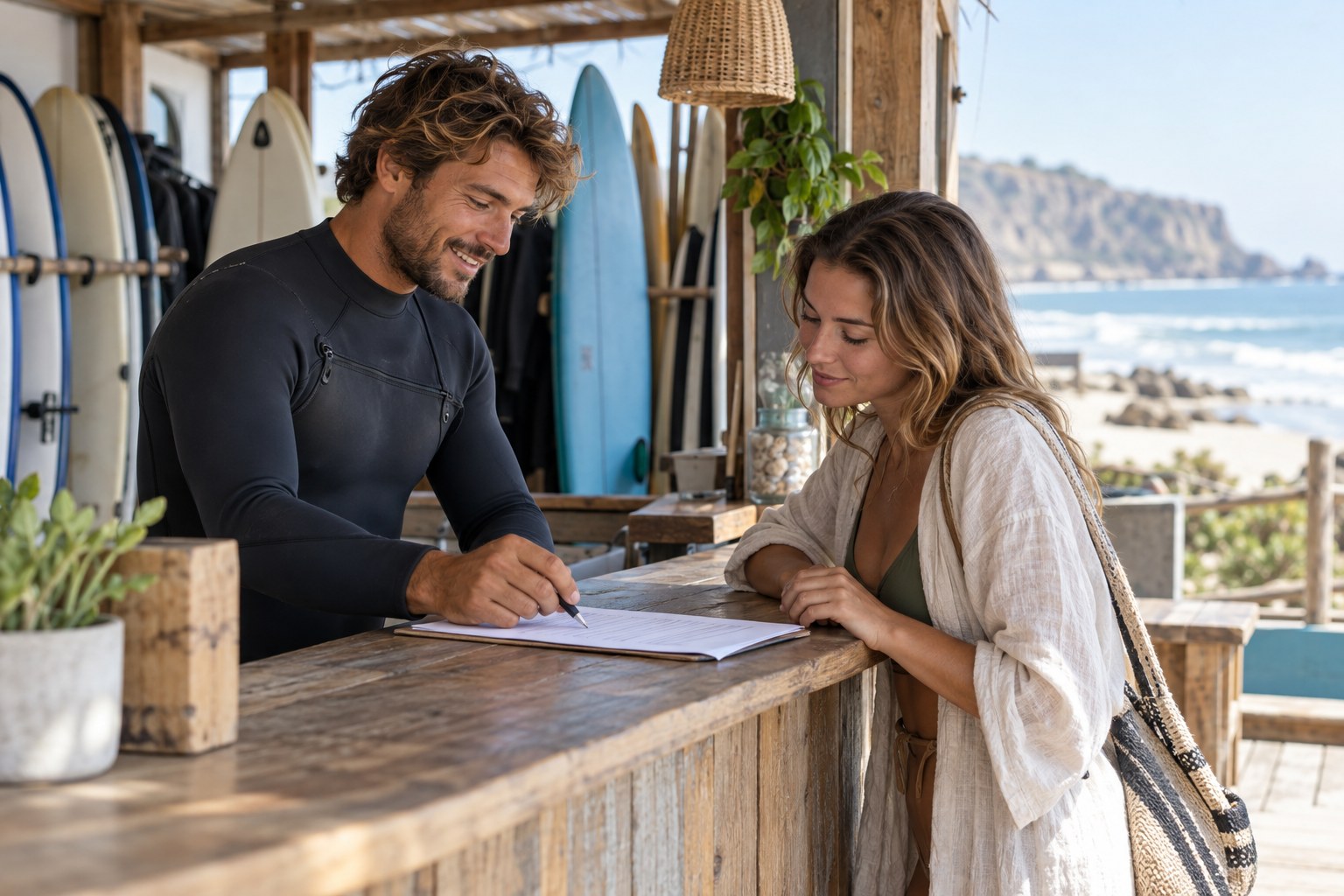
A first surf lesson is easier to arrange when you describe the day you actually want. A short introduction during a family holiday, a private session after years away from the sea and the first day of a week-long course are different bookings. Begin with your experience, comfort in open water and available time. A school needs that information before it can tell you which session is suitable.
Do not buy a board to make the booking feel more definite. Ask whether the school supplies a board, leash and suitable clothing, and whether it holds a range of sizes. Equipment included in a lesson is useful only when it can be fitted to the person using it. Send unusual sizing requirements ahead rather than hoping that the last suit on the rack will work.
Ask about the instructor qualification and current water-safety training recognised where the school operates. The International Surfing Association explains that its accredited instructors must hold a valid recognised water-safety accreditation. That is one useful credential to ask about; it is not a promise that every advertised school follows the same system.
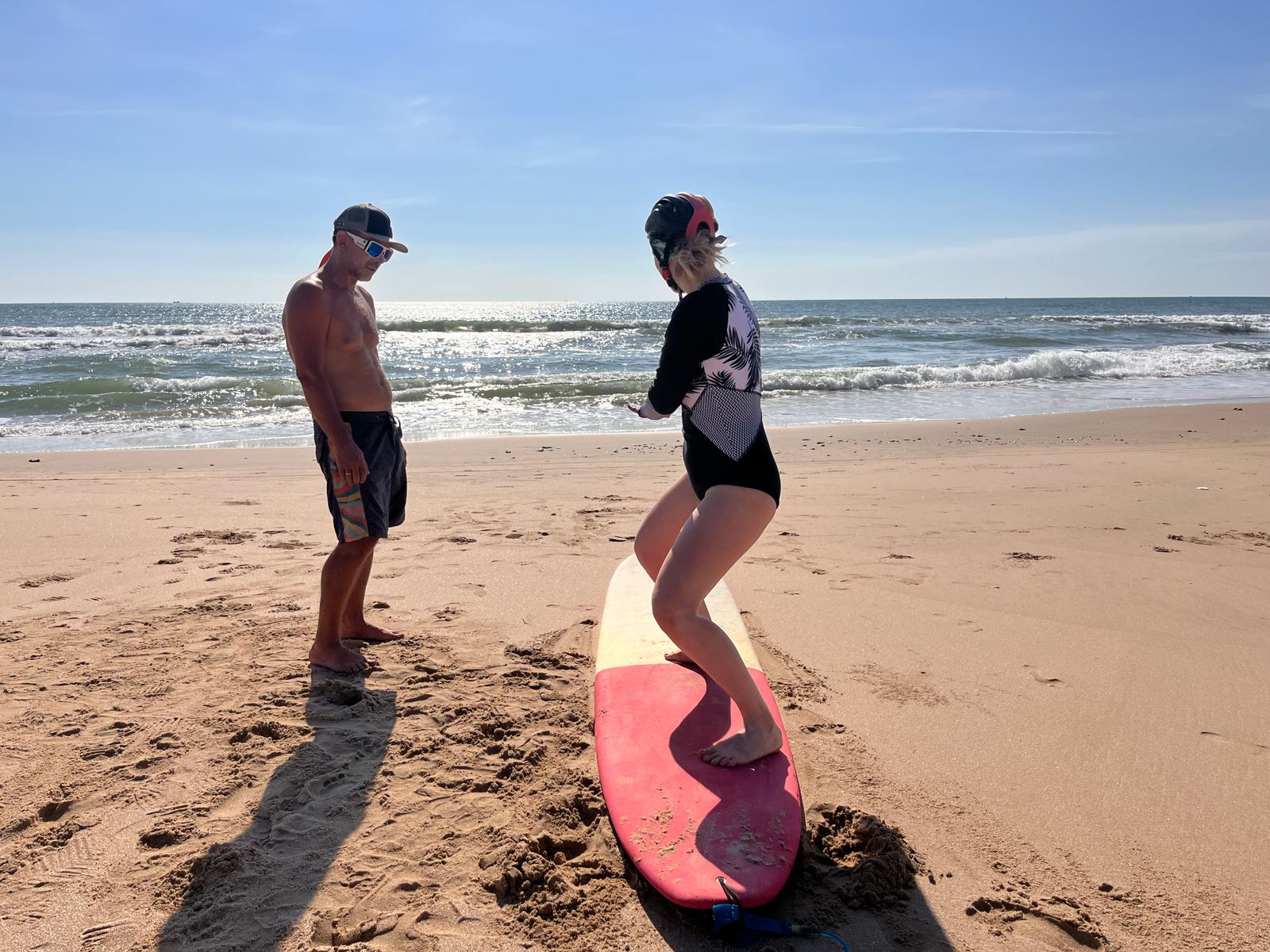
Find out whether you are booking a complete-beginner group and how learners are divided. A mixed family booking may need a different arrangement from an adult group with similar experience. The important question is how the instructor can observe and help you within the actual session, not whether the website uses a reassuring description.
Tell the school about a relevant access requirement or concern before paying. You might need help carrying equipment, a meeting point without steps or more time to understand spoken instructions. Ask what can be accommodated and what the lesson requires. If an answer is vague, resolve it before turning that uncertainty into a paid reservation.
Check whether the quoted duration includes changing, walking to the beach and the land briefing. Two lessons with the same advertised length can leave quite different amounts of teaching time. Get the meeting location as a map pin and ask when you should arrive relative to the advertised start.
Leave room after the lesson to return equipment, rinse where facilities allow and change into dry clothes. Booking a restaurant or train immediately after the stated finish makes an otherwise simple morning unnecessarily rushed. If your accommodation is elsewhere, establish where you can leave ordinary clothes and valuables during the session.
Read the cancellation and rescheduling terms before payment. Ask who decides whether conditions suit the class, how you will receive updates and whether a changed beach means arranging your own transport. A forecast screenshot is not confirmation that a beginner lesson will go ahead.
Choose a booking you can adapt: a reachable meeting point, clear equipment arrangements and enough space in the day for a changed time. After the session, ask the instructor what kind of supervised practice would be appropriate next. Standing up once is a memorable moment, but it does not by itself establish readiness to surf independently.
Starting out
Get clear answers about teaching, equipment and changes of plan before a surf school turns a provisional enquiry into a booking.
Starting out
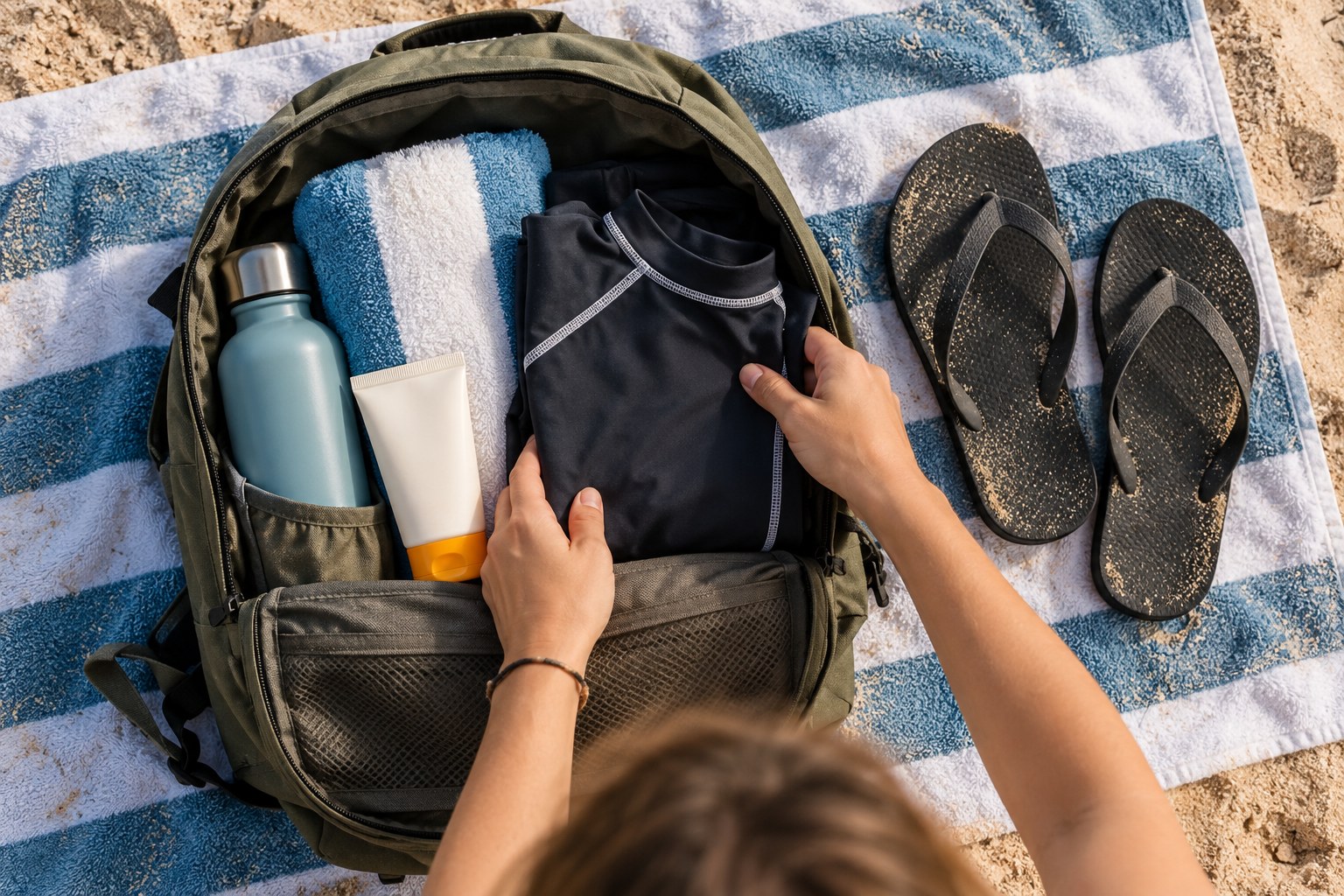
Most first lessons need a modest personal bag, with the school confirming the specialist equipment before you set off.