Care & storage
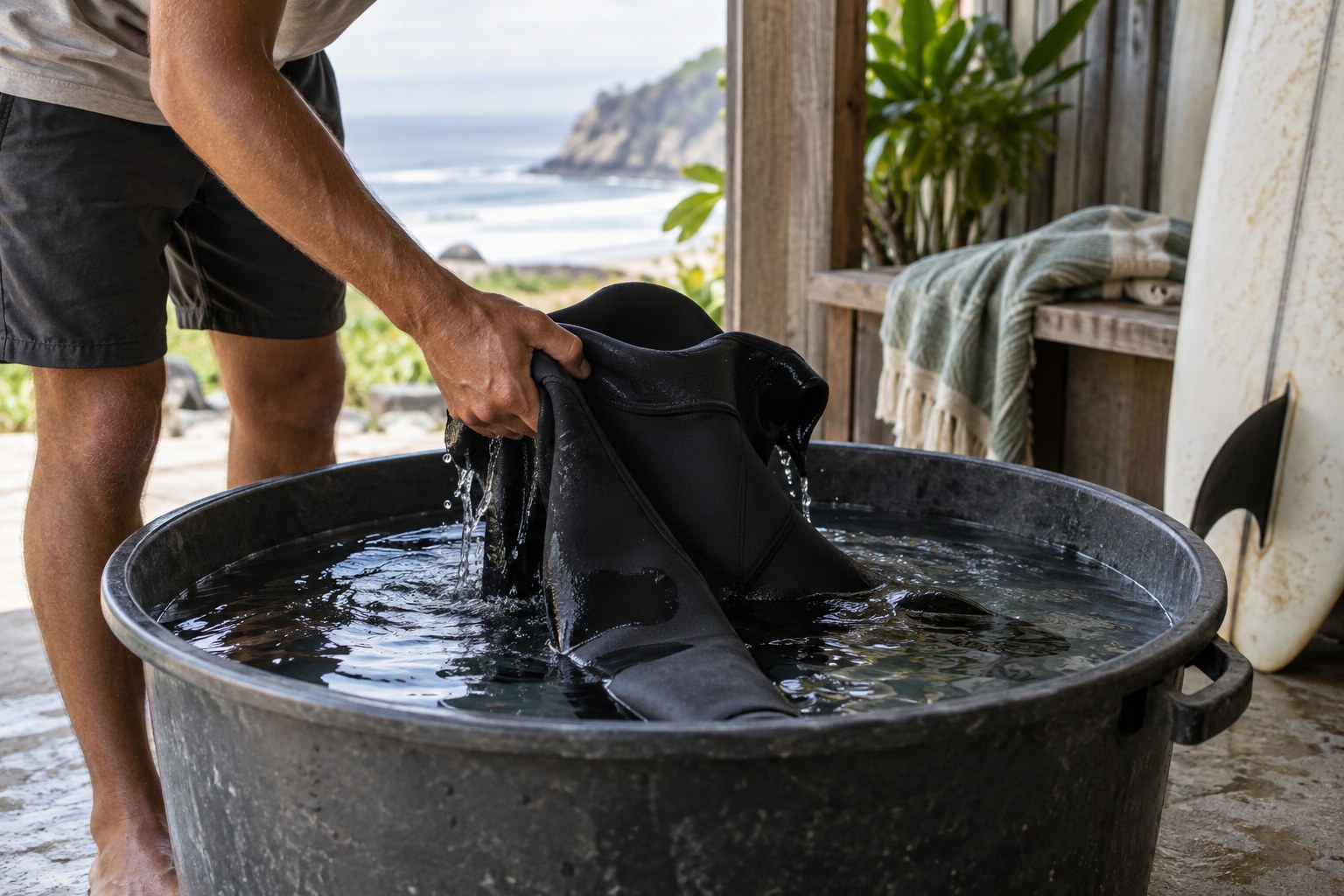
Rinse a wetsuit according to its care label
Identify the suit and its care instructions before setting up a rinse routine, especially when different wetsuits share the same household.
Care & storage
Empty the bag after every trip and clean the closure and lining according to its construction, rather than leaving yesterday's moisture sealed inside.
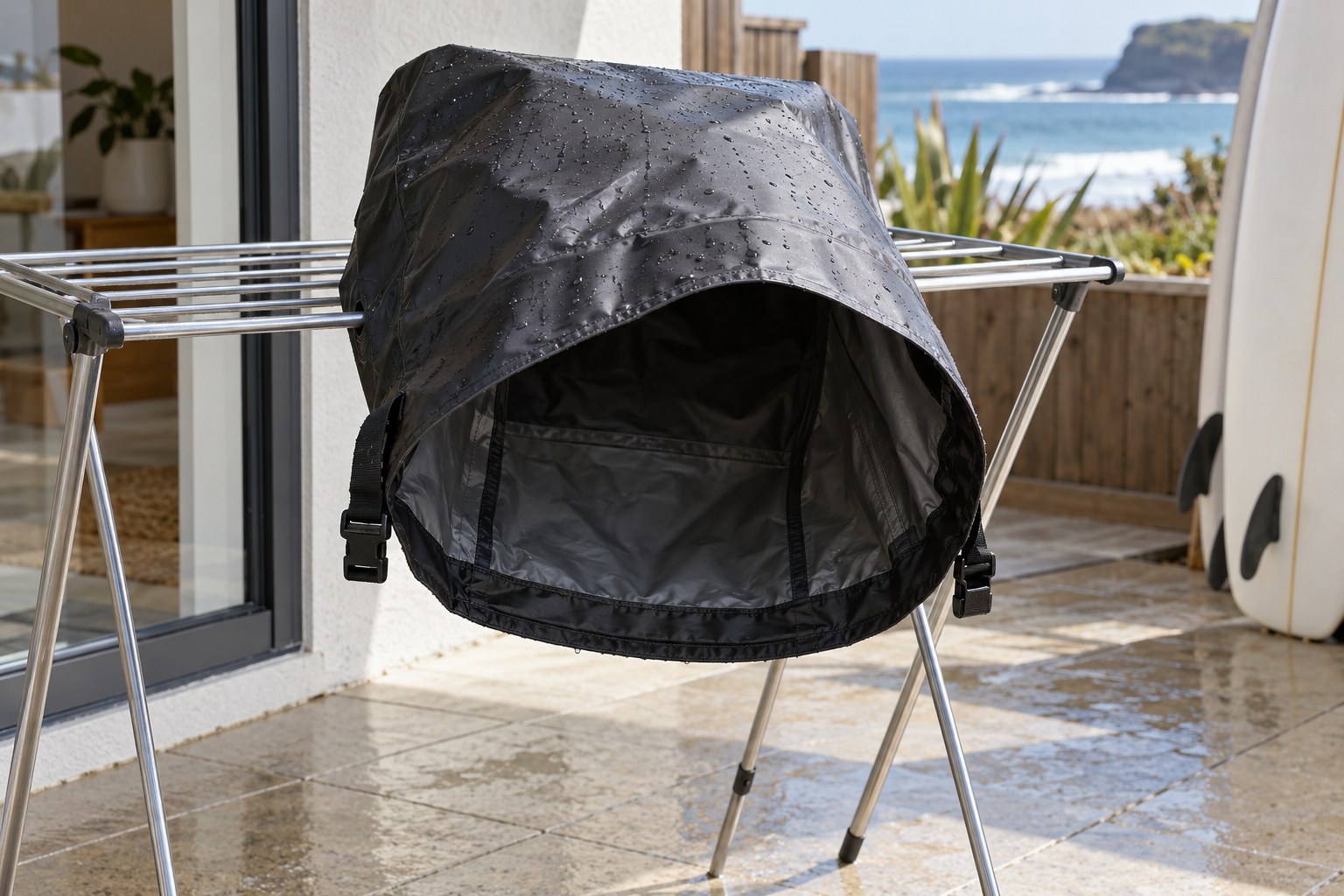
AI-generated illustration. Equipment details are illustrative; follow the instructions for your own item.
A wet bag contains equipment during a journey, but that role leaves it with moisture, sand and residue of its own. Empty it when you return instead of putting the closed bag directly into storage. Check the corners and closure area for small objects before cleaning; a fin screw or key can be easy to miss among damp fabric.
Read the bag's care instructions. Coated fabric, welded seams, roll-top closures and ordinary zips can require different handling. Do not assume that a bag designed to hold wet clothing can be machine washed, turned inside out aggressively or treated with any household cleaner.
Arrange the empty bag so air can reach the lining as the manufacturer allows. Spread folds without forcing a stiff seam backwards. Check the bottom corners and the spaces around handles or pockets, because the broad central panel may dry before those areas do.
If the closure has gathered sand, follow its cleaning directions before repeatedly fastening it. Grit trapped in a roll or zip can make the bag awkward to close and can be transferred to the next clean item packed inside. Use an appropriate gentle method rather than scraping with a metal tool.
Dry the exterior too. A bag that is clean inside can still wet a car seat or clean clothing if its outer fabric remains damp. Keep it separate from documents and electronics until you have checked the whole item.
Once dry, put the bag away in the shape recommended by its maker. Avoid crushing it beneath heavy equipment or forcing the closure into a sharp bend. Before the next trip, look for seam changes, abrasion and damage to the fastening.
Do not treat a successful wet-clothing journey as proof that the bag will protect valuables if submerged. Use it for its stated purpose and rating. If it leaks or its coating changes, consult the maker about repair or replacement rather than concealing the problem with an unknown sealant.
A short reset after each outing makes the bag's condition visible. It also prevents the next clean wetsuit from being placed into a container that still holds the previous session's sand and moisture.
Care & storage
Identify the suit and its care instructions before setting up a rinse routine, especially when different wetsuits share the same household.
Care & storage
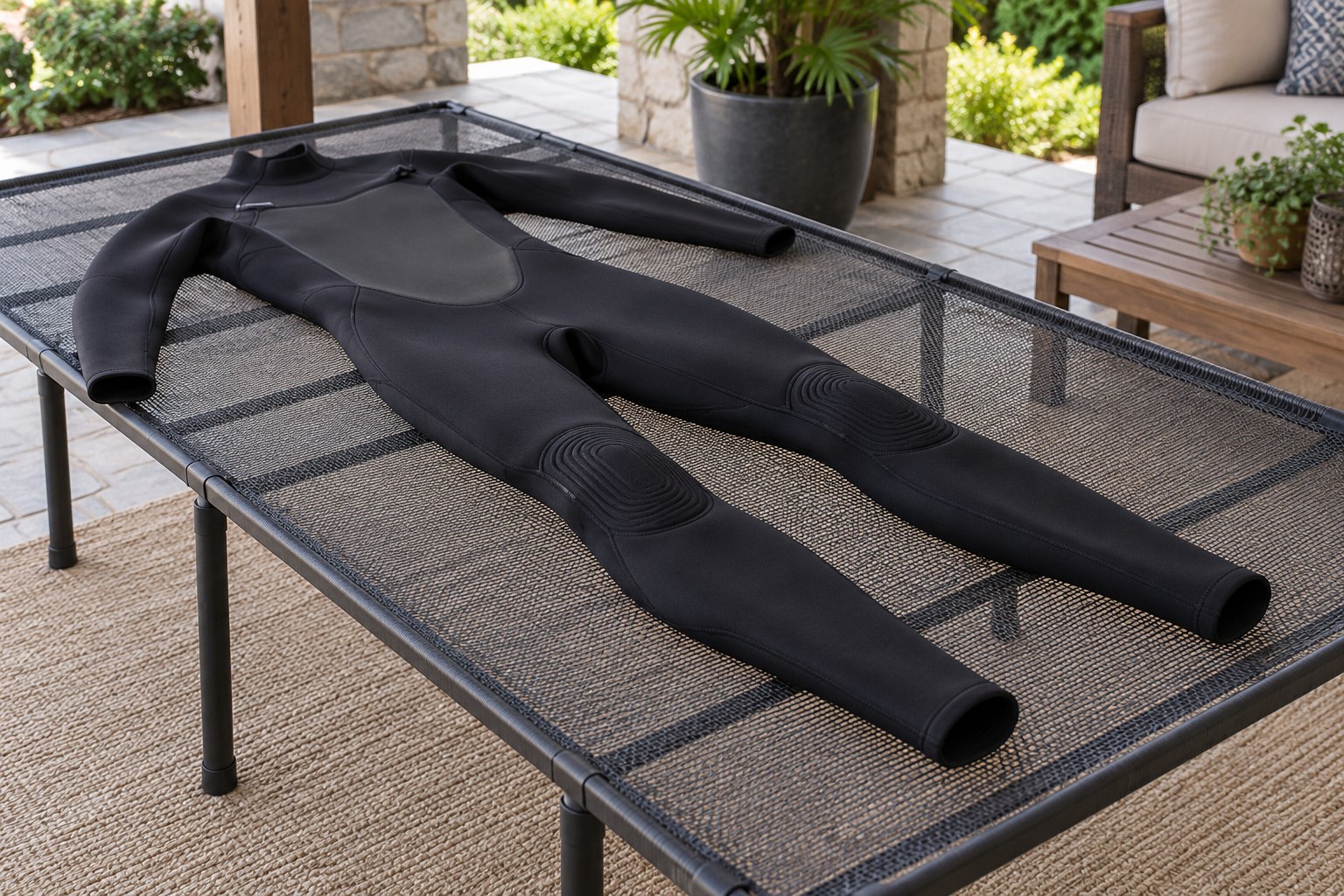
Support the wet suit over an appropriate broad support, and check the hanging arrangement before adding the garment's weight.