Care & storage
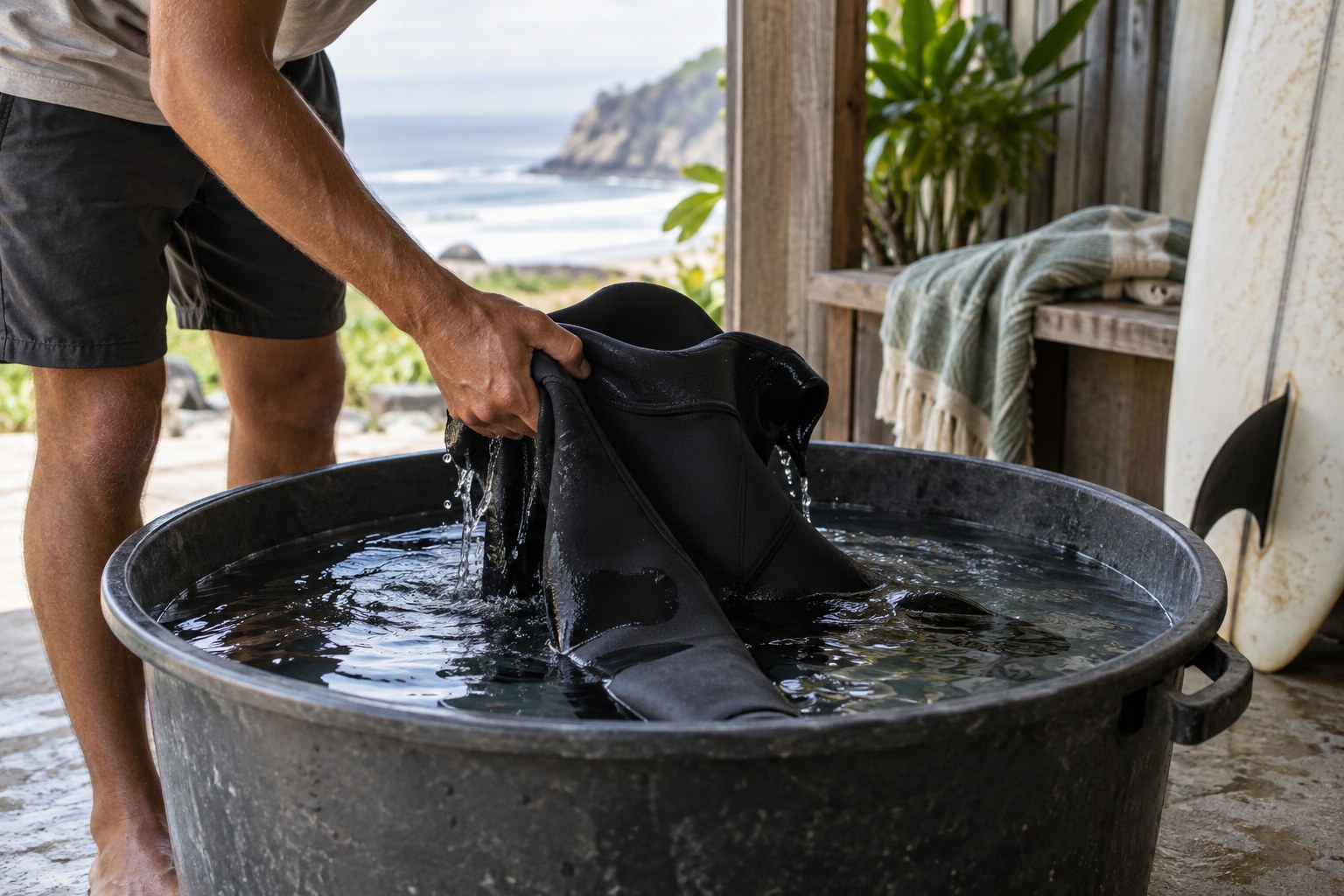
Rinse a wetsuit according to its care label
Identify the suit and its care instructions before setting up a rinse routine, especially when different wetsuits share the same household.
Care & storage
Design the drying area around drainage, permitted supports and airflow, with separate places for wet equipment and items ready to pack.
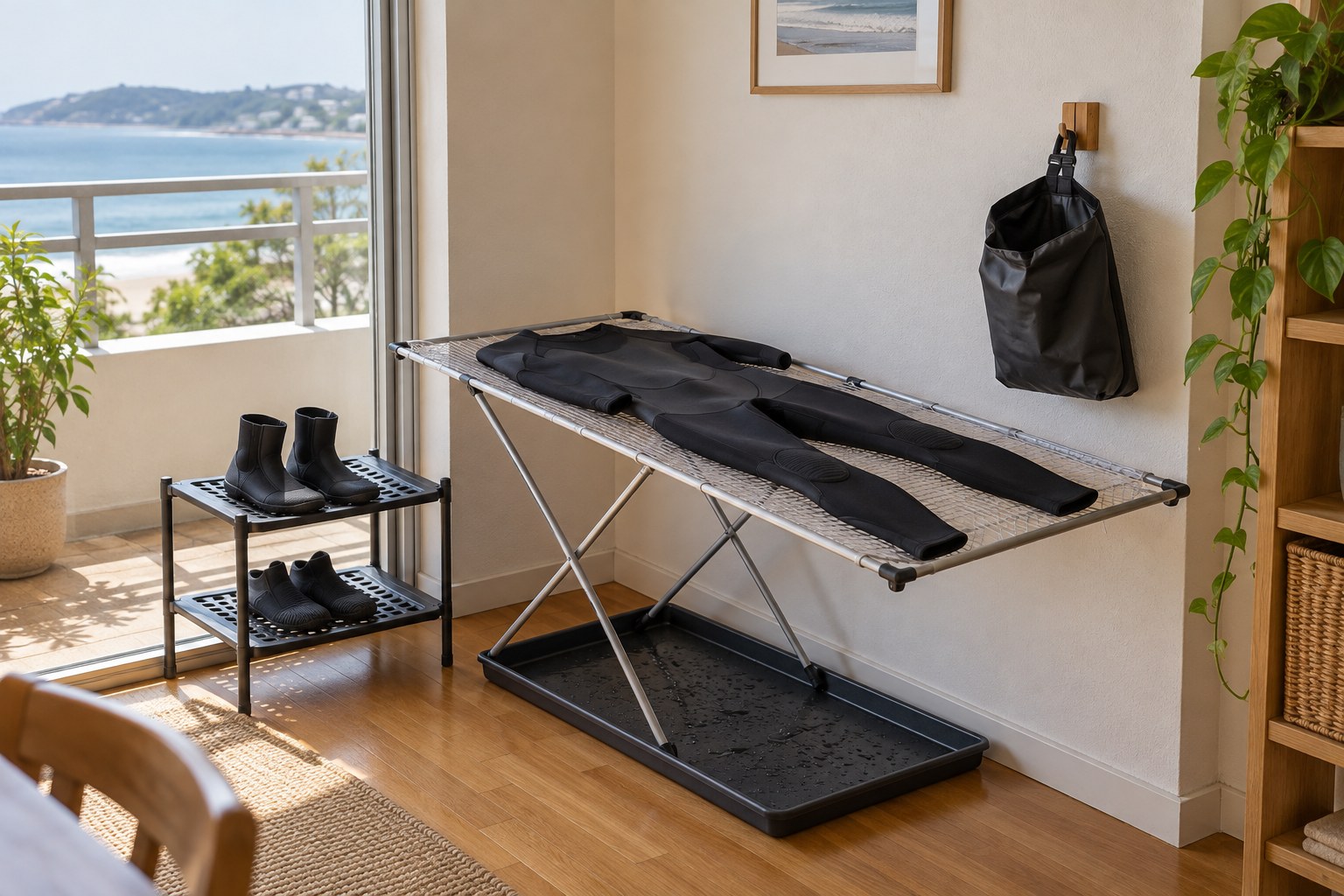
AI-generated illustration. Equipment details are illustrative; follow the instructions for your own item.
A small home does not need a large dedicated surf room, but it does need a repeatable place for wet equipment. Start by listing what returns from a normal session: suit, boots, towel, wet bag and perhaps a board bag. Measure their hanging or open footprint rather than imagining them all folded into the corner where the empty bag normally lives.
Check each item's care guidance before designing the space. Some items can use a broad support; others need a different arrangement. Avoid assuming one ordinary clothes hanger will solve every drying problem. The support and the place it attaches to must both be suitable for the wet load.
Consider where water drains and how the floor remains usable. A suitable tray or designated wet area may help contain drips, but it should not create an obstruction or leave standing water hidden under equipment. Keep the route through the room clear, particularly if several people share it.
Look at ventilation and the instructions about heat and sunlight. A space immediately beside a heater may seem convenient while conflicting with the care guidance. A closed cupboard may store dry kit neatly but be unsuitable for drying it. Distinguish those two functions instead of trying to make one enclosed corner do everything.
If the property is rented or shared, confirm what may be installed and where. A temporary-looking hook can still damage a surface or be unsuitable for a heavy wet load. Use an approved support arrangement and its specified installation rather than relying on an improvised attachment.
Boots, gloves and the lining of a wet bag need attention as well as the main suit. Arrange them so openings remain accessible and they do not disappear beneath a towel. A simple labelled shelf or container for dry small parts can keep tools and hardware away from the dripping area.
Keep clean travel clothes out of the drying zone. Once an item is ready, move it to a dry storage place rather than letting it block airflow to the remaining kit. This creates a clear distinction between equipment that is still in the care process and equipment that can be packed.
For a household with more than one surfer, agree how each person's items are identified and when they are moved. A system that requires everyone to recognise the exact shade of a black wetsuit will eventually cause confusion. Use separate positions or identifiers that do not damage the garments.
Bring the equipment through the full routine once and notice where the process becomes awkward. Perhaps the bag cannot open fully, the suit touches the floor or dry shoes block the drip tray. Change that specific arrangement rather than adding more hooks without a plan.
Review the area after the kit is removed. Dry the tray or floor as appropriate, clear sand and check the supports. A small drying space works through regular turnover: it receives wet items, makes their condition visible and returns to an empty usable area before the next session.
Care & storage
Identify the suit and its care instructions before setting up a rinse routine, especially when different wetsuits share the same household.
Care & storage
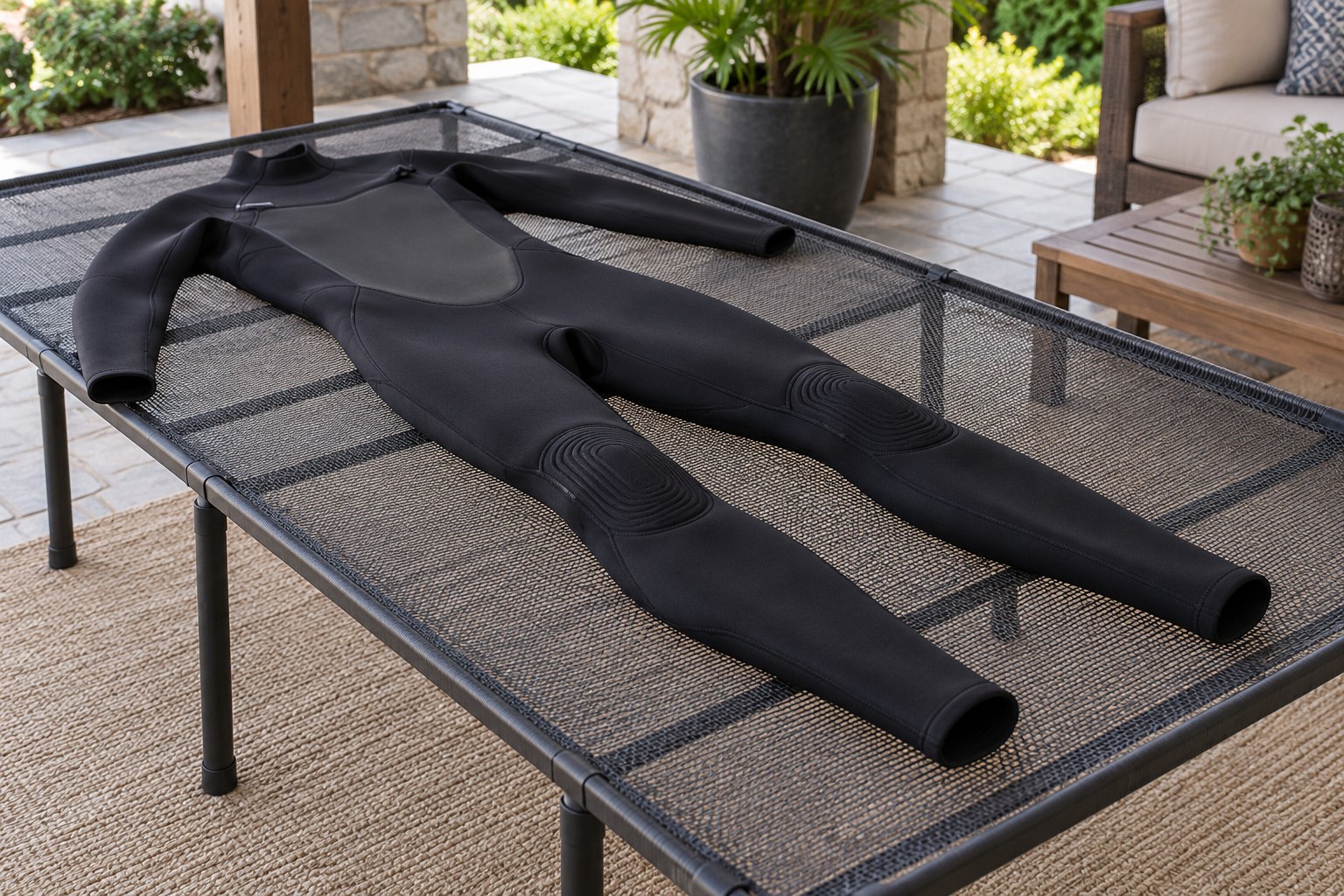
Support the wet suit over an appropriate broad support, and check the hanging arrangement before adding the garment's weight.