Care & storage
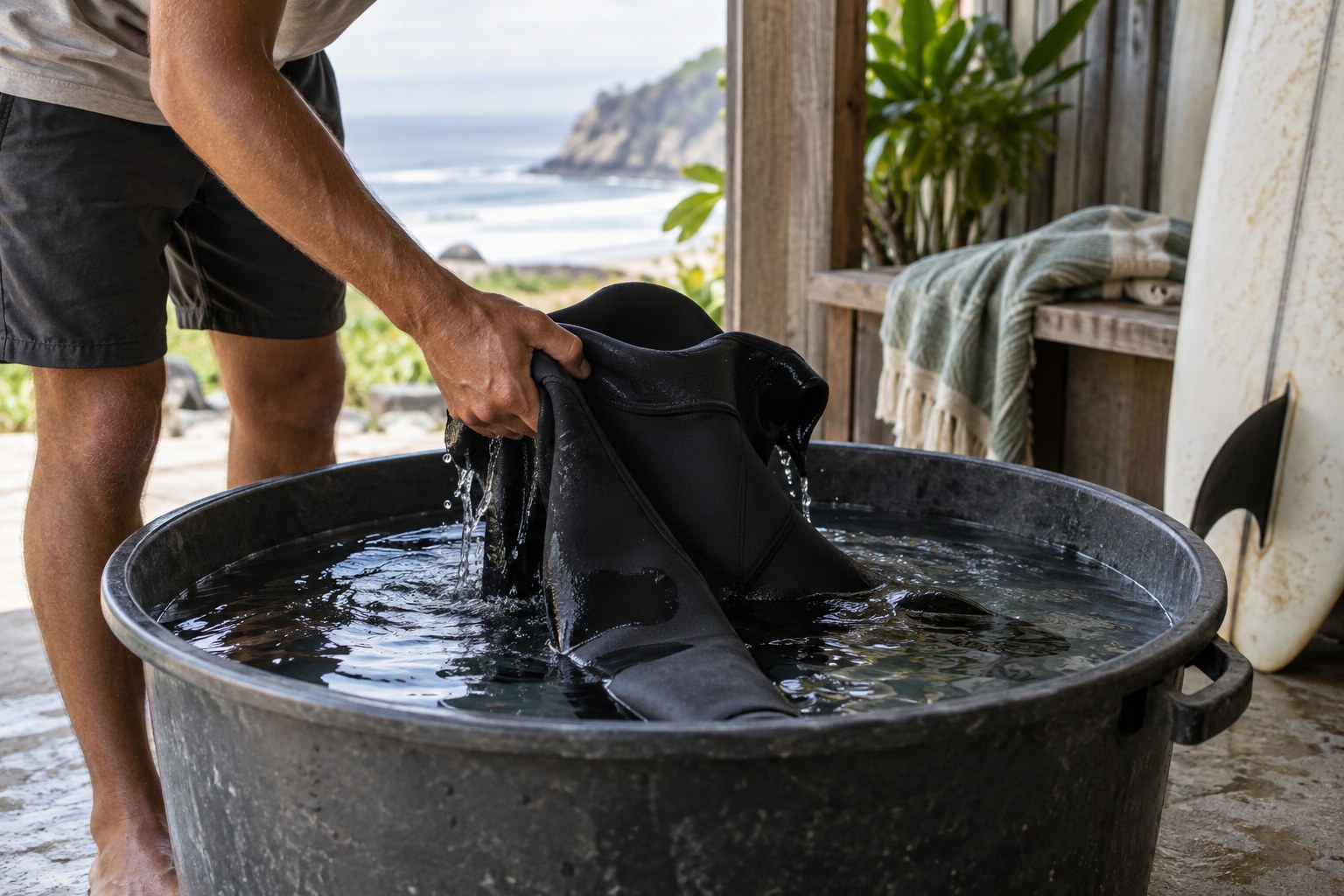
Rinse a wetsuit according to its care label
Identify the suit and its care instructions before setting up a rinse routine, especially when different wetsuits share the same household.
Care & storage
Open the bag fully after travel, remove loose contents and inspect the padding and closure before storing it around a board.
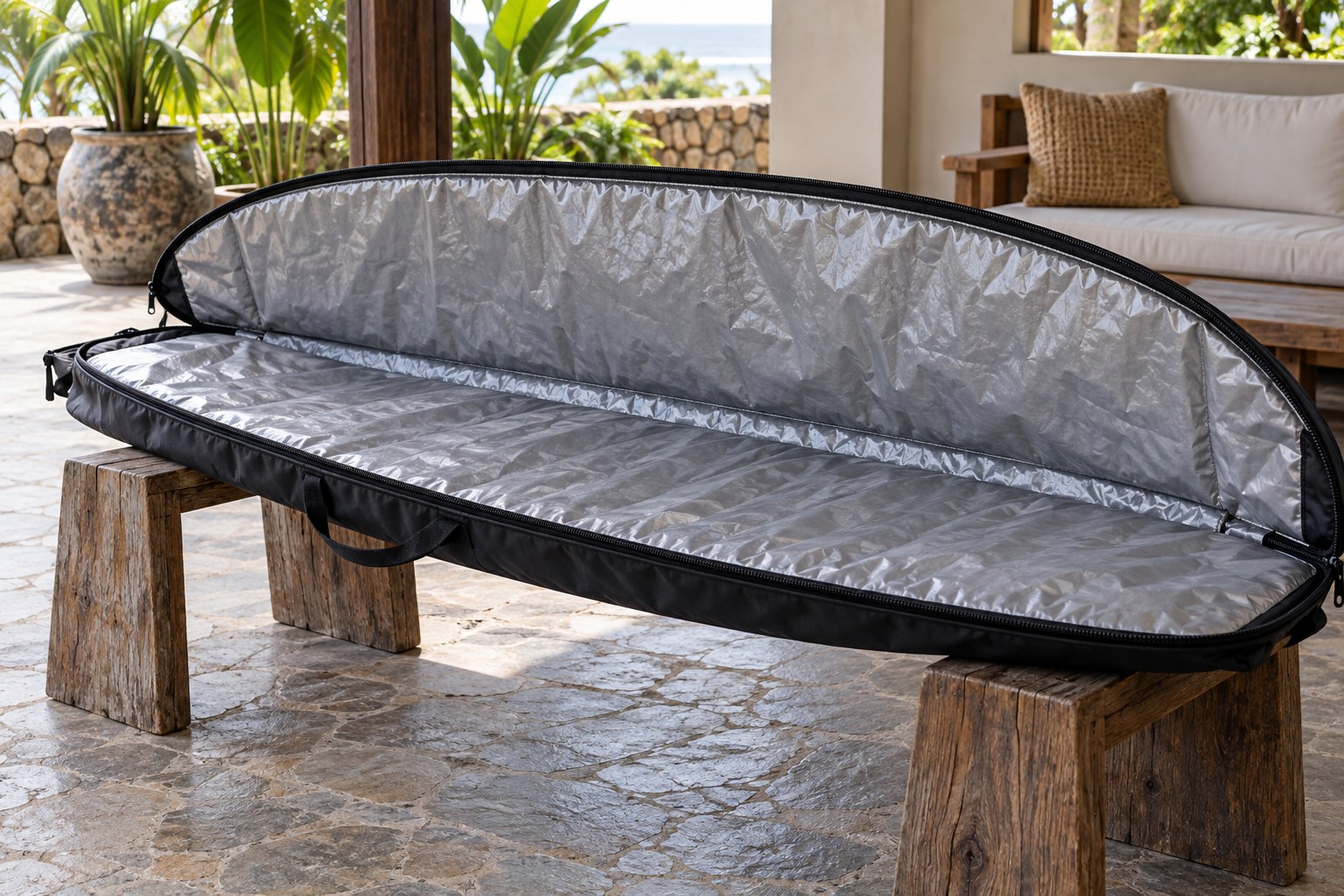
AI-generated illustration. Equipment details are illustrative; follow the instructions for your own item.
A padded board bag can carry moisture into storage even when its outer surface feels dry. After a trip, remove the board and every loose item. Check the corners, pockets and spaces around dividers for damp padding, sand and hardware that could scratch the board later.
Read the bag's care instructions before washing or applying a cleaner. Coatings, insulation and zip construction vary. A cleaning method suitable for a simple fabric sleeve may be inappropriate for a padded travel bag, especially one with components that cannot be removed.
Open the bag in a permitted, ventilated place and arrange it so the lining can dry according to the maker's guidance. Avoid folding the wet padding tightly or leaving one side pressed against a damp floor. Keep it away from heat sources the instructions prohibit.
Check the zip area for grit and visible damage. Clean it by the approved method rather than repeatedly pulling the slider through resistance. Do not use a generic lubricant simply because another bag manufacturer recommends it for a different closure.
Inspect handles, shoulder-strap attachment points and any wheels while the bag is empty. Travel can leave a problem in a load-bearing area that is less obvious once the bag is filled again. Record damage and ask about repair before the next journey, when the same area will carry the full weight.
Wait until the interior, padding and pockets are ready for storage. Keep the bag in the arrangement recommended by the manufacturer and avoid crushing it beneath heavy objects. If the board will remain inside, follow both the board and bag instructions about dryness, support and environment.
Return only the appropriate accessories to their compartments. Loose screws or sharp tools should be contained separately, not left where the board will lie. Before the next trip, reopen the bag early enough to check its condition and test the closure without rushing.
A dry, empty inspection provides a useful baseline. It makes new damage easier to notice and prevents the bag from quietly transferring the previous trip's moisture and grit to the next one.
Care & storage
Identify the suit and its care instructions before setting up a rinse routine, especially when different wetsuits share the same household.
Care & storage
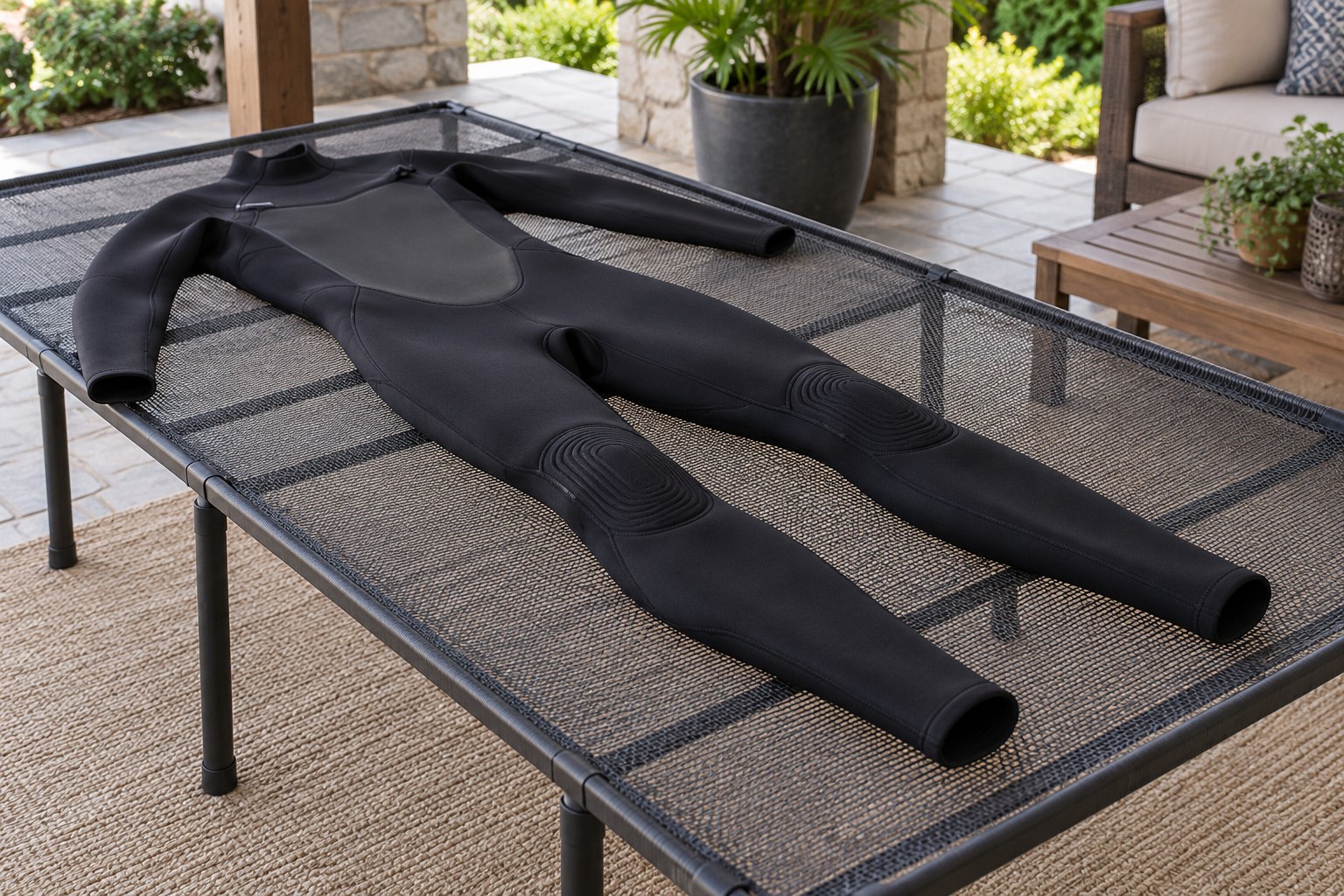
Support the wet suit over an appropriate broad support, and check the hanging arrangement before adding the garment's weight.