Care & storage
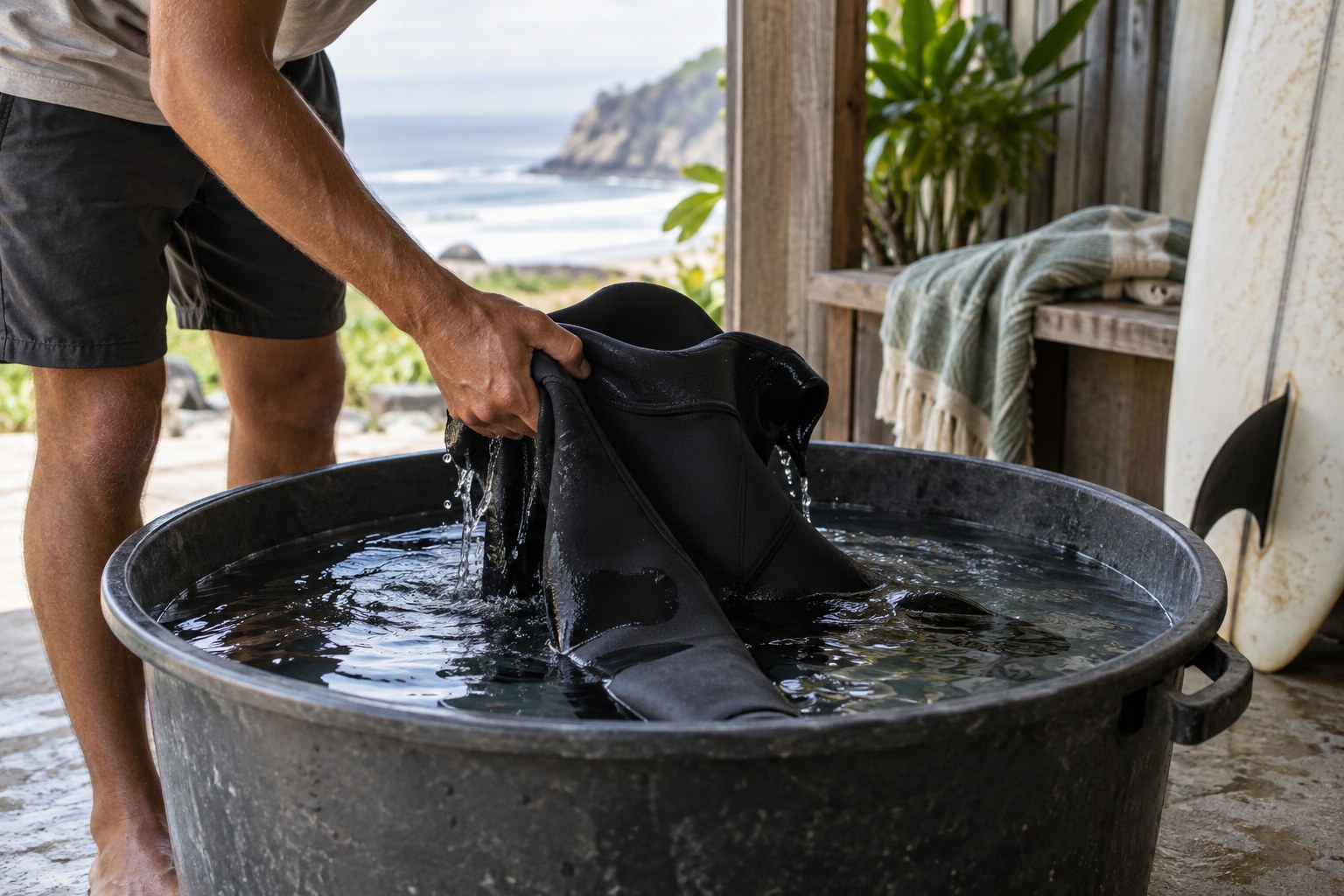
Rinse a wetsuit according to its care label
Identify the suit and its care instructions before setting up a rinse routine, especially when different wetsuits share the same household.
Care & storage
Arrange drying so the inside of each boot can be checked, while following the maker's limits on turning, support and heat.
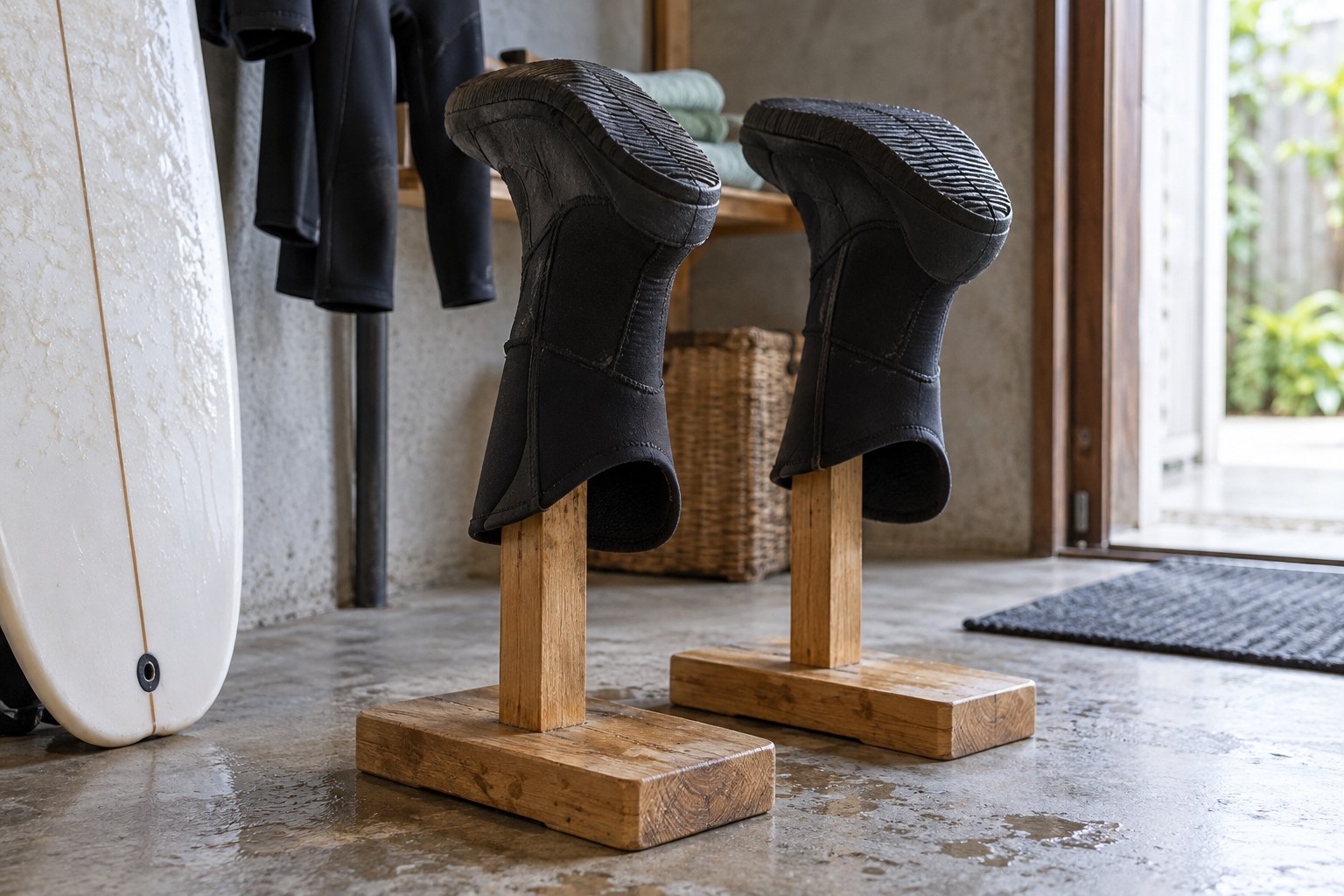
AI-generated illustration. Equipment details are illustrative; follow the instructions for your own item.
Surf boots can look dry on the outside while moisture remains in the lining or toe area. After following their cleaning instructions, set them up where air can reach the openings without crushing the material. Read the maker's guidance before turning them inside out; not every construction is intended to be inverted in the same way.
Keep the pair separate enough that one opening is not pressed against the other. A closed bag is a transport solution, not a drying area. If you used a bag to get home, empty it and attend to the bag's moisture as well.
Before putting the boots away, inspect the inside as far as the design allows. Feel for remaining dampness without pulling hard on the lining or forcing fingers into a tight seam. The toe and heel areas may need more attention than the open cuff.
Follow the product's directions about drying aids. A device suitable for another kind of footwear may use heat or support the boot in a way the surf-boot maker does not permit. Do not improvise with a radiator, hair dryer or other heat source because the next session is approaching.
Look at the straps and hook-and-loop closures while the boots are out. Keep rough closure surfaces from catching delicate lining, and note any loose stitching or separation for advice. Cleaning and drying do not establish that a damaged sole or fastening is ready for use.
Once dry, store the boots without folding the cuffs tightly or loading other gear on top. Keep the size and model information with your equipment record if the label is becoming difficult to read. When several people share a drying area, use a separate identifier rather than assuming matching colour means the boots belong together.
Before travel, take the boots out early enough to check fit and condition. If they remain persistently damp or develop a material problem despite following the care directions, ask the maker about appropriate next steps. A predictable drying routine is useful because it leaves the whole boot ready to inspect, not merely tidy enough to put in a cupboard.
Care & storage
Identify the suit and its care instructions before setting up a rinse routine, especially when different wetsuits share the same household.
Care & storage
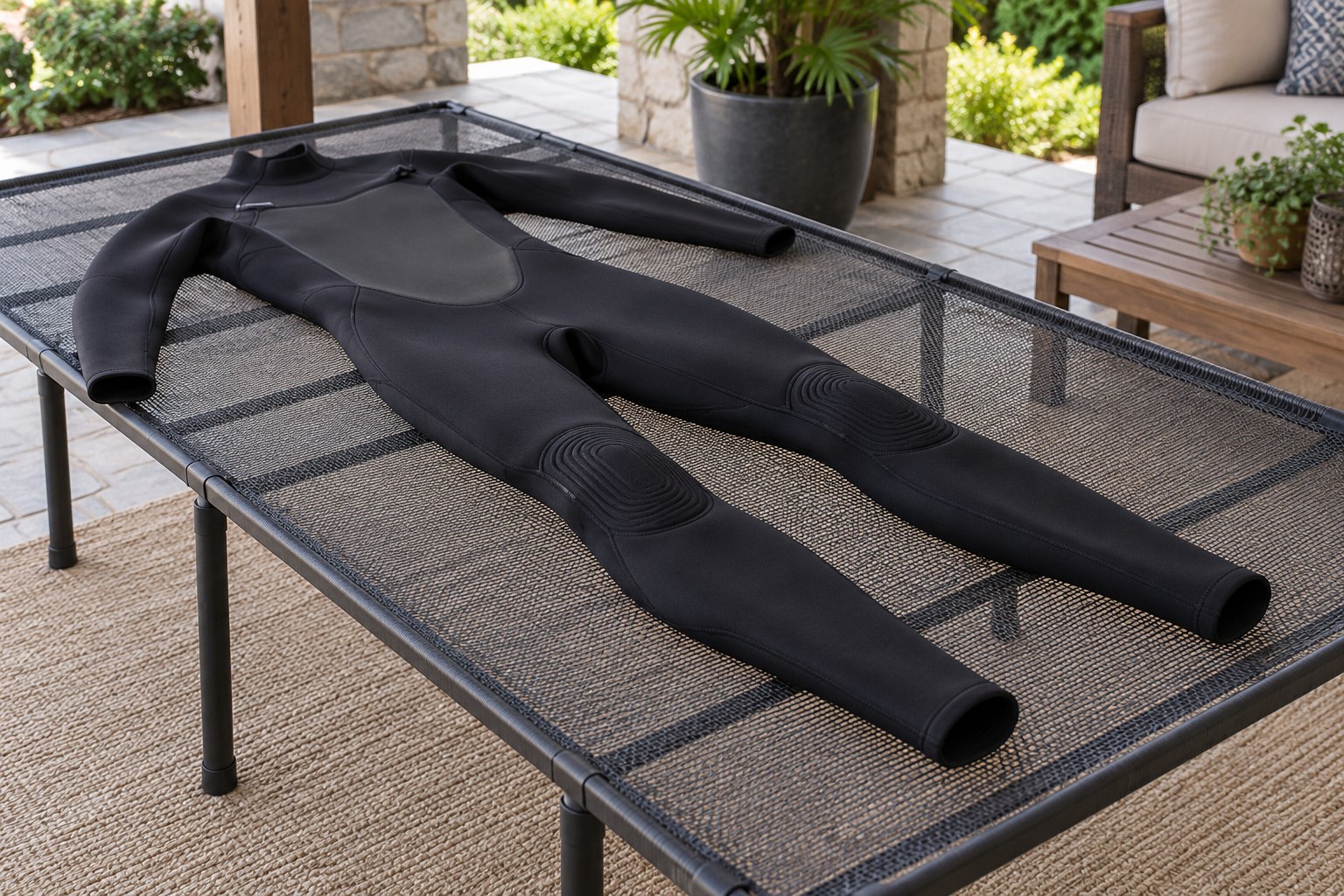
Support the wet suit over an appropriate broad support, and check the hanging arrangement before adding the garment's weight.