Care & storage
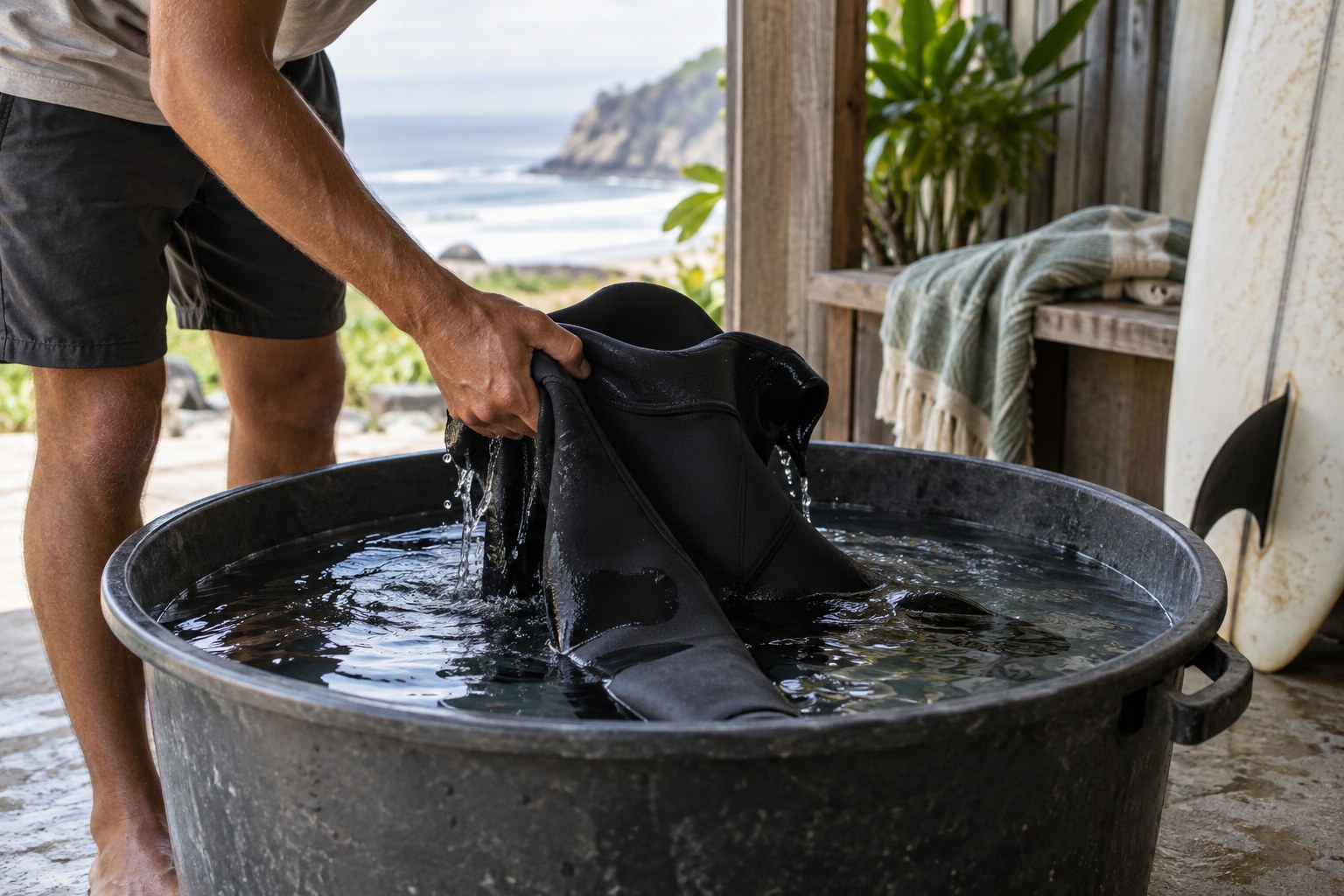
Rinse a wetsuit according to its care label
Identify the suit and its care instructions before setting up a rinse routine, especially when different wetsuits share the same household.
Care & storage
Stop when the tool slips or the fitting resists unexpectedly, then identify the system before seeking a compatible repair or replacement.
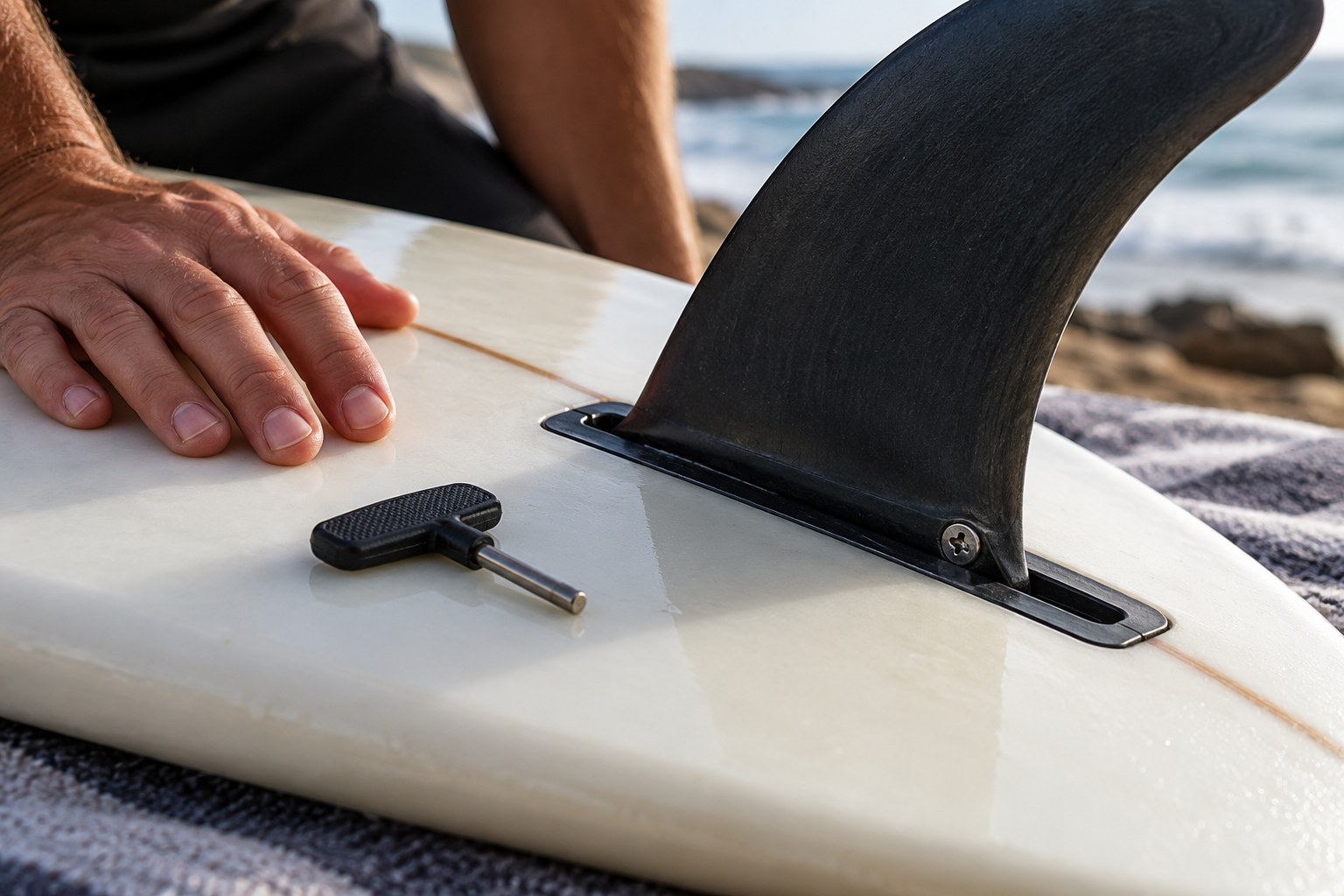
AI-generated illustration. Equipment details are illustrative; follow the instructions for your own item.
A fin screw that will not move can tempt you to use a longer tool or more force. Pause instead. An incorrect key, damaged tool interface, contamination or another issue may be involved, and adding leverage can make the original problem harder to resolve. Do not use a tool that only partly engages the fitting.
Identify the fin system and consult its instructions. Check whether the operation you are attempting is actually part of that system's normal removal procedure. Similar-looking fin boxes can have different mechanisms, and an online demonstration of another design is not a reliable substitute.
Take a clear photograph of the fitting and a wider view of the fin and box. Note whether the screw moved previously, whether the tool has slipped and whether any product has already been applied. Keep that description factual rather than deciding in advance that the screw is seized for a particular reason.
Avoid adding household oils, solvents or heat unless the manufacturer specifically directs their use for the relevant materials. A chemical that affects a metal screw can also contact the surrounding board or box. Compatibility is a separate question from whether a product might loosen something.
Do not drill, lever the fin sideways or repeatedly test the screw to see if it has changed. Put the board on a suitable support and protect the area while arranging advice. Keep the correct tool with the board so the person assessing it can see what was used.
Ask a suitable shop or the system maker what needs to be inspected and which replacement components are appropriate. Futures, for example, supplies a replacement key and screw set for its own system; that does not make an unidentified screw from another source interchangeable.
Once the issue is resolved, retain the part specification and installation instructions with the board's record. Remove a damaged key from the usable tool kit so it cannot recreate the problem. Before returning to the water, have any uncertainty about the fin and box arrangement resolved rather than treating a newly moving screw as proof that everything around it is sound.
Care & storage
Identify the suit and its care instructions before setting up a rinse routine, especially when different wetsuits share the same household.
Care & storage
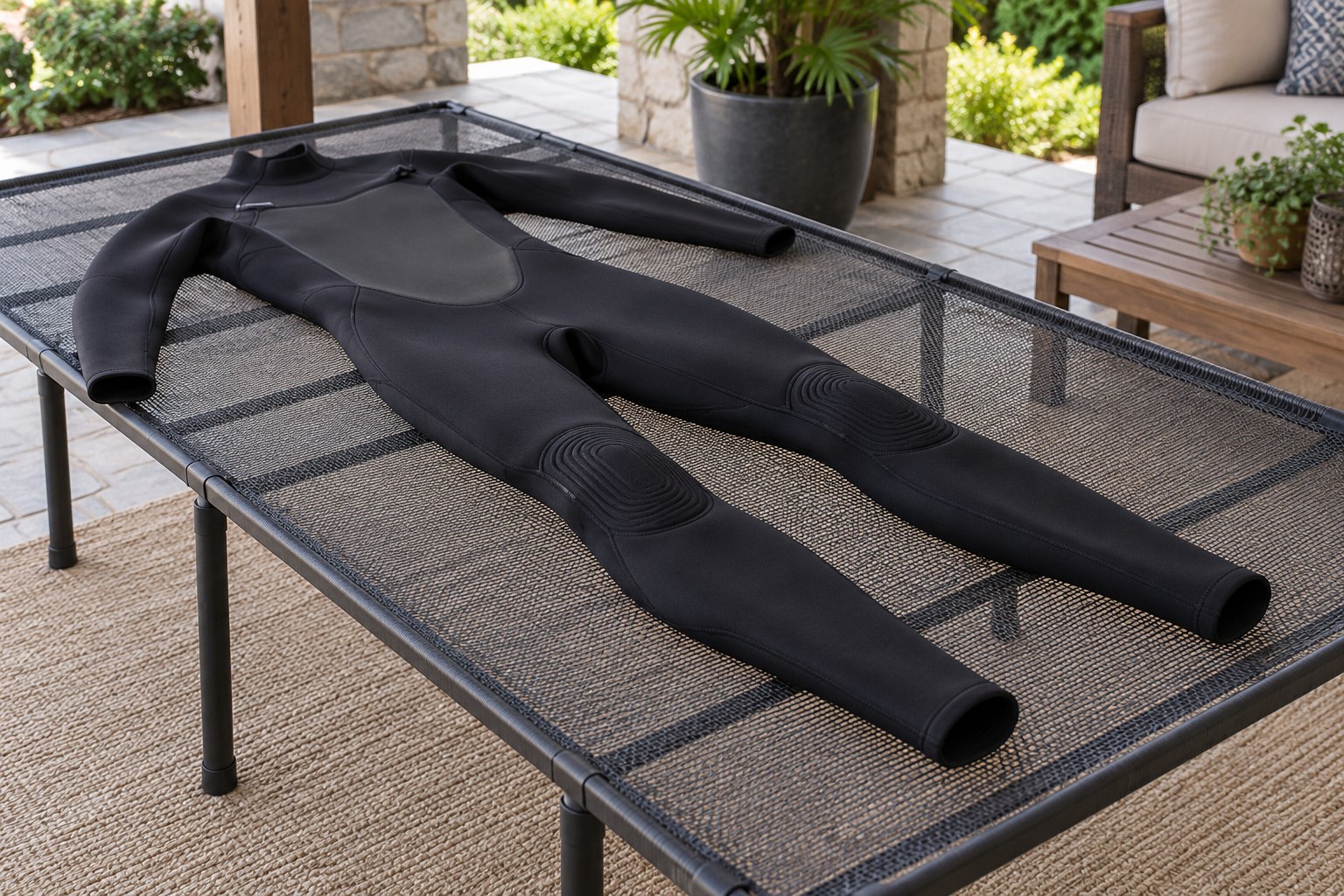
Support the wet suit over an appropriate broad support, and check the hanging arrangement before adding the garment's weight.