Care & storage
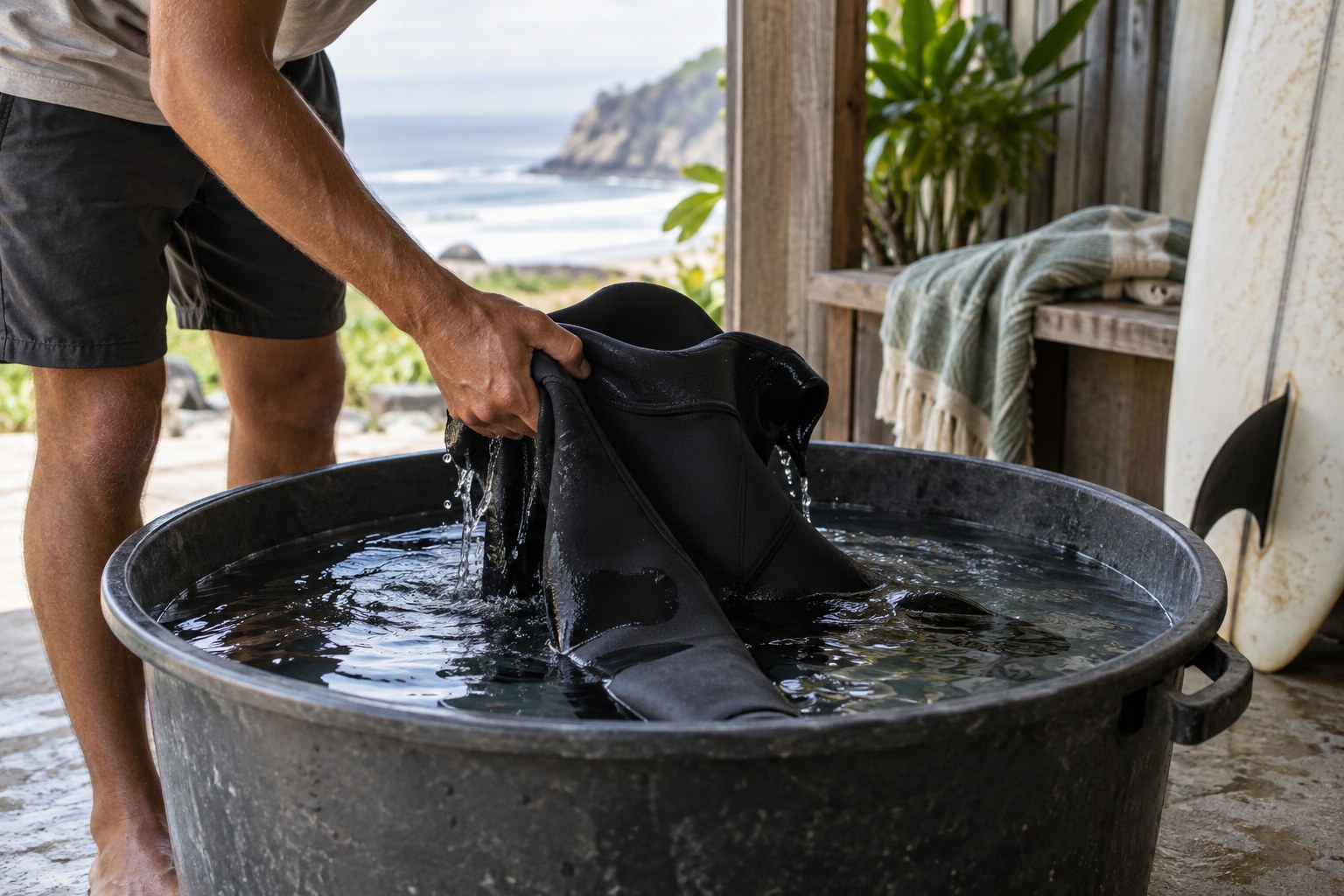
Rinse a wetsuit according to its care label
Identify the suit and its care instructions before setting up a rinse routine, especially when different wetsuits share the same household.
Care & storage
Stop using the board if damage is uncertain, document the location and let an appropriate repairer assess anything you cannot confidently identify.
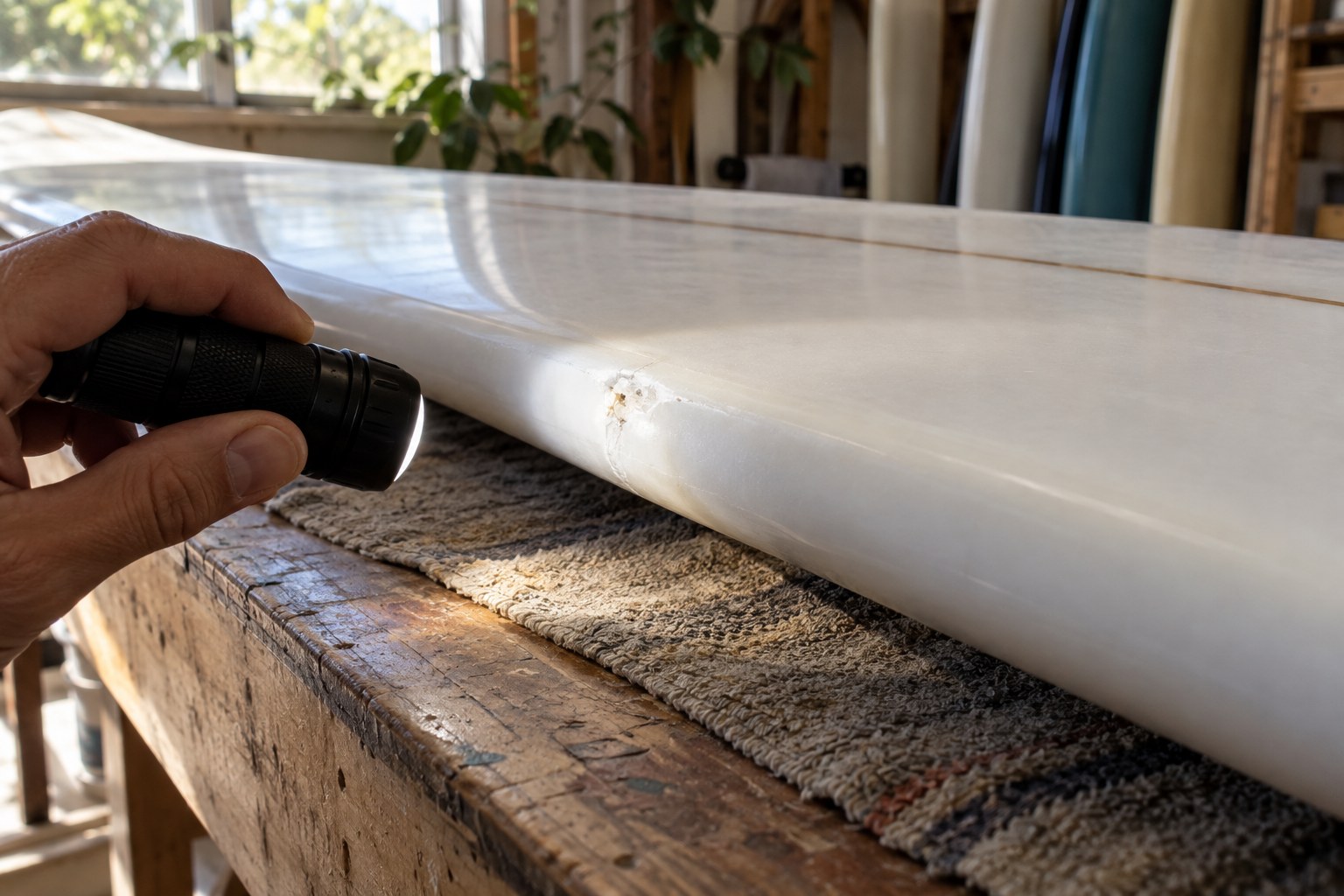
AI-generated illustration. Equipment details are illustrative; follow the instructions for your own item.
After a board has struck something, begin with what happened and where the contact occurred. Put it on a stable support and look at the area in good light. Do not keep surfing simply because the visible mark looks small, and do not repeatedly flex or press the area in an attempt to prove that it is intact.
Check the nearby rail, deck or bottom as well as the exact point of impact. If the contact involved a fin, include the surrounding box area in the visual record without forcing the fin to move. Keep hands away from sharp damaged material.
Take an overall photograph showing the location, followed by closer views from more than one angle. Include a scale reference beside the area where it can be placed without damaging the board. Record whether there is an opening, a visible change in shape or another feature you can actually see. Avoid diagnosing the internal construction from colour alone.
Write down when the impact occurred and whether the board was used afterwards. If it has been in water since the event, tell the repairer. That information can matter to the assessment even when the photographs appear straightforward.
Do not put an unfamiliar patch or adhesive over the area before asking what is appropriate. A temporary product has its own compatibility and use instructions, and may not address the kind of damage present. Covering the area can also make initial inspection harder.
Contact the board maker, a suitable shop or a repairer with the model and photographs. Ask whether they need to see the board in person and how it should be stored or transported meanwhile. Follow their advice about keeping it out of use.
If the board is rented, report the incident to the provider promptly and follow the agreement. Do not attempt a repair to avoid the conversation. Keep any assessment or repair record with the board's other details so a later owner or repairer can understand its history.
An impact check is a decision about whether further assessment is needed. It is not a guarantee that the board is sound, and a neat-looking photograph should not be used to replace the judgement required for an uncertain area.
If the impact happened during transport, keep the carrying bag available for inspection too. A corresponding mark can help explain the event, but do not assume a clean bag means the board could not have been affected. Preserve photographs and any relevant report number without delaying the equipment assessment.
When several people use the same board, tell them that it is awaiting advice and separate it from boards ready to use. A small note in a private message may be missed by the next person collecting gear. The status needs to be visible enough that the board is not taken out because it happens to be nearest the door.
Care & storage
Identify the suit and its care instructions before setting up a rinse routine, especially when different wetsuits share the same household.
Care & storage
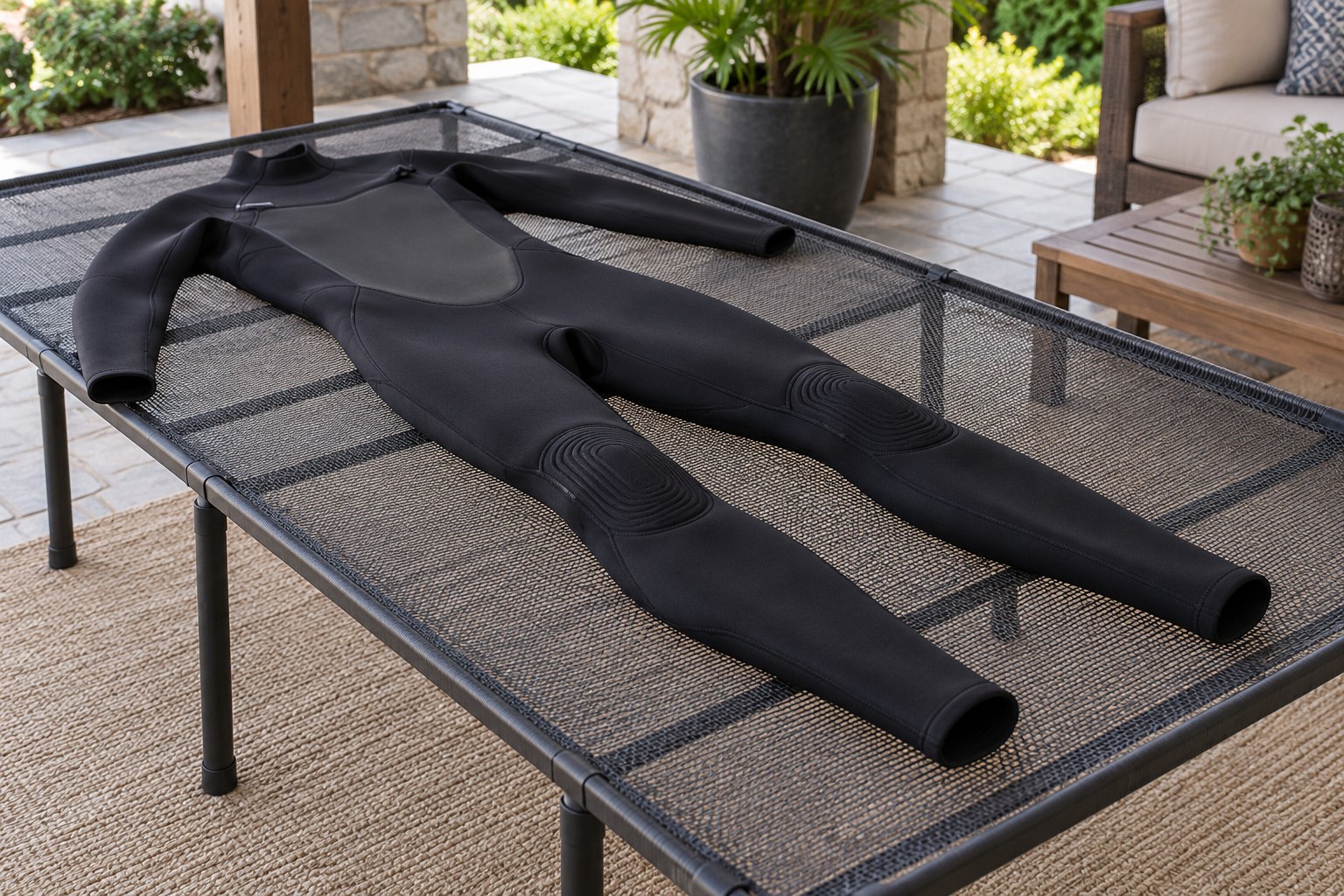
Support the wet suit over an appropriate broad support, and check the hanging arrangement before adding the garment's weight.