Care & storage
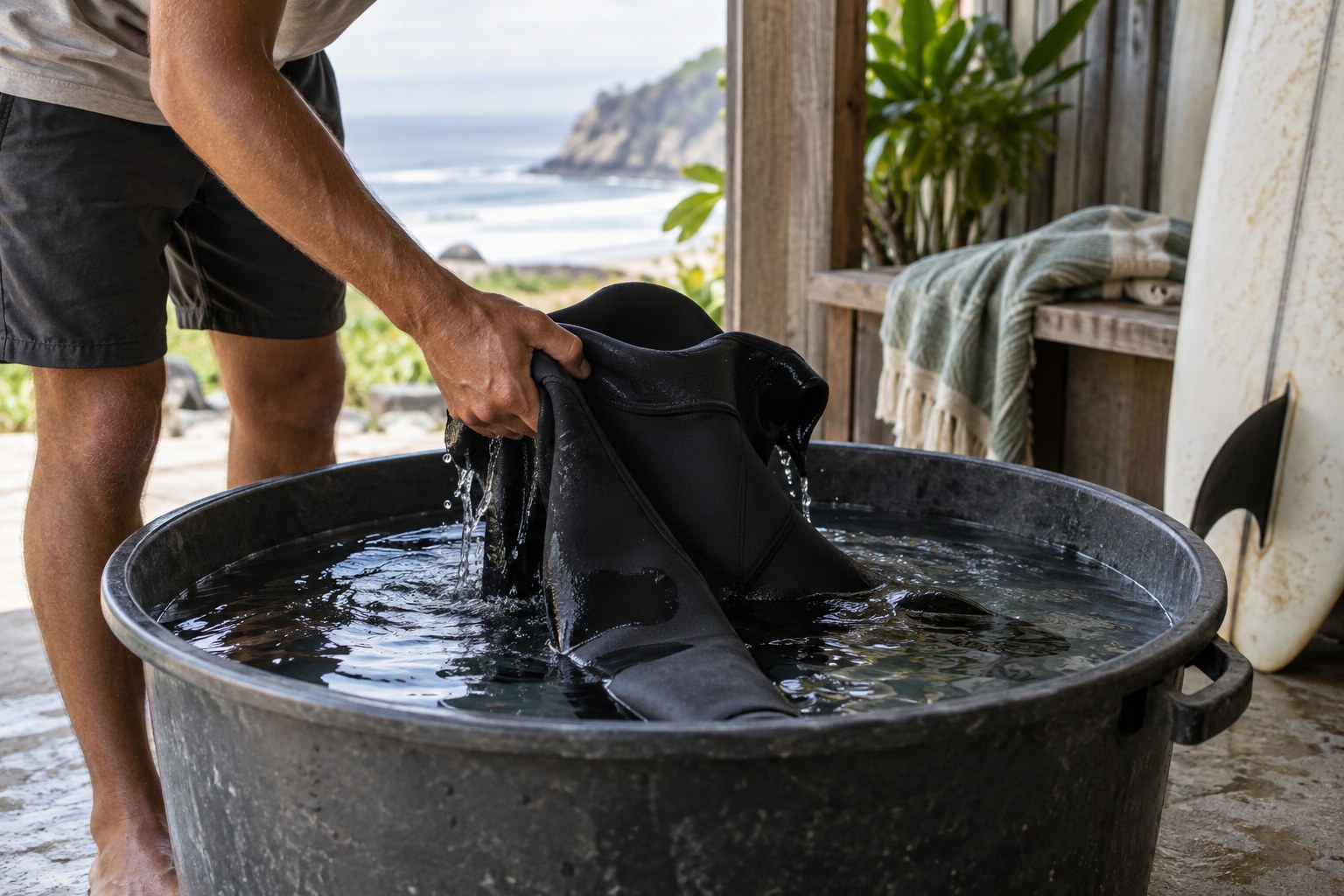
Rinse a wetsuit according to its care label
Identify the suit and its care instructions before setting up a rinse routine, especially when different wetsuits share the same household.
Care & storage
Inspect seams on a clean, dry suit in good light, looking for changes without stretching the garment to prove that a repair is needed.
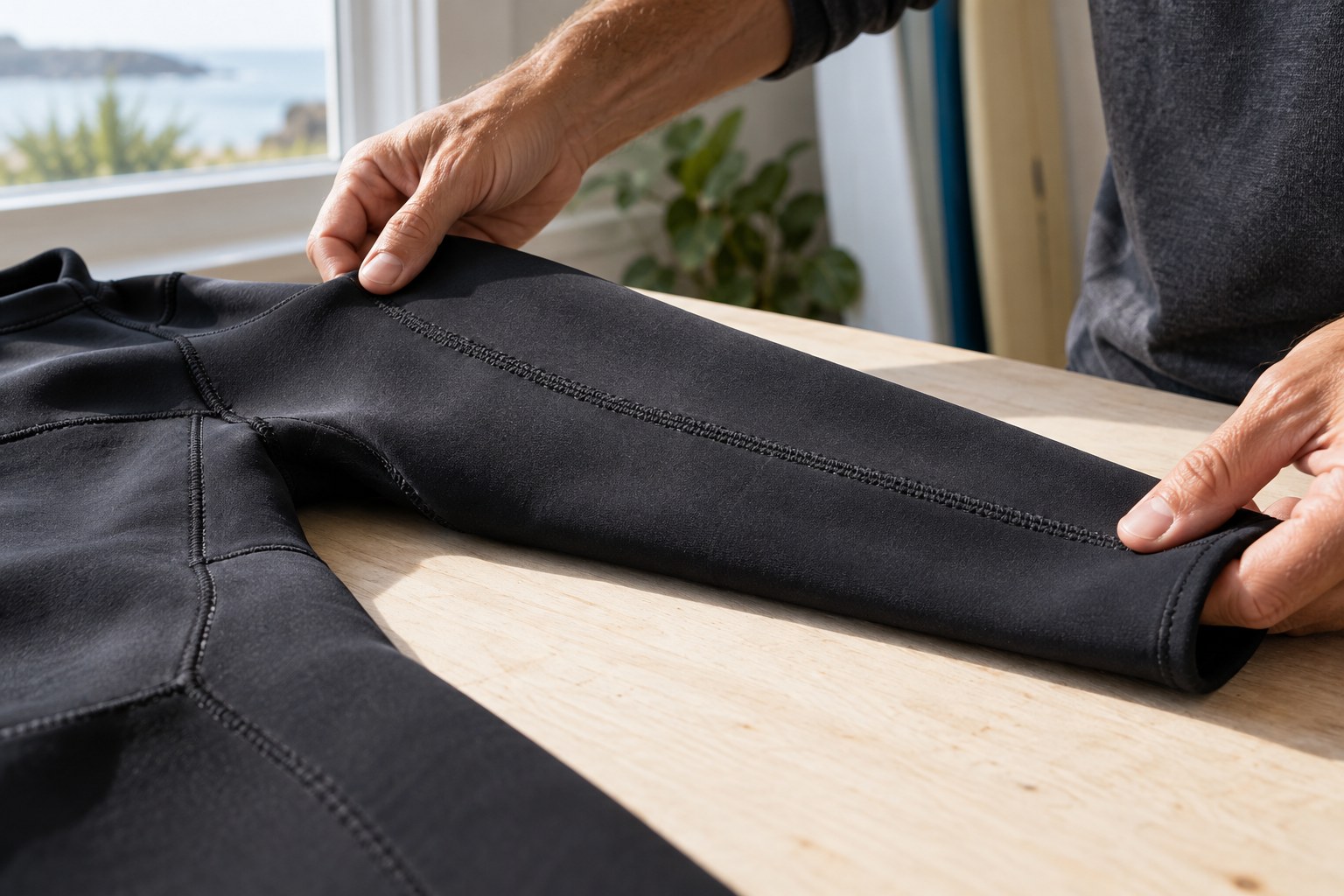
AI-generated illustration. Equipment details are illustrative; follow the instructions for your own item.
A seam inspection is easier when the suit is dry and laid out where both sides can be viewed. Start by identifying the seam construction described by the maker. Visible stitching, internal tape and glued joins do not all look the same, and a feature that is normal for one model may be unfamiliar on another.
Work through the garment in a consistent direction, from the neck and shoulders towards the arms, torso and legs. Turn it as the care instructions allow so that the lining can be checked too. Pay attention to high-movement areas and places where you have previously noticed discomfort or a change in how the suit behaves.
Look for lifting tape, loose threads, separation or a new rough edge. Do not pull at a loose end or stretch a questionable join to see how far it opens. The inspection should preserve the area for assessment, not enlarge it.
Compare with earlier photographs if you have them. A clear image of the whole panel and a closer image of the suspected change are more informative than a highly magnified photograph with no location. Add a note identifying the side and position, such as the inside of the left knee.
Distinguish appearance from diagnosis. A discoloured mark may be visible without its cause being obvious, while a small-looking separation can still need professional attention. Avoid declaring the suit sound solely because the photographs look neat.
If a seam needs advice, contact the maker or a repair service with the model and pictures. Ask about suitable repair options, turnaround and any preparation required. Do not apply an unfamiliar adhesive first and then ask whether it was compatible.
Keep a short list of areas that have been professionally repaired or recommended for monitoring. Before the next trip, check those locations along with the rest of the suit. An inspection done early enough to allow a repair is useful; the same discovery made while packing for an airport creates a problem that could have been addressed at home.
Care & storage
Identify the suit and its care instructions before setting up a rinse routine, especially when different wetsuits share the same household.
Care & storage
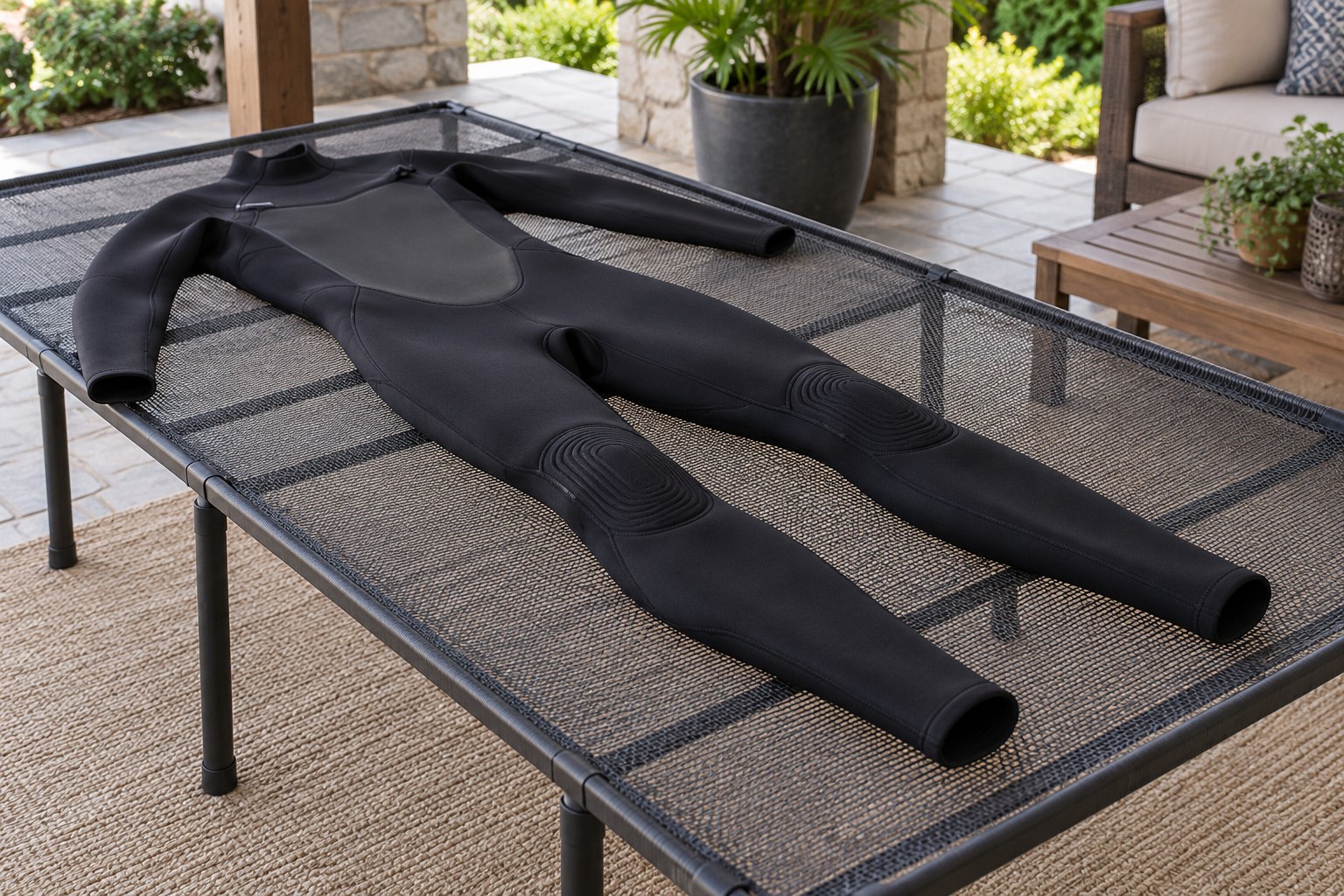
Support the wet suit over an appropriate broad support, and check the hanging arrangement before adding the garment's weight.