Care & storage
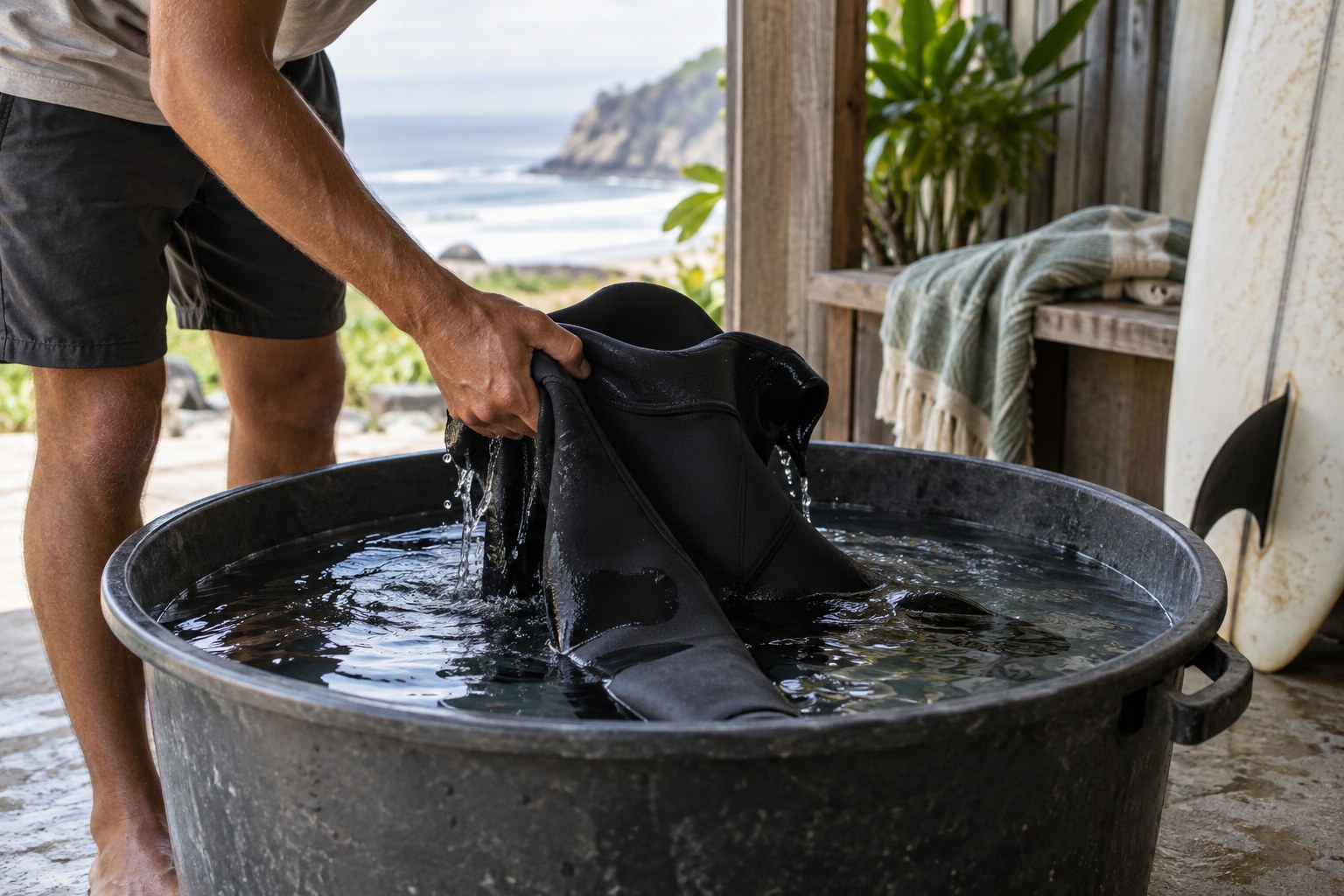
Rinse a wetsuit according to its care label
Identify the suit and its care instructions before setting up a rinse routine, especially when different wetsuits share the same household.
Care & storage
Send the repairer the suit's model and clear views of the damaged area before buying an adhesive or attempting to close the tear yourself.
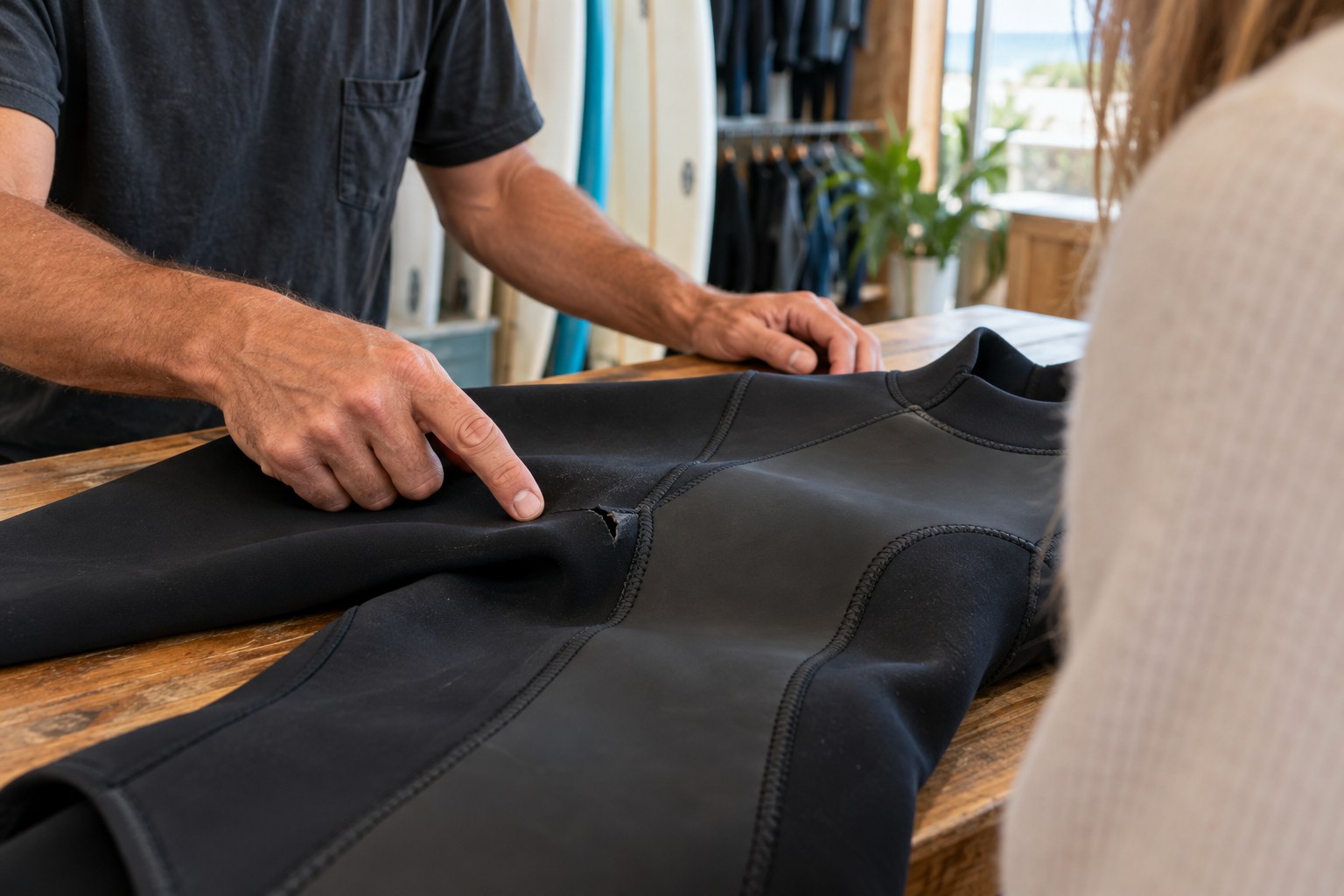
AI-generated illustration. Equipment details are illustrative; follow the instructions for your own item.
A tear in a wetsuit can involve the outer material, lining, seam or several layers. Its size in a photograph does not tell you which repair method is appropriate. Keep the suit out of use when the damage is uncertain and ask the manufacturer or a repairer about the actual area, especially near a closure or a heavily stressed join.
Begin by identifying the suit. Find the brand, model, size and any material information on the label. Add the purchase date if known and mention previous work in the same area. This gives the repairer a more useful starting point than a message asking whether 'neoprene glue' will work on an unidentified garment.
Lay the suit on a clean surface and take an overall view, then closer views from the relevant sides. Include a size reference nearby without placing a sharp or heavy object on the material. Do not pull the edges apart simply to show the opening more clearly.
Describe what happened if you know, but separate observation from inference. Saying the tear was noticed after changing is different from asserting that a seam failed because of a manufacturing defect. Accurate information helps the repairer ask the next question and preserves any relevant warranty discussion.
If you have already used a product, name it and describe when and where it was applied. Do not conceal that step. It may affect how the surface needs to be assessed or prepared.
Ask what the repair aims to restore, whether the area needs inspection in person and how long the process takes. Include any curing or waiting period the repairer specifies before use. A repair appointment that finishes the evening before a flight may not fit the complete process.
Consider the rest of the suit's condition as well. A repair may be sensible for an otherwise suitable garment, while repeated issues or a poor fit may justify a broader discussion. The decision should be based on the item in front of the repairer, not a fixed rule that every tear below a certain size is a home repair.
Keep the repair record and any care instructions afterwards. Photograph the finished area so you have a reference for future inspections, and follow the service's guidance before returning the suit to use.
Care & storage
Identify the suit and its care instructions before setting up a rinse routine, especially when different wetsuits share the same household.
Care & storage
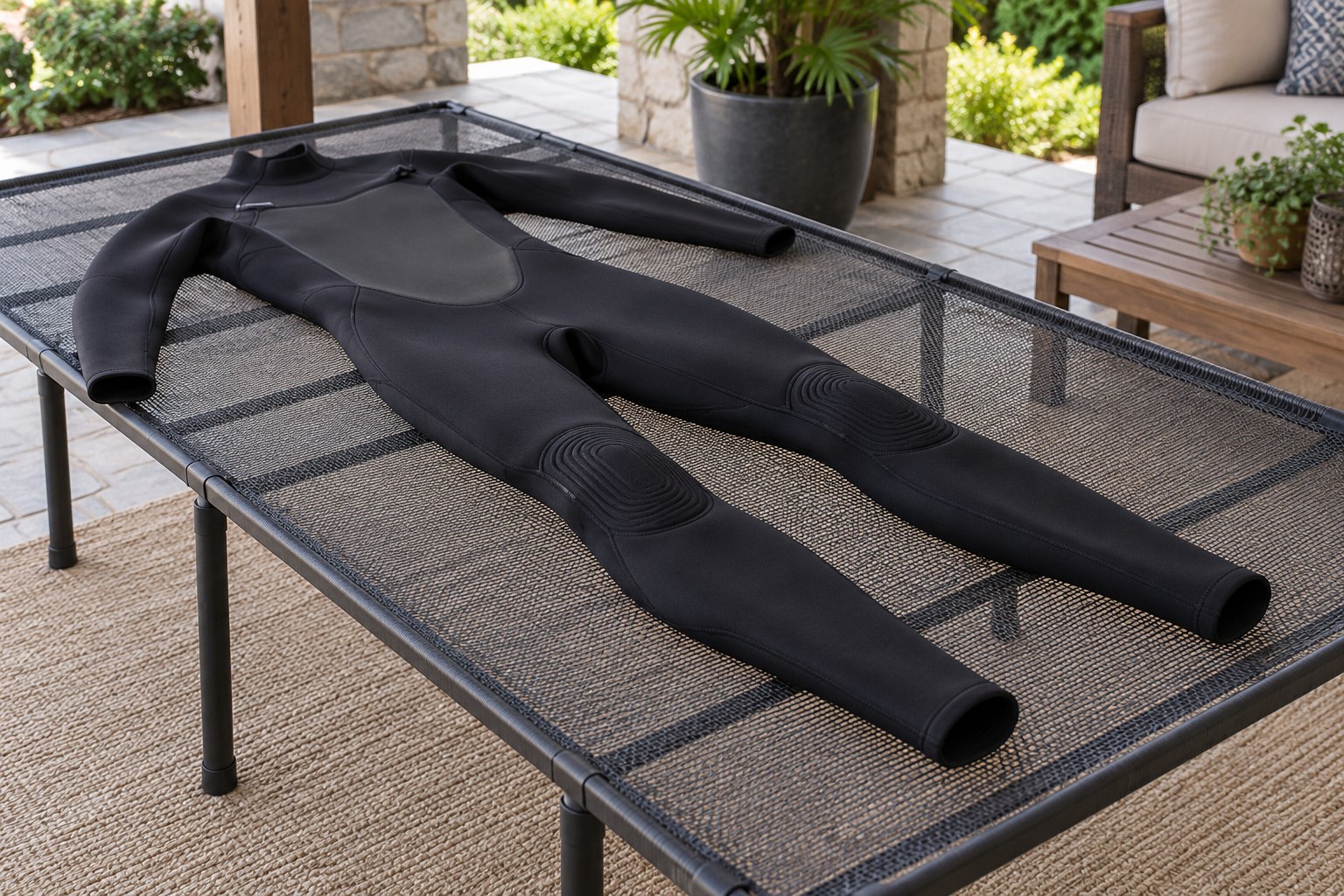
Support the wet suit over an appropriate broad support, and check the hanging arrangement before adding the garment's weight.