Care & storage
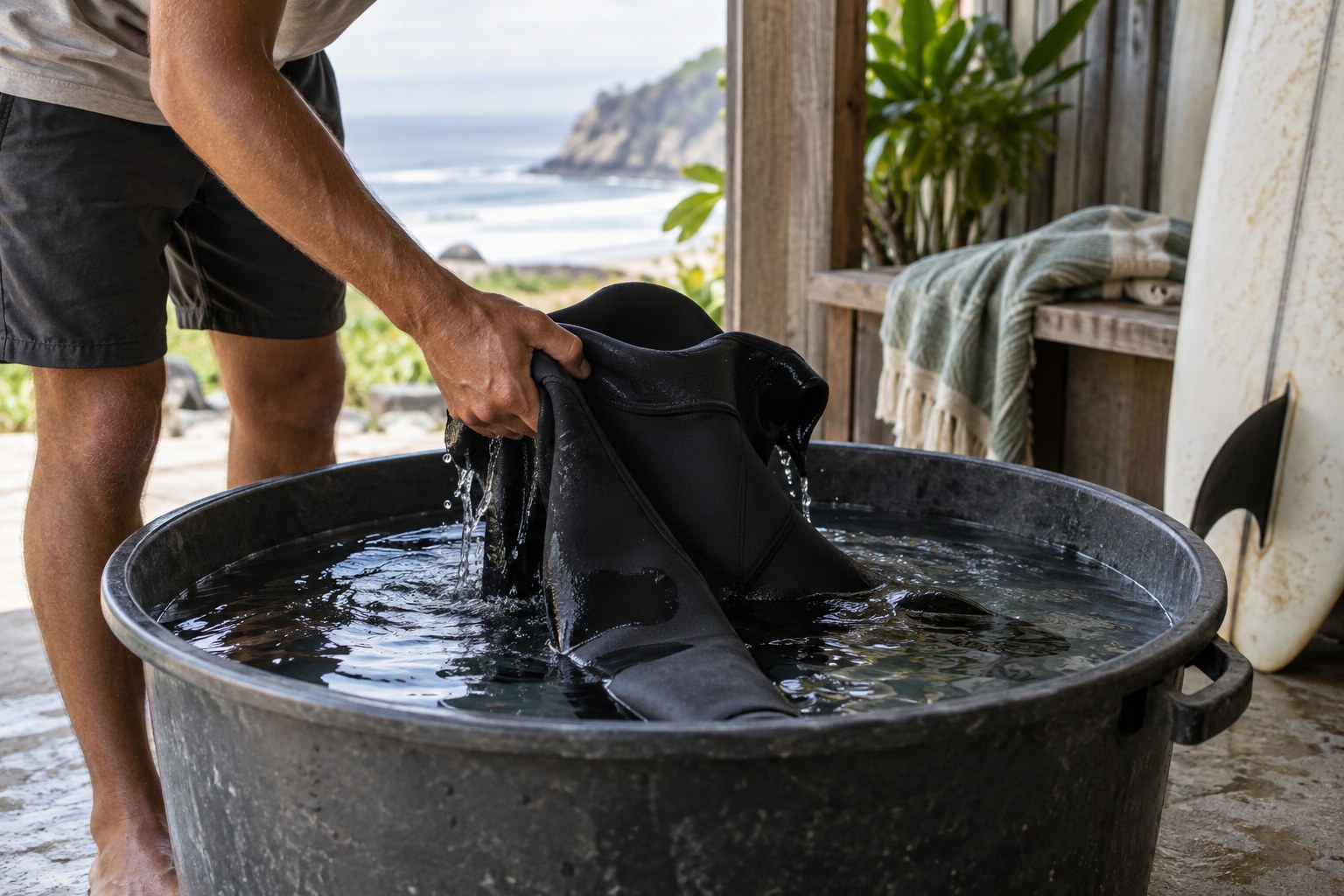
Rinse a wetsuit according to its care label
Identify the suit and its care instructions before setting up a rinse routine, especially when different wetsuits share the same household.
Care & storage
Send a clear overall view and a few well-lit detail photographs, with factual notes that locate the issue and explain what happened.
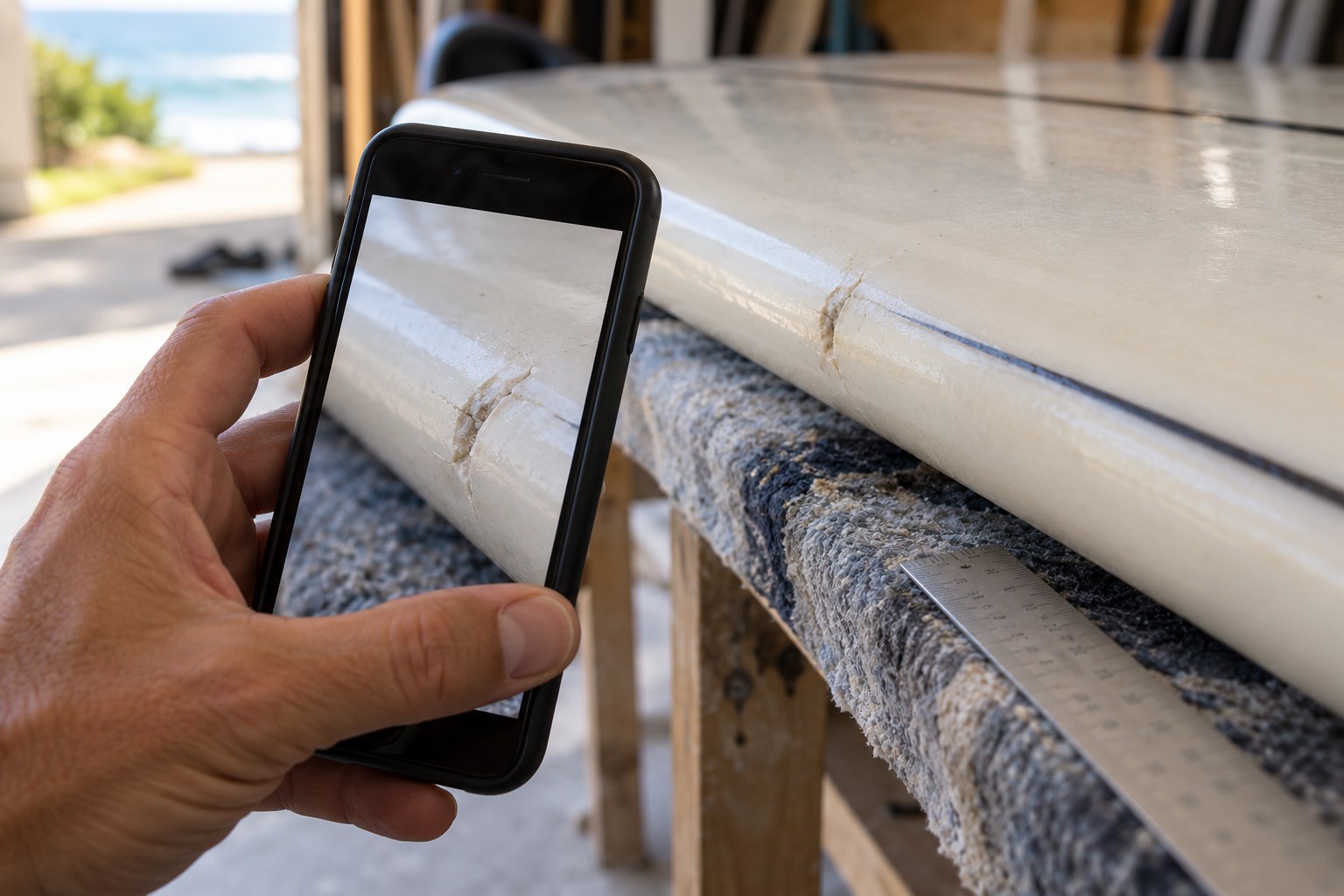
AI-generated illustration. Equipment details are illustrative; follow the instructions for your own item.
A repair enquiry is easier to answer when the photographs show where the problem sits on the equipment. Start with the whole item, then a medium view of the affected panel or area, then close details. A single extreme close-up can make a small mark look dramatic while leaving the repairer unable to identify the object.
Use even light and keep the camera steady. Avoid filters that change colour or contrast, and check that the focus is on the damaged area rather than your hand. Take another angle if a reflection hides the surface instead of assuming the repairer can see through the glare.
Place a suitable size reference nearby when it can be done without pressing on the item or introducing a sharp edge. Do not pull a tear open, bend a board or move a loose fitting simply to make the picture clearer. Preserve the condition you are asking someone to assess.
Identify the location in words. 'Inside left ankle seam' or 'bottom near the tail on the right side' gives a repairer a route through the images. Keep the terminology simple if you are unsure, and include an annotated copy only alongside the unmarked original.
Describe when the issue was noticed, what happened beforehand and any products or repairs already applied. Distinguish facts from guesses. A note saying the mark appeared after transport is more precise than declaring that a particular handler caused it without evidence.
Include the maker, model and material information you can verify, plus the date you hope to use the item again. Ask whether the photographs are sufficient for initial advice or whether the equipment needs inspection in person. Remote images have limits, particularly when internal damage or material condition is uncertain.
Keep the original files and the reply together. If the repairer requests another view, reproduce the same overall orientation so the new image can be compared easily. Do not treat an estimate based on photographs as permission to use damaged equipment unless the qualified assessor has clearly addressed that question for the actual item.
Care & storage
Identify the suit and its care instructions before setting up a rinse routine, especially when different wetsuits share the same household.
Care & storage
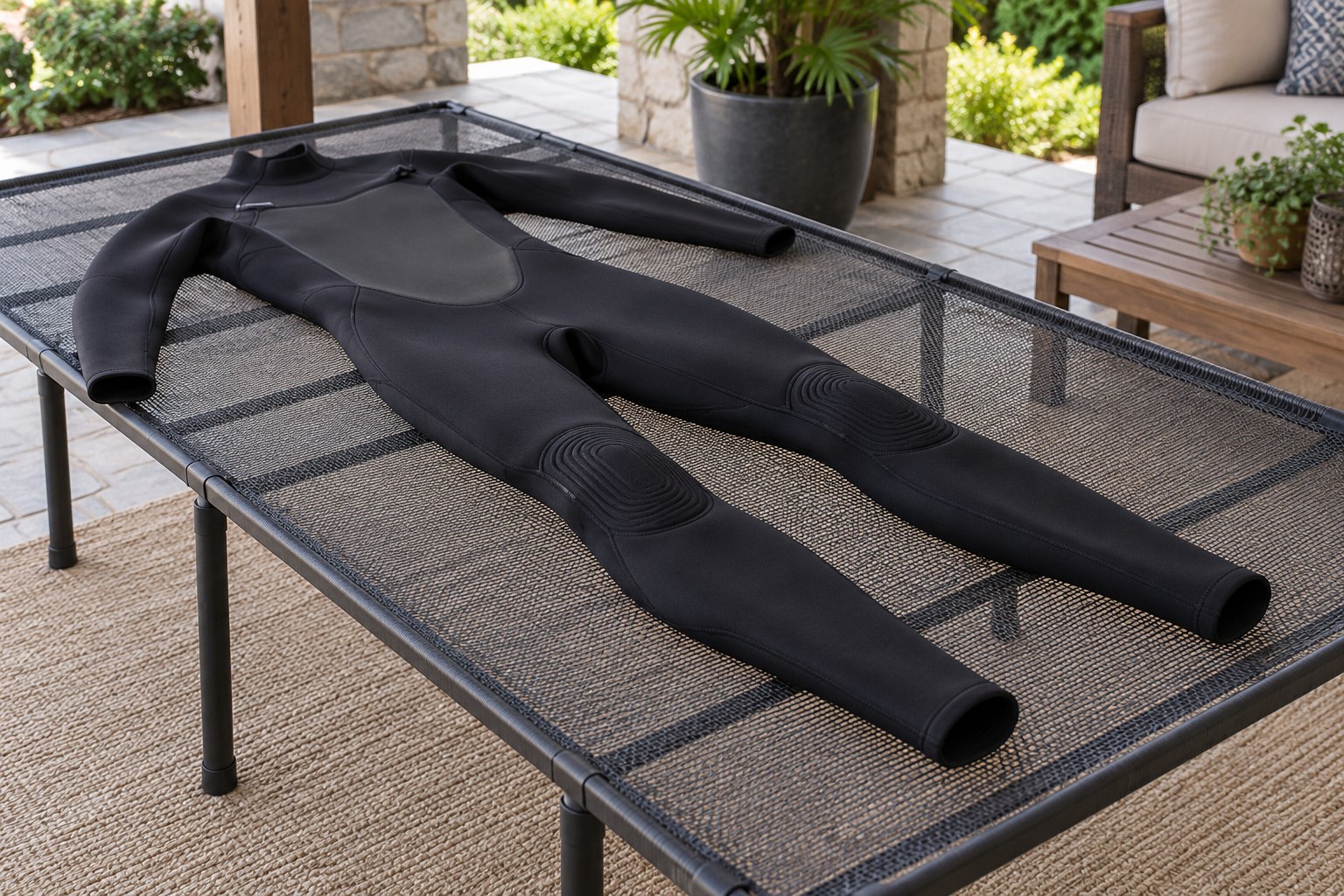
Support the wet suit over an appropriate broad support, and check the hanging arrangement before adding the garment's weight.