Care & storage
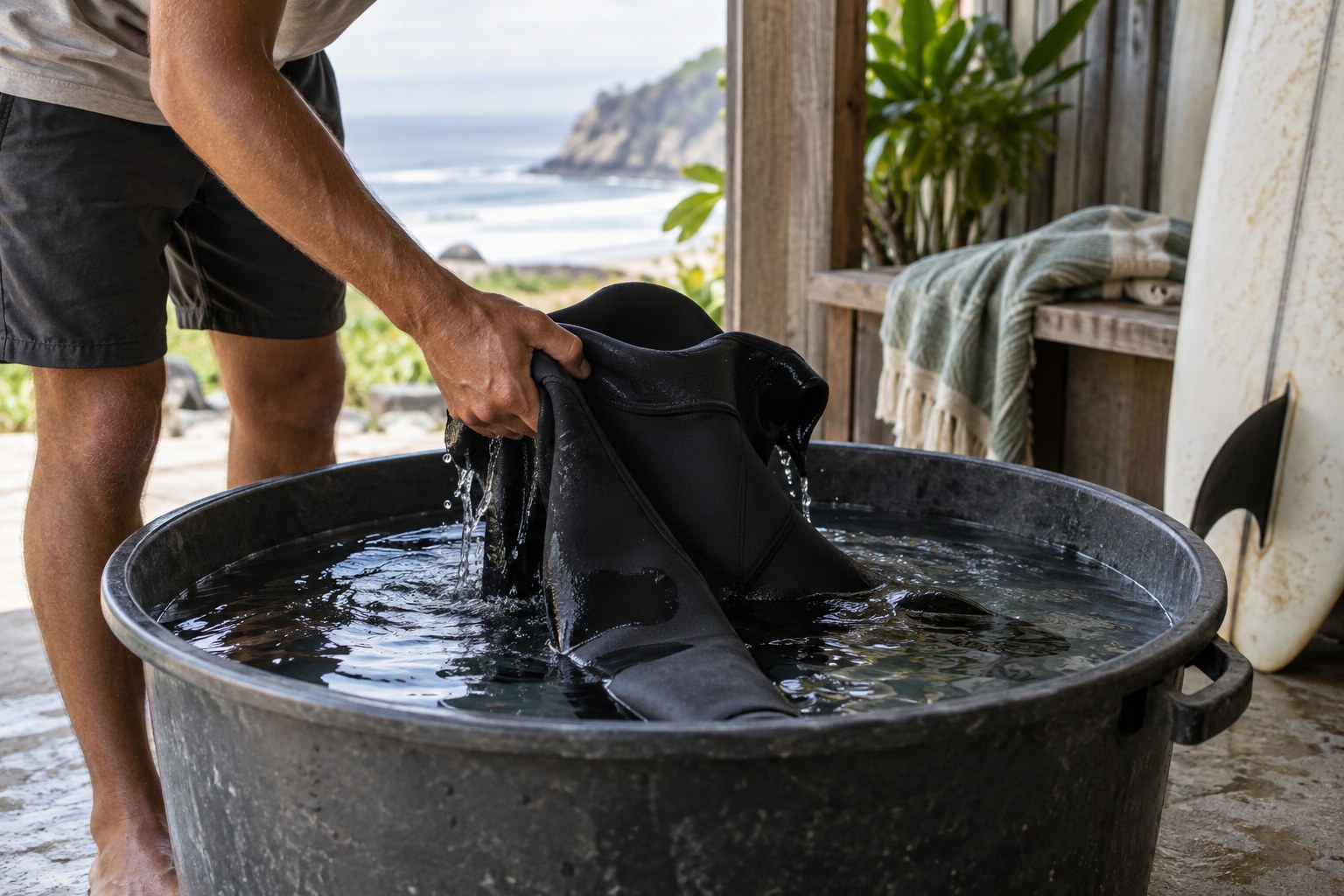
Rinse a wetsuit according to its care label
Identify the suit and its care instructions before setting up a rinse routine, especially when different wetsuits share the same household.
Care & storage
Work through equipment in the order it will be cleaned, assessed, repaired and stored, leaving a short action list for anything that is not ready.
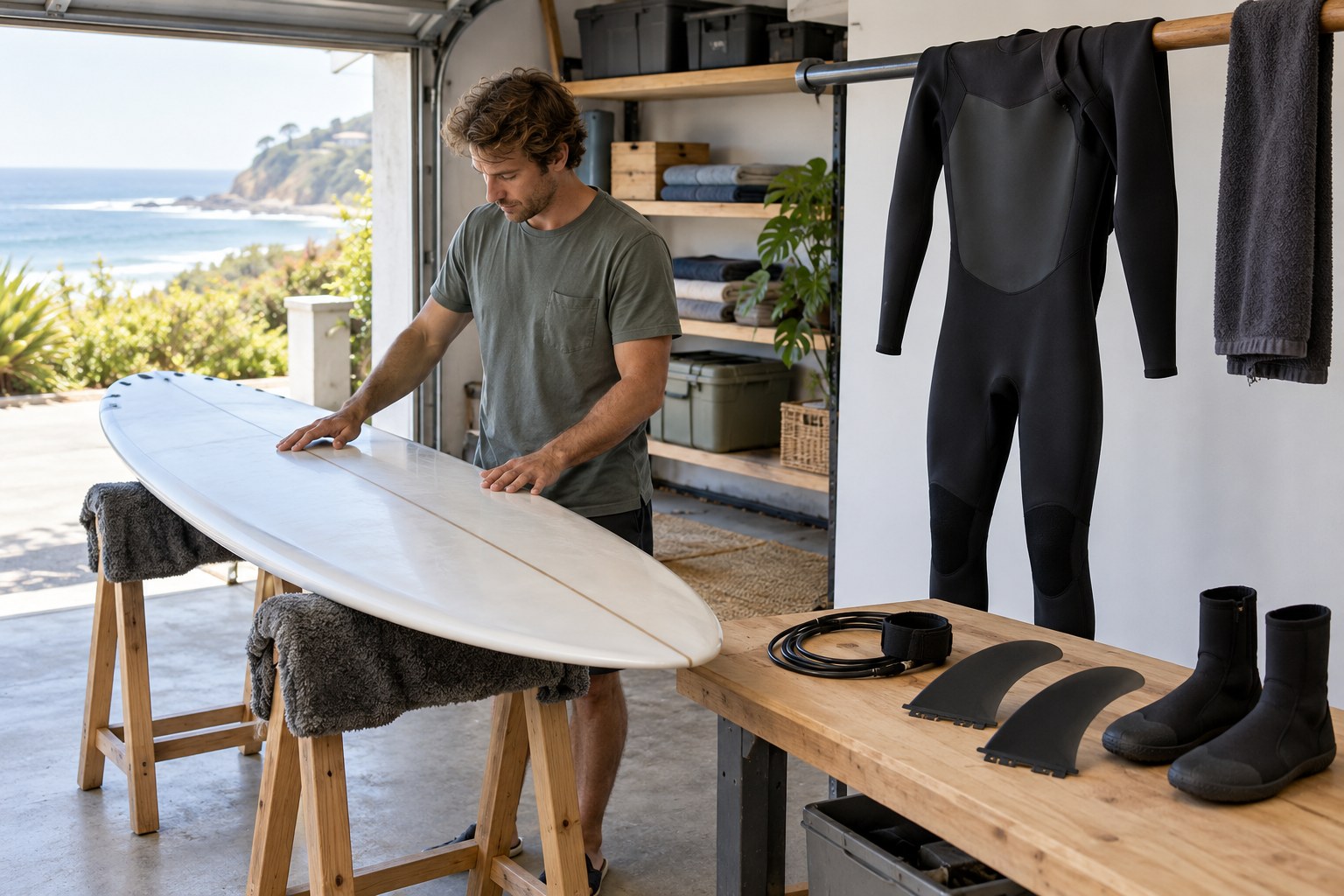
AI-generated illustration. Equipment details are illustrative; follow the instructions for your own item.
An end-of-season inspection is most useful before the equipment disappears into storage. Choose a time when the kit is clean and dry enough to handle, with space to lay items out separately. Gather the maker's instructions, a camera or phone and a simple list for notes. The task is to identify condition and next actions, not to prove that every item can survive another year.
Begin by separating equipment that appears ready for ordinary checks from equipment with a known issue. A damaged leash, uncertain board area or failing closure should not be mixed back into the ready-to-pack pile because the rest of the kit looks tidy. Give unresolved items a clearly marked place while advice is obtained.
Look over the board in good light, including rails, nose, tail and the visible fin-box areas. Compare any known marks with previous photographs. Do not press or flex a suspicious area to test it. Record changes and arrange an assessment when the condition is unclear.
Check the bag separately with the board removed. Empty pockets, inspect padding and look at handles, straps and closure areas. A board can be ready for storage while its bag needs drying or repair. Keep loose hardware and sharp accessories contained so they cannot create new marks when the board goes back inside.
Review the rack or storage support too. Confirm that its installation and contact points remain suitable under the maker's instructions. Equipment care does not stop at the board's surface if the place it rests has shifted or become crowded with unrelated objects.
For each wetsuit, check the label, seams, lining and closure without stretching questionable areas. Note repairs or advice needed. Look at boots and other garments separately, paying attention to parts that are easy to leave damp. Follow each item's own cleaning and storage instructions rather than putting everything through one laundry process.
Set aside any garment whose fit no longer suits you. A clean suit in good condition can still be the wrong size or uncomfortable for the intended use. Record that distinction so a future packing list does not mistake 'stored' for 'suitable'.
Check towels, changing clothing and wet bags after the main session equipment. Empty every pocket and container. Small forgotten objects, residue and moisture can create another task months later if they are sealed away now.
Use specific entries: 'ask repairer about left knee seam', 'replace specified fin key' or 'confirm rack pad part number'. Avoid broad notes such as 'sort surf stuff', which do not tell you what to do next. Add the provider or source to contact where you know it.
Separate essential repairs from optional purchases. A missing compatible fitting is a different priority from wanting a second towel. Set a date to resolve the essential items well before the next trip, allowing for shipping or repair time rather than leaving them until the departure week.
Place dry equipment in its recommended storage arrangement and keep the action list accessible outside any closed bag. Save photographs and repair information with the equipment record. Items awaiting assessment should remain identifiable so they cannot be borrowed or packed as if they were ready.
Before the next season, inspect again. Storage conditions, fit and plans can change, and the end-of-season record is a reference rather than a permanent approval. Its value is that you begin the next preparation knowing what was checked, what changed and which questions still need an answer.
A household inspection can be divided across two evenings. Use the first to identify and photograph issues, then contact the relevant makers or repairers before the second. Use the second to finish approved care and organise storage. This prevents cleaning and packing from racing ahead of unanswered questions.
Keep uncertain items in their own group with a brief note attached to the storage container, not directly to delicate material. The note should identify the question and the next contact, rather than simply saying broken. If you decide to retire an item, follow the appropriate disposal or reuse arrangements and remove it from any packing checklist so it cannot reappear as an assumed spare.
Care & storage
Identify the suit and its care instructions before setting up a rinse routine, especially when different wetsuits share the same household.
Care & storage
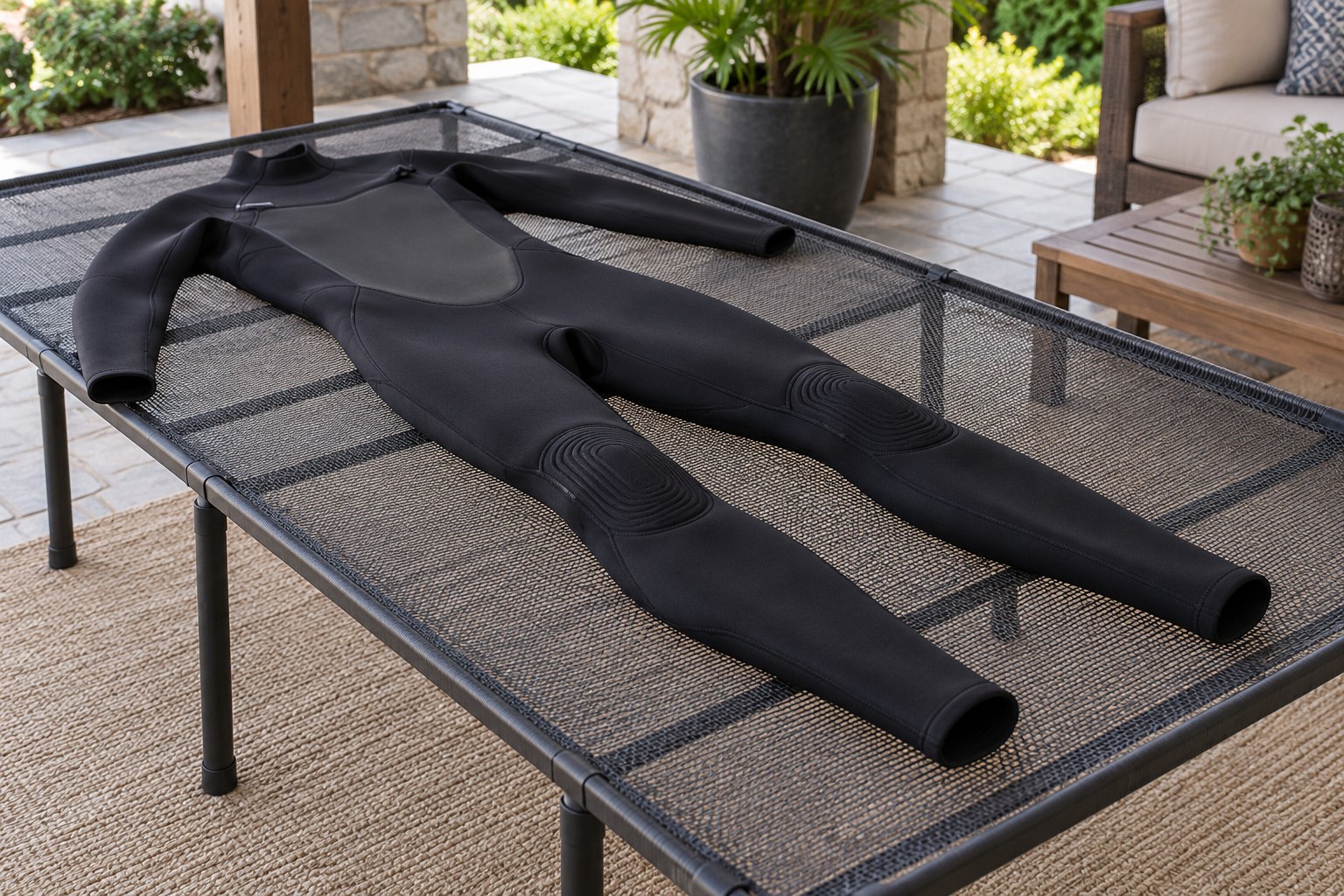
Support the wet suit over an appropriate broad support, and check the hanging arrangement before adding the garment's weight.