Care & storage
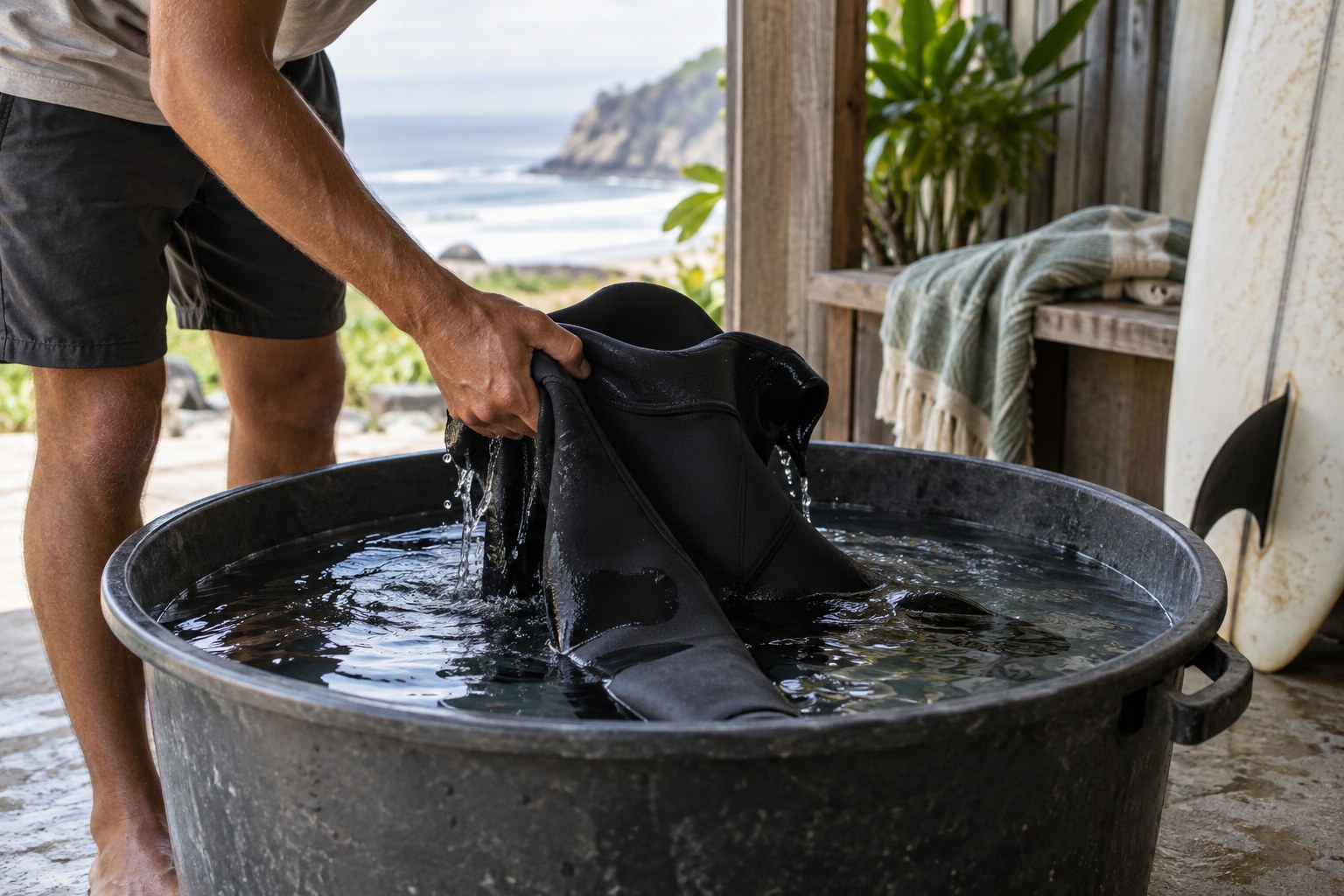
Rinse a wetsuit according to its care label
Identify the suit and its care instructions before setting up a rinse routine, especially when different wetsuits share the same household.
Care & storage
Bring equipment out early enough to inspect, resolve missing parts and confirm fit before the first booked session creates a deadline.
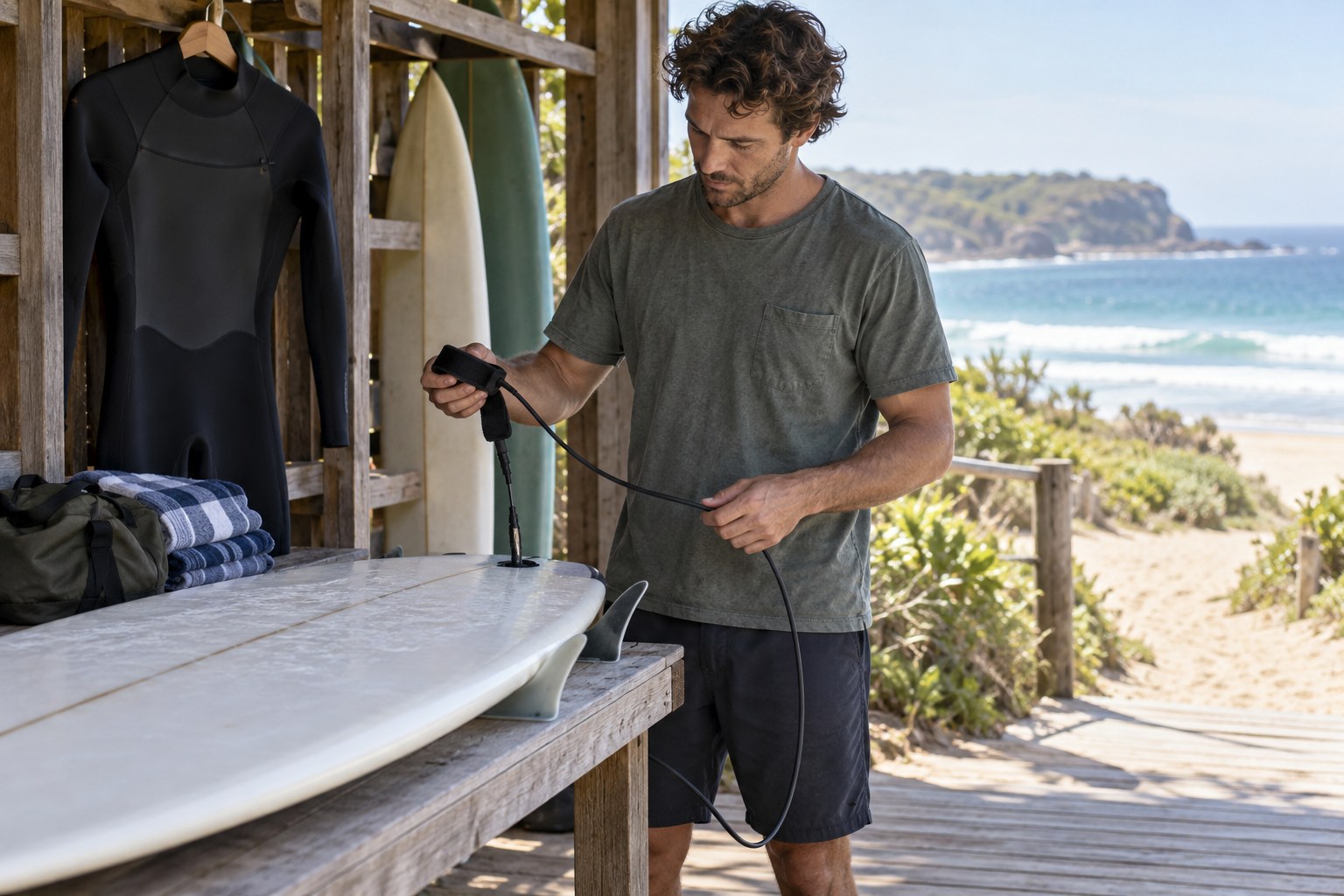
AI-generated illustration. Equipment details are illustrative; follow the instructions for your own item.
Returning to the water after a break starts before the day you load the car. Take stored equipment out with enough time to inspect it and address problems. A bag that was packed neatly at the end of the last trip may contain an unresolved repair, a component borrowed for another board or clothing that no longer fits as expected.
Open your previous equipment notes if you have them. Check whether any item was marked for replacement or assessment. Do not assume the task was completed merely because the item is back on the shelf. Confirm the repair or replacement record, then look at the actual equipment.
Match the board, fins and other components to their instructions. Check that parts belong together and that the required tools are present and undamaged. A mixed box of familiar-looking screws is not a compatibility check. If the setup has changed, obtain the correct guidance before installing anything.
Inspect the board and any known repair areas without forcing or flexing them. Check the carrying bag, rack or transport system as separate items. If something is damaged or uncertain, arrange an assessment rather than making the first session a test of whether it will hold.
Take wetsuits and clothing out of their storage folds or supports according to their care guidance. Check seams, closures and lining, then assess fit in the manner the maker recommends. Do not pull harder at a zip to make an old size work. A change in fit needs to be resolved before relying on the garment for a session.
Lay out the dry change, towel, wet transport container and small personal items. Check that the container is clean and dry and that the closures function normally. Refill or replace only items that are actually needed, and check any product label before using something that has been stored for a long period.
Revisit the transport plan. A different vehicle or a new board bag may require a different approved arrangement. Measure and confirm what matters rather than assuming last year's fit carries over. Leave time to obtain any specified missing component.
If you are returning to lessons, tell the provider about the break and your previous experience. Ask about suitable session arrangements and supplied equipment. Stored kit being ready does not establish that your skills or the day's conditions match an independent session.
Before packing, look at the items you set aside during inspection. Each should have a clear outcome: assessed and ready under the relevant guidance, replaced, or excluded from the trip. Do not put an uncertain item back into the bag simply because there is no time left to ask about it.
Save updated specifications and repair notes for later. The preparation is complete when the equipment and arrangements are known well enough to follow, with uncertainties resolved before they become beachside decisions. An early, methodical return routine makes that possible without needing to buy an entirely new set of kit.
Care & storage
Identify the suit and its care instructions before setting up a rinse routine, especially when different wetsuits share the same household.
Care & storage
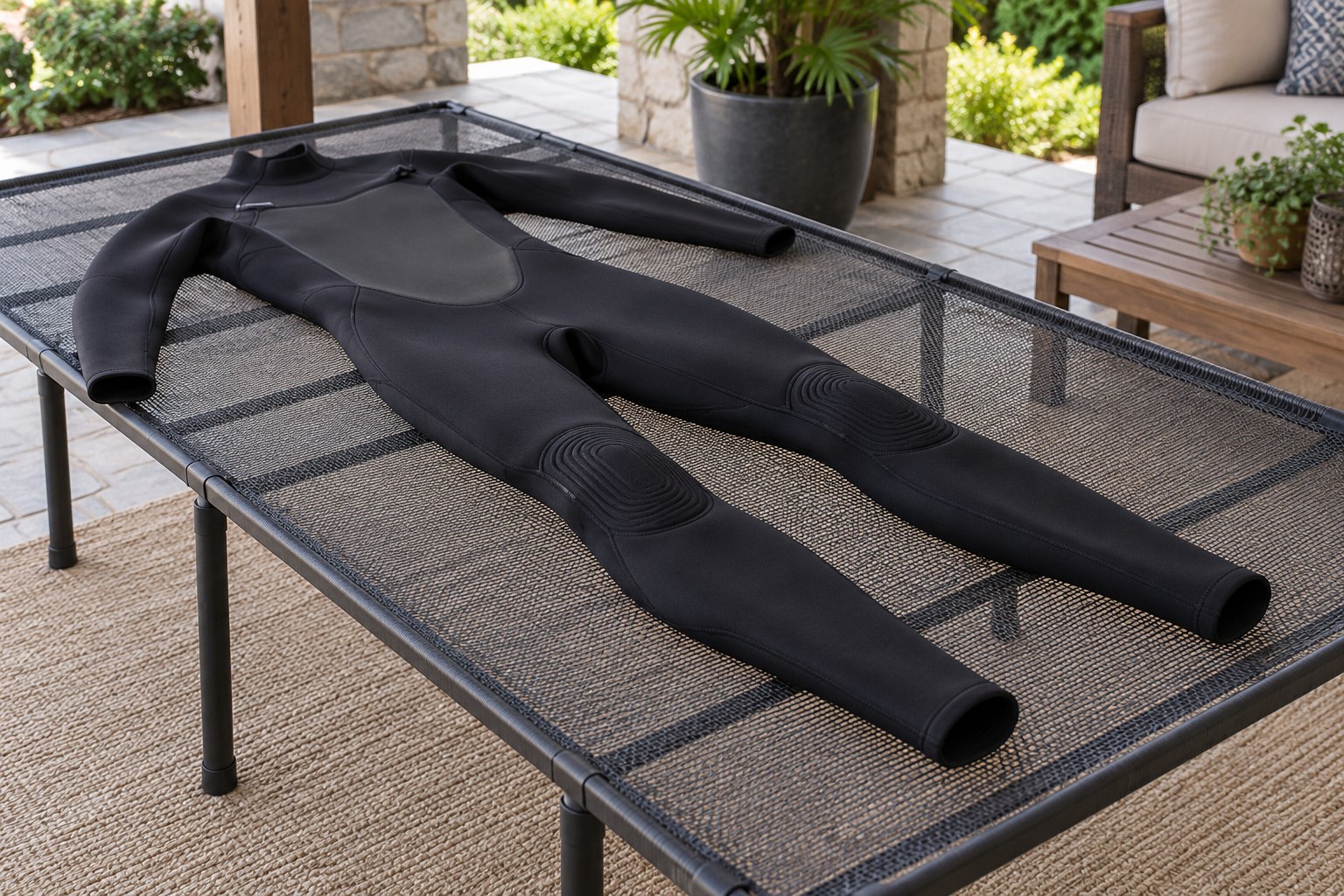
Support the wet suit over an appropriate broad support, and check the hanging arrangement before adding the garment's weight.