Care & storage
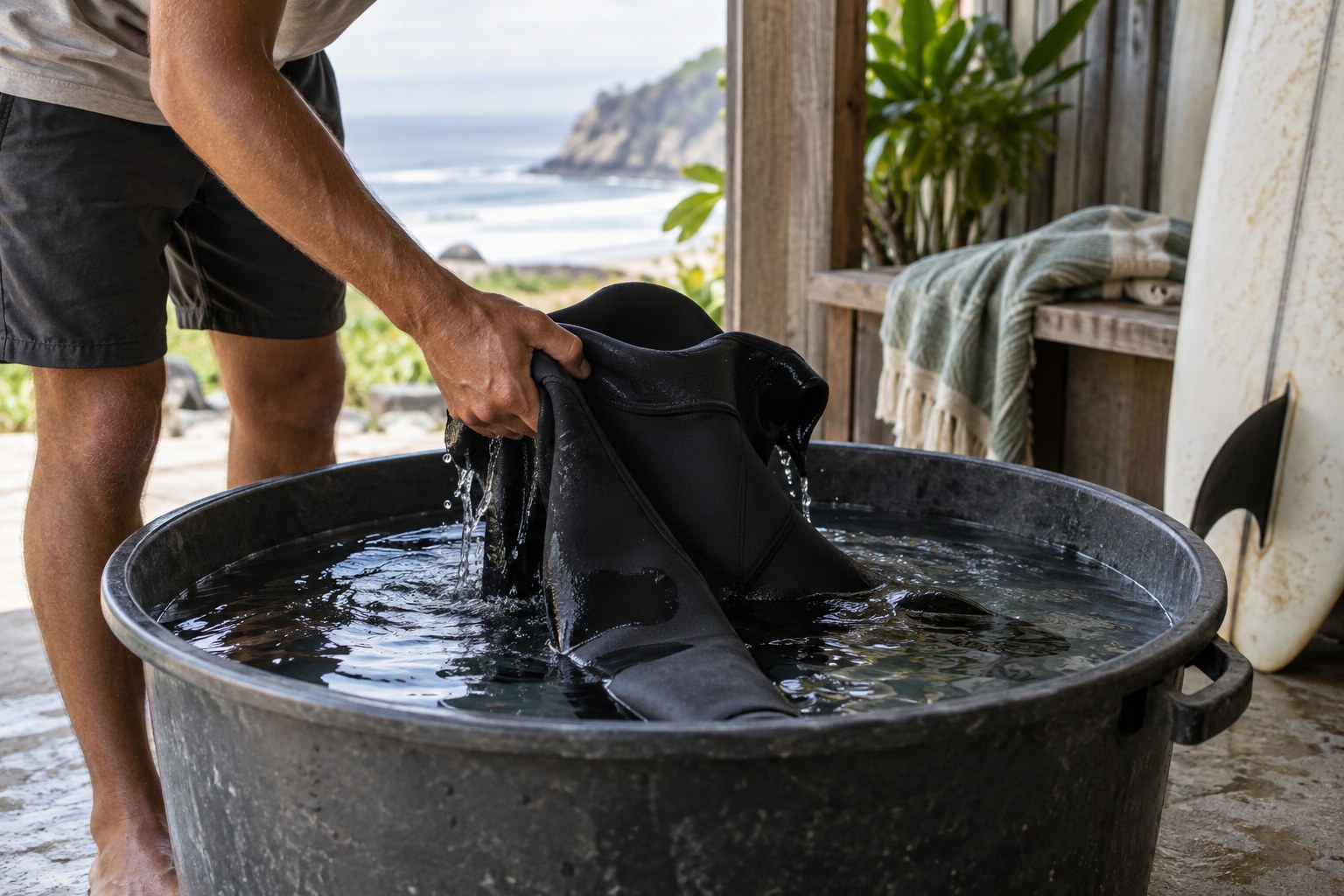
Rinse a wetsuit according to its care label
Identify the suit and its care instructions before setting up a rinse routine, especially when different wetsuits share the same household.
Care & storage
Check the board's surface and maker guidance before choosing a wax-removal method, and keep heat, sharp tools and unknown solvents out of an improvised routine.
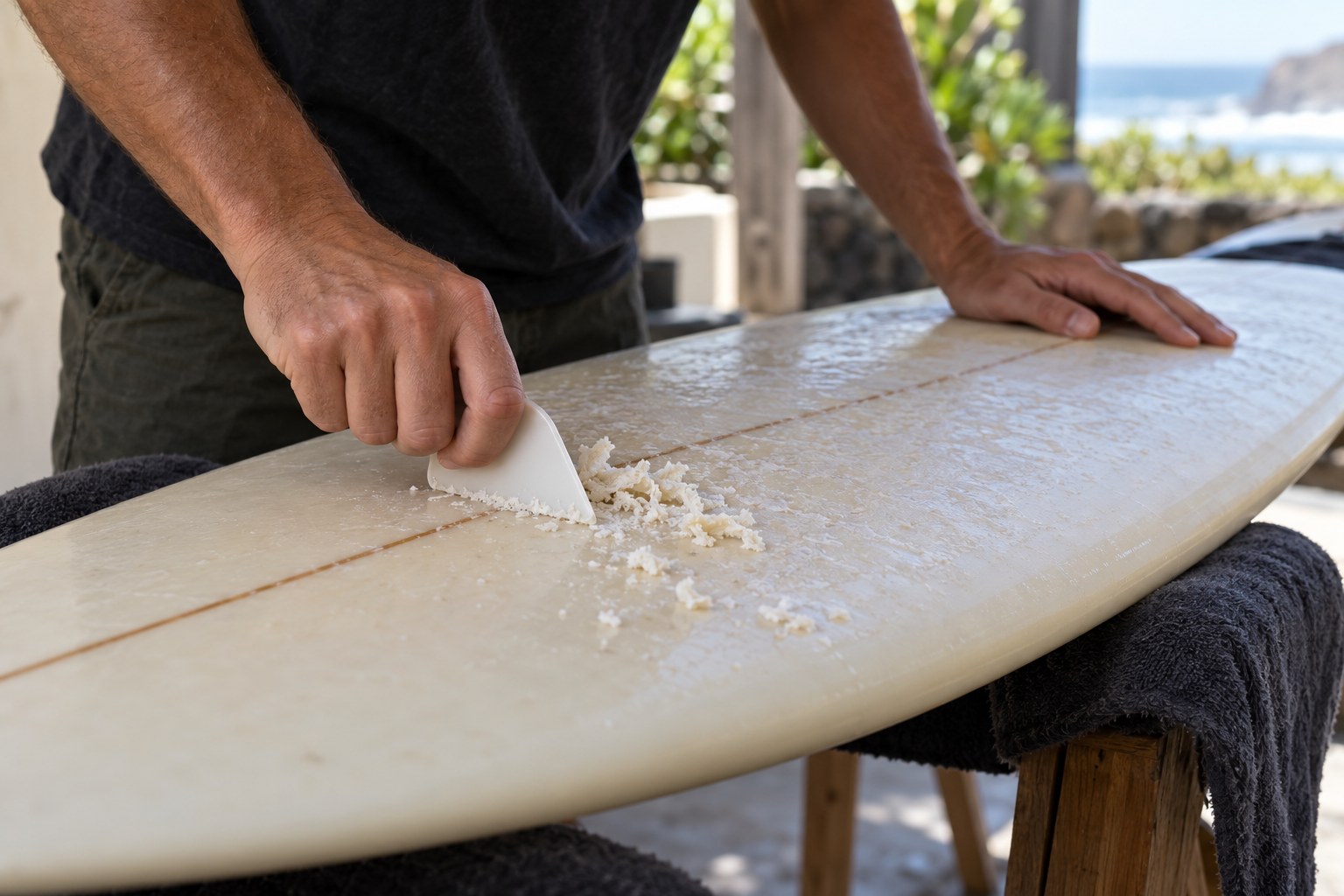
AI-generated illustration. Equipment details are illustrative; follow the instructions for your own item.
Old wax can hide the surface you want to inspect or make a new application uneven. Before removing it, identify the board's construction and finish. A method described for one hard board should not be transferred automatically to a foam deck or a different coating. Look for the board maker's care instructions and the wax product's advice.
Set the board on a stable, padded support that does not load the fins or leave the nose and tail exposed to knocks. Work where removed material can be collected rather than scattered into sand or a drain. Clear the area so you do not have to move the board around sharp tools or other equipment halfway through.
If the maker permits a purpose-designed wax scraper, inspect its edge before use and follow the recommended technique. A damaged edge or an improvised metal blade can create a problem more serious than old wax. Avoid adding pressure simply because a patch is reluctant to lift.
Do not heat the board in direct sun, a hot car or with a powered heat source as a shortcut. Follow the board's temperature precautions. Likewise, do not substitute household solvents for a product whose compatibility with the finish has been confirmed. A cleaner described as powerful is not necessarily appropriate for the surface beneath the wax.
Collect removed wax as you work and dispose of it under local arrangements. Keep scraps away from fabric bags and clothing, where they can create another cleaning task. If the process reveals a questionable mark or opening, stop and obtain advice before covering it with fresh wax.
Once the surface has been cleaned by the approved method, inspect it in good light. Photograph any area you need a repairer to assess. Do not assume that a smooth-looking patch is sound merely because the wax is gone.
Apply new wax only when the board and product instructions allow and the board is ready for use. Keep the product details with your equipment notes if you want to repeat the same arrangement later. The aim is a suitable surface for the next session, not a rushed cosmetic result achieved by an uncertain cleaning method.
Care & storage
Identify the suit and its care instructions before setting up a rinse routine, especially when different wetsuits share the same household.
Care & storage
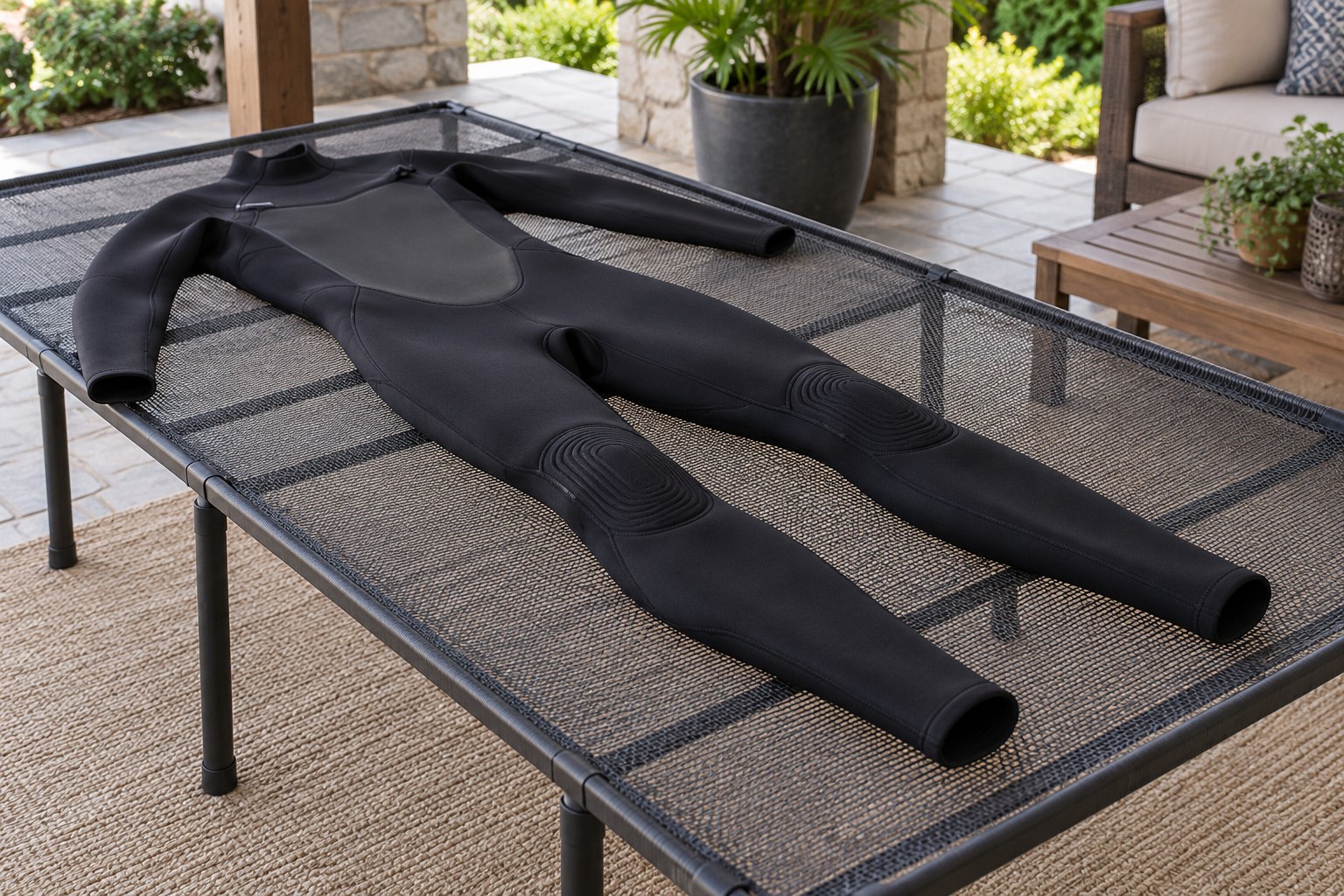
Support the wet suit over an appropriate broad support, and check the hanging arrangement before adding the garment's weight.