Care & storage
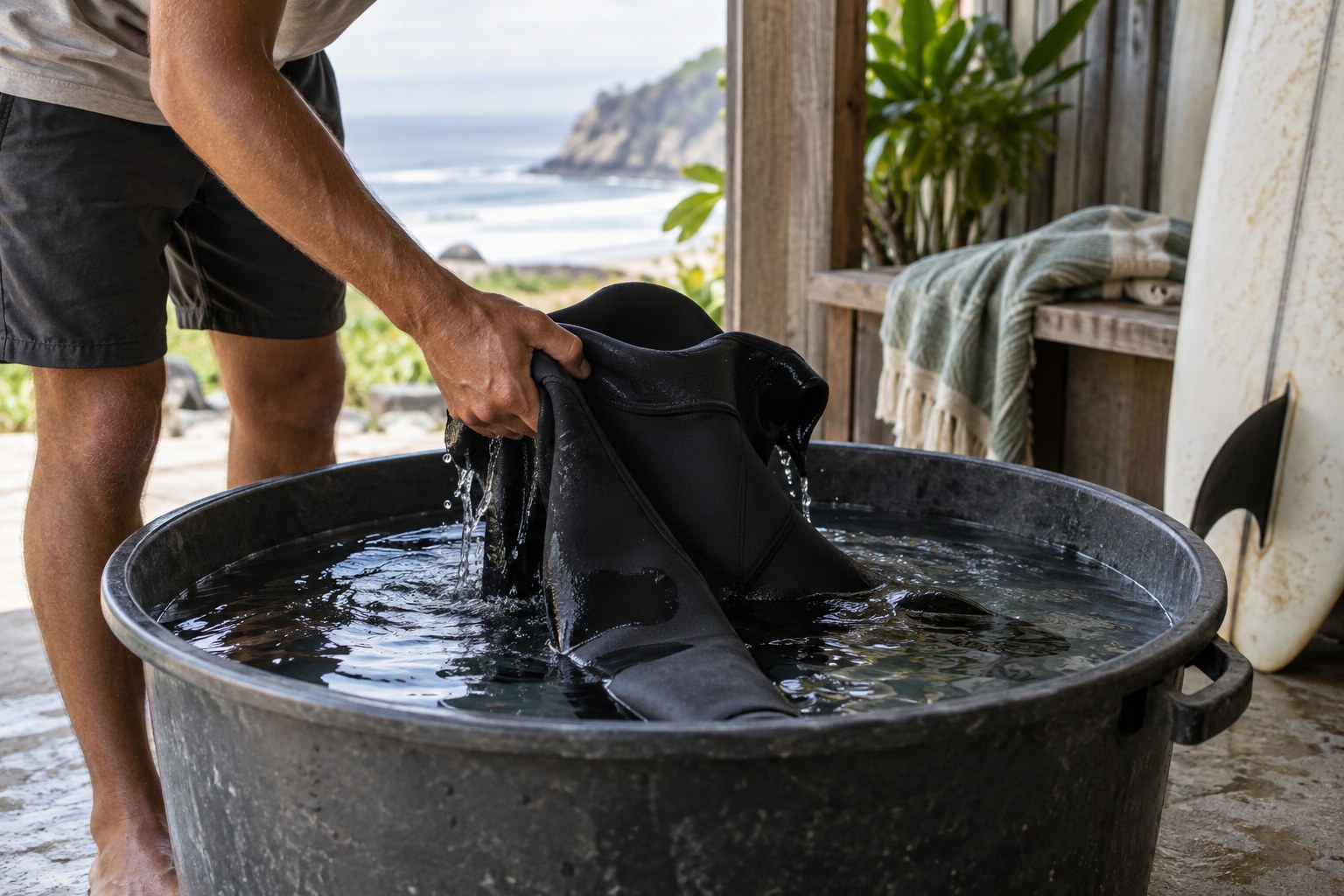
Rinse a wetsuit according to its care label
Identify the suit and its care instructions before setting up a rinse routine, especially when different wetsuits share the same household.
Care & storage
Let a cleaned leash dry in a relaxed arrangement, and keep storage separate from the inspection needed before using it again.
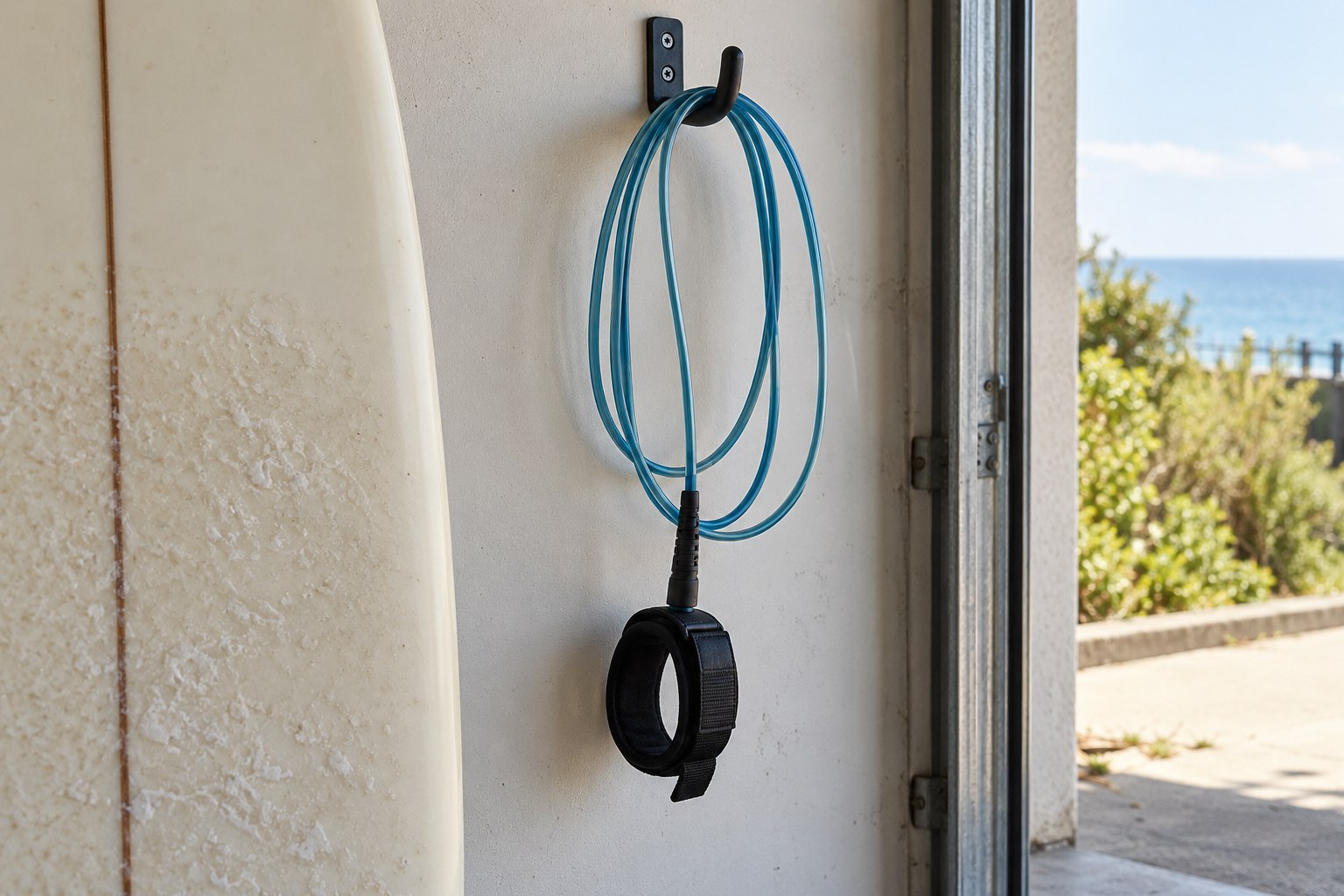
AI-generated illustration. Equipment details are illustrative; follow the instructions for your own item.
A leash should not disappear into a tightly knotted bundle after a session. Read the manufacturer's care instructions and follow its cleaning and drying guidance. Arrange the cord without sharp bends or a load hanging from one small section, and keep it away from conditions the maker warns against.
Creatures' leash-care guidance advises rinsing after use and avoiding wrapping the leash tightly around a board. Use the instructions for your own model, especially when considering storage and replacement. A tidy storage shape is not evidence that the leash is still suitable for use.
Lay out or support the leash in a permitted relaxed arrangement so the cuff and attachments are not trapped inside a wet coil. Keep hook-and-loop surfaces from catching other delicate equipment. Do not attach a heavy wet garment to the leash as an improvised drying line.
Look at the cord, cuff, swivels and attachment areas while the item is accessible. Record visible changes such as cuts, damaged stitching or a fastening that no longer works normally. Do not stretch or load-test it aggressively to decide whether it can survive another session.
If a problem is uncertain, ask the maker about replacement rather than attempting to restore an essential component with an improvised knot or adhesive. Storage care cannot reverse every kind of wear, and a repaired-looking surface does not establish the condition of the whole assembly.
Store different leashes so their length, intended use and condition can be distinguished. Label the storage place or keep a separate record rather than writing with an unapproved product on the cord. An item waiting for advice should be separated from gear ready to use.
When taking it out again, repeat the pre-use inspection recommended by the manufacturer and confirm it suits the board and activity. Do not assume that the leash belongs to a particular board simply because it was packed in the same bag.
The aim is a routine that avoids unnecessary tangling and makes the equipment easy to inspect. It does not replace local safety advice or make a leash a substitute for the ability and judgement required for the session.
Care & storage
Identify the suit and its care instructions before setting up a rinse routine, especially when different wetsuits share the same household.
Care & storage
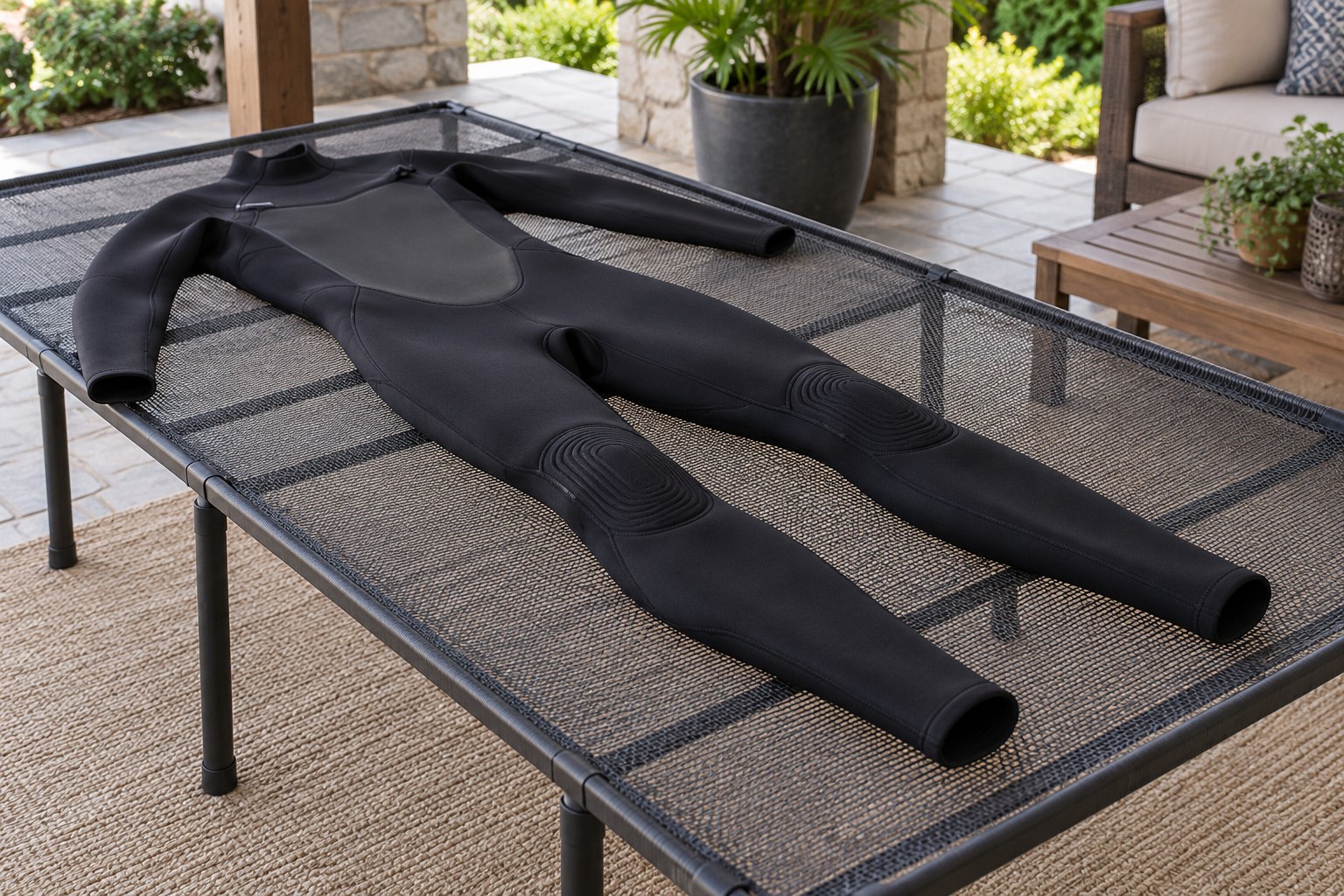
Support the wet suit over an appropriate broad support, and check the hanging arrangement before adding the garment's weight.