Care & storage
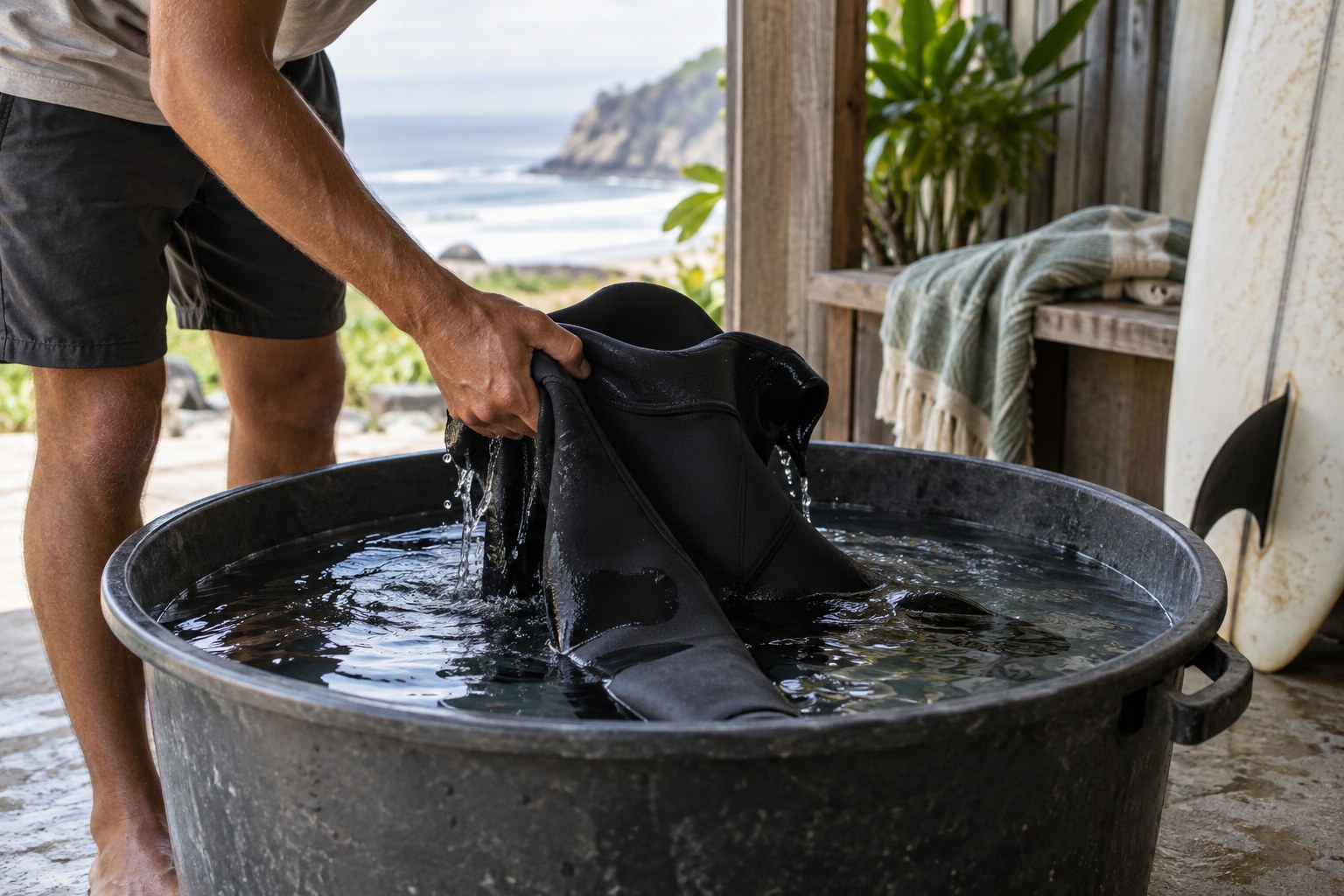
Rinse a wetsuit according to its care label
Identify the suit and its care instructions before setting up a rinse routine, especially when different wetsuits share the same household.
Care & storage
Choose a stable, compatible support in a cool storage location, and check the surrounding space for heat, movement and concentrated contact points.

AI-generated illustration. Equipment details are illustrative; follow the instructions for your own item.
A surfboard's storage position needs to work when nobody is watching it. A board balanced neatly against a wall can still be vulnerable to a door, a pet or someone reaching for another item. Start by identifying the maker's storage guidance and choosing a rack or support designed for the board's dimensions and weight.
Softech's softboard-care guide recommends a cool, dry location away from direct sun and heat. Check the corresponding instructions for your own board rather than assuming that a bag or indoor address removes every environmental concern. A garage, conservatory or vehicle can experience conditions different from the room where you planned the storage.
Check the contact points and the rack's installation requirements. Pads should be in the intended places and mounting hardware should suit the wall or structure as specified. Do not improvise load-bearing fixings because the board feels light when held by hand.
Keep fins, rails and other vulnerable areas from being used as accidental supports. Leave enough clearance to lift the board out without dragging it against shelves or sharp corners. If several boards share a rack, make sure removing one does not require shifting another into an unstable position.
Avoid stacking unrelated objects on the board or tightening storage straps in a way the support system does not permit. A tidy-looking arrangement can still concentrate pressure where it was not intended. Store small tools and loose hardware separately.
Sunlight can reach a different part of a room in another season, and a nearby heater may only be used in winter. Look at the storage location under those conditions rather than treating the first inspection as permanent.
After a trip, inspect and care for the board before returning it to the rack. Keep the bag dry if it is stored with the board, and follow any guidance about ventilation. A storage area should make routine checks easier, not hide the equipment so thoroughly that damage or dampness goes unnoticed until departure day.
If the location is shared, agree how the board is handled and leave the access route clear. The most useful rack is one that remains suitable during ordinary household movement, not only in a carefully arranged photograph.
Care & storage
Identify the suit and its care instructions before setting up a rinse routine, especially when different wetsuits share the same household.
Care & storage
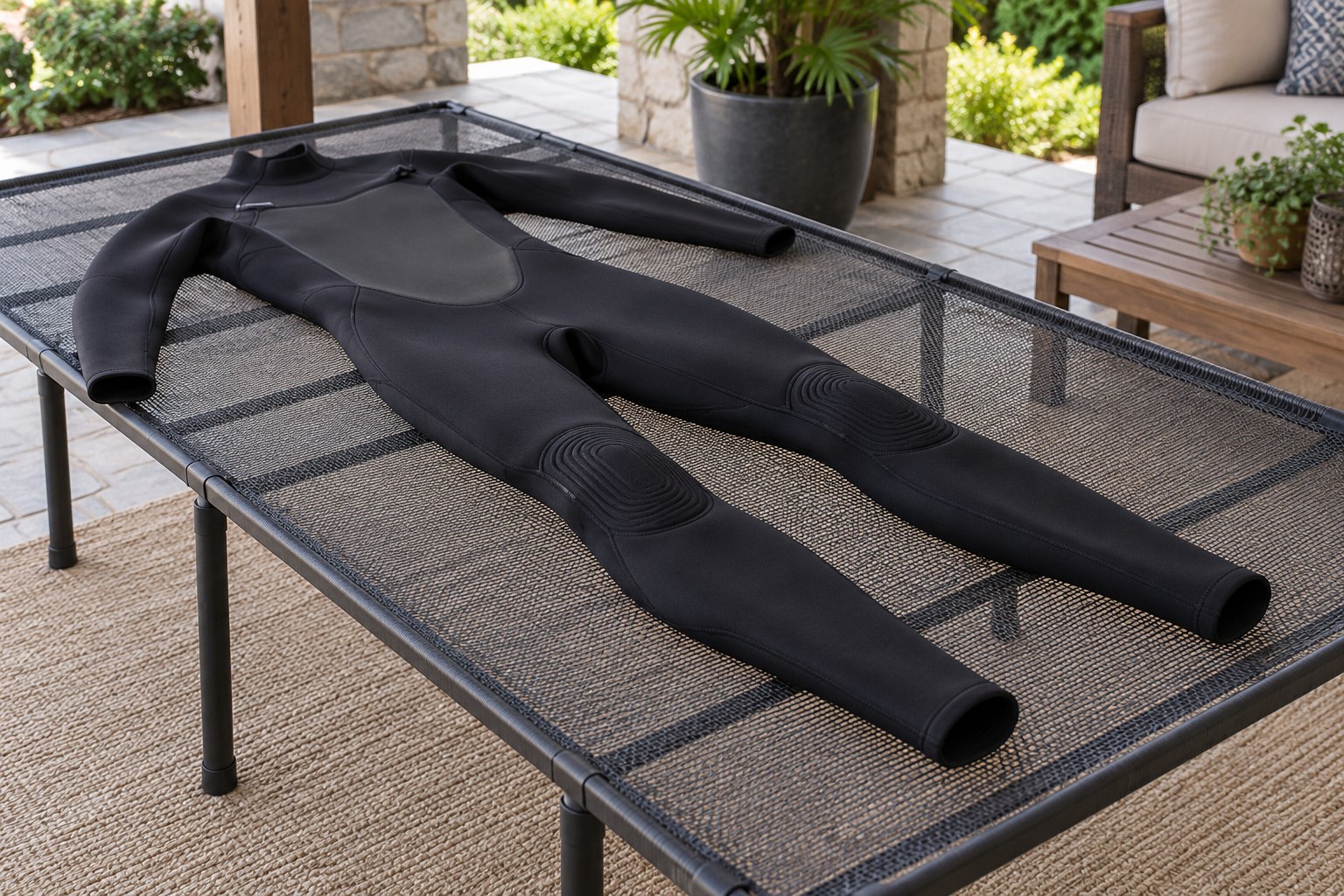
Support the wet suit over an appropriate broad support, and check the hanging arrangement before adding the garment's weight.