Care & storage
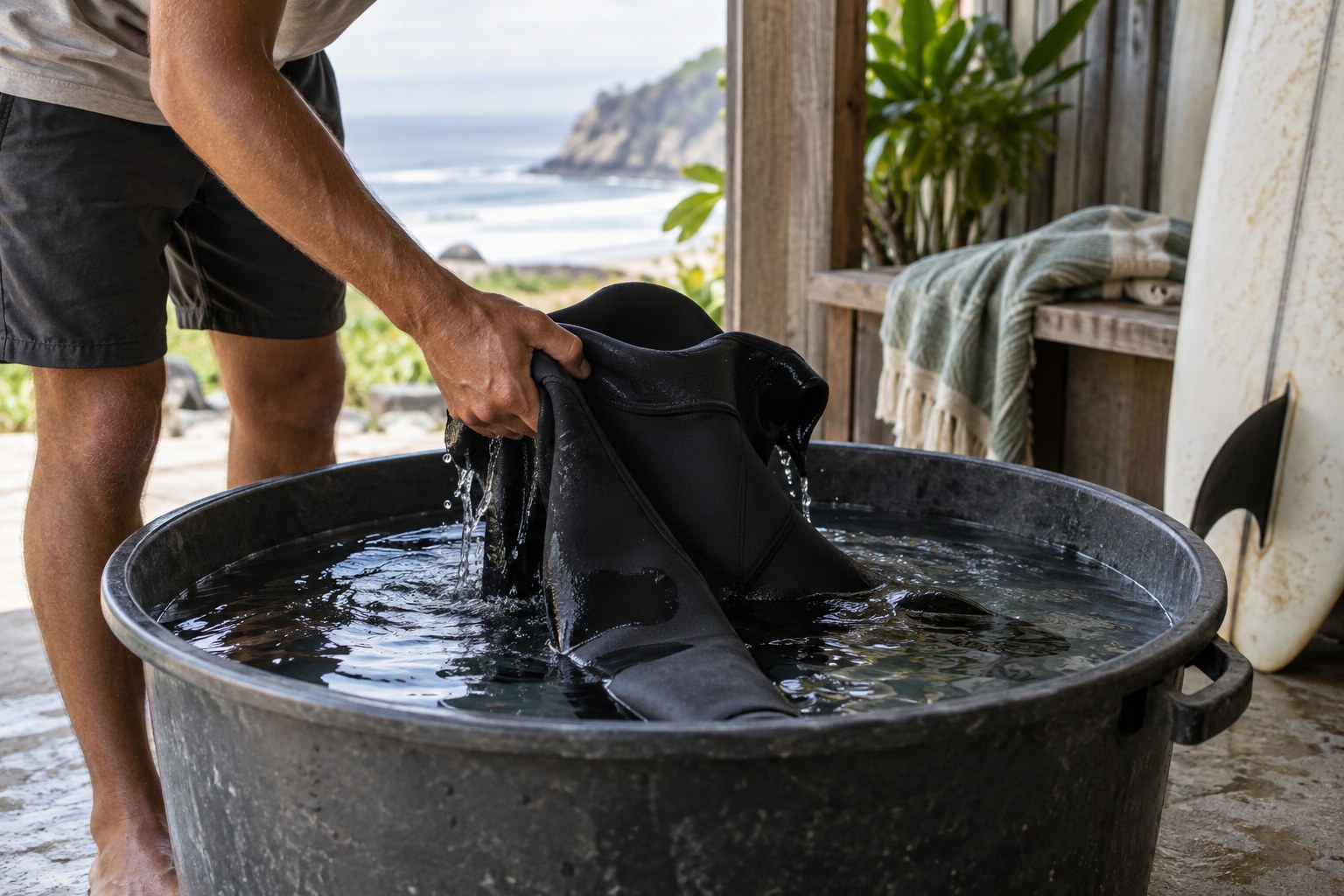
Rinse a wetsuit according to its care label
Identify the suit and its care instructions before setting up a rinse routine, especially when different wetsuits share the same household.
Care & storage
Put a clean, fully dry suit away in a supported arrangement that follows its maker's guidance, with space around closures and delicate panels.
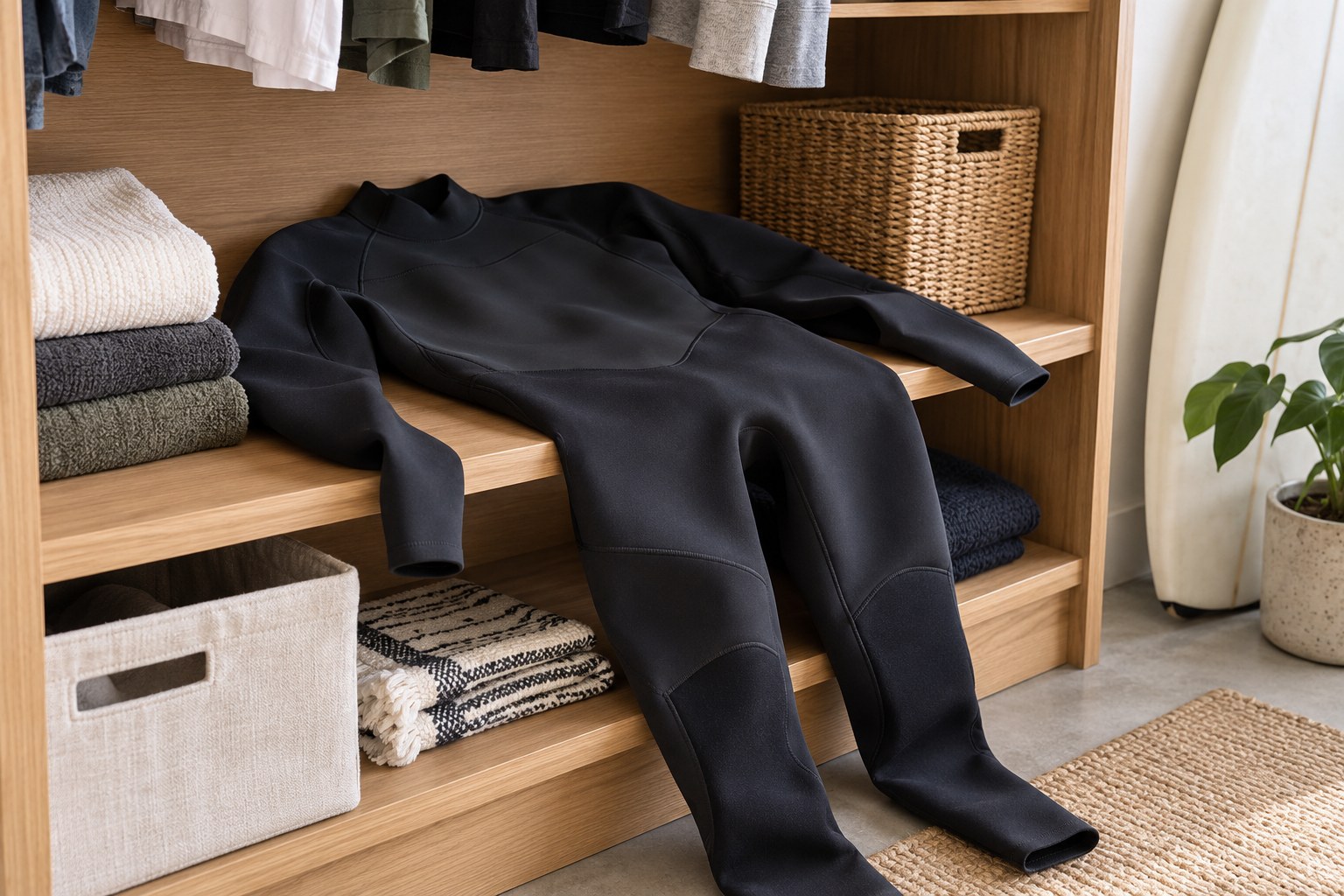
AI-generated illustration. Equipment details are illustrative; follow the instructions for your own item.
Between trips, a wetsuit should have a storage arrangement rather than simply remaining wherever it finished drying. Read the manufacturer's instructions for the model, including any directions about hanging or folding. Long-term storage is a different task from carrying a damp suit home in a bag for a short journey.
Before putting it away, check that less exposed areas are dry: the lining, folded sections, cuffs and closure area. If the suit needs further cleaning or repair, deal with that first or clearly separate it from equipment ready for use. Storing a problem out of sight makes it easier to forget before the next trip.
Choose a place where the suit will not be crushed beneath other equipment or pressed into tight bends. Follow the maker's preferred support method and avoid using the neck, zip pull or a small loop as an improvised carrying point. Keep hard accessories and hook-and-loop fasteners from catching the lining.
Do not use a tightly packed travel bag as the default off-season store. Even if the suit can be folded into it, the arrangement may not match the manufacturer's storage guidance. A dedicated space also makes it easier to notice dampness, damage or an item that was never fully unpacked.
Keep the suit away from sources of heat and other conditions its care instructions warn against. Consider the actual environment over time: a cupboard beside a hot appliance or a sunlit window can behave differently from the room in which you are standing now.
Attach no adhesive labels directly to the material unless the maker permits it. Instead, keep the model, size and any repair notes in a separate equipment record. If you are storing several similar suits, identify their storage locations so you do not have to pull each one out to find a particular thickness or size.
Before the next trip, take the suit out early enough to inspect and try it as appropriate. A stored item may still need attention even if it was ready when it went away. Good storage keeps that inspection straightforward; it does not replace it.
Care & storage
Identify the suit and its care instructions before setting up a rinse routine, especially when different wetsuits share the same household.
Care & storage
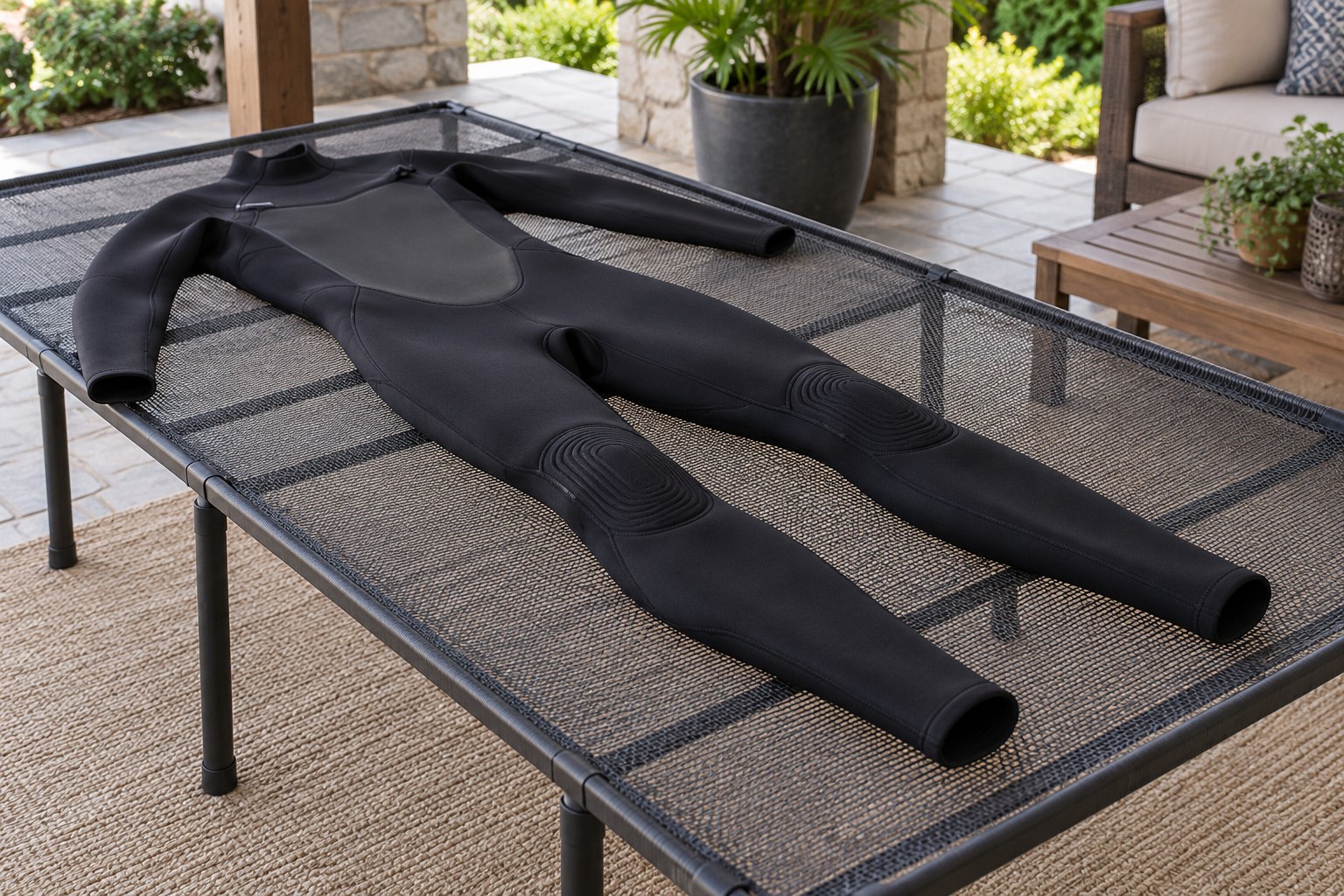
Support the wet suit over an appropriate broad support, and check the hanging arrangement before adding the garment's weight.