Care & storage
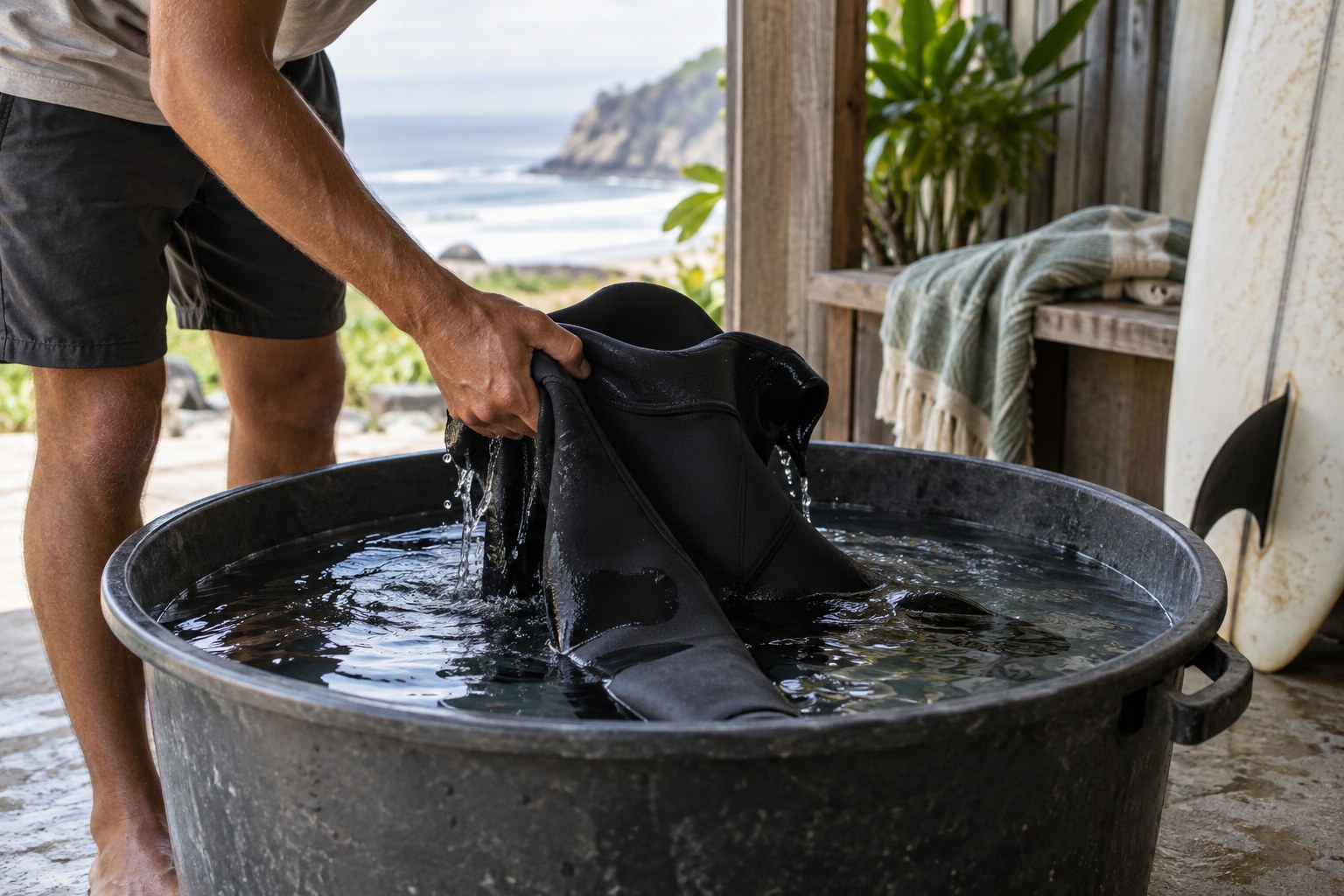
Rinse a wetsuit according to its care label
Identify the suit and its care instructions before setting up a rinse routine, especially when different wetsuits share the same household.
Care & storage
An unclear crack, opening or change in shape needs a decision before the next session; a small visible mark does not reveal the whole condition of a board.

AI-generated illustration. Equipment details are illustrative; follow the instructions for your own item.
Damage is not always easy to classify from a photograph. A line on a board may look superficial, while a seemingly modest impact can involve more than the outer finish. If you are unsure what you are seeing, keep the board out of use and seek an assessment from the maker or an appropriate repairer.
Start with the board's identity and history. Record the model, construction if known, the event that preceded the mark and any previous repair nearby. Explain whether the board has been in water since the damage was noticed. These details help the repairer understand the question without requiring you to invent a diagnosis.
Do not bend the board, press a suspect panel repeatedly or move a fin forcibly to see whether the area fails. Those actions can alter the condition you are trying to have assessed. Keep damaged edges away from hands and other equipment while placing the board on a suitable support.
A patch product is not a universal answer. Its suitability depends on the board, the damage and the maker's instructions. An attractive result on the surface does not by itself establish that a repair is complete. Ask before applying a product that could conceal the affected area or complicate later work.
Send photographs that show both the whole board and the location in detail. Use clear lighting rather than filters, and include the surrounding area. If a repairer asks for an in-person inspection, treat that as a reasonable limit of remote advice rather than a failure to give a quick answer.
Tell the repairer when you hoped to use the board, but do not let that date become evidence that a rushed process is suitable. Ask about assessment, repair, any required waiting period and the checks before use. A temporary alternative, such as an appropriate rental arranged with a provider, may be simpler than trying to compress every stage into one evening.
After the work, retain the repair description and instructions. Photograph the finished area and note anything the repairer asks you to monitor. The purpose of assessment is to replace an uncertain assumption with an informed next step, not merely to make a mark less visible before returning to the water.
Care & storage
Identify the suit and its care instructions before setting up a rinse routine, especially when different wetsuits share the same household.
Care & storage
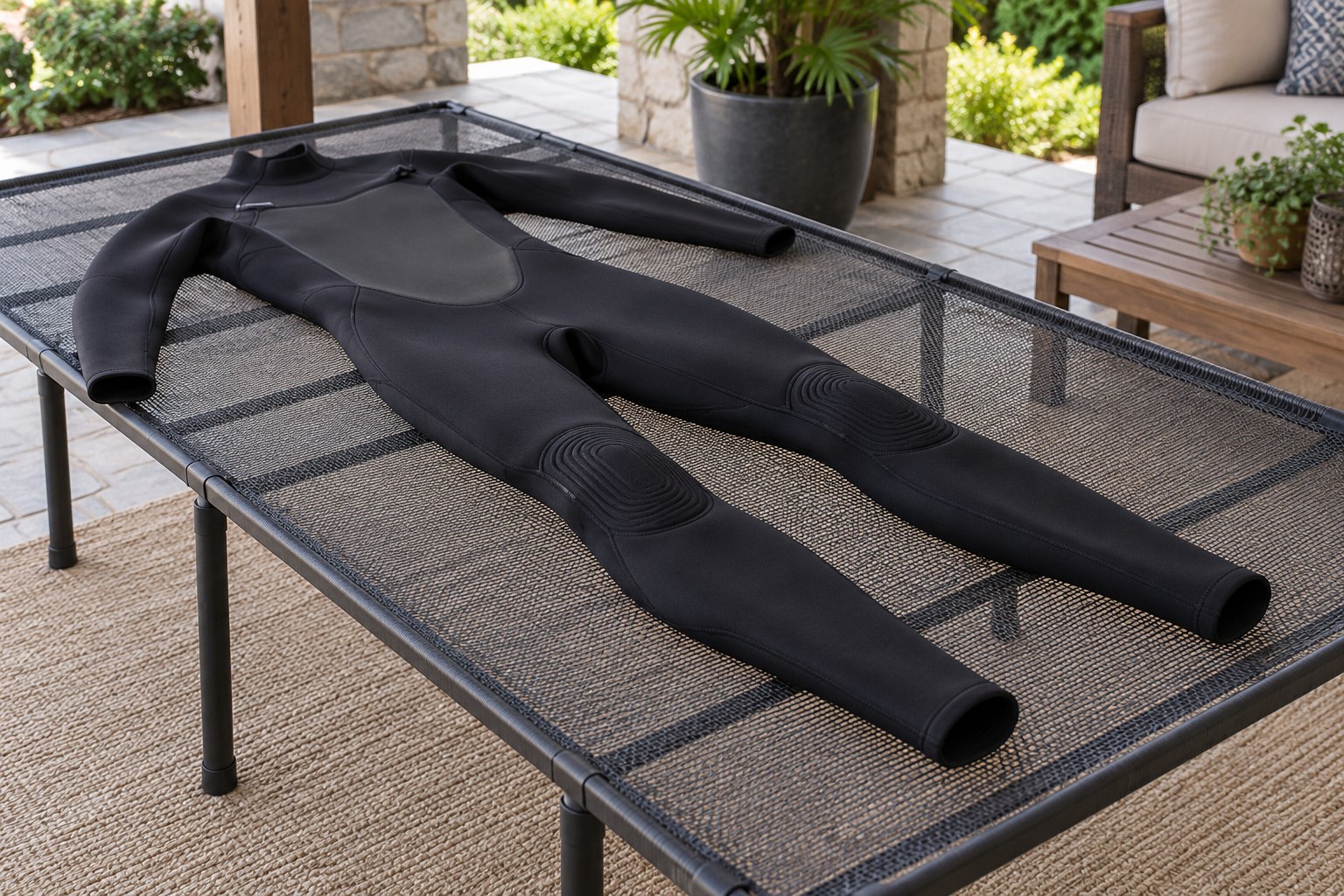
Support the wet suit over an appropriate broad support, and check the hanging arrangement before adding the garment's weight.