Starting out
Choose a surf lesson for your first day in the water
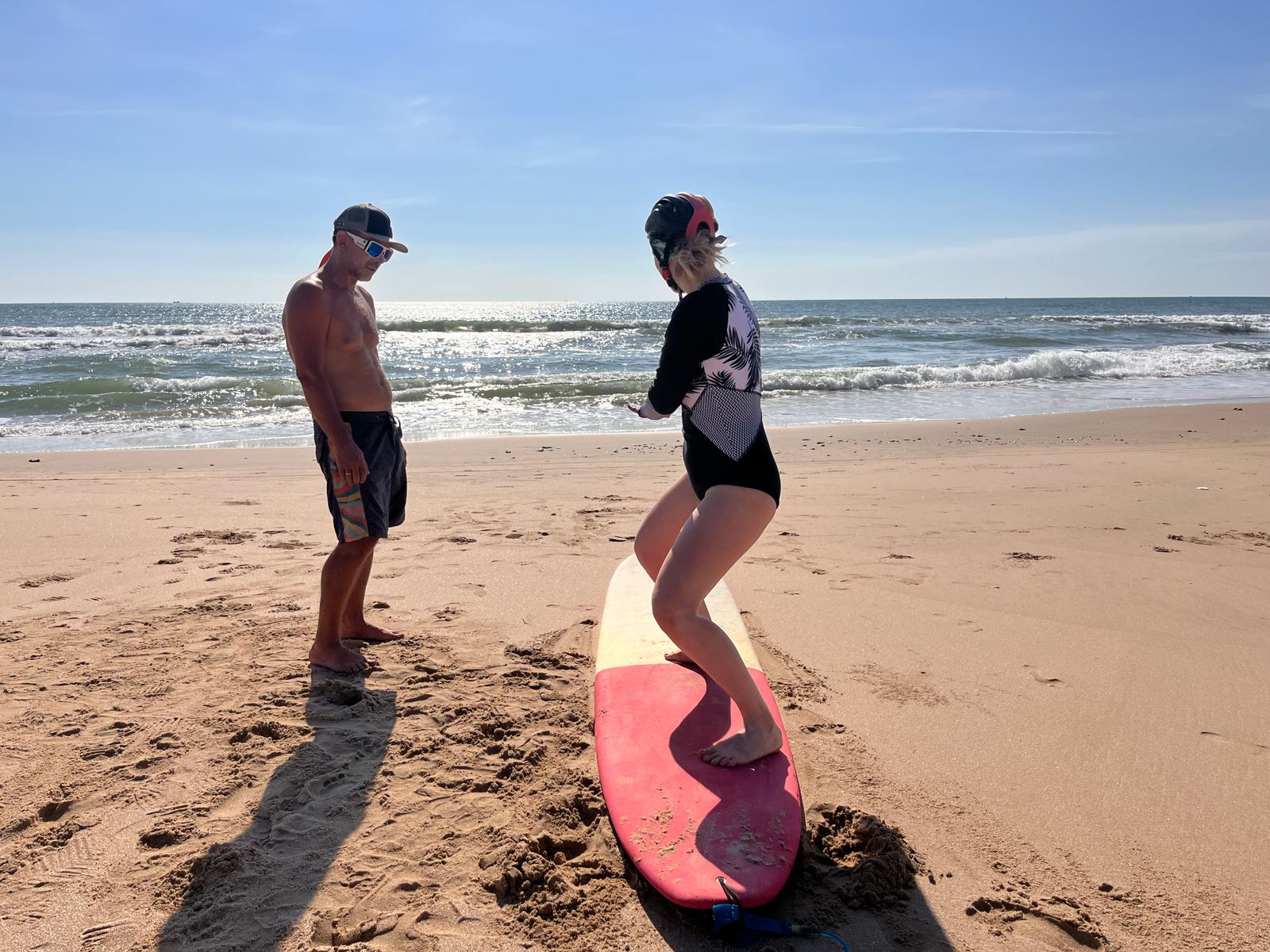
Find a first lesson whose meeting arrangements, equipment and teaching format leave you ready to learn, rather than trying to solve everything on the beach.
Starting out
Leave enough room for changing conditions, recovery and ordinary holiday plans when booking several days of instruction.
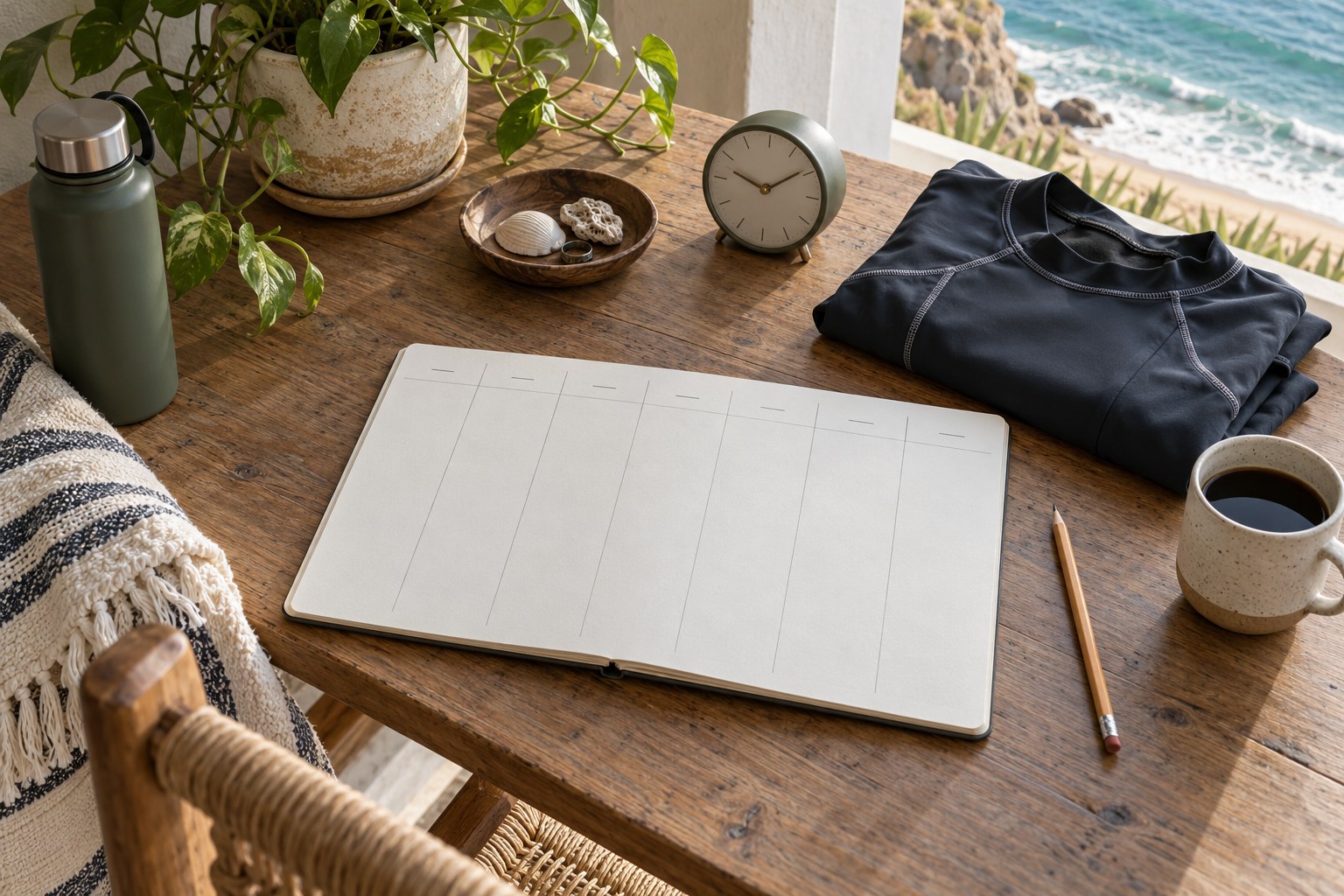
AI-generated illustration. Equipment details are illustrative; follow the instructions for your own item.
A week with access to surf lessons does not have to mean a lesson every morning and afternoon. Plan around the length of the appointments, the travel involved and your experience of similar activity. If this is your first surf trip, avoid committing every available hour before you have tried the first session.
Start by drawing the fixed parts of the week: arrival, departure, accommodation changes and any plans shared with other people. Then add the school’s available lesson windows. The gaps between those items are where changing, meals, transport and unplanned delays need to fit.
Book an initial session early enough that you can discuss the rest of the week with the instructor. Ask whether later lessons can be scheduled after that assessment and whether a package allows changes. A series described as five lessons may have a different cancellation arrangement from five separate appointments.
Leave at least one useful alternative window rather than filling the entire week with unrelated bookings. The school may need to change the time or location. An alternative window helps only if transport and other commitments can move too, so check those dependencies before assuming your schedule is flexible.
Do not turn a missed lesson into a compulsory double session later. Ask whether that is appropriate and whether the timetable allows it. The aim is to create useful learning opportunities, not to complete a numerical target at any cost.
Estimate the door-to-door time. A lesson that lasts two hours can occupy much more of the day once you include the journey, fitting equipment, returning it and changing. Put a proper meal and dry clothing into the plan instead of expecting to rush directly from the beach to another activity.
Use breaks to record feedback, sort equipment and decide what you want to ask next time. If you feel unusually tired, sore or unwell, tell the school and reassess the appointment. A prepaid booking should not be the only reason you enter the water.
For a mixed holiday, reserve some plans that do not depend on surfing. A local walk, exhibition or relaxed meal can make a cancelled lesson less disruptive. Check ordinary opening times before treating an attraction as a reliable fallback, especially outside the main holiday season.
Create a simple record with each booked session, the meeting point, the decision deadline for changes and the next fixed commitment. You do not need a complicated planner. The value is seeing that a late-morning lesson and an early-afternoon transfer may conflict even when they occupy different boxes in a booking app.
For example, an arrival on Monday evening could leave Tuesday available for an initial lesson and a discussion of the rest of the week. A later appointment might remain provisional until the school confirms its plan. A day with a fixed group outing can stay free of lessons altogether. This is an illustration of sequencing, not a prescription for how many sessions a person should take.
If several travellers share transport, add who needs the vehicle at each time. A lesson moved to another beach may be easy for one person but leave companions unable to reach their activity. Resolve that dependency with the school or group before accepting the new time. Flexibility means having workable alternatives, not merely leaving a blank space in the calendar.
Check the departure day separately. A final lesson may leave damp equipment to pack, a board to return or a long journey immediately afterwards. Ask whether an earlier session in the week provides a more comfortable finish. Ending the trip with time to organise belongings can be more useful than squeezing one last appointment into an already full day.
Before the final lesson, ask the instructor what would make a useful continuation: another supervised course, a different group level or a period of preparation before returning. Write down the equipment you used and the feedback that helped. That record is more valuable than leaving with only the number of lessons completed.
Starting out
Find a first lesson whose meeting arrangements, equipment and teaching format leave you ready to learn, rather than trying to solve everything on the beach.

Starting out
Get clear answers about teaching, equipment and changes of plan before a surf school turns a provisional enquiry into a booking.