Starting out
Choose a surf lesson for your first day in the water
Find a first lesson whose meeting arrangements, equipment and teaching format leave you ready to learn, rather than trying to solve everything on the beach.
Starting out
Foam boards vary in outline, construction and intended use. Compare the actual rental options instead of treating every soft deck as the same board.
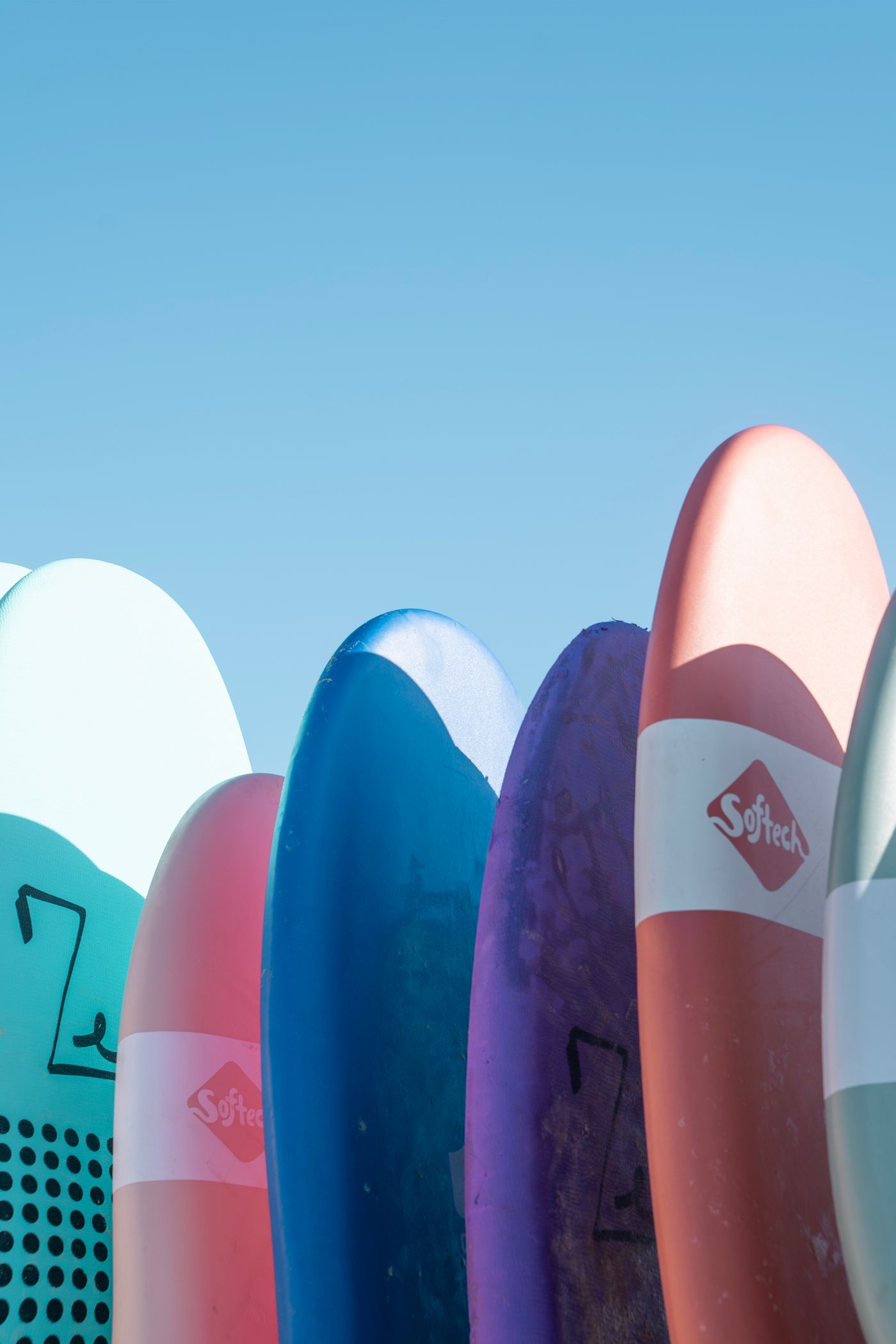
At a rental shop, the phrase foam board covers more than one type of equipment. A broad learner model and a compact performance softboard may both have soft upper surfaces but serve different users. Softech's own range separates learner-oriented boards from models aimed at more experienced surfers, illustrating why the construction label alone is not enough.
Tell the shop what you have used in lessons and whether an instructor has advised a particular type. If you are still at the stage of needing supervision, book that support rather than treating a rental receipt as confirmation that independent surfing is appropriate.
Ask for the model and size of each proposed option. Look at the outline, thickness and overall condition with the staff member. If you have a photograph or note from a previous lesson board, show it. It gives the shop a concrete reference instead of leaving them to interpret “a fairly big foamie”.
Check what comes with the hire. The fin arrangement, leash and any required wax should be explained for that particular board. Do not assume you can apply a product or add an accessory because it worked on another softboard. Surface materials and fittings differ.
Ask to see the underside and rails before leaving. Point out visible cuts, lifting material, damaged fins or loose fittings and have the shop assess them. Photograph the agreed condition if permitted. A supplied board should not require you to improvise a repair before the session.
Confirm the return time and location, including whether you can swap boards during the rental. A change may be useful if the staff member or instructor decides the first option is unsuitable. It is easier to discuss this at the counter than after a long walk back.
Find out whether the board may leave that beach, travel on a vehicle or stay with you overnight. Ask where it should be kept between uses and what the shop wants you to do if you notice damage. Keep the contact details accessible without depending on a wet paper receipt.
At return, mention any change in condition rather than putting the board back on the rack without discussion. Note the model if it suited the lesson plan. Repeated rentals can build a useful equipment record, provided each choice remains tied to your current instruction and the conditions of the day.
Starting out
Find a first lesson whose meeting arrangements, equipment and teaching format leave you ready to learn, rather than trying to solve everything on the beach.

Starting out
Get clear answers about teaching, equipment and changes of plan before a surf school turns a provisional enquiry into a booking.