Starting out
Choose a surf lesson for your first day in the water
Find a first lesson whose meeting arrangements, equipment and teaching format leave you ready to learn, rather than trying to solve everything on the beach.
Starting out
A short record of feedback, equipment and unanswered questions can make your next lesson more focused.
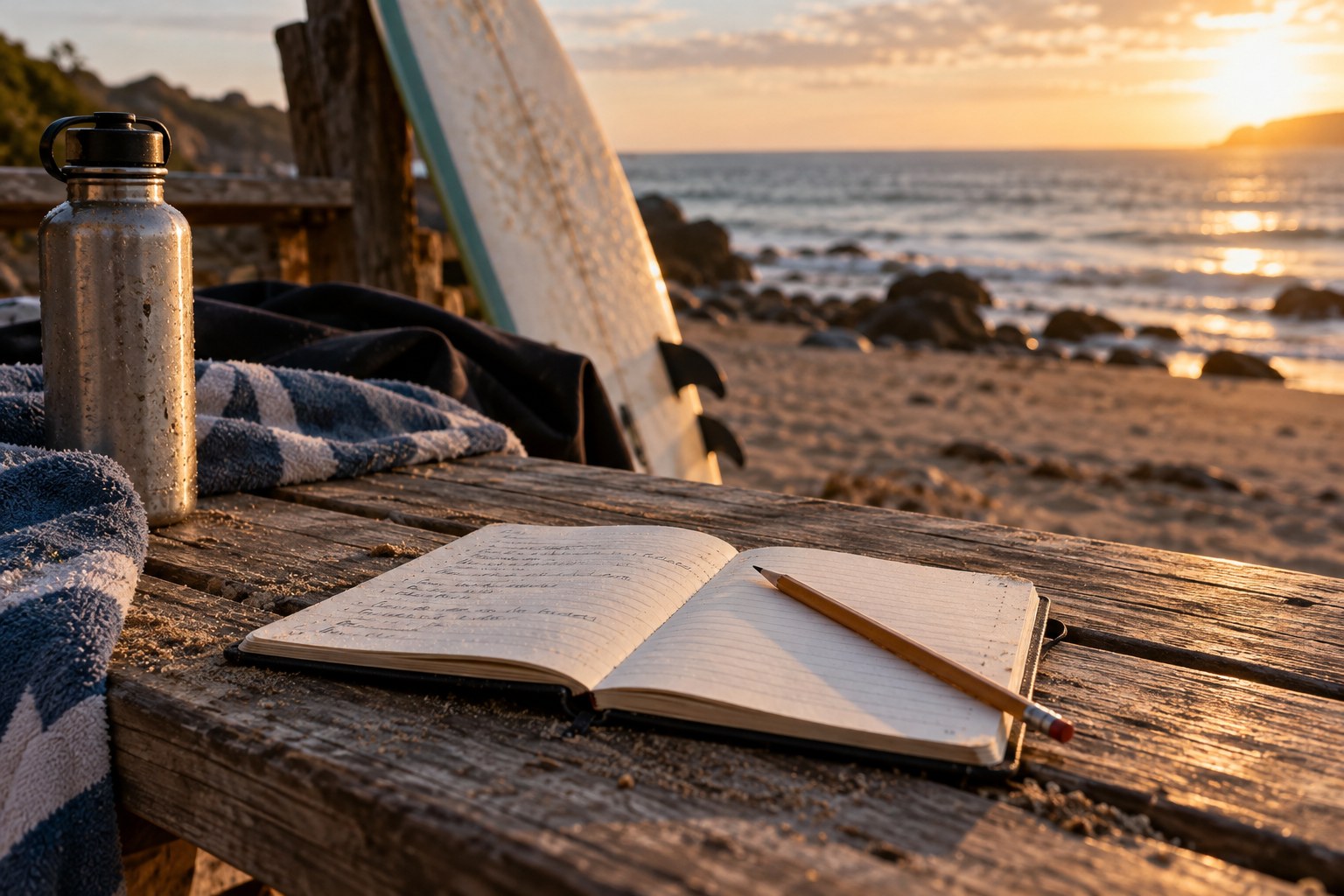
AI-generated illustration. Equipment details are illustrative; follow the instructions for your own item.
Write your surf lesson notes after you have changed and settled, while the details are still easy to recall. You do not need an elaborate training diary. A small notebook or one note on your phone is enough if it helps you distinguish what the instructor said from your own interpretation.
Begin with the date, school and equipment. Record the board model or identifying number if available, the wetsuit size and anything about fit that you would want to mention next time. A photograph of the board label, taken with permission, can prevent an uncertain description such as “the big blue one”.
Choose the most useful piece of feedback and write it in plain words. If the instructor gave a short cue, preserve that wording without expanding it into a technique you have not been taught. Add what you were doing when the feedback was given so the sentence retains its context.
Separate observation from explanation. “My back foot landed near the rail twice” is an observation. “The board is too narrow” is a possible explanation that may be wrong. Put uncertain explanations in a question section and ask the instructor before changing equipment around them.
Describe progress in terms you could recognise again. You might have remembered the meeting routine, understood an instruction sooner or felt able to ask for a pause. Counting only successful rides can erase other useful parts of a first lesson.
Record the location and any conditions the instructor discussed, but do not turn a personal diary into a forecast rule. A note that a lesson worked at a certain tide does not establish that the same beach is suitable every time that tide returns. Conditions and the teaching plan need fresh assessment.
If you attach a photo, label what it shows and when it was taken. A picture before the lesson may not represent the water later in the appointment. Avoid photographing other learners without their agreement, and keep personal information out of a notebook you intend to share.
End with one or two questions for the next session. Too many goals can make it hard to identify what matters. A useful question might ask whether the same board is appropriate again or what the instructor wants you to focus on first. Review the note before your next booking, then let the new lesson add to it rather than forcing the day to match your previous experience.
Starting out
Find a first lesson whose meeting arrangements, equipment and teaching format leave you ready to learn, rather than trying to solve everything on the beach.
Starting out
Get clear answers about teaching, equipment and changes of plan before a surf school turns a provisional enquiry into a booking.