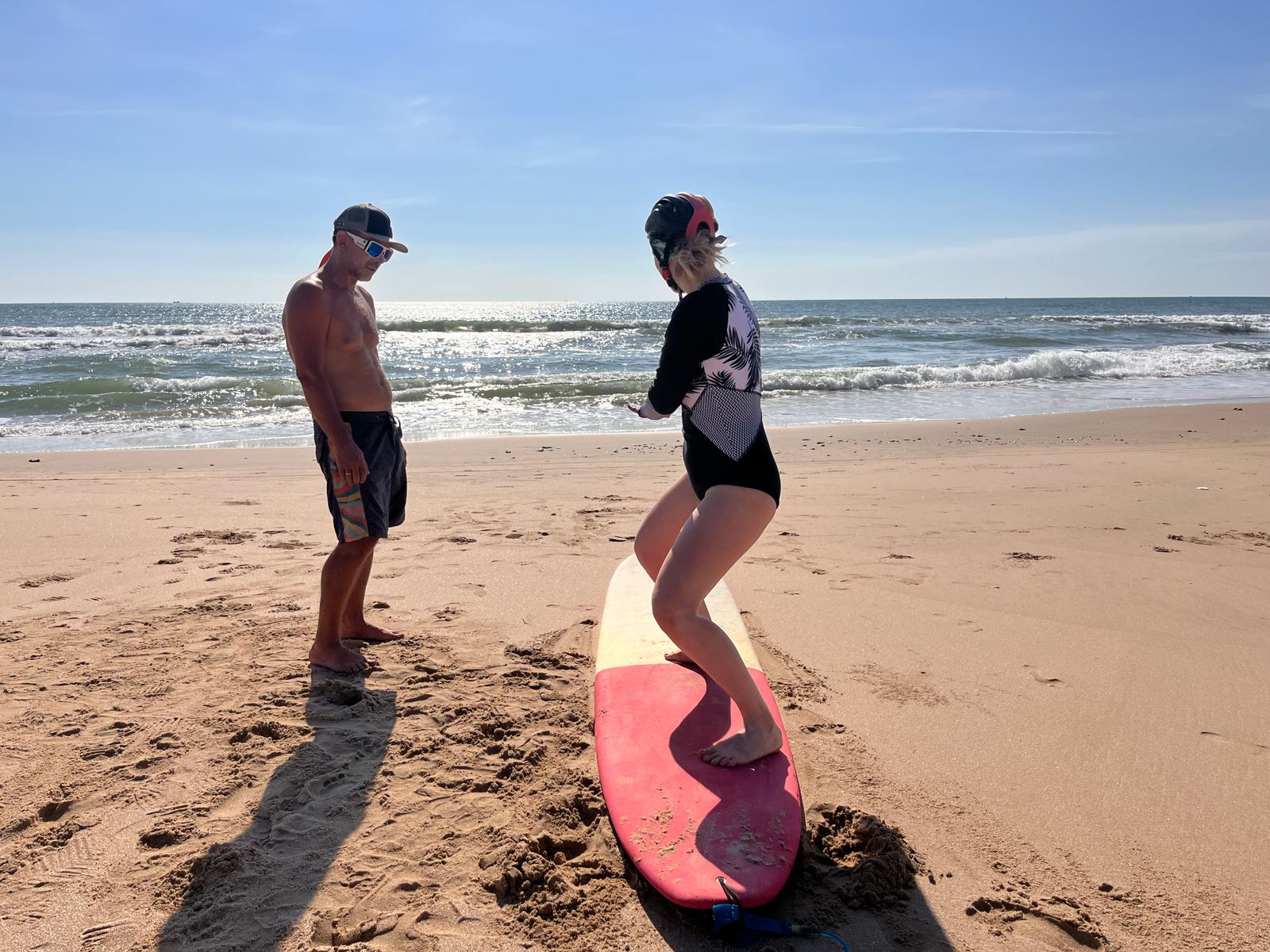
Starting out
Choose a surf lesson for your first day in the water
Find a first lesson whose meeting arrangements, equipment and teaching format leave you ready to learn, rather than trying to solve everything on the beach.
Starting out
Give an adult first lesson a useful purpose without turning it into a test of age, fitness or how quickly someone else stands up.
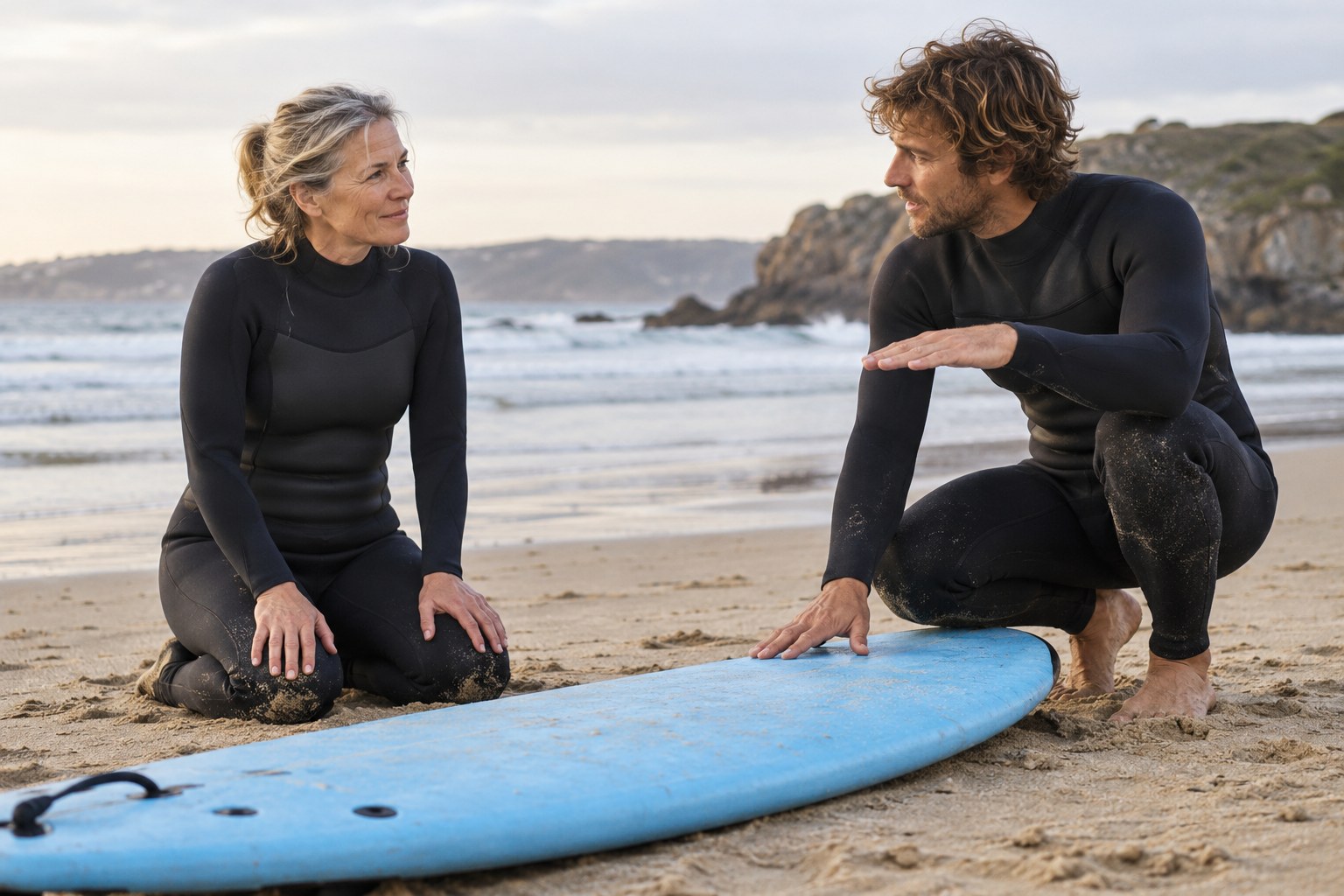
AI-generated illustration. Equipment details are illustrative; follow the instructions for your own item.
Learning to surf as an adult can bring a familiar habit into an unfamiliar setting: expecting yourself to understand quickly because you are competent at many other things. A first lesson involves equipment, instructions and an environment you may not know. Allowing it to feel new is more useful than demanding immediate fluency.
Tell the school what experience you do have, including any previous lessons, and what feels uncertain. There is no need to apologise for starting later. Clear information helps the instructor choose a suitable teaching approach; a confident label that hides your uncertainty does the opposite.
Standing on a board is an obvious milestone, but it is not the only useful outcome of a first appointment. You can aim to understand the briefing, ask when a cue is unclear and remember the equipment routine. These are things you can work on without requiring the sea to deliver a particular result.
After an attempt, listen for the specific feedback rather than evaluating your whole ability. One movement may need adjustment while another is improving. Ask the instructor to identify a single priority if several instructions become difficult to remember at once.
Avoid using another learner's progress as a timetable. They may have relevant experience you do not know about, or they may simply respond differently to that day's task. Their successful attempt is not evidence that you have missed a deadline.
Keep the rest of the day manageable so you have time to change, eat and reflect. If you feel tired or uncomfortable, say so during the lesson rather than hiding it to keep pace with the group. You can participate in a learning process without treating every minute as a performance.
Ask what kind of follow-up would be appropriate and how much continuity the school can provide. A note of the board used and the feedback received can help if your next lesson is elsewhere. Do not assume that buying equipment will resolve a question that needs another explanation.
At home, record what you enjoyed as well as what was difficult. The answer may be that you want a regular course, occasional holiday lessons or a second session before deciding. All are more useful conclusions than judging an entire activity from whether you stood up on the first day.
Starting out
Find a first lesson whose meeting arrangements, equipment and teaching format leave you ready to learn, rather than trying to solve everything on the beach.
Starting out
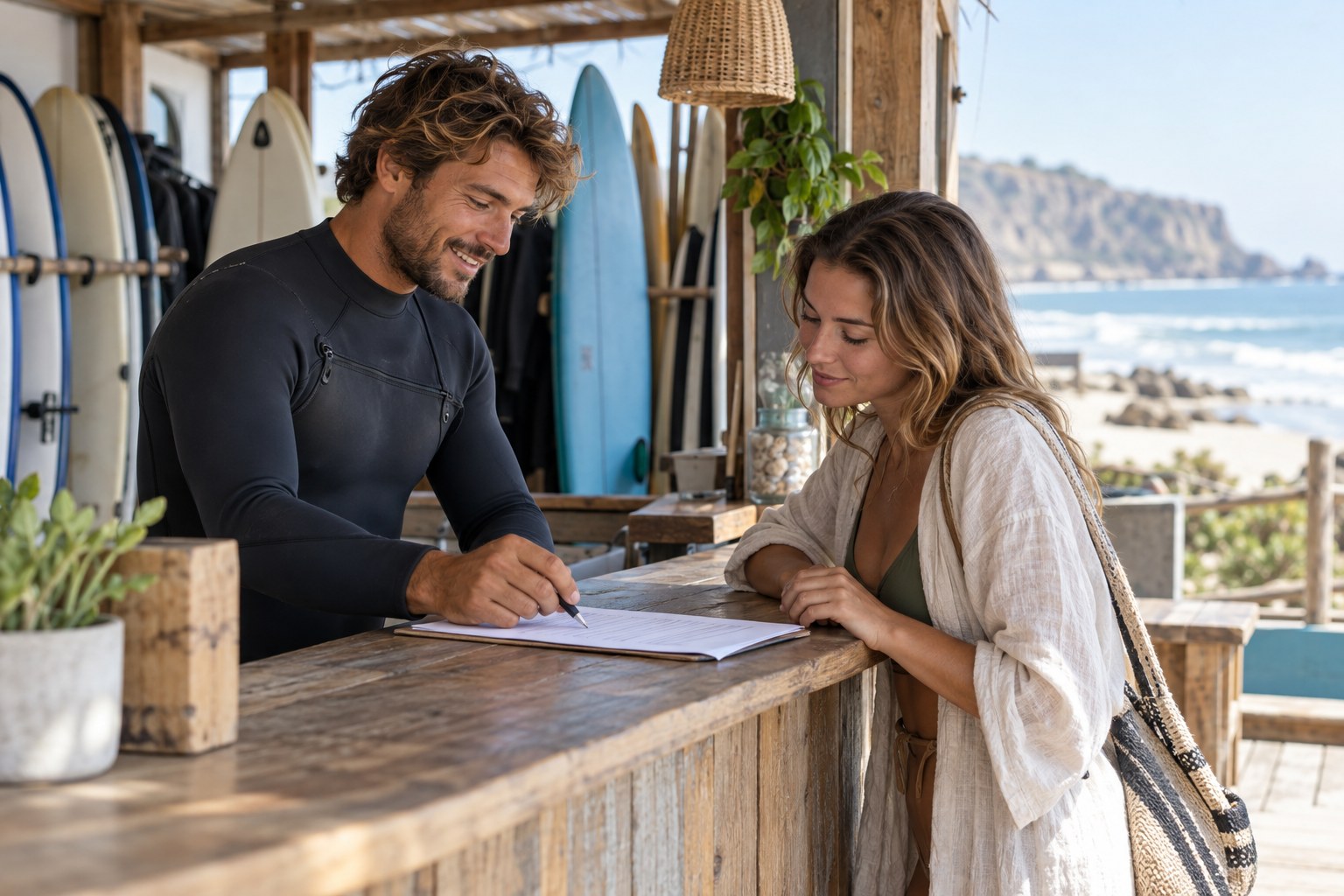
Get clear answers about teaching, equipment and changes of plan before a surf school turns a provisional enquiry into a booking.