Starting out
Choose a surf lesson for your first day in the water
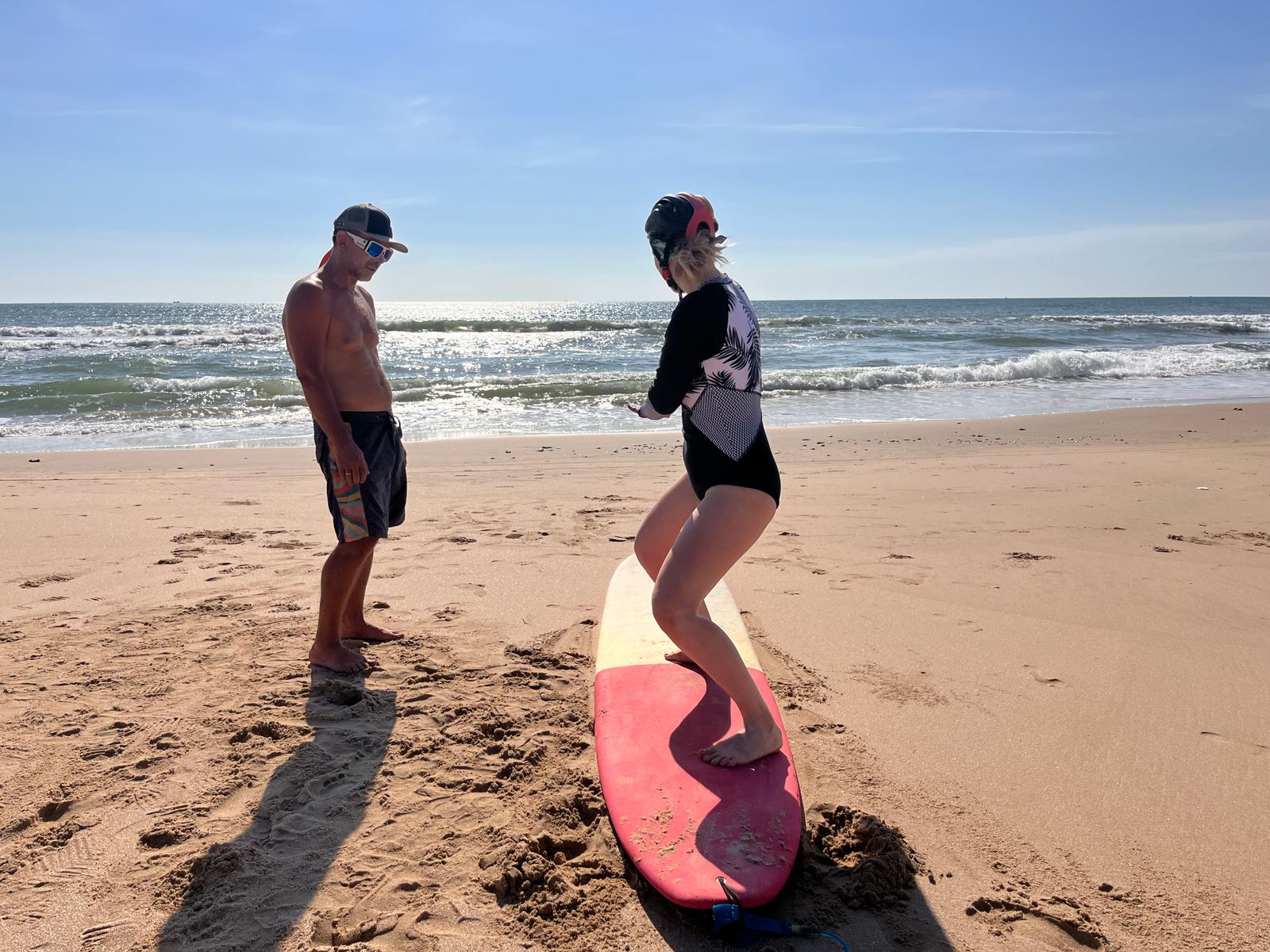
Find a first lesson whose meeting arrangements, equipment and teaching format leave you ready to learn, rather than trying to solve everything on the beach.
Starting out
A shared trip works more smoothly when surfing has a defined place in the timetable and nobody has to spend every morning waiting on the sand.

AI-generated illustration. Equipment details are illustrative; follow the instructions for your own item.
Talk about the holiday before booking a surf package. If only one or two people want lessons, establish how much of each day the rest of the group wants to spend near the beach. Friends may be happy to share a coastal base without wanting to organise every meal around changing conditions.
Describe the whole lesson appointment, including transport and changing, rather than promising to be away for only the advertised teaching time. A two-hour lesson may occupy most of a morning. Clear expectations prevent a small booking from quietly becoming everyone else's waiting period.
Look for accommodation from which non-surfers can reach their own activities without relying on the only driver. Walkable cafés, ordinary transport and interesting nearby places can matter more than being directly beside the lesson beach. Verify the routes rather than relying on a listing's phrase “close to everything”.
If the school offers pickups, check whether the accommodation is within its actual route and whether the return time is flexible. This can free the group's car, but only if the arrangement is confirmed. A vague possibility of transport is not a plan.
Agree on a few fixed shared moments, such as an evening meal or a rest-day outing, and keep other periods independent. It is easier to adapt one morning than to renegotiate every hour of a tightly linked itinerary.
Tell friends how the school communicates cancellations or time changes. Decide which changes you can accept without affecting a group booking. If a rescheduled lesson clashes with a prepaid shared activity, know in advance which commitment takes priority.
Keep an alternative day plan that you would enjoy even if the lesson is cancelled. Avoid treating non-surfing activities as consolation prizes; they are part of the holiday people agreed to take together. Conversely, friends should not have to remain available indefinitely in case a new surf window appears.
At the accommodation, organise wet gear so it does not occupy shared chairs, bathrooms or luggage space without agreement. Ask the host about rinsing and drying facilities. A modest amount of equipment planning helps the surf portion of the trip remain one person's activity rather than an inconvenience spread across the whole group.
Starting out
Find a first lesson whose meeting arrangements, equipment and teaching format leave you ready to learn, rather than trying to solve everything on the beach.

Starting out
Get clear answers about teaching, equipment and changes of plan before a surf school turns a provisional enquiry into a booking.