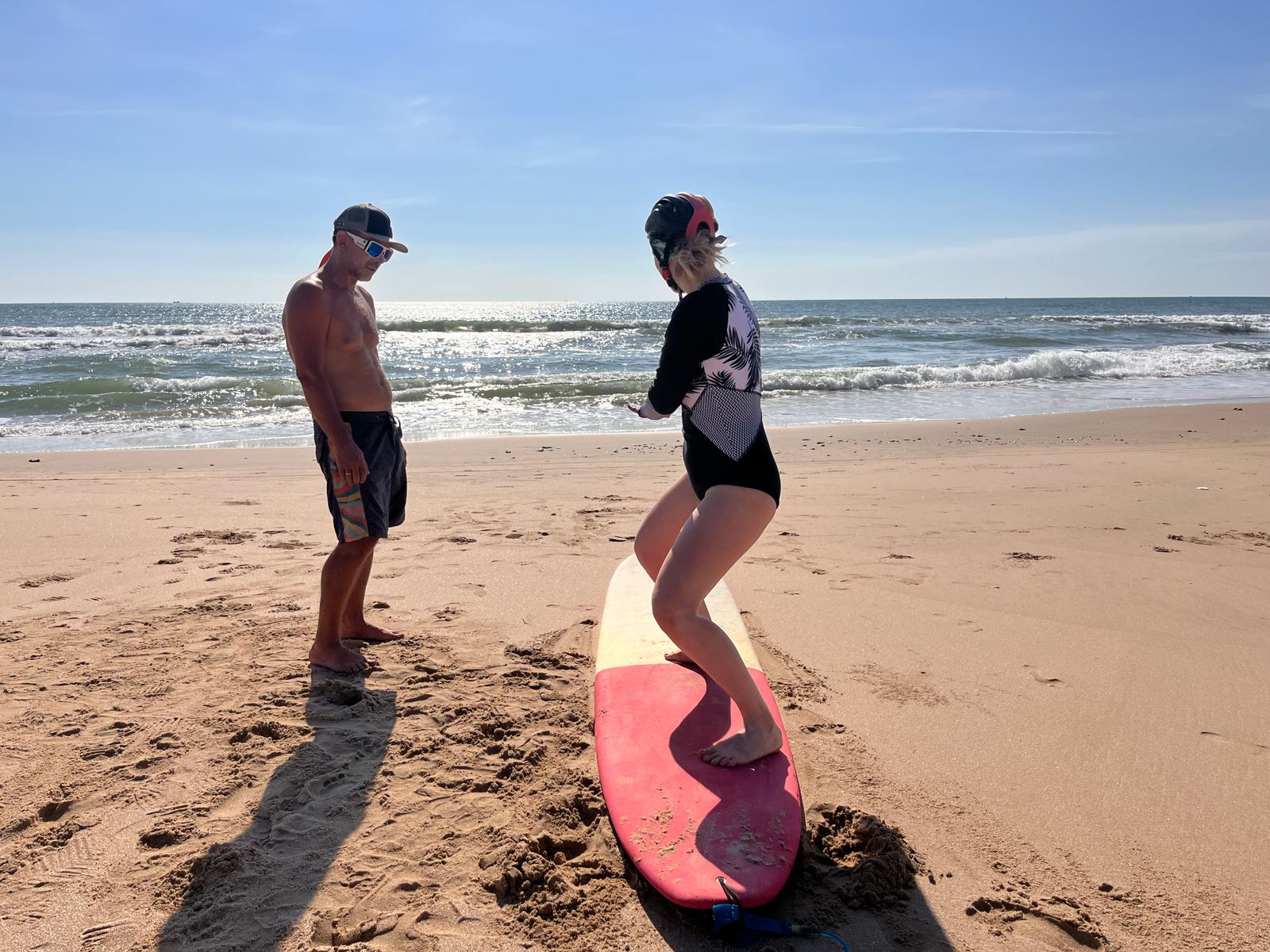
Starting out
Choose a surf lesson for your first day in the water
Find a first lesson whose meeting arrangements, equipment and teaching format leave you ready to learn, rather than trying to solve everything on the beach.
Starting out
Discuss vision needs before the booking, and arrange any water-suitable eyewear through an eye-care professional rather than improvising at the beach.
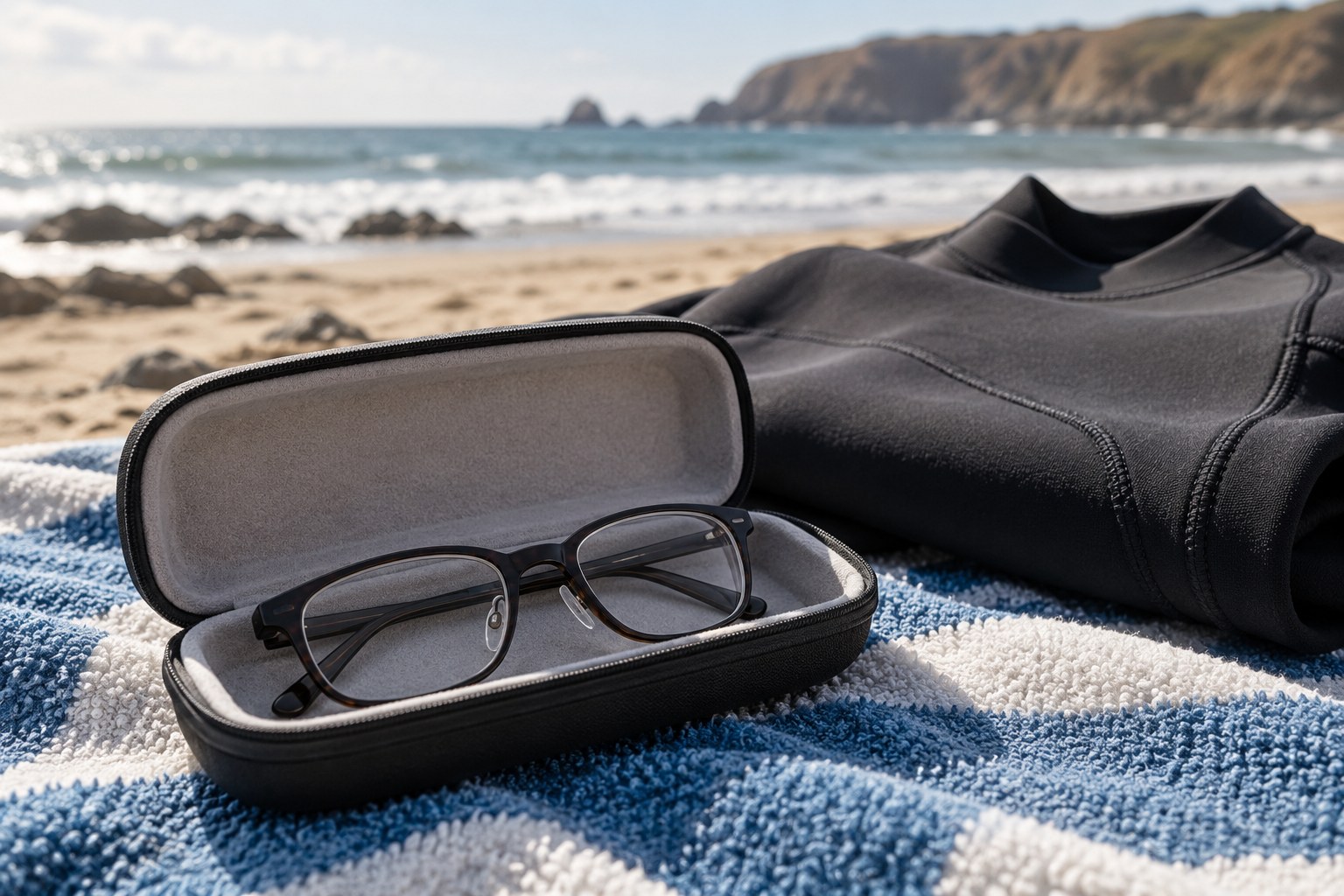
AI-generated illustration. Equipment details are illustrative; follow the instructions for your own item.
Tell the surf school that you wear glasses and describe what you need to see clearly. Reading a sign on land, recognising the instructor and seeing across the teaching area are different demands. The school can explain the lesson environment, while an eye-care professional can advise on an appropriate vision solution for you.
Do this before the day of the lesson. Ordinary spectacles, a fashion retainer or swimming goggles bought without advice may not be appropriate for surfing. A strap that keeps glasses on during a walk does not establish that the frame is suitable for impact or immersion.
The CDC advises removing contact lenses before water activities such as swimming because water exposure carries an eye-infection risk. Ask your eye-care professional about suitable alternatives, including whether prescription sports eyewear is appropriate for your needs and the activity.
Bring the school's description of the session to that conversation if helpful. Explain that it involves surf and a board, rather than asking only about a swimming pool. The type of activity matters when discussing fit, retention and the design of eyewear.
Do not make a first lesson the first test of an unfamiliar prescription or fit if you can resolve those questions beforehand. Follow the professional's and manufacturer's directions, and tell the instructor what you will use before entering the water.
Ask where your usual glasses can be stored and how you will reach them after the session. A rigid case in a secure, dry location is easier to manage than loose frames in a towel. Avoid leaving them where another learner may sit or put down equipment.
Keep your glasses accessible for the walk back, reading transport information and finding your belongings. If another person will help you, agree that arrangement in advance rather than assuming an instructor can leave the group to retrieve something.
If an adequate vision arrangement is unresolved, postpone the water portion and discuss another appointment. The point is not to make do with blurry vision or unsuitable equipment because the lesson is paid for. A clear plan lets both you and the instructor focus on learning rather than solving a preventable problem beside the sea.
Starting out
Find a first lesson whose meeting arrangements, equipment and teaching format leave you ready to learn, rather than trying to solve everything on the beach.
Starting out
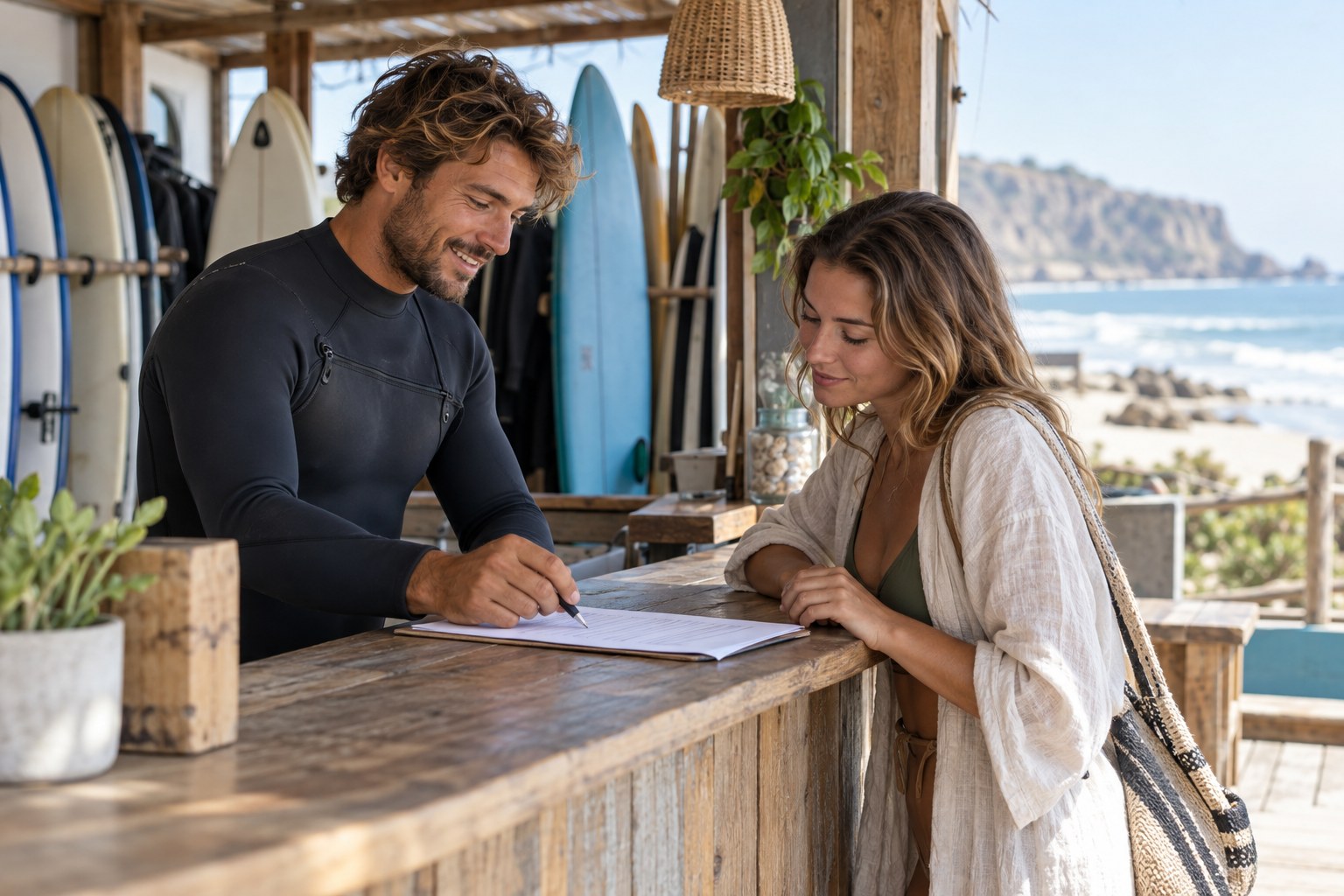
Get clear answers about teaching, equipment and changes of plan before a surf school turns a provisional enquiry into a booking.