Starting out
Choose a surf lesson for your first day in the water
Find a first lesson whose meeting arrangements, equipment and teaching format leave you ready to learn, rather than trying to solve everything on the beach.
Starting out
Regular and goofy describe which foot leads. Neither label is a ranking, and a first lesson gives you room to explore what feels workable.

In surfing, regular usually means the left foot is forward and goofy means the right foot is forward. The terms describe stance; they do not distinguish correct from incorrect surfing. You do not need to select a label because it matches your writing hand, your favourite surfer or the stance of the friend beside you.
Tell your instructor if you have experience in skateboarding, snowboarding or another board sport. That experience may offer a starting point, but it is not a reason to ignore what happens in the lesson. Someone who has never used a board can simply say so rather than arriving with a conclusion from an online quiz.
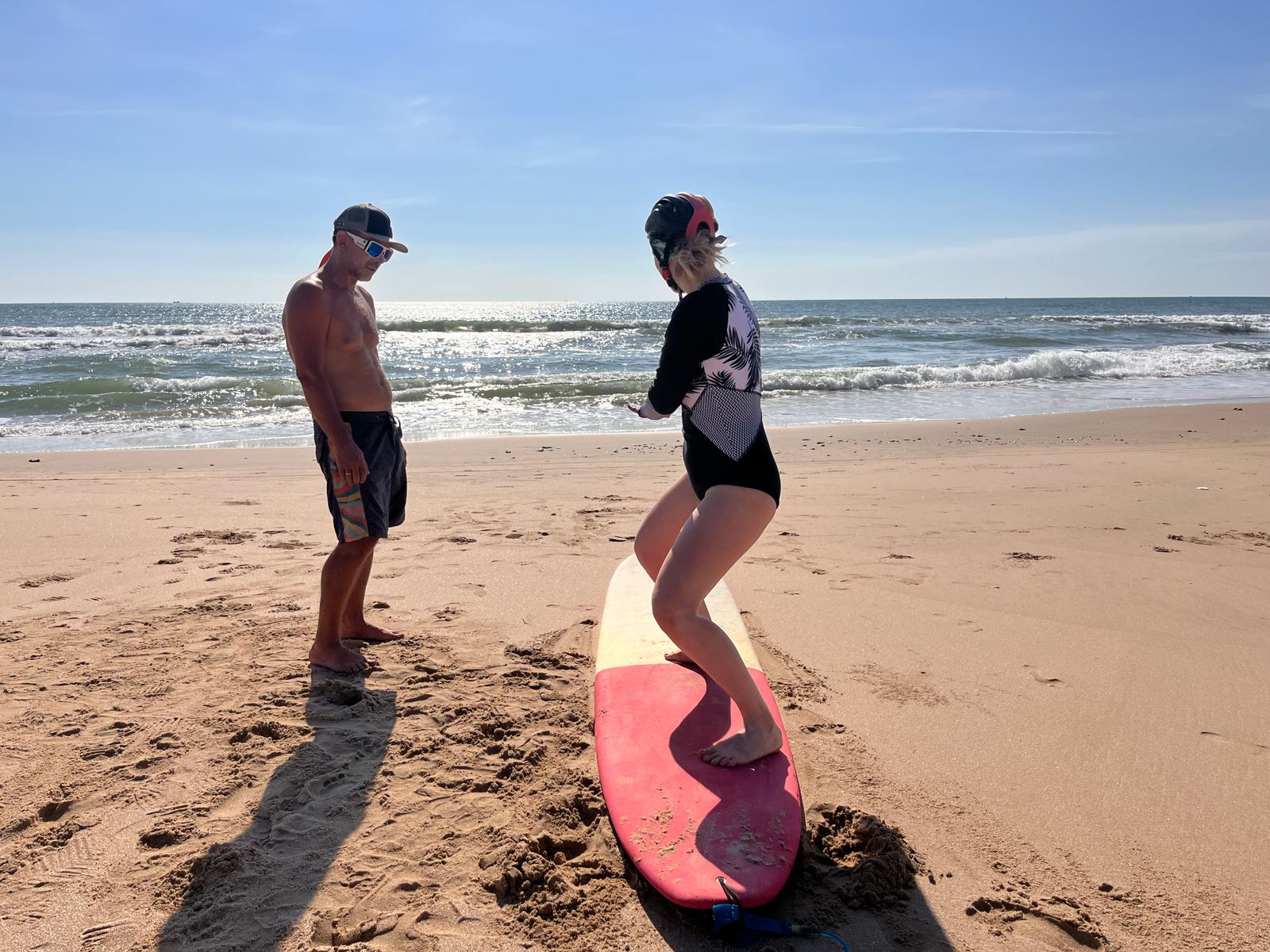
Ask the instructor how they want you to try each stance during the land briefing. Follow their setup and use a suitable practice surface. Do not stand on a surfboard resting on its fins to experiment; the board needs to be handled as equipment, not used as an improvised balance platform.
Notice which position makes the instructions easier to follow, rather than searching for a dramatic feeling of certainty. At first, both positions may feel unfamiliar. If you repeatedly change your leading foot or feel confused by a cue, tell the instructor so they can observe and clarify it.
Avoid the common party trick of unexpectedly pushing someone to see which foot moves first. It creates an unnecessary fall risk and does not replace a teacher watching you practise in a controlled setting. There is no need for another person to surprise you into a decision.
Once the instructor has helped you choose a starting stance, ask them to check the leash arrangement and explain the relevant names for your front and back foot. Understanding those terms makes later feedback less confusing. If you change stance during practice, mention it rather than silently carrying on with a setup you do not understand.
Write down the stance used in your lesson notes, along with any uncertainty. That is a record of what you tried, not a lifelong commitment. When you return for another lesson, the instructor can use it as context and review what is working. The useful outcome is clear communication and a consistent starting point for practice, not winning an argument about which foot you should prefer.
Starting out
Find a first lesson whose meeting arrangements, equipment and teaching format leave you ready to learn, rather than trying to solve everything on the beach.

Starting out
Get clear answers about teaching, equipment and changes of plan before a surf school turns a provisional enquiry into a booking.