Starting out
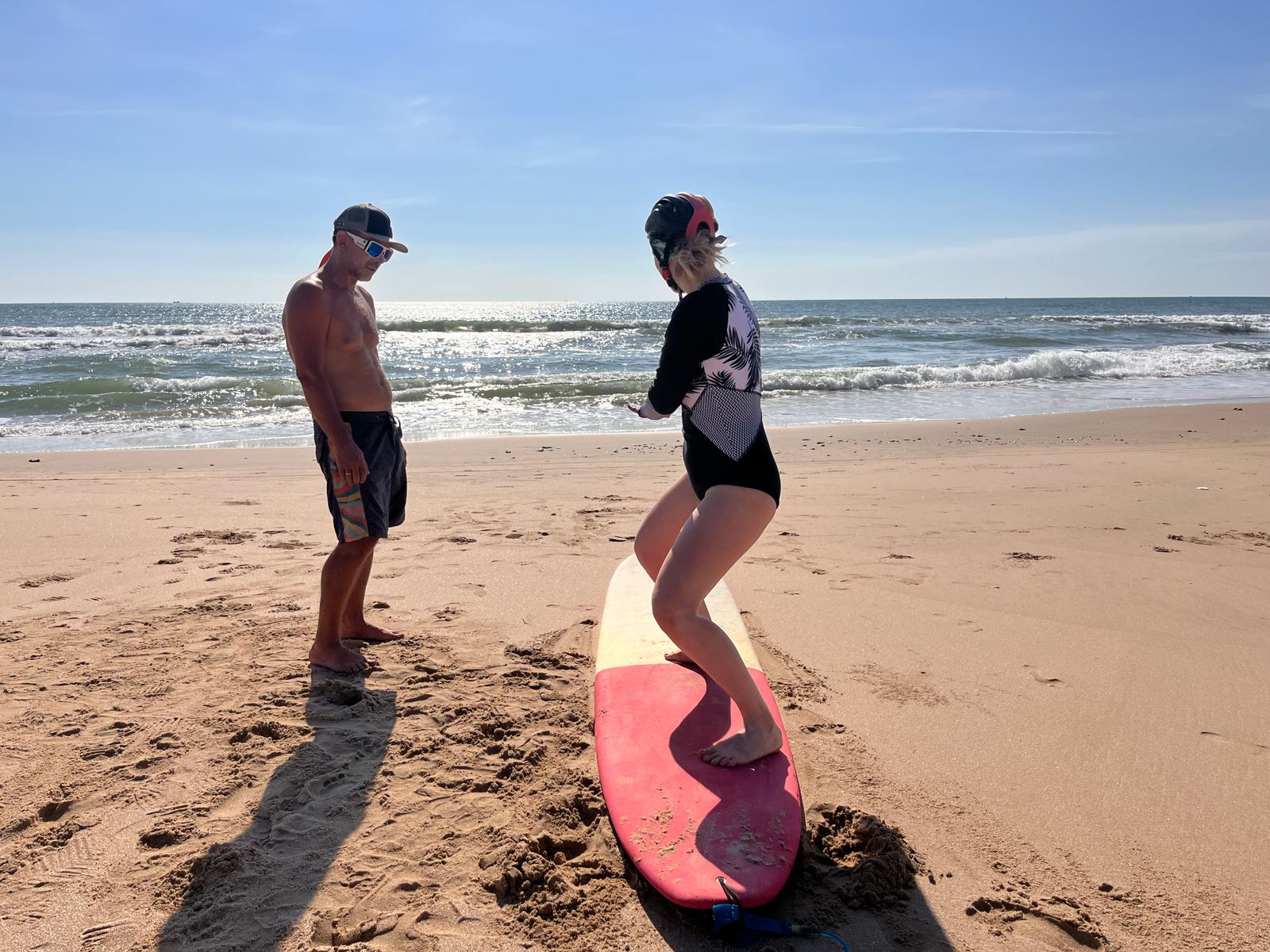
Choose a surf lesson for your first day in the water
Find a first lesson whose meeting arrangements, equipment and teaching format leave you ready to learn, rather than trying to solve everything on the beach.
Starting out
Wave period adds information to height, but a longer interval is not a simple signal that conditions are better for a learner.

Wave period describes a time interval between waves, usually expressed in seconds. Forecast services may display a peak period or other measure, so read the definition attached to the chart you are using. The Met Office describes peak period in relation to the most powerful waves and notes that longer-period swell can break with more force than short-period choppy waves.
That is enough reason to avoid reading a small height number in isolation. It is not enough information to decide that a beach is suitable for you. Period belongs beside wave direction, wind, local geography, tide information and current advice.
When looking at two forecasts, check that both values refer to the same kind of period and time. One service may show a main swell while another presents a broader summary. A difference between their numbers does not necessarily mean one is broken; they may be displaying different parts of the prediction.
Keep the units visible when making a note. “Twelve” means little without the word seconds and the relevant date. If you send a screenshot to a surf school, include the location and ask a specific question rather than expecting the image alone to explain your concern.
Do not turn period into a wave-count promise. Actual conditions at the beach are more complicated than dividing a lesson duration by a number of seconds. A class also spends time receiving instruction, moving equipment and taking breaks. Forecast arithmetic is not a useful way to predict how many rides you will have.
During a lesson briefing, ask the instructor how the reported period contributes to their assessment that day. A concrete explanation at a familiar beach can make the concept easier to understand than a long list of thresholds copied from the internet.
Write down the explanation alongside the location and date. If the instructor says a particular combination is unsuitable for the class, preserve the combination rather than extracting one number as a universal limit. A learner's decision still needs supervision and current context.
For trip planning, use changing period information as a reason to keep arrangements flexible. Confirm lesson times through the school and keep a land-based alternative available. Understanding the term should make you less dependent on a single attractive forecast number, not more confident about interpreting the sea from home.
Starting out
Find a first lesson whose meeting arrangements, equipment and teaching format leave you ready to learn, rather than trying to solve everything on the beach.

Starting out
Get clear answers about teaching, equipment and changes of plan before a surf school turns a provisional enquiry into a booking.