Starting out
Choose a surf lesson for your first day in the water
Find a first lesson whose meeting arrangements, equipment and teaching format leave you ready to learn, rather than trying to solve everything on the beach.
Starting out
Read the local flag system before choosing an activity area; colours and patterns need the beach's own explanation.
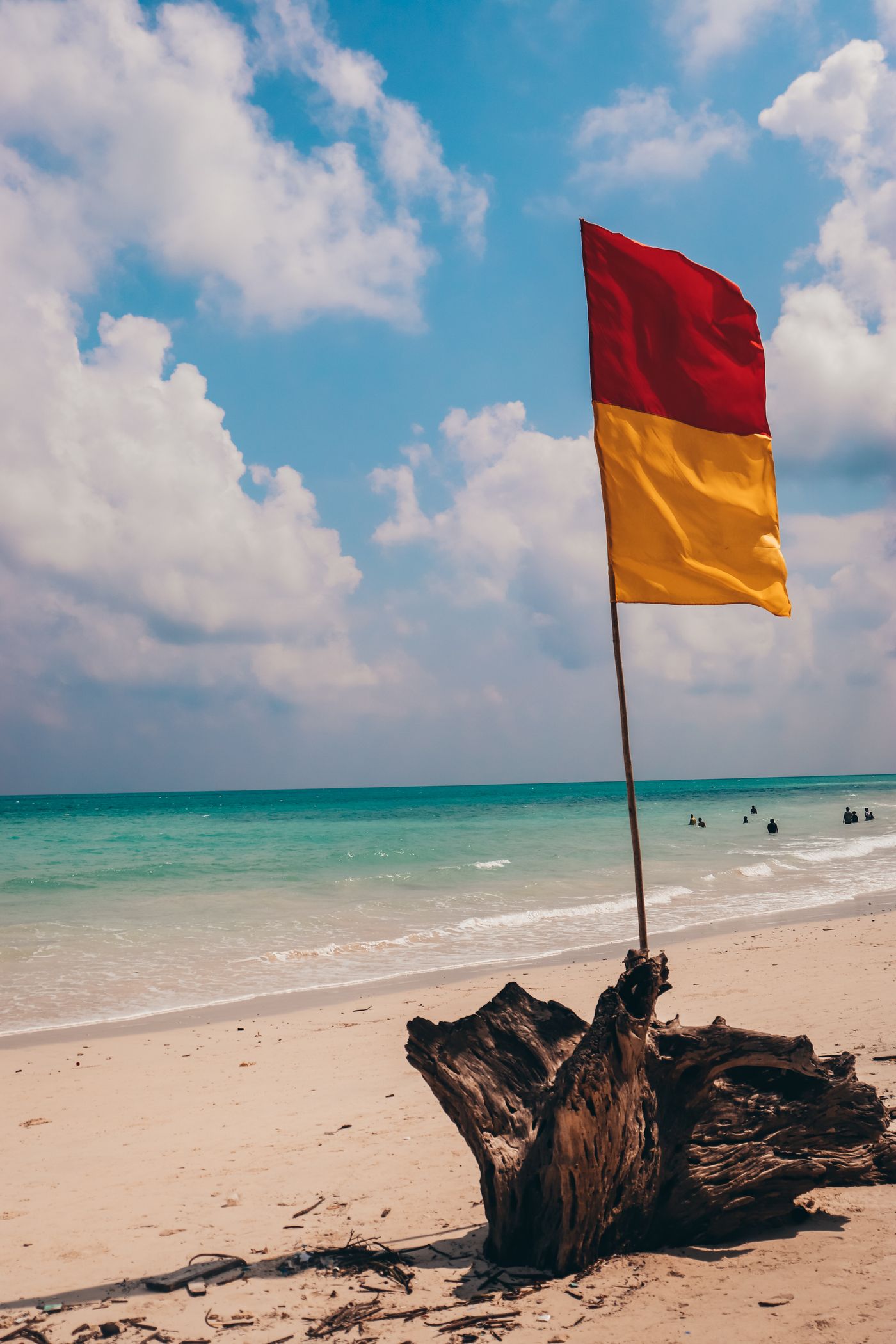
Flags are part of a beach's operating information, not decoration for a holiday photograph. Start with the signs and guidance at that location. Systems can differ between countries, so a colour you recognise from a previous trip should prompt a check rather than an assumption.
In the RNLI's UK guidance, red-and-yellow flags identify a lifeguard-patrolled swimming and bodyboarding area. Black-and-white chequered flags identify a zone for surfboards and other non-powered watercraft. A red flag means dangerous conditions and no water entry. These distinctions show why “between the flags” needs the activity and the flag type attached to it.
Look for written signs as well as flags. A prohibition sign may apply to an activity even when the sea looks inviting. A board can also describe local hazards, seasonal restrictions or the absence of a lifeguard service. If the wording is unfamiliar, ask a lifeguard or the relevant beach staff to explain it.
Do not use the absence of a flag as evidence that conditions are suitable. You may be outside the managed area, outside operating hours or at a beach using another system. Find the current official information before deciding what to do.
Point out the actual flags during a group briefing. It is easy for two people to discuss different sets when a beach has several zones. Ask an instructor to explain where the lesson takes place and how the group will respond if the boundary or instructions change.
Beach arrangements may change while you are having lunch, changing clothes or walking elsewhere. Before returning to the water, look again and follow the current directions. An earlier briefing is not a reason to ignore a later signal.
Photographs of flags can be useful for learning their names, but they should not become a portable permission slip. Keep the official local explanation with any notes you make. Avoid labelling an old image “safe surfing area” without its date, location and context.
If you cannot tell which area applies to you, pause and ask. Clear understanding is more useful than trying to look experienced. A first lesson is an appropriate setting to learn how the local signs and flags relate to the activity you are about to undertake.
Starting out
Find a first lesson whose meeting arrangements, equipment and teaching format leave you ready to learn, rather than trying to solve everything on the beach.

Starting out
Get clear answers about teaching, equipment and changes of plan before a surf school turns a provisional enquiry into a booking.