Starting out
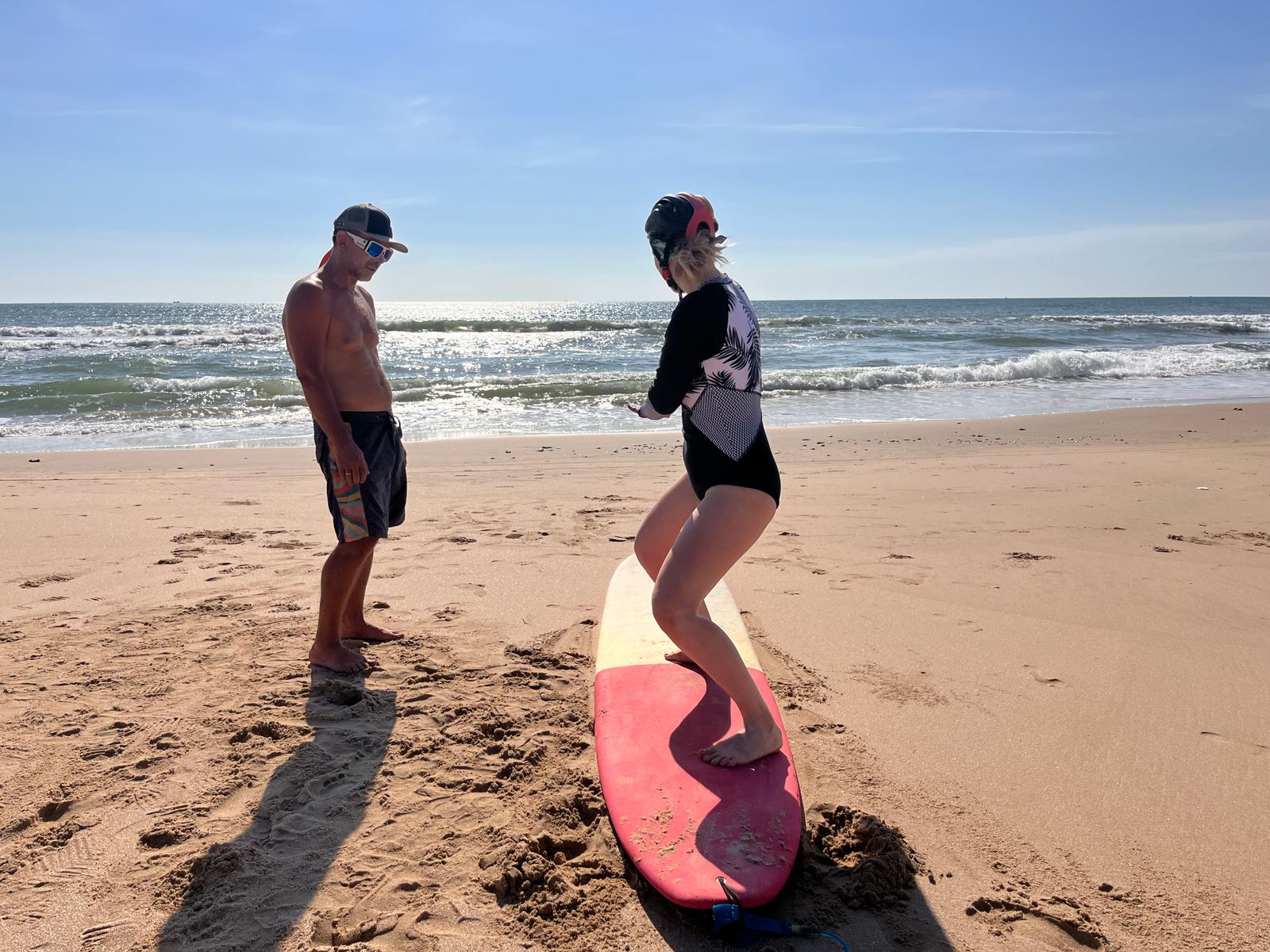
Choose a surf lesson for your first day in the water
Find a first lesson whose meeting arrangements, equipment and teaching format leave you ready to learn, rather than trying to solve everything on the beach.
Starting out
Litres describe one aspect of a board. Use the number to compare known models, then bring shape and your current experience back into the decision.
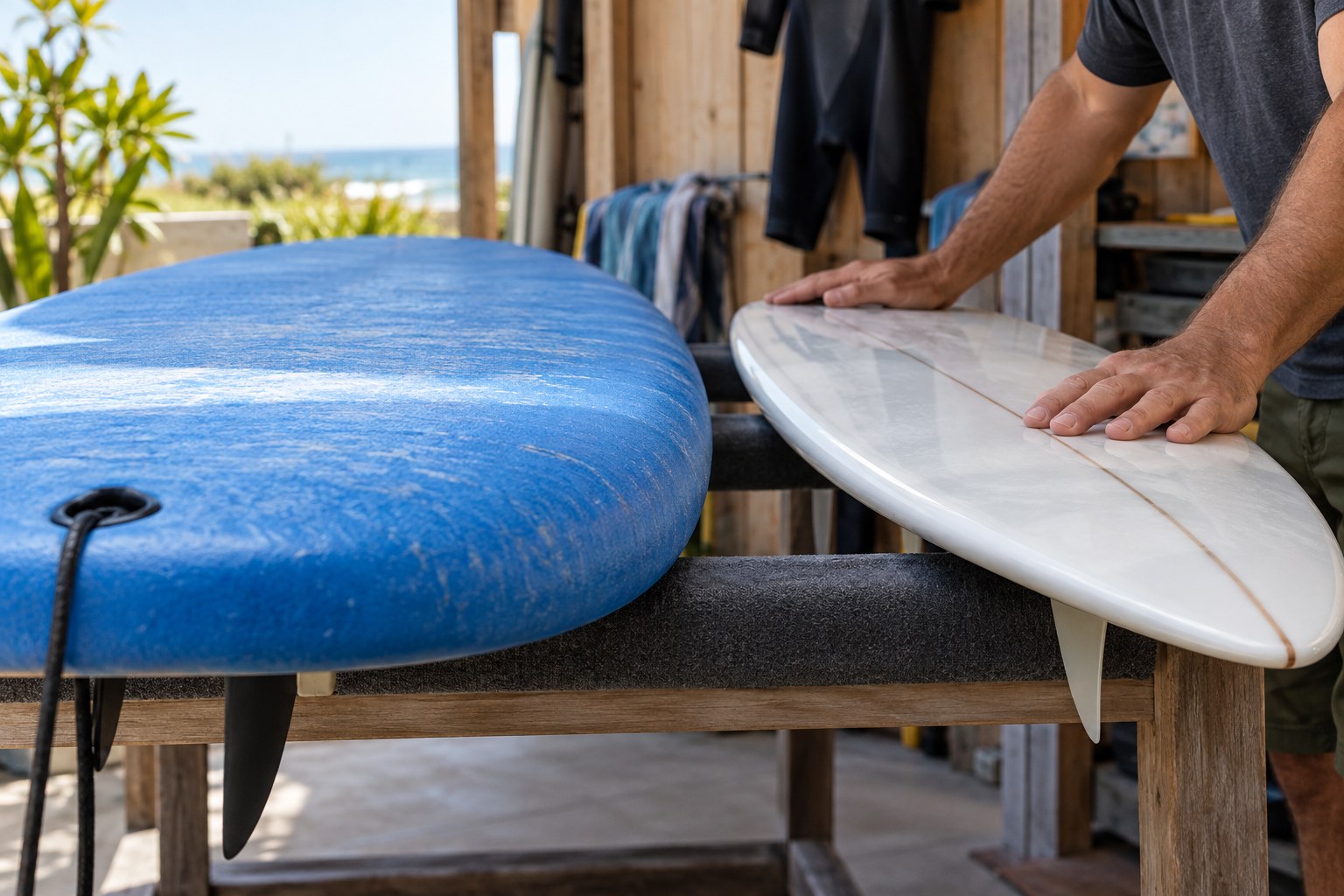
AI-generated illustration. Equipment details are illustrative; follow the instructions for your own item.
Surfboard volume is commonly stated in litres. It describes the three-dimensional volume of the board, rather than just its length or width. Firewire uses volume as a sizing aid while also noting that the appropriate size depends on the shape. That distinction matters when a beginner starts comparing specification tables.
Two boards can share a volume figure while looking very different. One may spread its foam over a longer, wider outline; another may concentrate it in a shorter, thicker shape. A matching number does not make them interchangeable for a learner, and it does not guarantee that either suits the conditions in which a lesson takes place.
After a lesson, ask for the model, size and volume if the information is available. Add the instructor's comments about why that board was chosen. This creates a more useful reference than entering your weight into several calculators and choosing whichever result looks most appealing.
If a rental board has no volume printed on it, do not invent a figure from length alone. Record the known dimensions and model. A shop may be able to identify it, but uncertainty is better than a precise-looking number with no reliable basis.
Bring your reference board into a buying conversation. Explain whether you could carry it comfortably, how the instructor assessed your control and what kind of supervised practice you are doing. These details let the adviser discuss a change from an actual starting point.
A volume calculator depends on the assumptions behind its questions. Labels such as beginner and intermediate may be broad, and they do not capture every aspect of experience, frequency or local conditions. Read any explanation supplied with the tool and avoid treating a single output as an instruction to purchase.
Ask what would change if you chose the neighbouring size of the same model. Would the length, width, thickness and intended use all remain suitable? This is a more focused discussion than comparing unrelated boards solely because their litre values sit close together.
Do not assume that lowering volume is a compulsory measure of improvement. Your equipment should serve the sessions you want and can appropriately undertake. A board that helps you practise consistently can remain useful even when a smaller model becomes an option.
When you save a shortlist, keep the whole specification together: model, construction, length, width, thickness, volume and fin system. Volume becomes helpful when it sits beside that context. On its own, it is one measurement trying to answer a much larger question.
Suppose you used a broad lesson board comfortably and now see a much shorter board with a surprisingly similar litre figure. Do not conclude that the shorter model offers the same learning experience in a convenient package. Ask the shop how the foam is distributed and which rider the shorter design is intended for. The equal number is the beginning of the comparison, not the result.
Another common situation is choosing between two sizes of the same model. Here the volume difference may sit alongside small changes in several dimensions. Ask which size the maker recommends for your circumstances and whether either has been tried in your lessons. Record the reason given, especially if it differs from the result of an online calculator.
When borrowing advice from a friend, keep their circumstances visible. Their preferred volume may reflect a different board, frequency of use or level of experience. It can help you formulate a question, but copying it removes the context that made it useful to them.
If a retailer cannot explain why a proposed board is appropriate beyond saying it has enough litres, seek a fuller discussion before buying. The aim is not to reject measurements. It is to use a measurement accurately, alongside the evidence that tells you what the board is intended to do and whether it fits your present practice.
Starting out
Find a first lesson whose meeting arrangements, equipment and teaching format leave you ready to learn, rather than trying to solve everything on the beach.

Starting out
Get clear answers about teaching, equipment and changes of plan before a surf school turns a provisional enquiry into a booking.