Starting out
Choose a surf lesson for your first day in the water
Find a first lesson whose meeting arrangements, equipment and teaching format leave you ready to learn, rather than trying to solve everything on the beach.
Starting out
Discuss a board's complete size and shape with your instructor before assuming a smaller board will make learning easier.
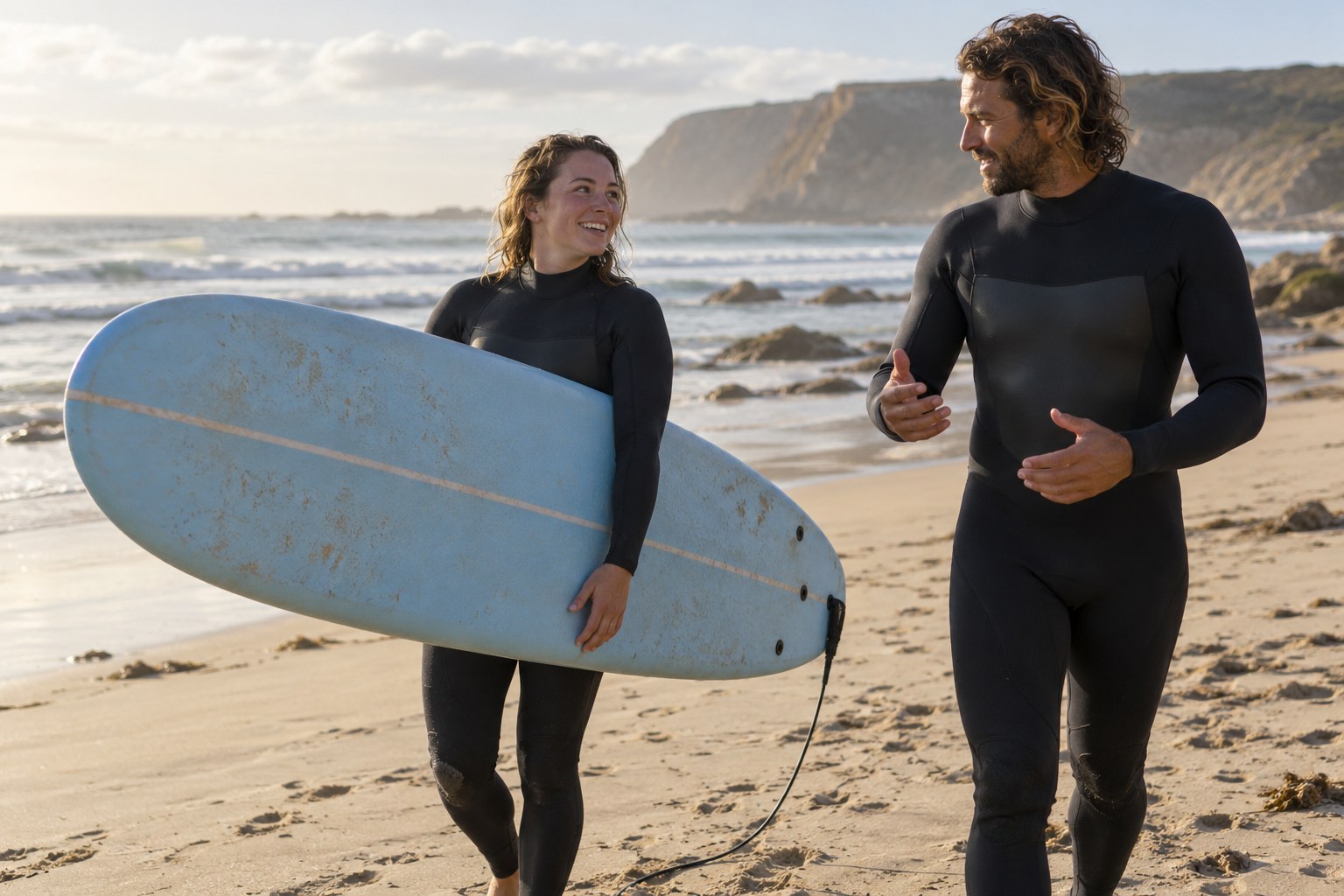
AI-generated illustration. Equipment details are illustrative; follow the instructions for your own item.
A large learner board can look cumbersome beside a short performance model, especially in a shop display. That visual comparison says little about which will support your first lessons. A board selected for early practice is intended to give you an appropriate platform while you learn the basic movements and how to manage equipment around other people.
The relevant word is appropriate. Bigger is not an unlimited prescription, and a very large board can create carrying or handling difficulties for a particular learner. An instructor can consider the whole person, the session and the available boards rather than recommending a size from a photograph.
Ask the instructor why they selected your board. They may point to its outline, length, foam distribution or learner-oriented construction. Write down those reasons. They are more useful than assuming the school simply gave everyone the largest board it owned.
During feedback, describe what actually felt difficult. Carrying the board from the shop is different from positioning yourself on it, and both are different from controlling it in the teaching area. A request for a smaller board may solve one inconvenience while making another part of the lesson less manageable.
If the instructor suggests trying another board, compare the experience within the lesson rather than making a private equipment experiment elsewhere. Ask what they want you to notice. A clear purpose helps distinguish a useful change from the excitement of trying something new.
Before buying, measure the space available at home and the route from storage to the beach. A board can be suitable in the lesson and still be awkward in a narrow stairwell. Resolve that logistical issue through storage or transport planning rather than automatically buying a shape that does not suit your current practice.
Consider rental while you establish what you use regularly. Keep records of several instructor-approved boards and the differences you noticed. That history gives a future shop conversation more substance than a vague desire for something easy to carry.
Avoid treating a smaller board as a graduation certificate. Learning does not require every purchase to be shorter than the previous one. The right question is whether a proposed board supports the sessions you are ready for, with a size you can transport and look after consistently.
Starting out
Find a first lesson whose meeting arrangements, equipment and teaching format leave you ready to learn, rather than trying to solve everything on the beach.
Starting out
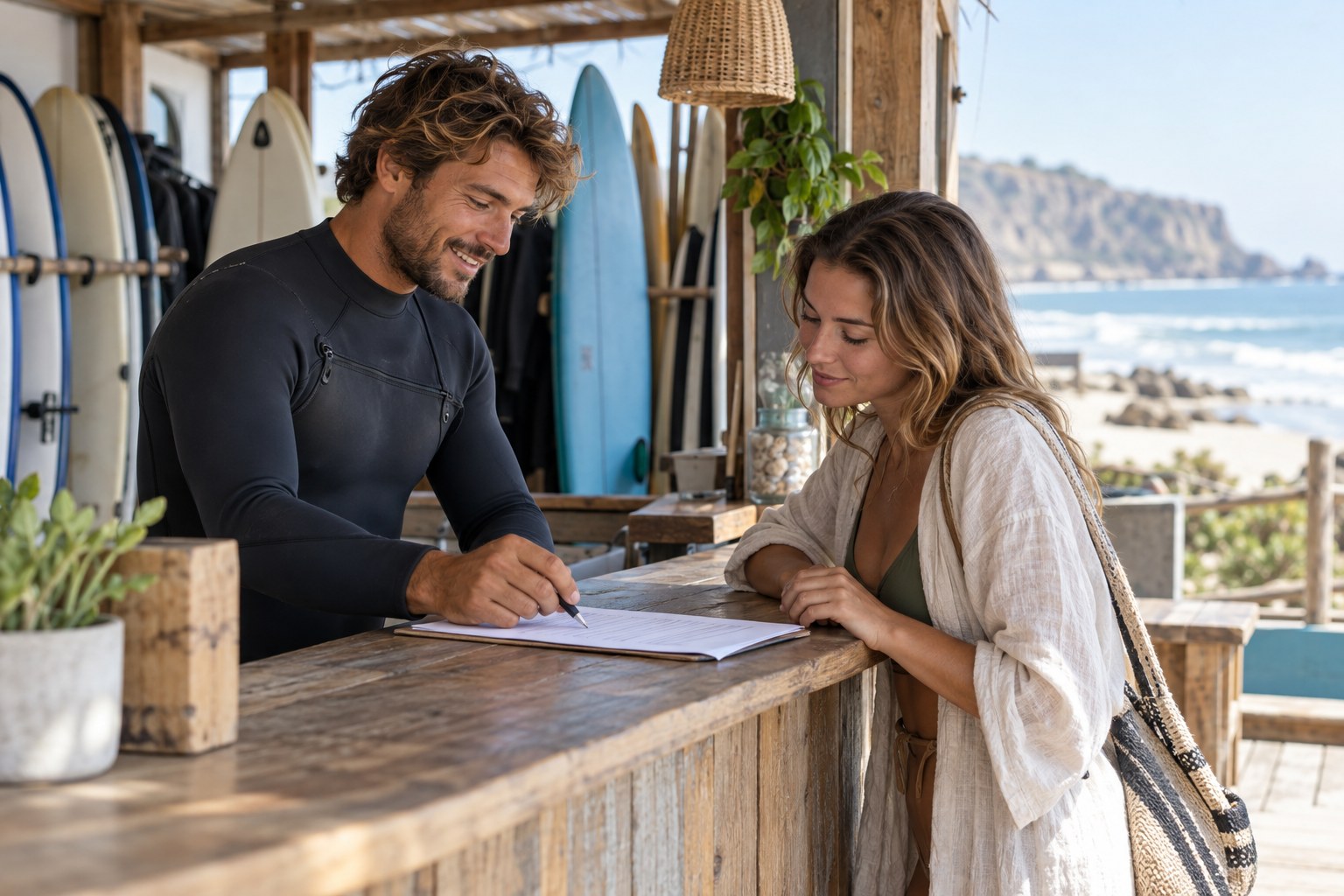
Get clear answers about teaching, equipment and changes of plan before a surf school turns a provisional enquiry into a booking.