Surf travel
Choose a surf camp by its daily schedule
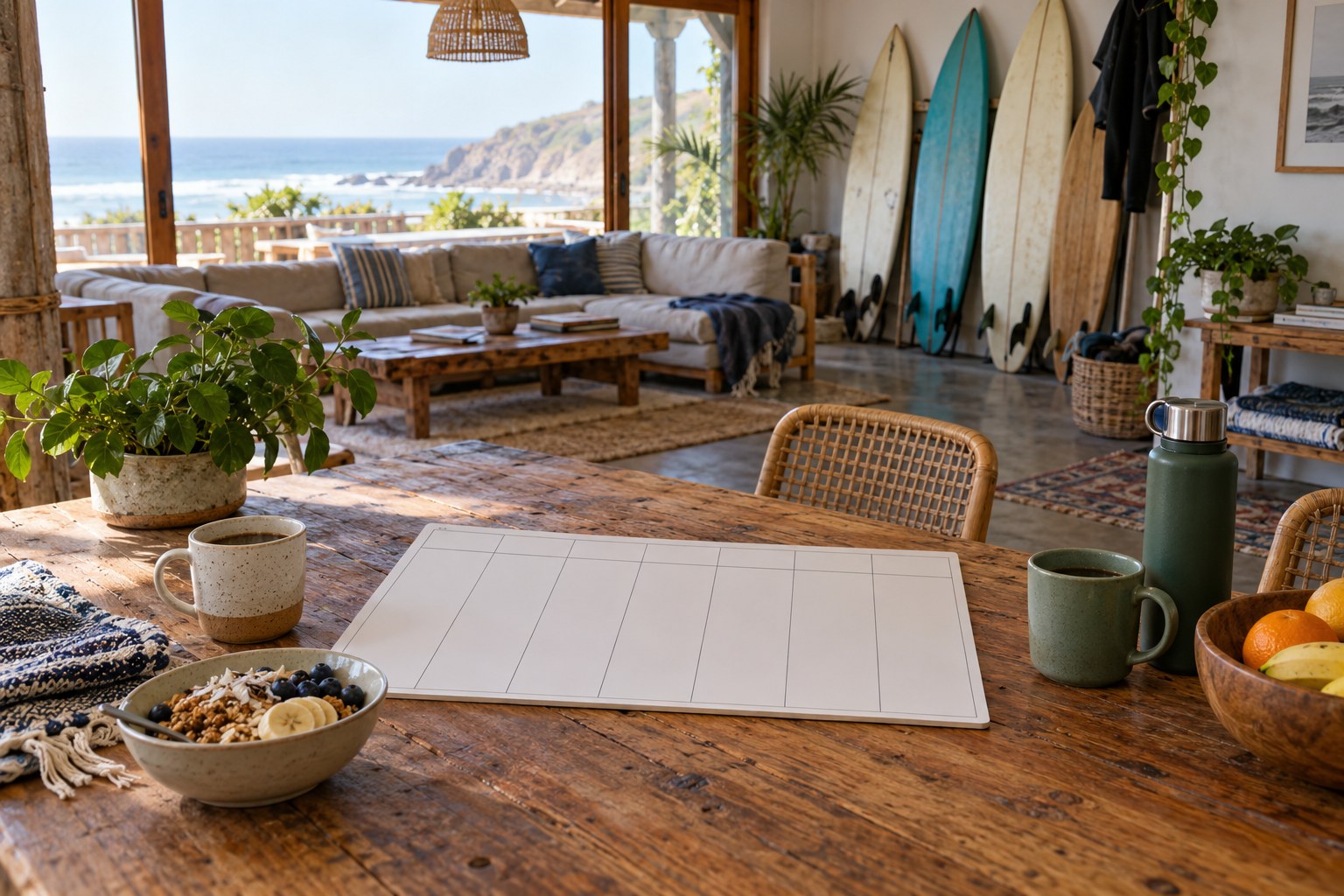
Read a sample day as a sequence of travel, instruction, meals and rest. The advertised number of lessons does not describe the whole holiday.
Surf travel
Pack for the changes between travelling, waiting, surfing and getting dry; one warm item rarely covers all four situations.
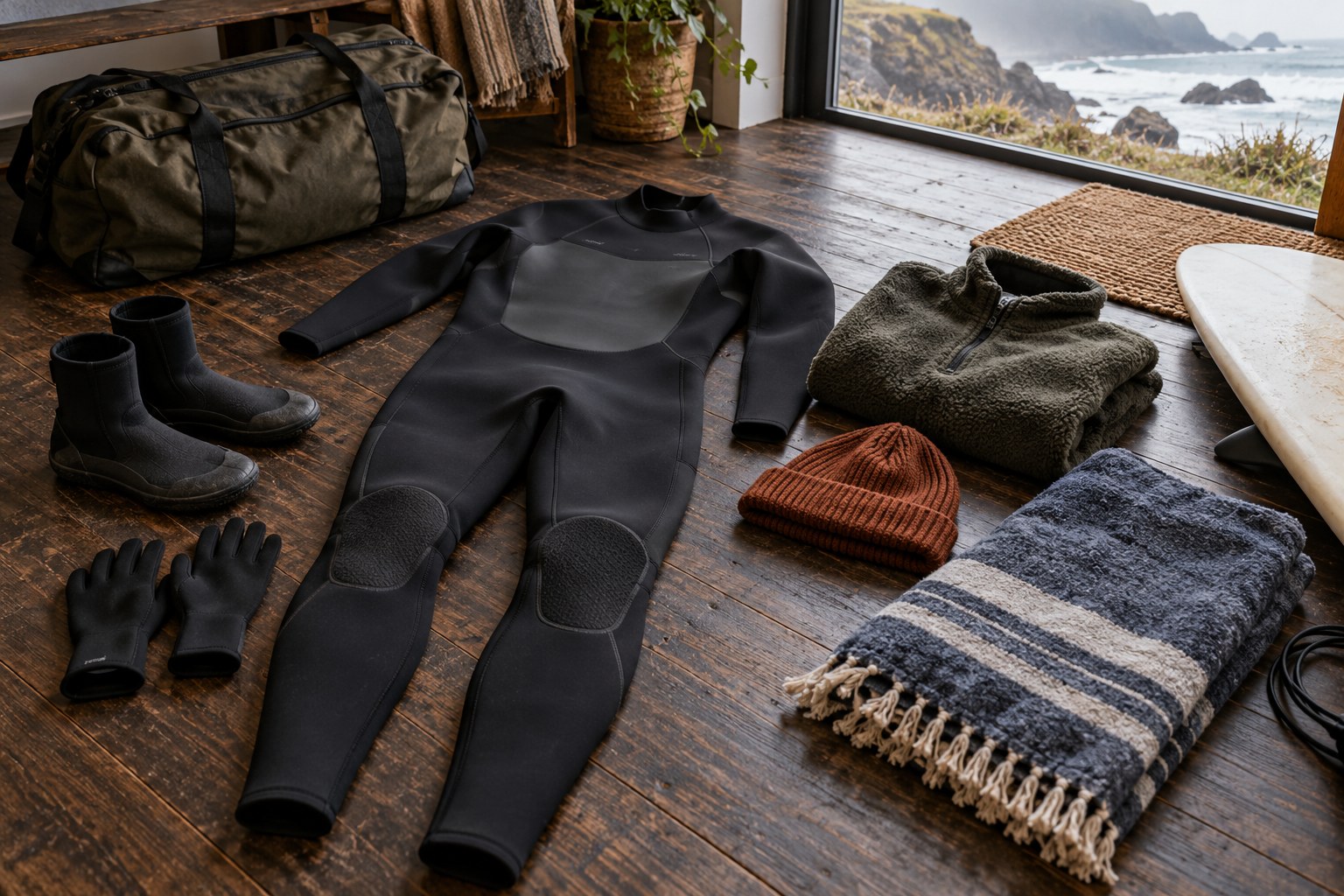
AI-generated illustration. Equipment details are illustrative; follow the instructions for your own item.
A cool-weather surf break involves more than the period spent in the water. You may wait for a lesson, carry equipment in wind, change outside and travel back in damp conditions. Build the packing list around those transitions. The wetsuit choice still belongs with local advice and the manufacturer's guidance; ordinary travel layers do a different job.
Write four headings on paper: journey, waiting, session and afterwards. Under each, list the clothing or equipment you actually expect to use. An item can appear twice, but check whether it will still be dry at the second point. The sweatshirt worn over damp kit should not also be your only clean travel layer.
Pack a complete dry change in a separate compartment or suitable bag. Include the small pieces that are easily forgotten, such as socks and underwear, as well as the obvious outer layer. Position the dry clothes where you can reach them without unpacking wet equipment onto them.
Choose a towel or changing garment for the facilities available. If changing takes place indoors, a large weatherproof robe may take space without serving much purpose. If you will wait outside between sessions, ask the school what arrangements it provides before deciding what to bring. A changing robe should not be treated as in-water protective equipment.
Footwear needs its own plan. Surf boots, if appropriate to your session and recommended locally, are not necessarily the shoes you will want for a long walk or the journey home. Check whether ordinary shoes can stay dry at the meeting point and how you will carry sandy items afterwards.
A second day changes the packing calculation. Ask the accommodation about rinsing and drying, and bring only hanging accessories it permits. An extra suit may be useful in some routines, but it also adds a second bulky item that needs care. Do not buy duplicates solely because the drying arrangement has not been investigated.
Carry a bag suited to transporting wet items, then empty it on arrival. Its role is to contain moisture during the journey, not to become the permanent overnight store. A small absorbent cloth can help with the bag's exterior or a wet bench, but keep it distinct from the towel you want against dry clothing.
Before leaving, place the packed bag beside the board or rental confirmation and mentally walk through the first day. Can you find the dry change without opening every compartment? Is there a place for the wet suit on the return leg? The useful list is the one that closes these gaps, rather than the longest list of cold-weather accessories.
Surf travel
Read a sample day as a sequence of travel, instruction, meals and rest. The advertised number of lessons does not describe the whole holiday.

Surf travel
Compare the room you will actually book, the shared facilities and the distance to the camp's meeting point rather than relying on a few attractive photographs.