Wetsuits & clothing
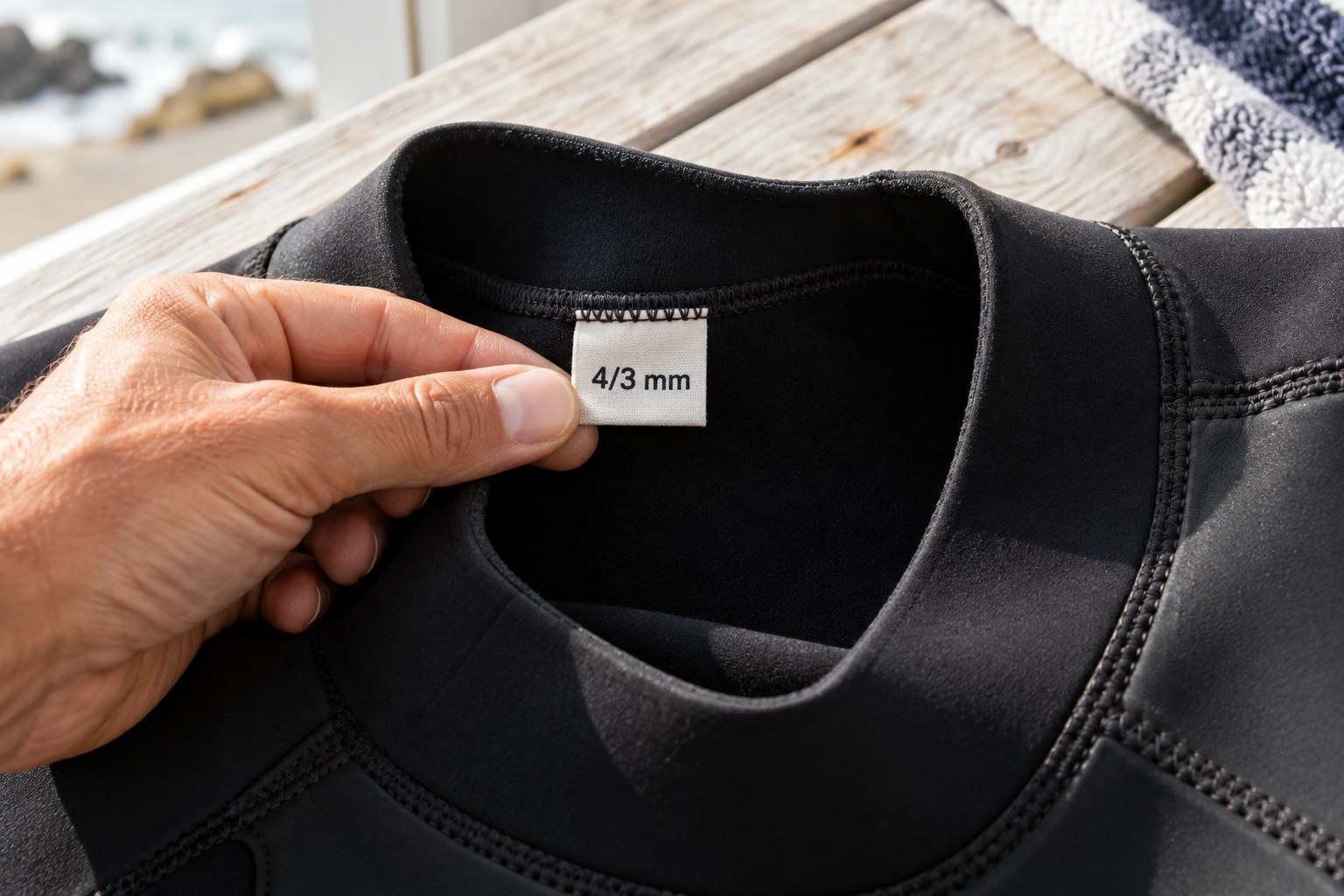
Read a wetsuit thickness label before comparing suits
Those slash-separated numbers describe material thickness, not a complete verdict on warmth. Read them alongside the suit's construction, fit and intended conditions.
Wetsuits & clothing
Assess a used wetsuit as a specific garment with an unknown history. Fit, visible condition and repair questions matter more than the original retail price.
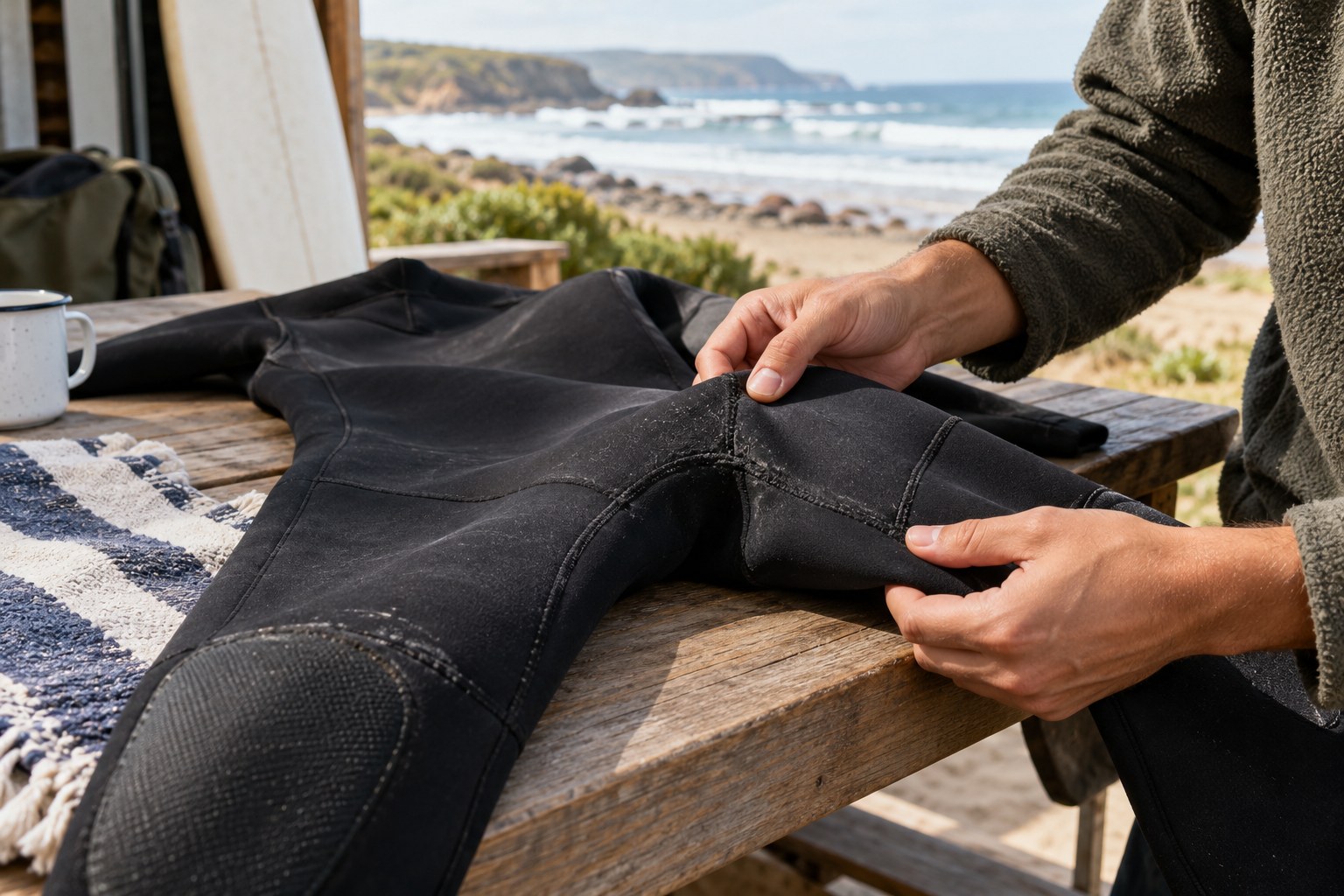
AI-generated illustration. Equipment details are illustrative; follow the instructions for your own item.
A second-hand wetsuit can be appealing when the original model was expensive, but the old price says little about the garment in front of you. Begin with its identity: maker, model, thickness, size and approximate purchase date if known. Ask for a clear photograph of the label rather than relying on a seller's memory or a colour match.
Find out why it is being sold and how it has been used, cleaned and stored. The answers provide context, not proof of condition. A suit described as worn only a few times still needs inspection, while an honest account of regular use helps you ask more focused questions.
Ask for the front and back, the interior, the entry system and close views of any damage or repairs. Include the neck, cuffs, knees and seam areas in the inspection. Photos should be clear enough to identify the location of a mark, not just show a dark garment hanging against a dark wall.
Request both an overall view and a closer image for an area of concern. Avoid asking the seller to stretch a seam dramatically to demonstrate its strength. A photograph cannot establish how a material will behave in use, and a destructive test is not an appropriate substitute for assessment.
If tape is lifting, a zip is damaged or a panel is torn, ask a relevant repair service about the issue before agreeing a price. Provide the model and photographs. Do not assume that every defect can be repaired economically or that a patch makes the whole garment equivalent to a new one.
Operate the zip gently as intended, checking for trapped material rather than forcing a stiff section. Look at the pull, slider, teeth and surrounding fabric. Ask whether any part has been replaced and whether the work was carried out by a repair service.
Check other fastenings and adjustment points for visible wear. A closure that works once during a brief inspection may still need further assessment if its surrounding material is deteriorated. Describe what you observe rather than attempting to diagnose the remaining lifespan yourself.
Use the maker's chart to identify a starting size, then try the garment under an agreed hygiene and inspection arrangement. A previous owner's height and weight do not guarantee that the suit will fit your proportions. Follow the entry instructions and check the full garment in comfortable movement.
Look for conspicuous loose areas, pressure points and restricted breathing or shoulder movement. Do not accept a poor fit because the price is low. If you cannot try the suit, understand what return option, if any, the seller actually offers before paying. An uncertain fit is part of the purchase decision, not a detail to resolve after it becomes yours.
If comparing two used suits, make separate notes rather than allowing one attractive feature to dominate. One might fit well but need a closure assessment; another might look newer but pull uncomfortably through the torso. Those are different uncertainties. A repair quote can address the first only if the repairer has enough information, while no discount resolves the second fit problem. Keep the options open until the relevant question has an answer, even if that means leaving without either garment.
List the purchase price, any confirmed repair quote and any cleaning or accessory cost required by the proposed arrangement. Compare that total with alternatives, including a suitable rental for occasional lessons. Leave unknown repair costs marked as unknown rather than assigning them an optimistic estimate.
Ask whether any warranty or service arrangement applies to a subsequent owner, and obtain the current terms from the maker if that matters to you. Do not assume a receipt transfers every original benefit. This is a question to verify for the particular purchase, not a general promise about used equipment.
Keep the seller's description, condition photographs and agreed terms with the payment record. If you proceed, follow the care instructions before use and resolve any remaining uncertainty with a fitter or repairer. A second-hand purchase works best when its limitations are understood in advance, rather than hidden by the excitement of finding a discounted model.
Wetsuits & clothing
Those slash-separated numbers describe material thickness, not a complete verdict on warmth. Read them alongside the suit's construction, fit and intended conditions.
Wetsuits & clothing
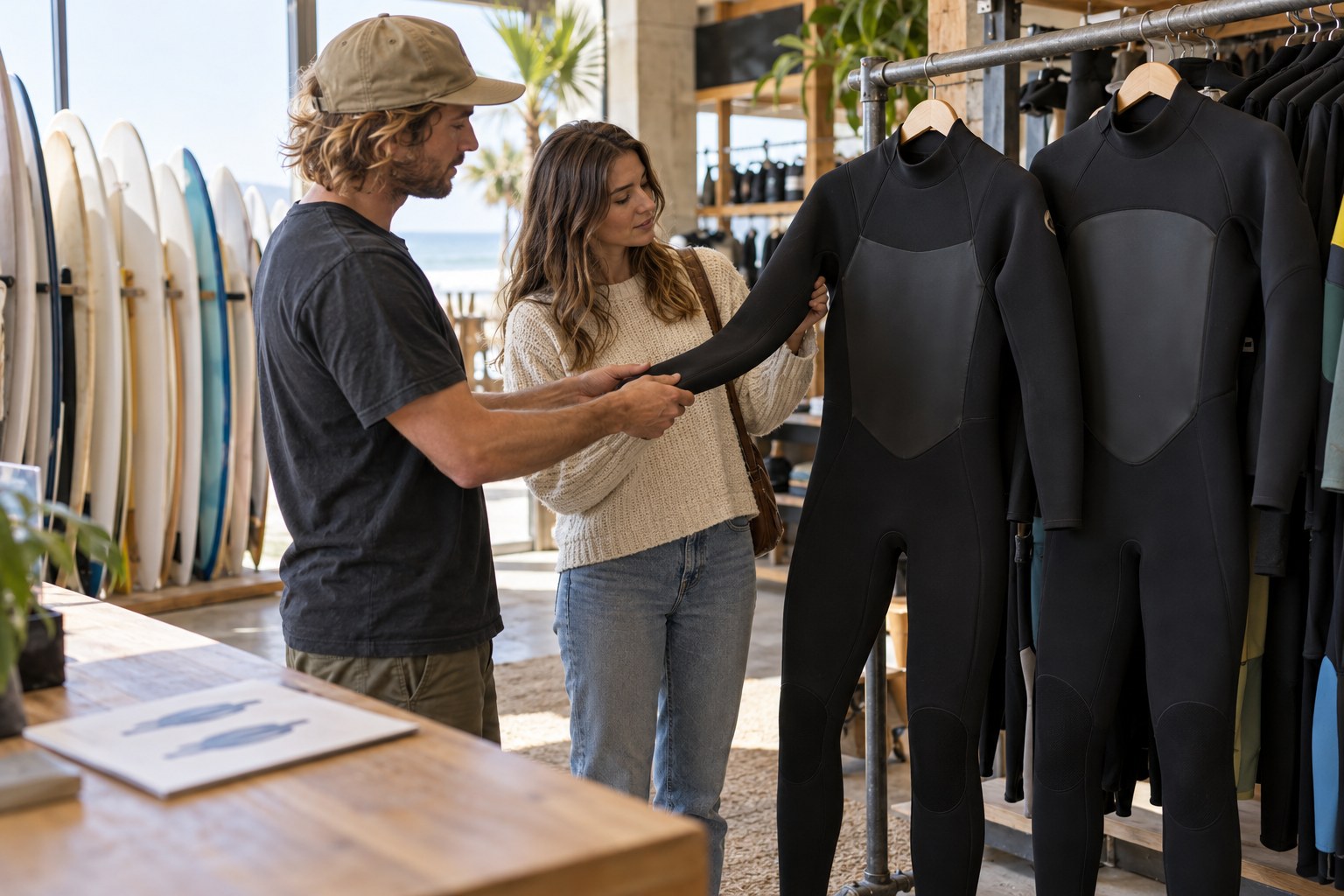
Bring the destination, season and session plan to a local shop, then compare its advice with the manufacturer guidance for the actual suit.