Wetsuits & clothing
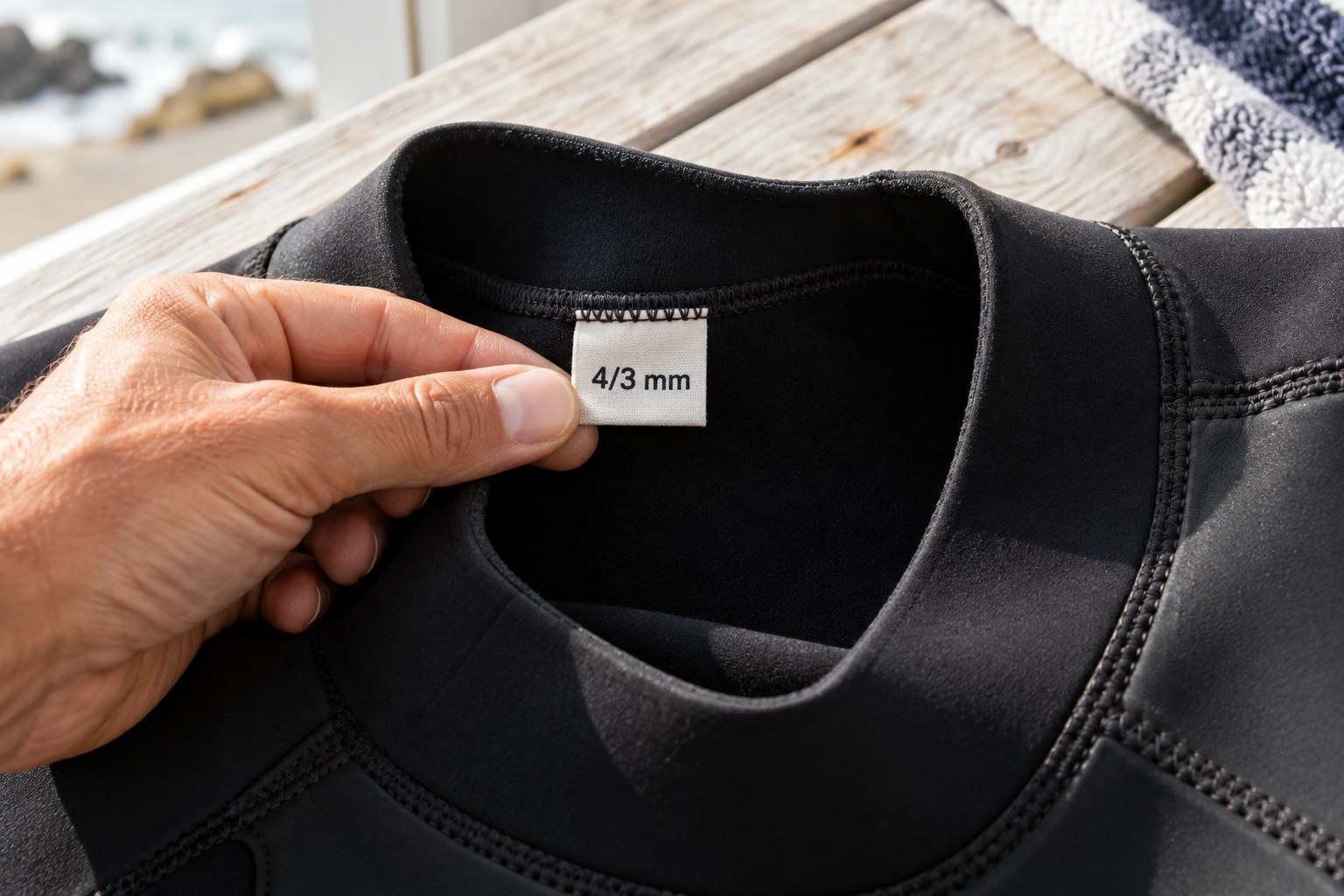
Read a wetsuit thickness label before comparing suits
Those slash-separated numbers describe material thickness, not a complete verdict on warmth. Read them alongside the suit's construction, fit and intended conditions.
Wetsuits & clothing
Bring the destination, season and session plan to a local shop, then compare its advice with the manufacturer guidance for the actual suit.
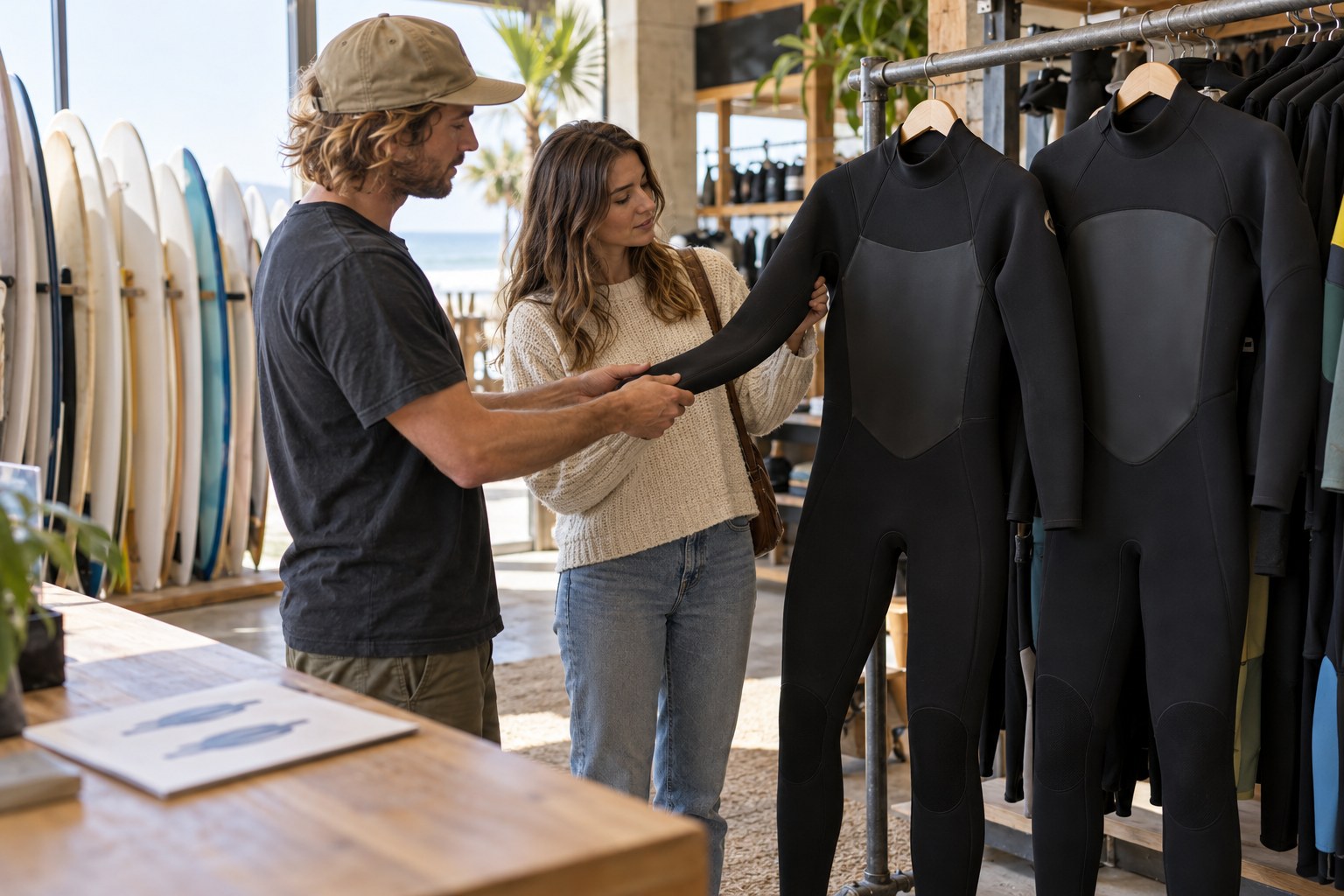
AI-generated illustration. Equipment details are illustrative; follow the instructions for your own item.
Choosing a wetsuit starts with a description of where it will be used. 'For Europe' or 'for winter' leaves too much variation unresolved. Name the coast, approximate dates and the kind of surfing you expect to do. If you are joining lessons, ask the school what equipment it recommends or supplies before buying a suit independently.
Use the manufacturer's chart for the model under consideration as one part of the conversation. A chart is a screening tool, not a guarantee of personal comfort or permission to enter unsuitable conditions. Local advice can help you ask better questions about the whole setup, including accessories and the time spent waiting on shore.
Tell the adviser whether you are booking a short introductory lesson, planning several sessions over a week or replacing equipment you already use. Explain what you currently own and what you noticed about its fit. A familiar brand name alone does not convey whether the old garment was loose through the torso or difficult to move in.
If you have no experience to compare, say so. There is no need to invent a preference for a particular thickness or entry system. Ask to understand the recommendation and whether rental equipment would let you evaluate the required type before buying.
Record the full model, thickness, coverage and proposed size. A shop may discuss two options that sound similar but have different cuts or construction. Photograph the label with permission and use the exact details when comparing prices elsewhere.
Check whether advice refers to the current model or an older version. A discounted suit can be a sensible purchase, but a shared product name does not establish identical construction. Ask the seller to identify the version and supply its own specifications.
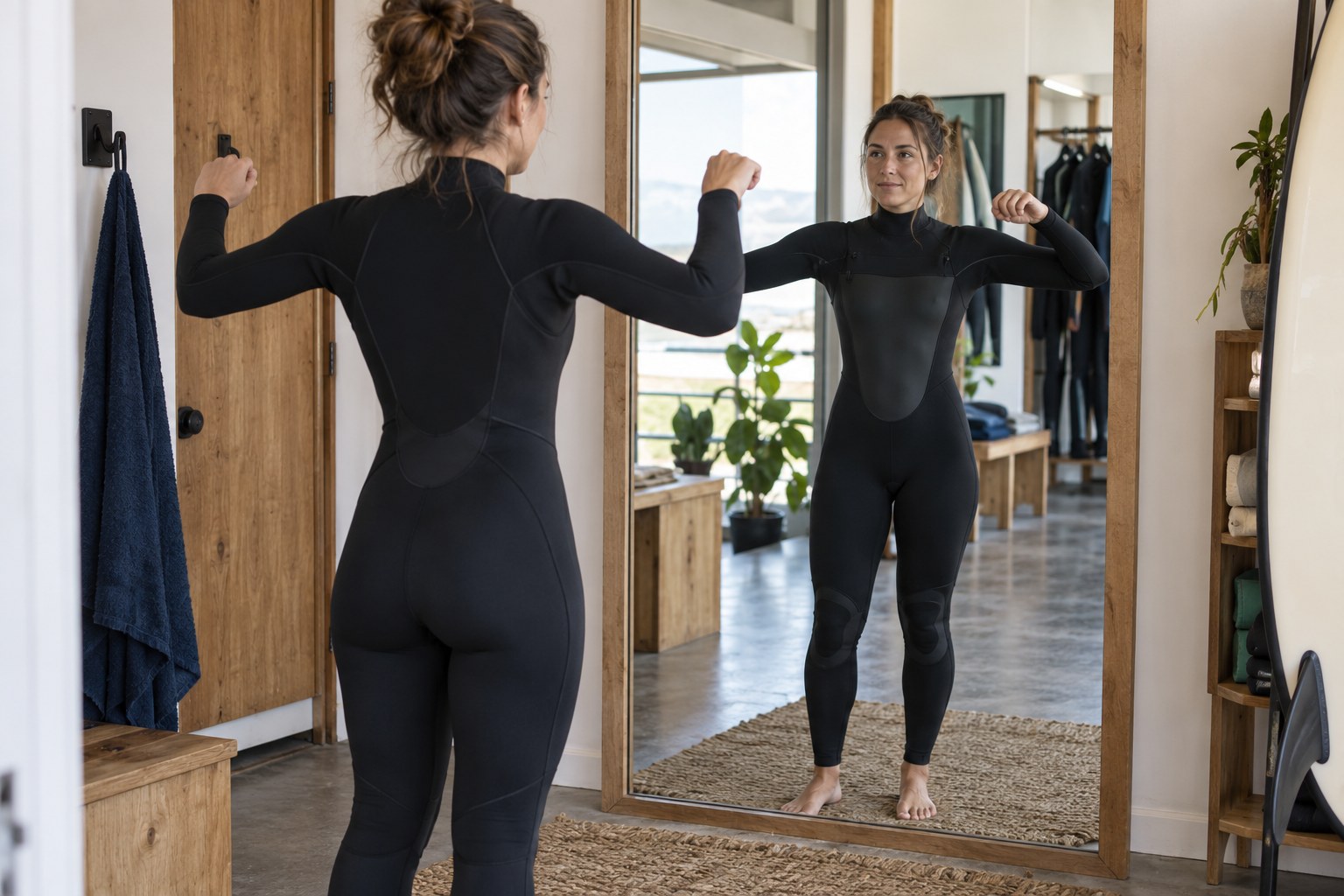
Arrange a proper fitting before the travel deadline. Follow the retailer's instructions, keep the tags attached and check the return conditions before taking the suit into the water. A size that looks plausible on a chart still needs to work on your body.
Discuss any restrictions in movement or breathing with the fitter rather than accepting them as an inevitable break-in period. If no available size works, try another cut or brand. The target is suitable equipment for the planned use, not making a sale item fit at any cost.
Revisit the decision if the trip changes substantially. A later season, another destination or a different lesson arrangement may call for a fresh conversation. Keep the original advice as a record of the circumstances it addressed, not as a permanent rule for every future surf trip.
Wetsuits & clothing
Those slash-separated numbers describe material thickness, not a complete verdict on warmth. Read them alongside the suit's construction, fit and intended conditions.
Wetsuits & clothing
Measure for the maker's chart, then assess the complete garment in motion. Your usual shirt or trouser size is only a familiar label.