Wetsuits & clothing
Choose a wetsuit using local advice and maker charts
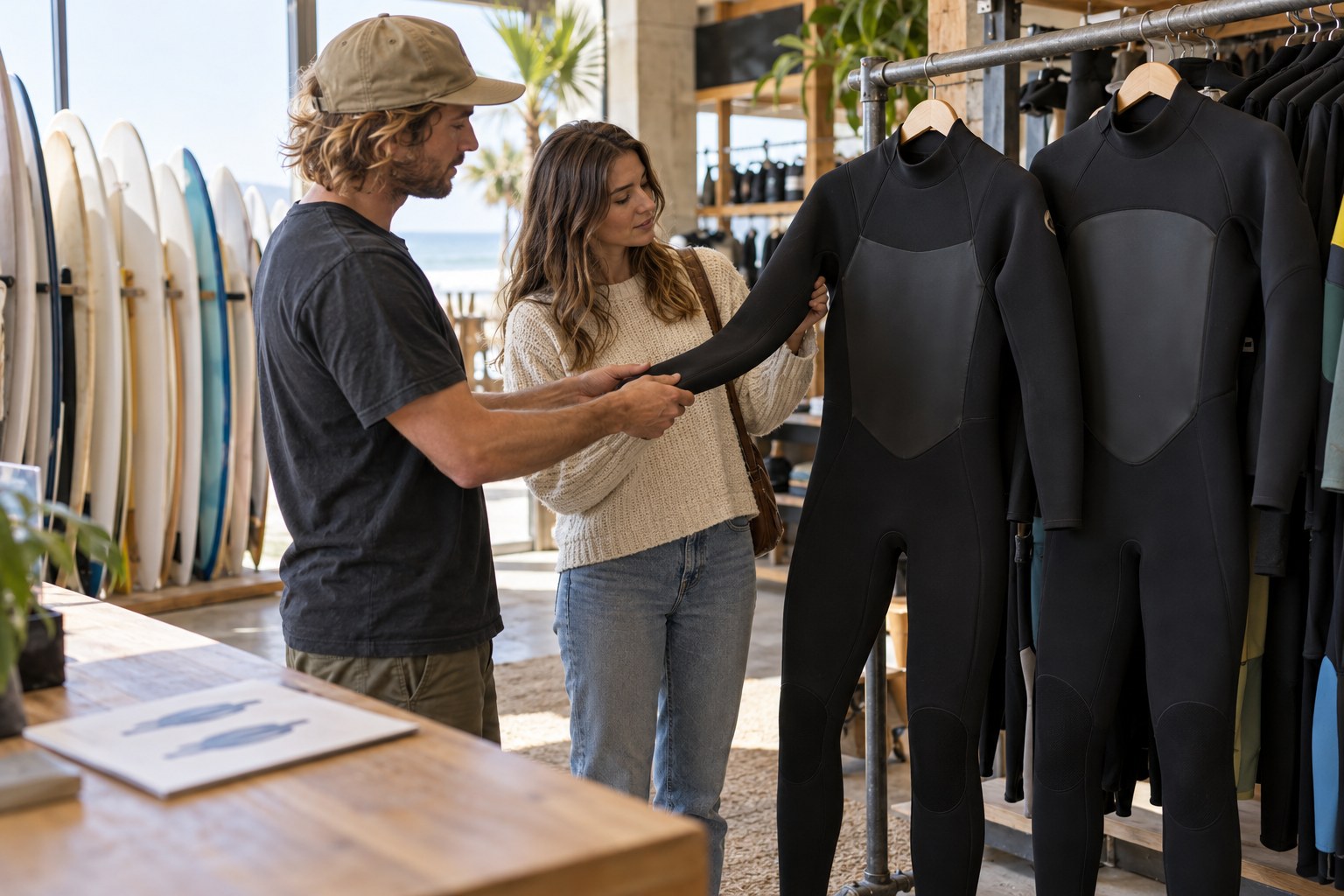
Bring the destination, season and session plan to a local shop, then compare its advice with the manufacturer guidance for the actual suit.
Wetsuits & clothing
Those slash-separated numbers describe material thickness, not a complete verdict on warmth. Read them alongside the suit's construction, fit and intended conditions.
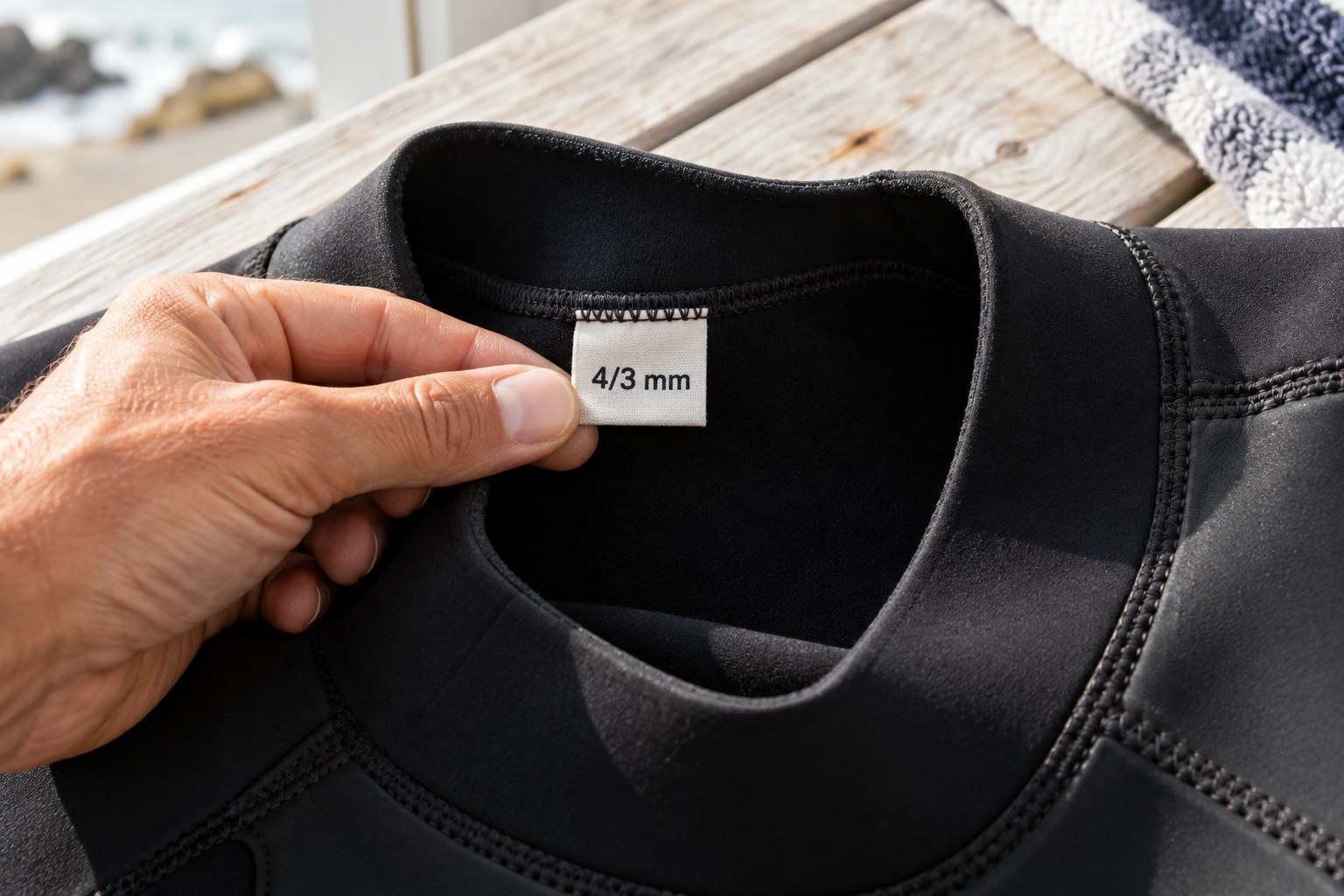
AI-generated illustration. Equipment details are illustrative; follow the instructions for your own item.
Two wetsuits can carry the same thickness label and still be very different purchases. One may have a different entry system, lining, seam construction or body shape. Begin with the numbers because they help organise a shortlist, then keep reading. A label is a specification to interpret, not a promise about how long any particular person can remain comfortable in the sea.
Rip Curl explains a 3/2 label as 3 millimetres through the torso and 2 millimetres through the arms and legs. The thicker torso panels and thinner limb panels serve different needs. Other models use additional numbers or a different panel arrangement, so check the maker's description rather than assuming that every slash means precisely the same layout.
Write down the complete specification when comparing listings. A shortened title that says only '3mm suit' may omit useful detail. Look for the model name, stated thickness, sleeve and leg coverage, entry type and a clear photograph of the label. If buying an older or used suit, request those details from the seller rather than matching its colour to a current catalogue photograph.
Put two full-length suits side by side before comparing either with a short-leg spring suit. Coverage is a separate decision from panel thickness. An appealing discount can distract from the fact that the garment is intended for a different kind of session. Create a short note for each candidate instead of relying on the shop's category filters, which may group several cuts together.
A useful comparison might read: full-length suit, chest entry, stated 4/3 thickness, size still to be checked. A second note could reveal that the alternative is actually a short-sleeve model. Neither description establishes a winner, but the difference becomes visible before you start comparing prices. Leave an explicit blank where a listing does not supply information; a blank is preferable to a guess.
Take the relevant manufacturer's chart to a local surf shop or instructor and explain when and where you intend to surf. Include whether this is a short supervised lesson, a longer outing or a trip during a different season. Ask what else they need to know before recommending equipment. Do not substitute a universal internet chart for that local discussion.
The same approach applies when changing brands. Keep the old suit's label as a reference, but describe what did and did not work about the complete garment. If the shoulders restricted movement or the body felt loose, repeating its thickness number alone will not address that problem. Try the proposed replacement according to the retailer's fitting instructions and check the returns terms before removing tags.
Once the choice is made, save a photograph of the specification and receipt. That small record makes a later repair enquiry or replacement search much easier, especially when the printed label has faded. It also helps separate the suit you actually own from a similarly named model with a different construction.
Wetsuits & clothing
Bring the destination, season and session plan to a local shop, then compare its advice with the manufacturer guidance for the actual suit.
Wetsuits & clothing
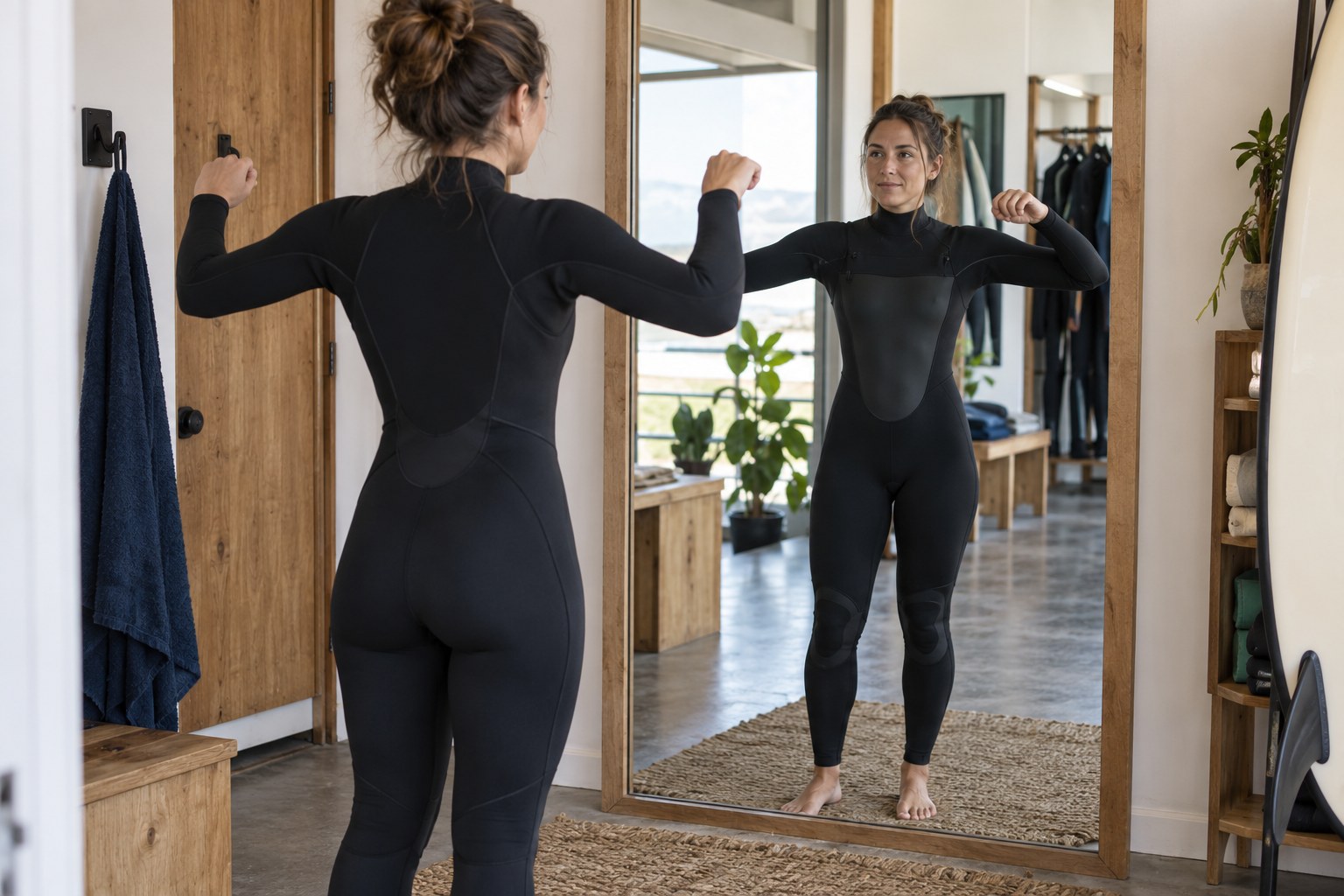
Measure for the maker's chart, then assess the complete garment in motion. Your usual shirt or trouser size is only a familiar label.