Boards & equipment
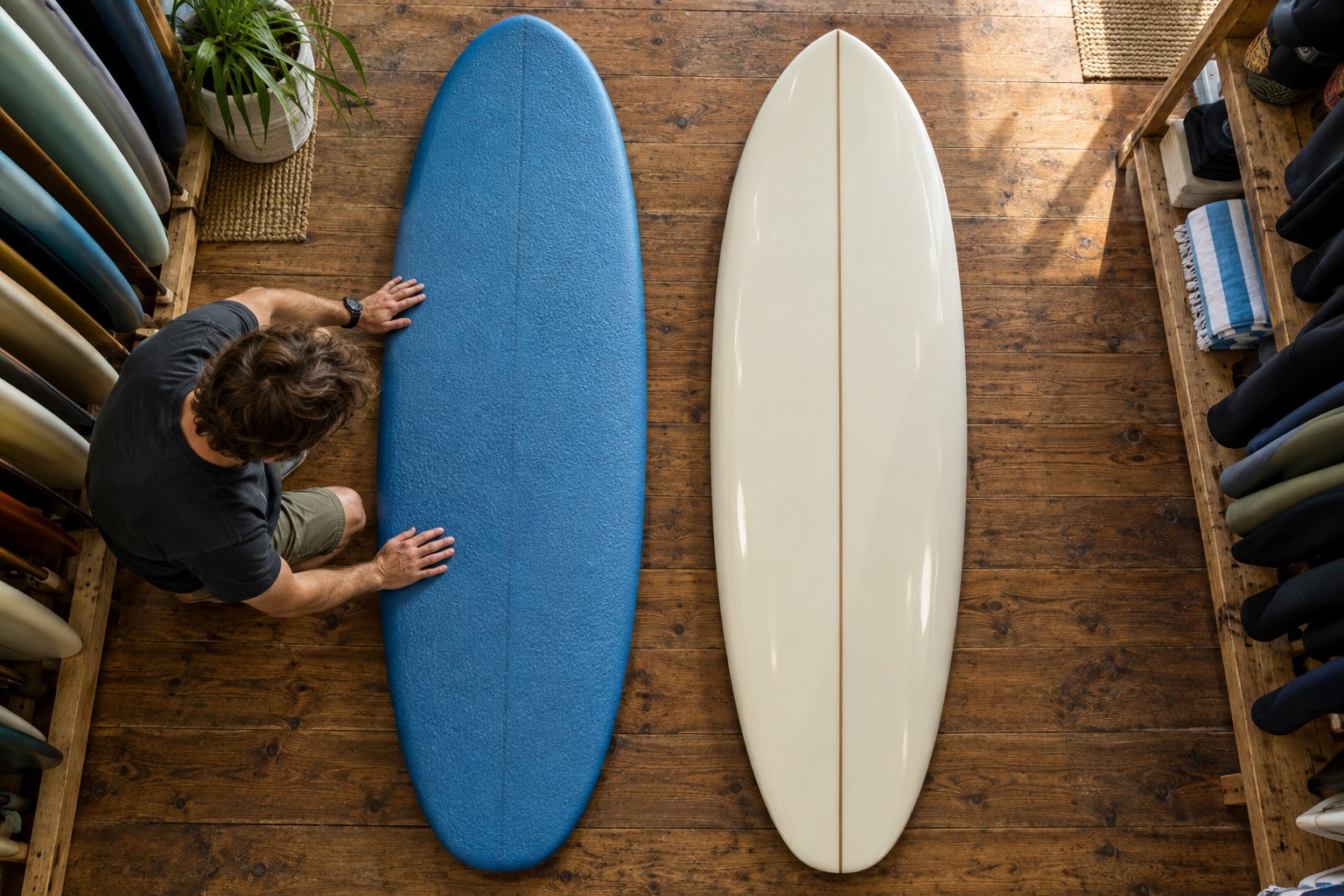
Soft top or hard board for your first purchase
Choose construction alongside shape, condition and the way you will use the board, rather than treating a hard board as an automatic upgrade.
Boards & equipment
A cuff needs the correct position, a sound closure and a fit that follows its maker's instructions. Tightness alone is not a useful test.

Start by identifying the cuff type. An ankle cuff and a calf cuff are designed for different positions, and products intended for other board sports may use different arrangements again. Follow the exact product instructions rather than copying the position shown in a photograph of someone else's equipment.
If you are new to surfing, have an instructor check the fit as part of the equipment briefing. Tell them if the cuff feels uncomfortable, moves unexpectedly or is difficult to fasten. Do not assume discomfort is something every learner must tolerate.
Open the cuff fully and inspect the fabric, stitching and closure surfaces. Look for fraying, torn material, embedded grit and worn areas that no longer engage as they should. A clean-looking outer surface can conceal damage on the part that actually fastens.
Follow the manufacturer's cleaning directions for debris. Avoid cutting, melting or gluing the closure to improve it. If it no longer holds reliably, replace the appropriate product rather than adding an improvised strap over the top.
Check the connection between cuff and cord. A comfortable cuff is not enough if that junction is damaged. Ask a shop about any unusual movement, cracking or missing part before continuing to use it.
Wetsuit legs and surf boots can affect the arrangement. Ask the instructor or manufacturer how the particular cuff should be worn with your kit, rather than applying a universal over-or-under rule. Make sure the setup follows the intended product use and does not leave the closure partly engaged.
Do not keep tightening a cuff simply because something feels wrong. Pressure, rubbing or restricted movement deserves a fit check, not more force. If the available cuff cannot fit appropriately, choose a suitable alternative with advice.
After the session, inspect any area that caused discomfort and note what clothing you were wearing. That record helps a shop understand a recurring fit issue. Rinse and dry the leash as directed, keeping the closure from damaging other fabrics in storage. A repeatable, comfortable setup begins with sound equipment and clear instructions, not an improvised arrangement that changes every time you use it.
Boards & equipment
Choose construction alongside shape, condition and the way you will use the board, rather than treating a hard board as an automatic upgrade.

Boards & equipment
Bring a record of the boards you have used and the sessions you want to your sizing conversation.