Boards & equipment
Soft top or hard board for your first purchase
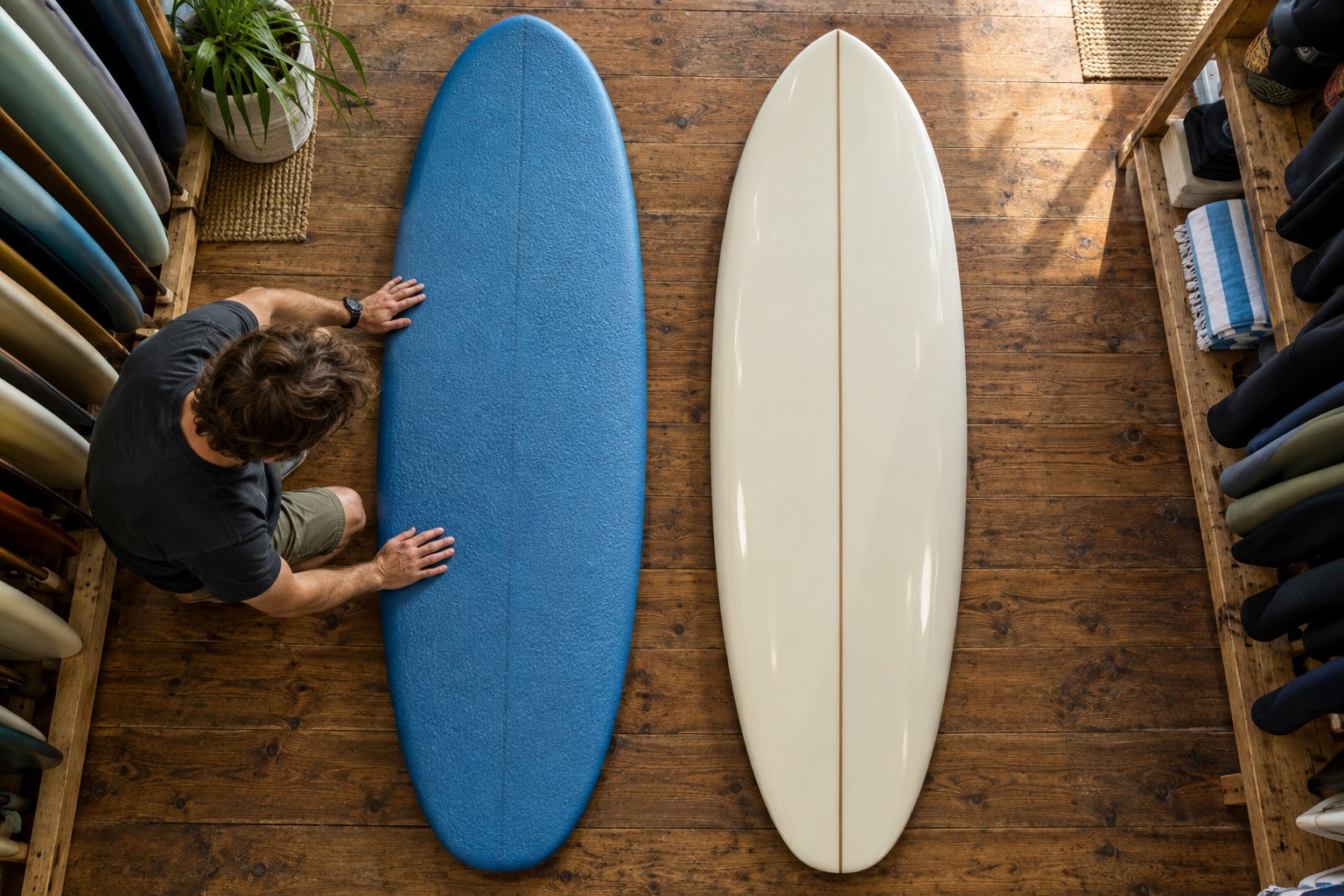
Choose construction alongside shape, condition and the way you will use the board, rather than treating a hard board as an automatic upgrade.
Boards & equipment
Bring a record of the boards you have used and the sessions you want to your sizing conversation.

AI-generated illustration. Equipment details are illustrative; follow the instructions for your own item.
Board length is visible, easy to compare and only one part of fit. A local instructor who has seen you in a lesson can connect the measurement to your actual practice. Ask for that conversation after a session, while the equipment and your experience of it are still easy to identify.
Record the current board's model, length, width and volume if available. Describe what you found difficult without immediately deciding that length caused it. Carrying a board through a narrow path, positioning yourself on the deck and responding to an instruction are different issues that may need different solutions.
Tell the instructor where you expect to continue and how often. Someone taking occasional holiday lessons has a different ownership question from someone attending a regular local course. Be honest about the level of supervision you still need; a purchase should not silently become a decision to practise independently.
Ask whether a proposed shorter or longer board changes the outline, width and thickness as well. Sizes within one model can differ in more than a single number, and moving to another model adds further variables. A recommendation is easier to understand when the instructor explains the intended benefit and the likely compromise.
If the instructor gives a range, keep it as a range until you compare actual models. A shop can then show options within that discussion rather than treating a single length as a shopping command. Give the shop the context, including which board you tried and what the instructor observed.
Measure the storage space and the narrowest parts of the route into it. Consider stair turns, lift access and doorways, not just whether the board fits against one wall. Use the packed board dimensions when planning vehicle transport or a bag purchase.
Tell the adviser about a genuine handling constraint. If you cannot carry a large board comfortably, ask what assistance or alternative arrangement is available. Do not quietly remove half a metre from the recommendation and assume the rest of the advice still applies.
A trial can resolve uncertainty more directly than another specification table. Ask whether the school or shop has a suitable board in the proposed size and what conditions would make a comparison useful. Keep the session within the instruction appropriate to your experience.
When you settle on a model, save the exact specification and the reason for the choice. This gives you a reference if a retailer offers a substitute or a different construction. A board with the same length printed on it is not necessarily the board that was recommended.
Ask the instructor to describe the type of board in ordinary terms as well as giving a size range. That helps if the school uses equipment unavailable in your home market. A shop can compare suitable alternatives more accurately when it knows the intended outline and use, rather than receiving only a length written on a phone.
If a shop proposes an alternative, send the complete specification back to the instructor when that support is available. Ask whether the difference changes the recommendation. This is especially worthwhile when a sale offers the next size down or a similarly named performance version.
Do not let a limited stock announcement create an artificial deadline. A board is a purchase you will transport, store and use repeatedly. Waiting for the appropriate option or continuing to rent can be a reasonable response when the available substitute has not been assessed.
Once you own the board, note how the first appropriate sessions compare with the trial. If a difficulty appears, return to observation and instruction before replacing it with another length. This closes the loop between advice, purchase and actual use rather than starting a cycle of buying around guesses.
Boards & equipment
Choose construction alongside shape, condition and the way you will use the board, rather than treating a hard board as an automatic upgrade.
Boards & equipment
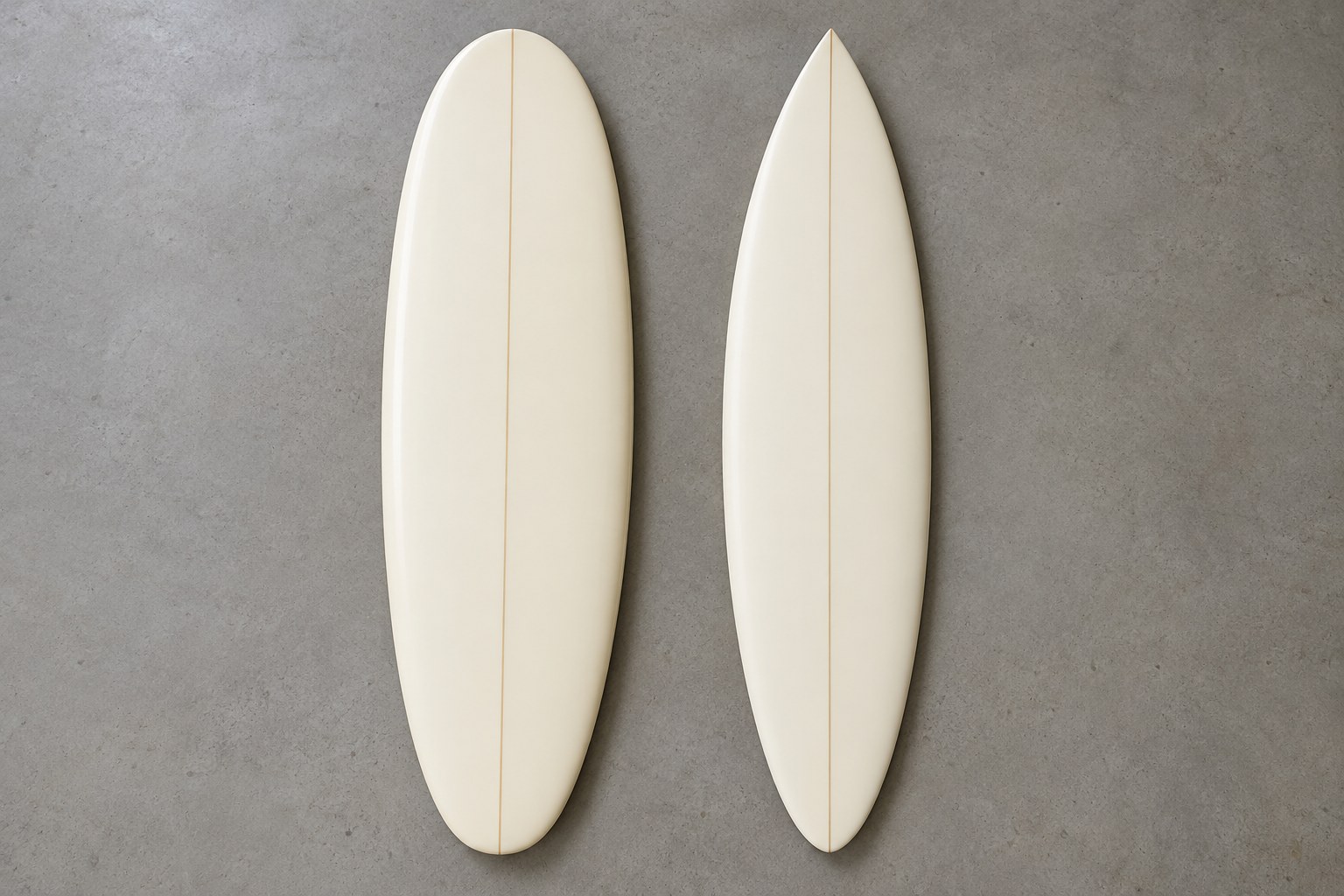
Look at where a board carries its width, not just the maximum measurement printed beside its length.