Boards & equipment
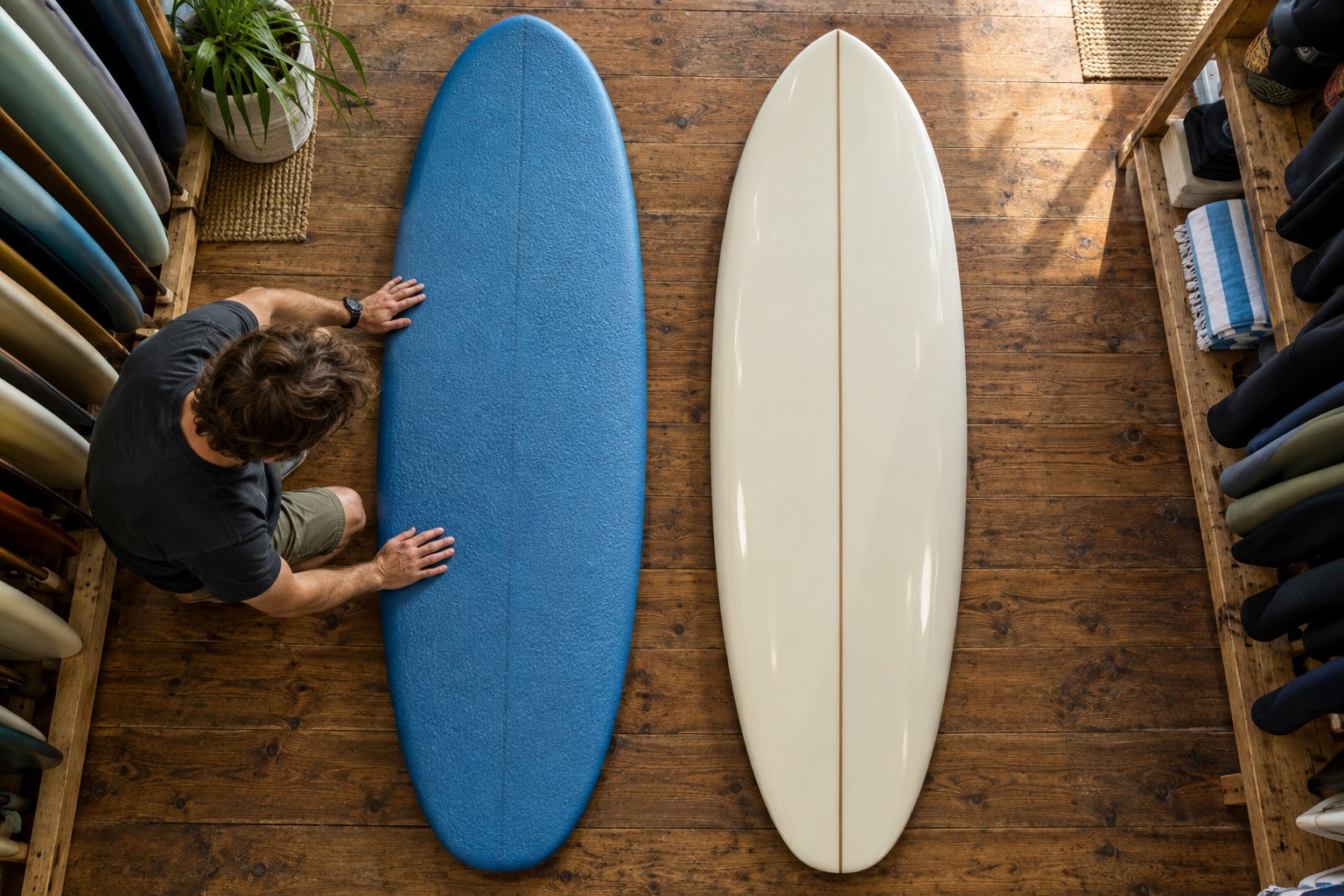
Soft top or hard board for your first purchase
Choose construction alongside shape, condition and the way you will use the board, rather than treating a hard board as an automatic upgrade.
Boards & equipment
Identify the box system, board model and required hardware before buying a fin that merely looks as though it will fit.
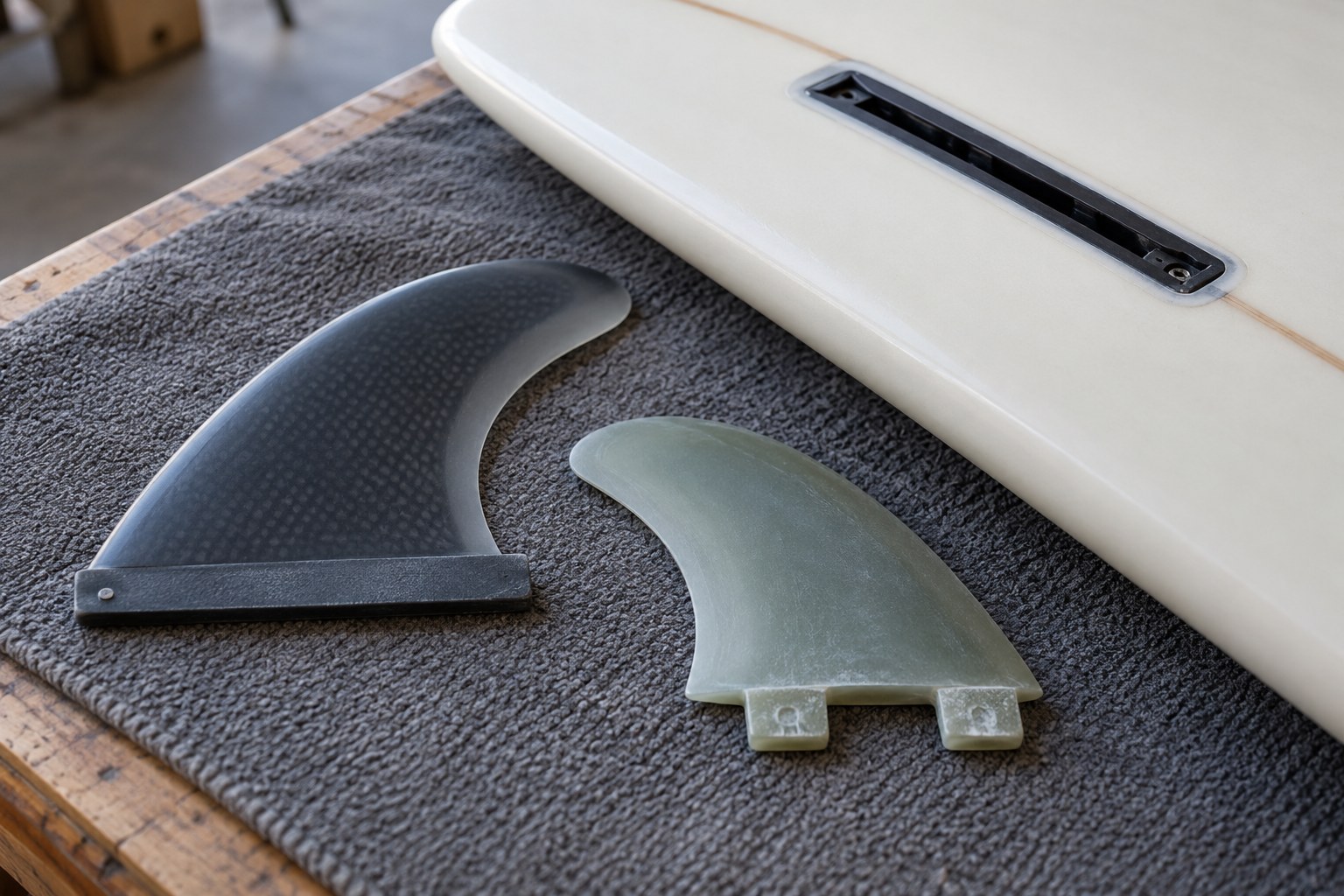
AI-generated illustration. Equipment details are illustrative; follow the instructions for your own item.
Fin compatibility starts with the attachment beneath the board, not the shape projecting into the water. Look for the board maker's specification and any marking on the box or plug. Save a clear photograph of the fitting and the existing fin base before shopping.
Firewire's FAQ distinguishes the single-tab Futures interface from the dual-tab FCS family. That is a useful first distinction, but the exact generation and product still matter. A generic description such as “two tabs” is not enough to settle every compatibility question.
Check the fin listing for the named system and the board documentation for the box type. If either is uncertain, send the photographs and model details to the manufacturer or an authorised shop. Ask for a written confirmation of the intended combination, including any required screws or inserts.
FCS explains that original FCS fins can be used with FCS II boxes using the appropriate compatibility arrangement. This is a specific supported combination, not evidence that all fins in either family interchange in every direction. Follow the current instructions for the actual components you own.
Do not force a fin into a fitting to test your theory. Resistance can come from incompatibility, debris, damage or an incorrect procedure. Stop and have the connection checked rather than using extra leverage or modifying the fin base yourself.
A centre fin and side fin can have different requirements even when sold within one range. Confirm the intended position, set configuration and size. For longboard-style centre boxes, read the product's fitting details instead of assuming every fin uses the same screw and plate arrangement.
Look at the contents list before payment. A photograph may show hardware that is optional, or a replacement component may be sold separately. Order the specified parts from a suitable source rather than substituting a household screw that happens to turn into the fitting.
For a used board, inspect the boxes with a knowledgeable person before investing in fins. A correct new fin does not repair a damaged box. Movement, cracks or previous repairs need assessment, and the cost may change whether the board is worth buying.
Once the setup is confirmed, record the board, system, fin model and hardware together. This small reference saves repeating the identification exercise when a component is lost or worn. It also helps prevent a future purchase from being based only on the colour of the fin you remember.
A used-board advertisement may say “FCS compatible” without identifying the actual fitting. Request a close photograph of the empty box and any markings, then ask a suitable shop to identify it. A picture with the fins installed can hide the part you need to inspect. If removal is required, let the seller follow the correct procedure rather than asking them to force an unfamiliar system.
For a replacement fin, send both the front and back of the existing base where possible. Include the full board model and the position of the missing fin. This prevents a conversation about size from being mistaken for a compatibility confirmation.
If the proposed solution involves an adapter, ask whether the board and fin manufacturers support that exact combination and which installation instructions apply. The existence of an aftermarket adapter does not establish suitability for every board or use. Keep the answer with the part identification so someone helping you later can understand what was fitted.
When an online seller's compatibility statement conflicts with the maker's documentation, resolve it before payment. Send the relevant model names and ask the seller to specify the version they are supplying. Returning an unused mismatched part is inconvenient; discovering the mismatch while trying to fit it can also damage equipment.
Boards & equipment
Choose construction alongside shape, condition and the way you will use the board, rather than treating a hard board as an automatic upgrade.

Boards & equipment
Bring a record of the boards you have used and the sessions you want to your sizing conversation.