Wetsuits & clothing
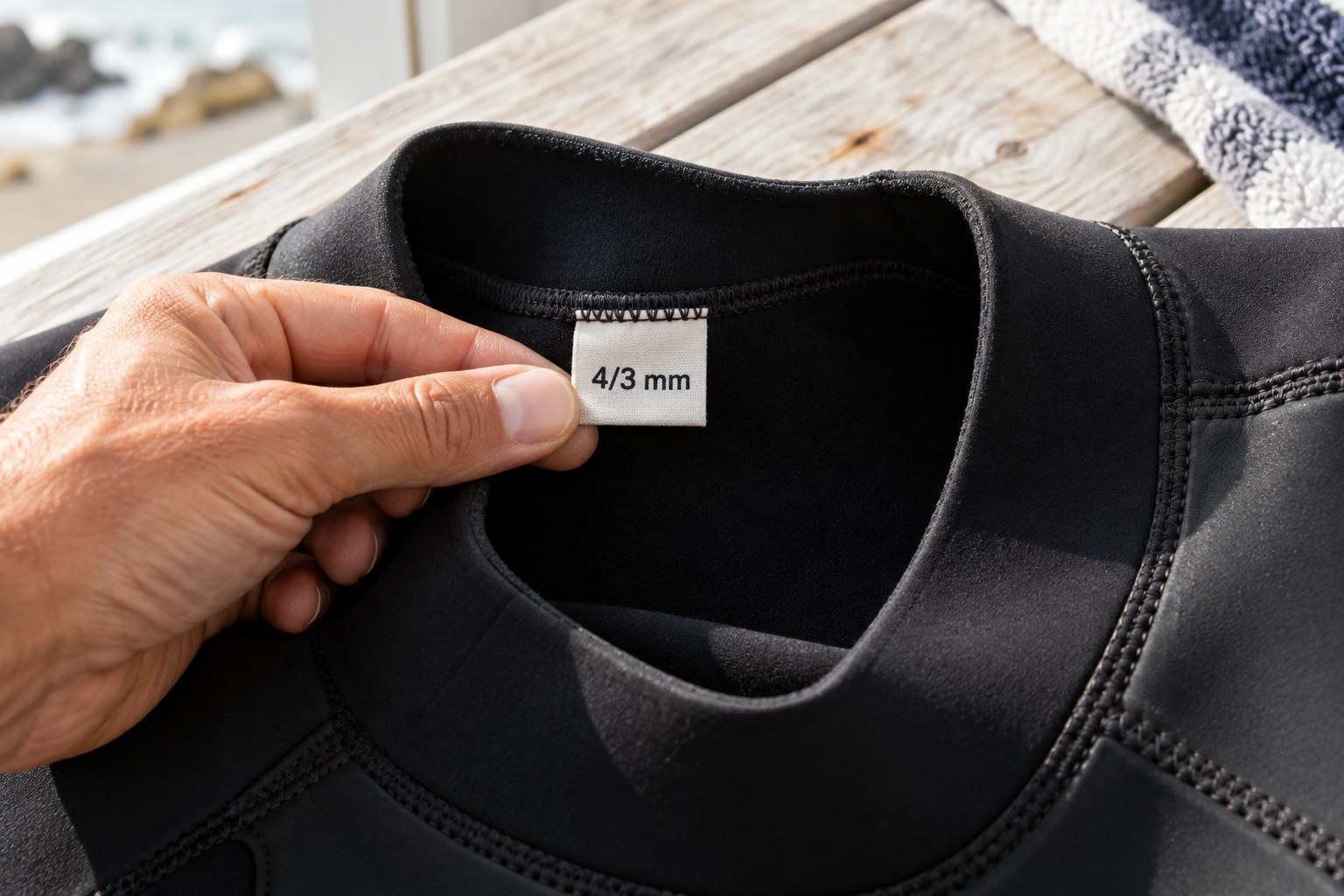
Read a wetsuit thickness label before comparing suits
Those slash-separated numbers describe material thickness, not a complete verdict on warmth. Read them alongside the suit's construction, fit and intended conditions.
Wetsuits & clothing
Assess surf boots by the maker's sizing, the shape around your foot and the intended use of the sole. Ordinary shoe size is only a starting point.
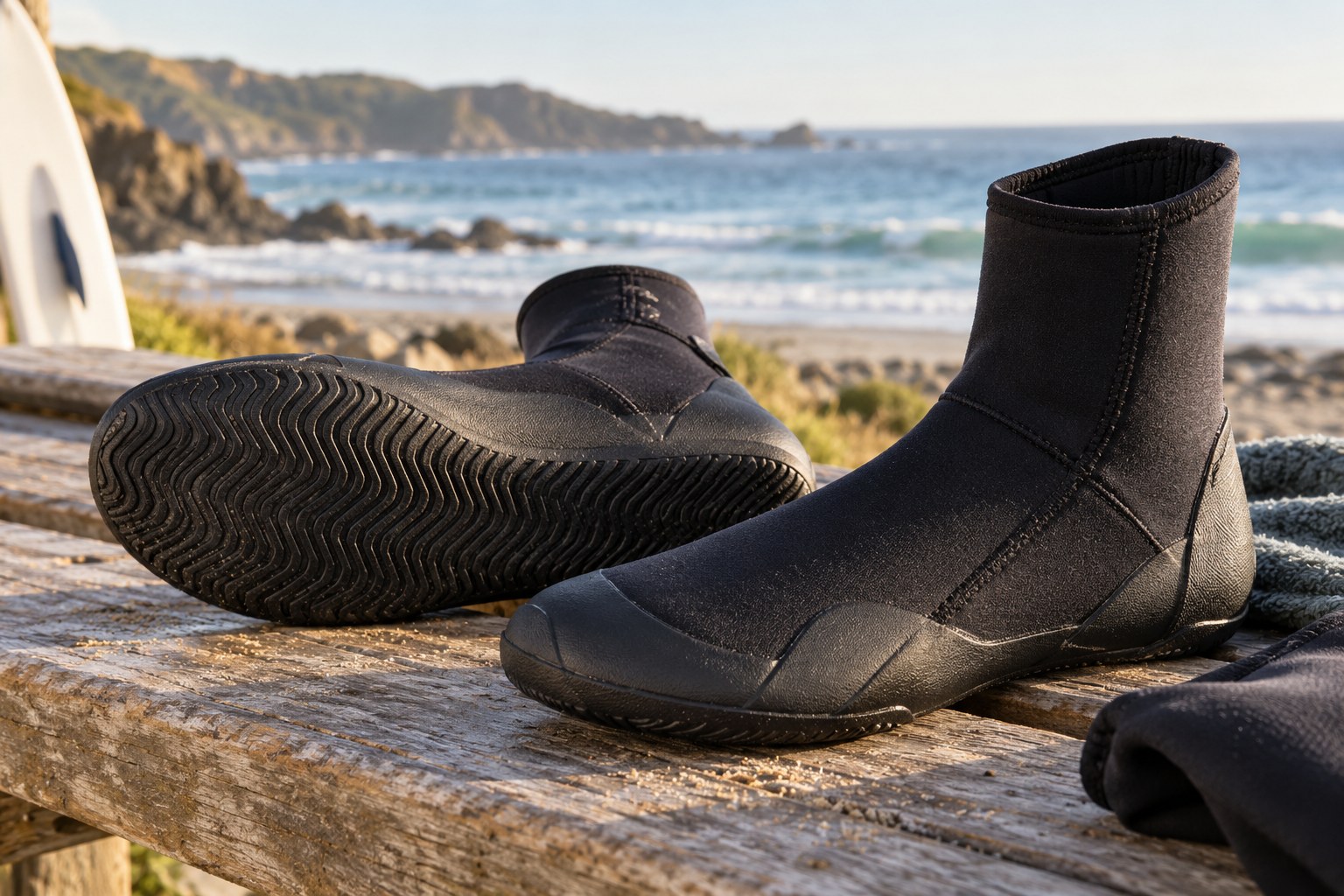
AI-generated illustration. Equipment details are illustrative; follow the instructions for your own item.
A surf boot can feel quite different from a street shoe even when the size number matches. Read the maker's boot chart and measure as directed before ordering. Check whether the model uses a split-toe or round-toe shape, what thickness is specified and what the sole is designed for. These are separate features, not interchangeable descriptions of the same boot.
Try both boots on a clean surface under the seller's conditions. Feet can differ, so fitting only one leaves part of the decision unanswered. If you plan to use the boots with a particular wetsuit, ask how the cuffs are intended to work together and try that arrangement when possible.
Check the heel, toes and top of the foot. Describe any pressure precisely rather than deciding that all snugness is normal. Curled toes, an uncomfortable divider or a heel that moves conspicuously call for a fitting discussion. Do not rely on a promise that every problem will disappear once the boots are wet.
If the design includes an adjustment strap, use it as instructed. Tightening it aggressively is not a reliable fix for excess room elsewhere. Compare another size or shape if the boot only feels secure when the adjustment is uncomfortable.
Look at the intended use of the sole rather than inferring protection from thickness alone. A surf boot is not automatically suitable footwear for every rocky approach, and no sole description makes an unfamiliar entry route safe. Ask locally about access and use appropriate footwear for the journey as well as the session.
On the board, the sole is part of what you feel beneath your foot. During a permitted fitting, stand and shift your weight on a clean flat surface. Ask the retailer to explain the construction differences between models instead of equating a thicker-looking sole with a better purchase.
Check the seams and joins for visible defects before removing tags. If buying online, photograph an apparent manufacturing problem and contact the seller before use. Avoid trimming, stretching or modifying an uncomfortable part while a return or size exchange is still possible.
Plan where the boots will dry after use according to their care instructions. The narrow openings need a routine that you can manage in your accommodation. A pair chosen carefully can still become an inconvenient travel item if it has nowhere appropriate to be rinsed, aired and stored between sessions.
Wetsuits & clothing
Those slash-separated numbers describe material thickness, not a complete verdict on warmth. Read them alongside the suit's construction, fit and intended conditions.
Wetsuits & clothing
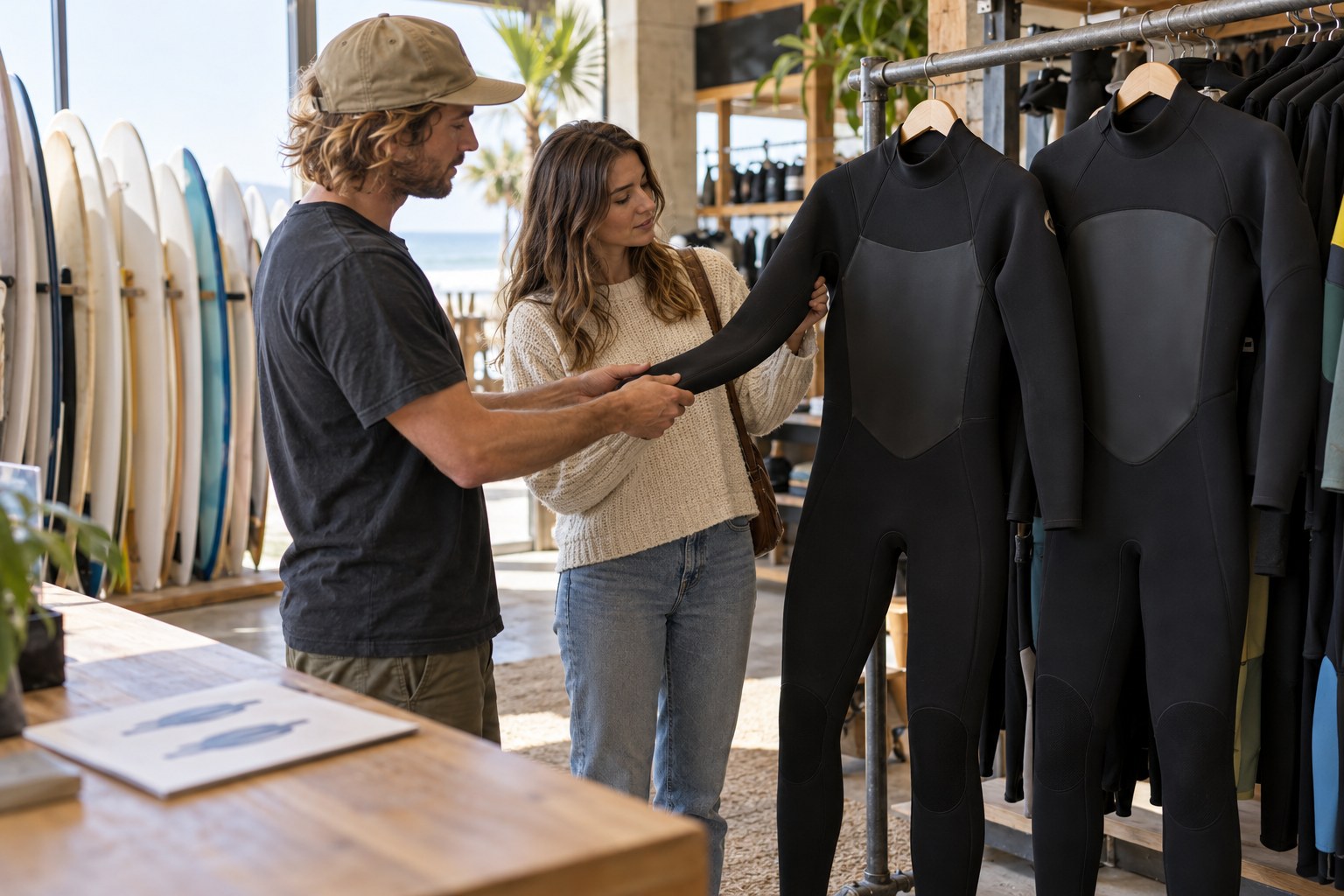
Bring the destination, season and session plan to a local shop, then compare its advice with the manufacturer guidance for the actual suit.