Wetsuits & clothing
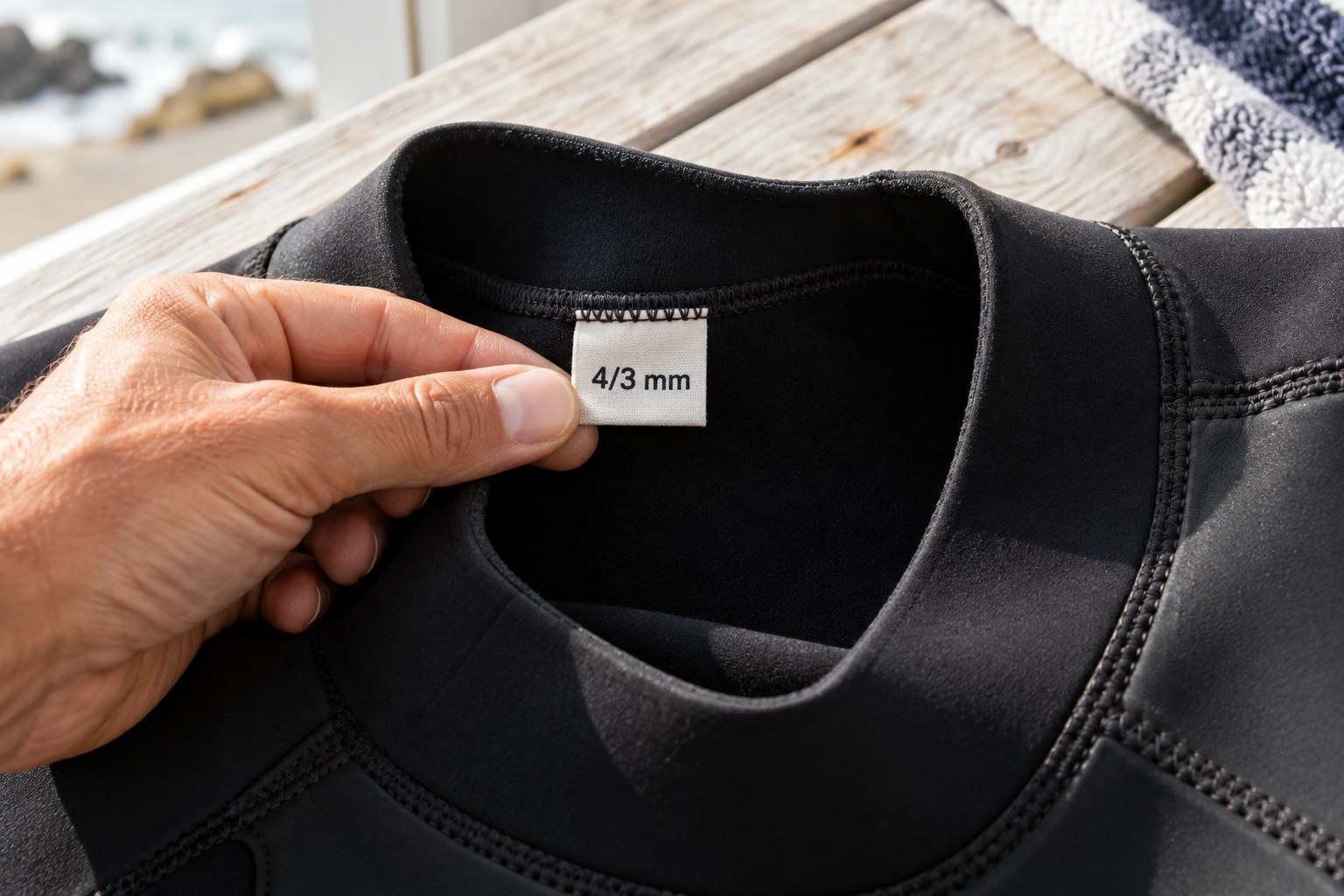
Read a wetsuit thickness label before comparing suits
Those slash-separated numbers describe material thickness, not a complete verdict on warmth. Read them alongside the suit's construction, fit and intended conditions.
Wetsuits & clothing
Measure for the maker's chart, then assess the complete garment in motion. Your usual shirt or trouser size is only a familiar label.
AI-generated illustration. Equipment details are illustrative; follow the instructions for your own item.
Wetsuit sizing begins with measurements rather than a clothing-size habit. Rip Curl explicitly distinguishes its wetsuit sizing from everyday apparel sizing. Open the chart for the relevant model and market, identify the measurements it requests and record them before choosing a starting size. Make sure you are reading centimetres or inches consistently.
Do not measure over bulky clothing or use a rigid metal tape for body circumferences. Follow the maker's measuring directions, and ask another person to help where needed. Write the date beside the figures so an old note is not mistaken for a current measurement months later.
The chart helps narrow the options; it does not finish the decision. If your measurements point to different sizes, send them to the retailer and explain the mismatch. Include whether the issue is height, torso proportion or circumference rather than asking simply whether the brand 'runs small'.
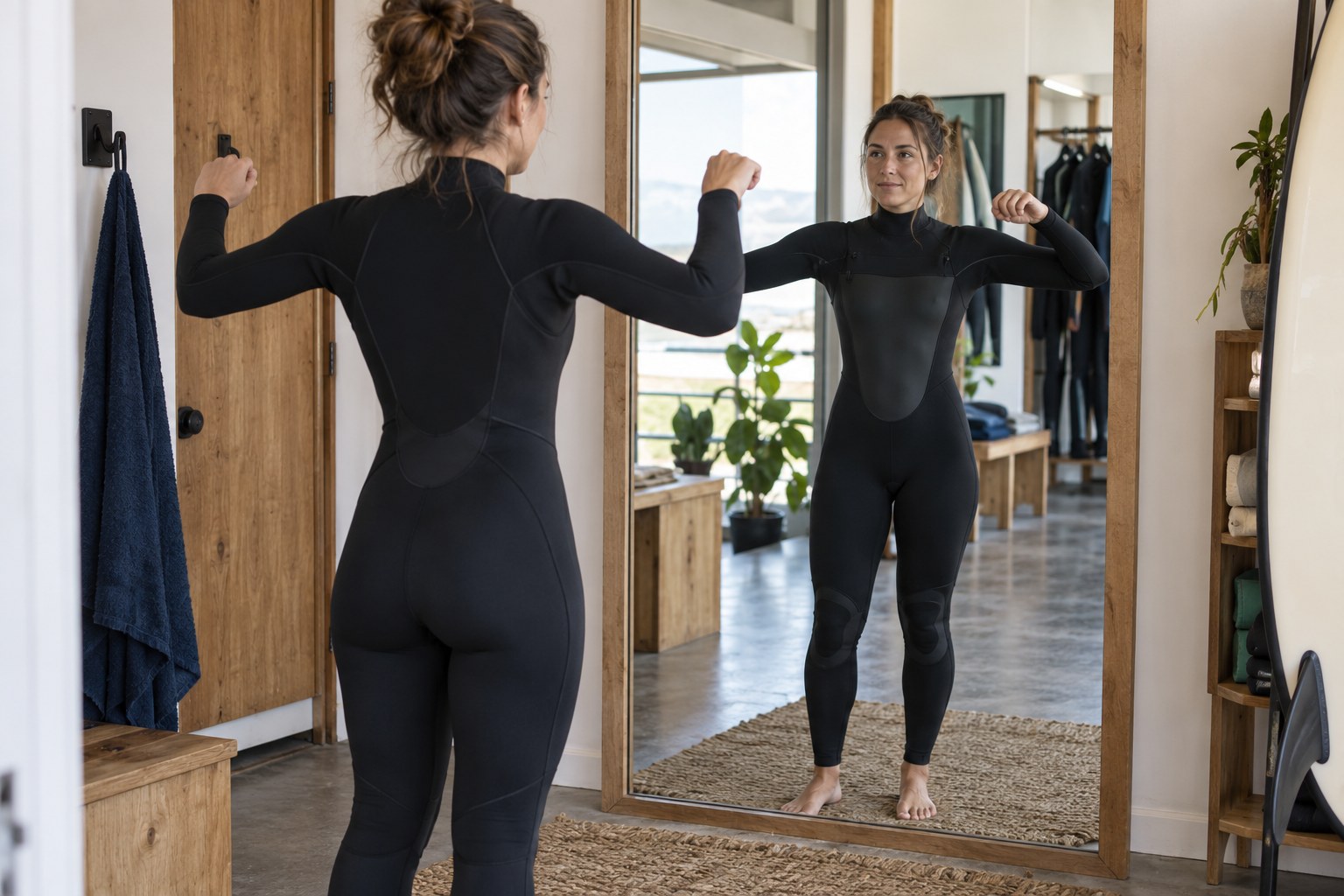
Try the suit on according to the shop's guidance. Allow time to position it correctly before judging the fit. Material left bunched lower down can make the upper body feel short, so ask a fitter to check the arrangement instead of pulling hard at the collar.
Once the suit is positioned, take normal deep breaths and make the movements the fitter recommends. Notice whether reaching overhead, bending or rotating creates a distinct restriction. Do not force a movement to demonstrate that the garment can stretch. A fitting should reveal how the suit works for you, not test its breaking point.
Look for areas that remain conspicuously loose or folded, and describe their location. 'Too big' is less useful than 'extra material at the lower back while the shoulders feel tight'. That combination may suggest a different cut rather than a simple move up or down one size.
Check the neck, wrist and ankle areas with the fitter. Do not adopt an arbitrary finger-width test from another brand as a universal rule. Ask how the particular suit is intended to sit and whether what you are feeling is acceptable for that model.
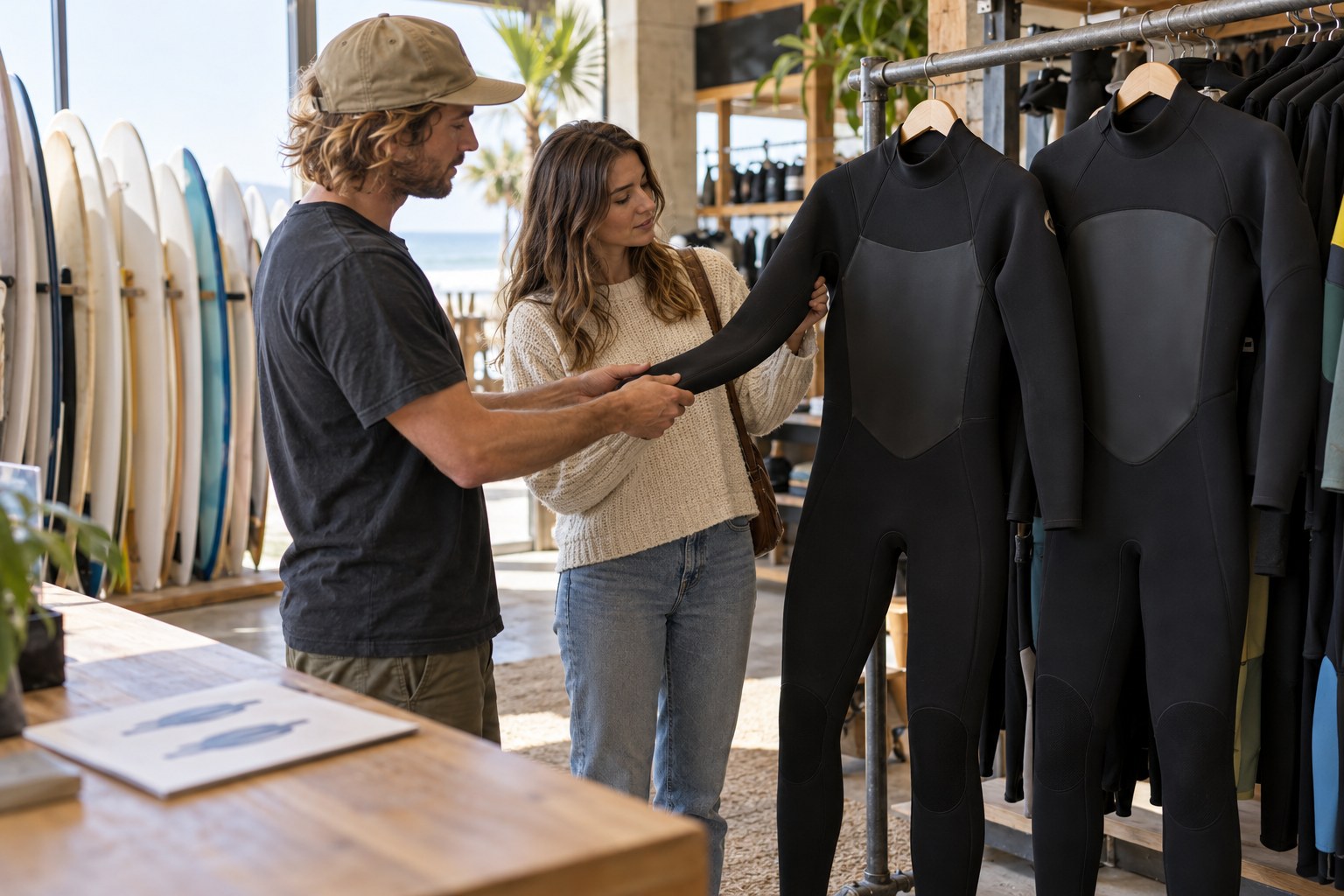
It can help to compare two candidates immediately, with the fitter noting what changed. One may allow easier shoulder movement but leave excess space elsewhere; another may fit the torso but have an entry you cannot comfortably manage. Keep those observations separate instead of giving each suit a single vague comfort score. If neither resolves the combination of requirements, explain the trade-off to the fitter and ask for a different pattern. A short written comparison prevents you from forgetting the first suit's problem after trying several others.
Before ordering online, read the return conditions for a dry try-on, tags and packaging. Plan the fitting on a clean surface and avoid using the suit in water until you have resolved obvious sizing questions. If you need to compare sizes, establish how the retailer handles that before buying several garments.
Save the successful model and size along with your measurements. The record is useful for later comparisons, but do not assume every new version from the same brand will fit identically. A replacement purchase deserves its own check, particularly after a long interval or a change in your measurements.
Wetsuits & clothing
Those slash-separated numbers describe material thickness, not a complete verdict on warmth. Read them alongside the suit's construction, fit and intended conditions.
Wetsuits & clothing
Bring the destination, season and session plan to a local shop, then compare its advice with the manufacturer guidance for the actual suit.