Boards & equipment
Soft top or hard board for your first purchase
Choose construction alongside shape, condition and the way you will use the board, rather than treating a hard board as an automatic upgrade.
Boards & equipment
Length is only one part of board-bag fit. Check the outline, internal room and fin arrangement before choosing a size.
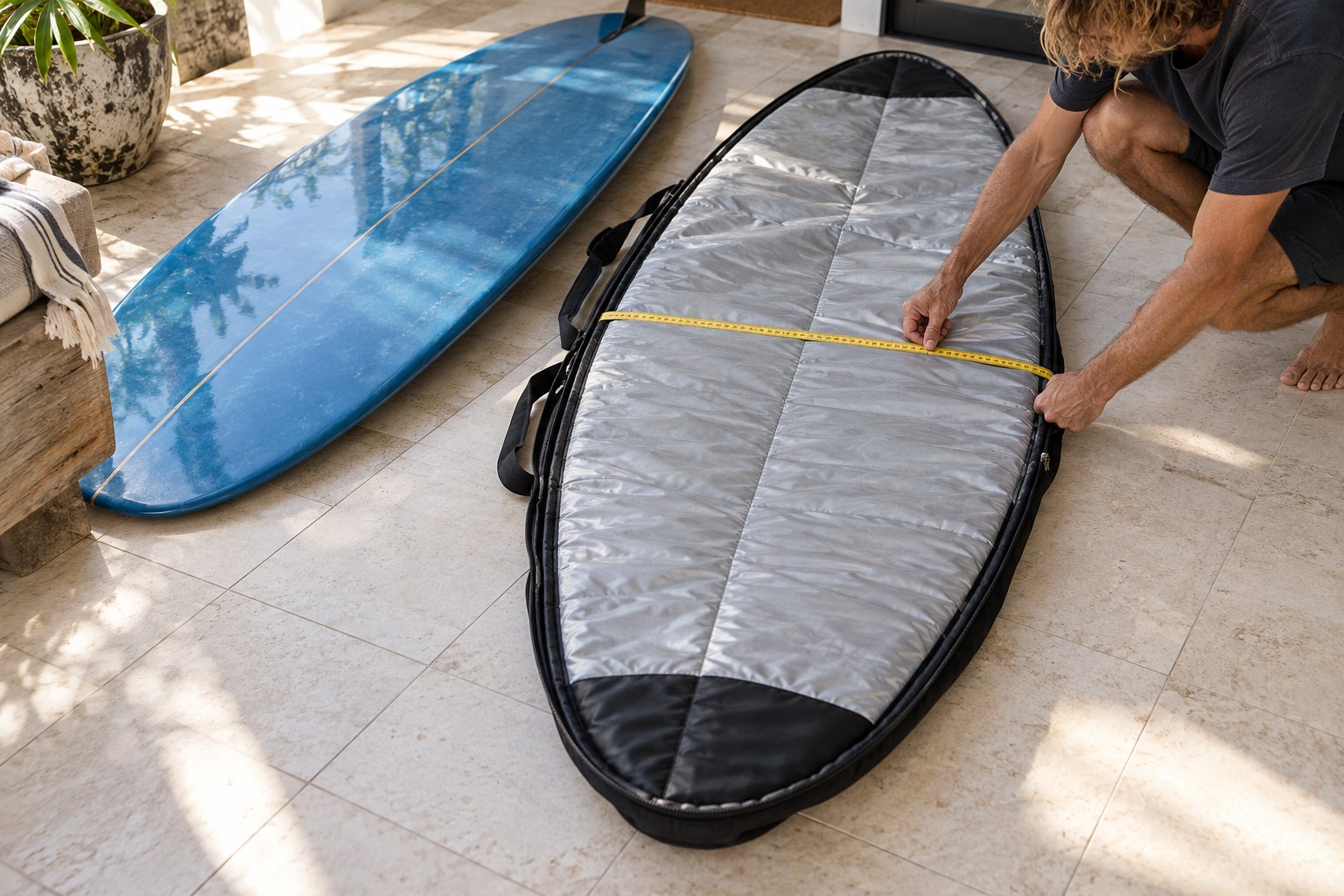
AI-generated illustration. Equipment details are illustrative; follow the instructions for your own item.
Two boards with the same stated length can occupy very different shapes. A broad nose, thick rails or a wide tail may determine whether a bag closes comfortably. Begin with the board's full dimensions and its outline, then read the bag maker's fit instructions. Do not add an arbitrary allowance to every label; some bags already account for clearance in their stated sizing.
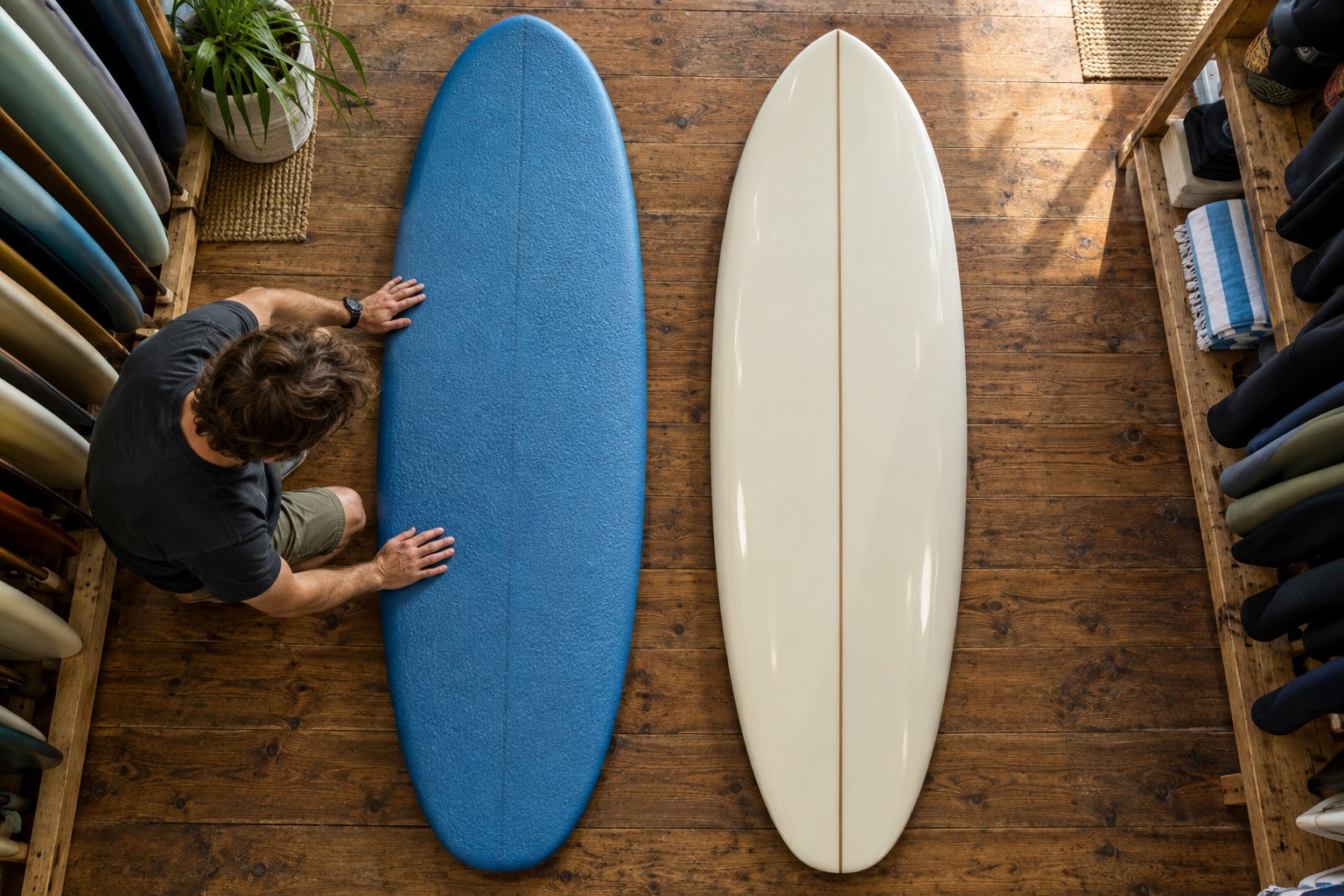
Take a photograph of the board from above, including the complete nose and tail. Alongside the measurements, it helps a retailer distinguish a narrow pointed shape from a much broader board. Include whether you intend to carry the fins attached and whether you will add any protection approved for that bag.
A product page may quote overall dimensions for transport rather than usable internal space. Ask which measurements are being supplied. Thickness is particularly easy to miss because it may be folded into a general capacity description rather than listed as a separate dimension.
If the maker gives only a board-length recommendation, send the other dimensions and model name before ordering. A written response that addresses your specific board is more useful than an enthusiastic review from someone carrying a different shape. Keep the reply with the order details in case a fit problem becomes apparent before use.
Open the bag fully and follow the maker's insertion instructions. The board should not need to be forced past a tight section while a zip is used to compress it into place. Check the nose first, then the rail clearance and the tail closure. Look inside rather than judging fit only from the exterior silhouette.
If the design includes a fin opening, verify that it aligns with the actual fin position. A closure pressed against hardware is a different issue from a little unused room around the nose. Do not cut or modify a new bag to solve a mismatch before discussing it with the seller.
Carry the fitted bag a short distance in the shop or at home on a clean surface. Notice whether the handle placement makes the nose dip and whether you can pass through your normal doorway. This reveals a handling problem that a dimension table cannot answer.
For a gift, obtain the recipient's board details instead of guessing from height or surfing experience. Bag size follows the equipment. A correctly chosen length on its own is not enough to make an otherwise unsuitable outline work.
Boards & equipment
Choose construction alongside shape, condition and the way you will use the board, rather than treating a hard board as an automatic upgrade.

Boards & equipment
Bring a record of the boards you have used and the sessions you want to your sizing conversation.