Boards & equipment
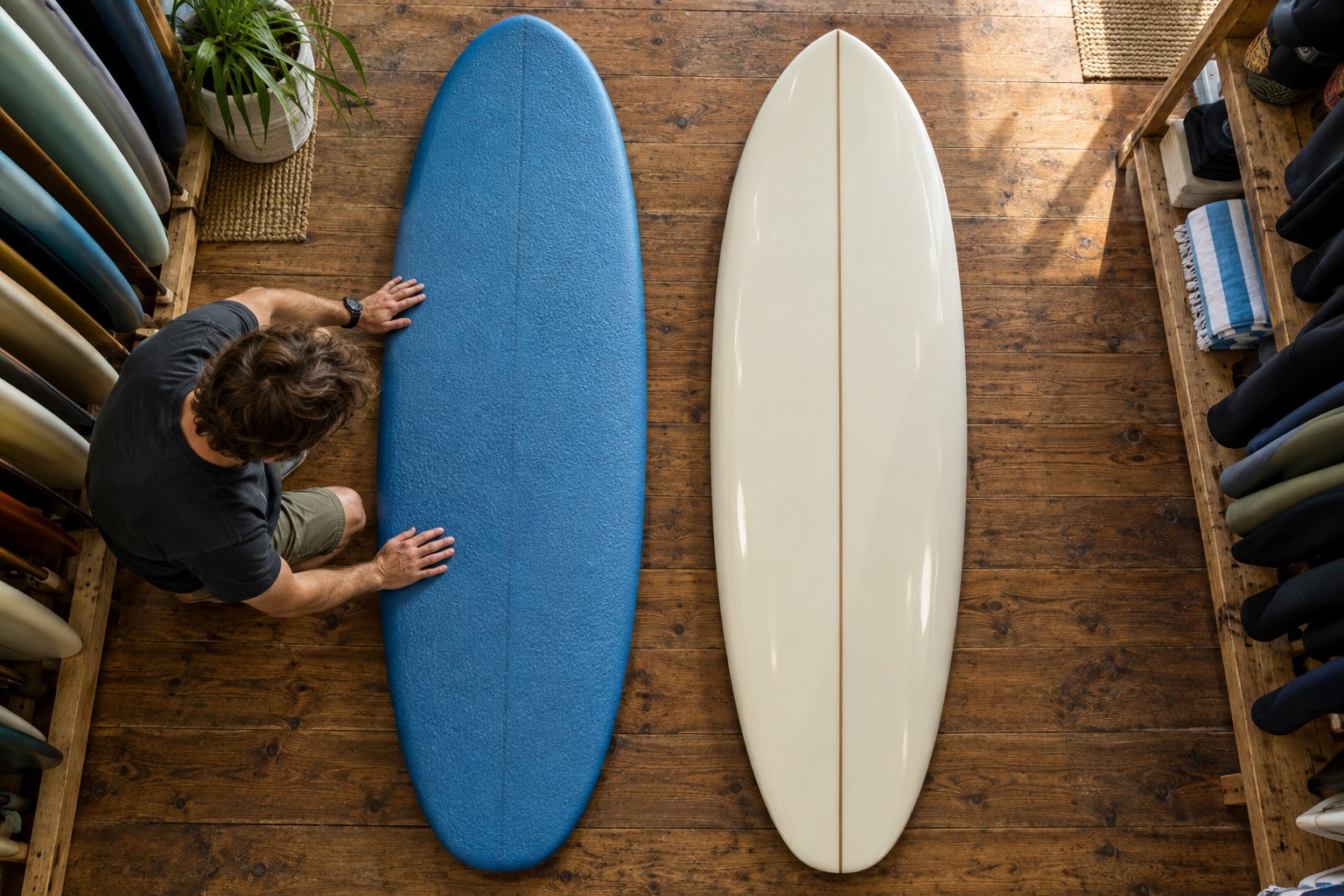
Soft top or hard board for your first purchase
Choose construction alongside shape, condition and the way you will use the board, rather than treating a hard board as an automatic upgrade.
Boards & equipment
Look at where a board carries its width, not just the maximum measurement printed beside its length.
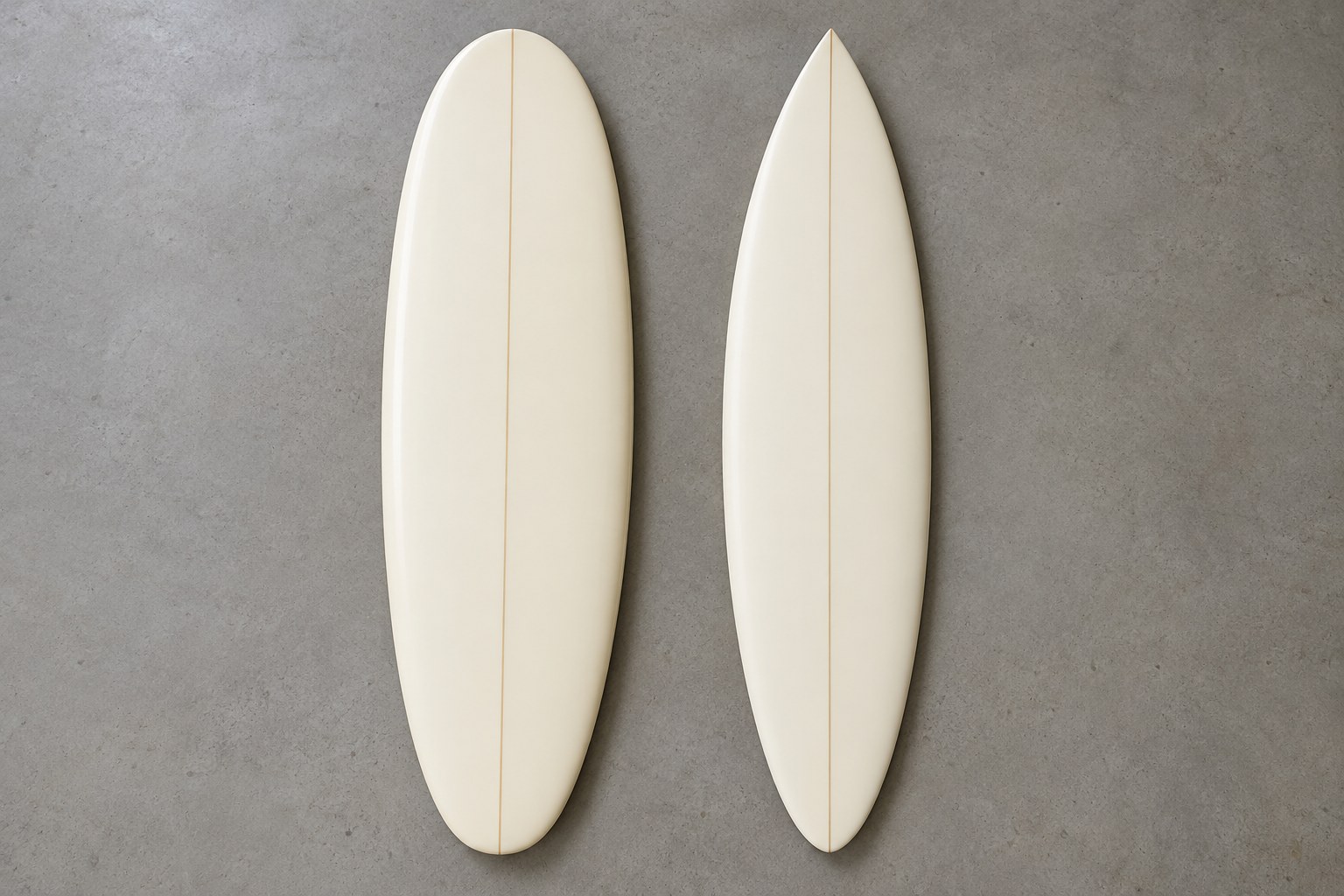
AI-generated illustration. Equipment details are illustrative; follow the instructions for your own item.
The outline is the board's silhouette seen from above. Two boards can have the same maximum width while distributing that width differently through the nose, middle and tail. A dimensions table therefore gives a useful reference but not the complete shape.
Place comparison boards where a shop can show them without balancing them on vulnerable edges. Look at the wide point and how the rails narrow towards each end. Ask which features belong to the model's intended use rather than trying to rank every curve as more or less advanced.
Width affects the physical experience of handling a board. Degree 33's shape guide notes that a board can be too wide for a rider to paddle comfortably along the rails. That is a useful reason to discuss body fit and actual experience instead of assuming maximum width is always desirable for a beginner.
If you have used a board in lessons, describe whether reaching and positioning felt manageable. Ask the instructor whether the outline contributed to the issue you noticed. Your account of one awkward movement is evidence to discuss, not a diagnosis of the board.
Do not assume a narrow-looking board is necessarily the next step. It may be designed around a style of surfing or conditions that do not match your current sessions. Equally, a broad outline can appear in compact performance designs as well as learner equipment. Read the model description alongside the measurements.
It is easier to understand a width difference when fewer other features change. Ask to compare adjacent sizes of a suitable model or two designs the shop considers relevant to your needs. If length, rocker, construction and fins all change, you cannot attribute every difference to the outline.
Take photographs from a consistent angle if permitted. A close wide-angle photograph can distort the nose and tail, making a later comparison misleading. Keep the model and size in the same note so images do not become detached from their specifications.
Before buying, return to the purpose of the board. You want a shape that suits the practice you are ready for and the handling you can manage, not the most dramatic silhouette on the rack. An instructor-approved trial provides more useful information than choosing the outline that looks easiest in a product photograph.
Boards & equipment
Choose construction alongside shape, condition and the way you will use the board, rather than treating a hard board as an automatic upgrade.

Boards & equipment
Bring a record of the boards you have used and the sessions you want to your sizing conversation.