Wetsuits & clothing
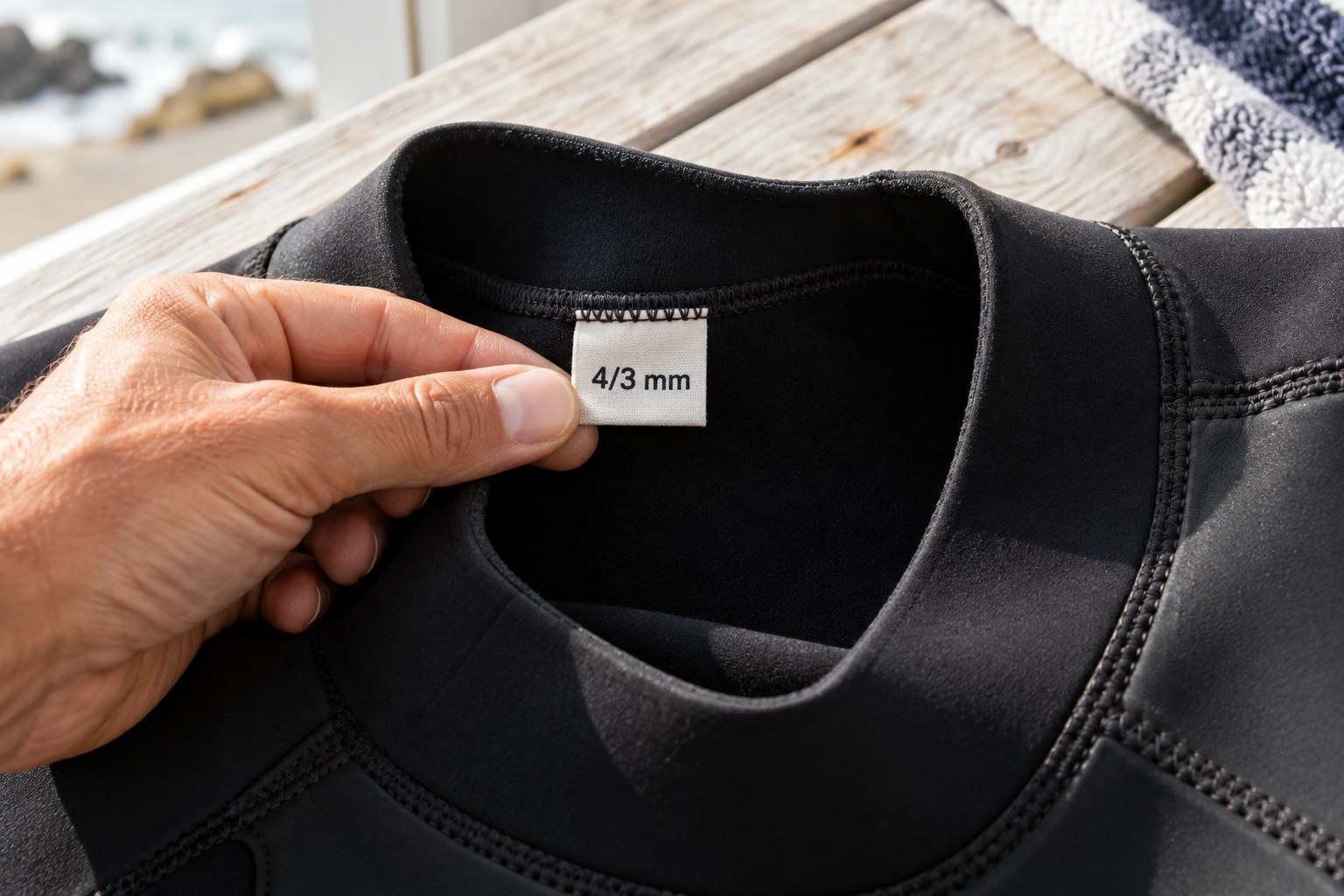
Read a wetsuit thickness label before comparing suits
Those slash-separated numbers describe material thickness, not a complete verdict on warmth. Read them alongside the suit's construction, fit and intended conditions.
Wetsuits & clothing
Choose a changing robe around the changing location, the clothes you wear underneath and the space available in your travel kit.
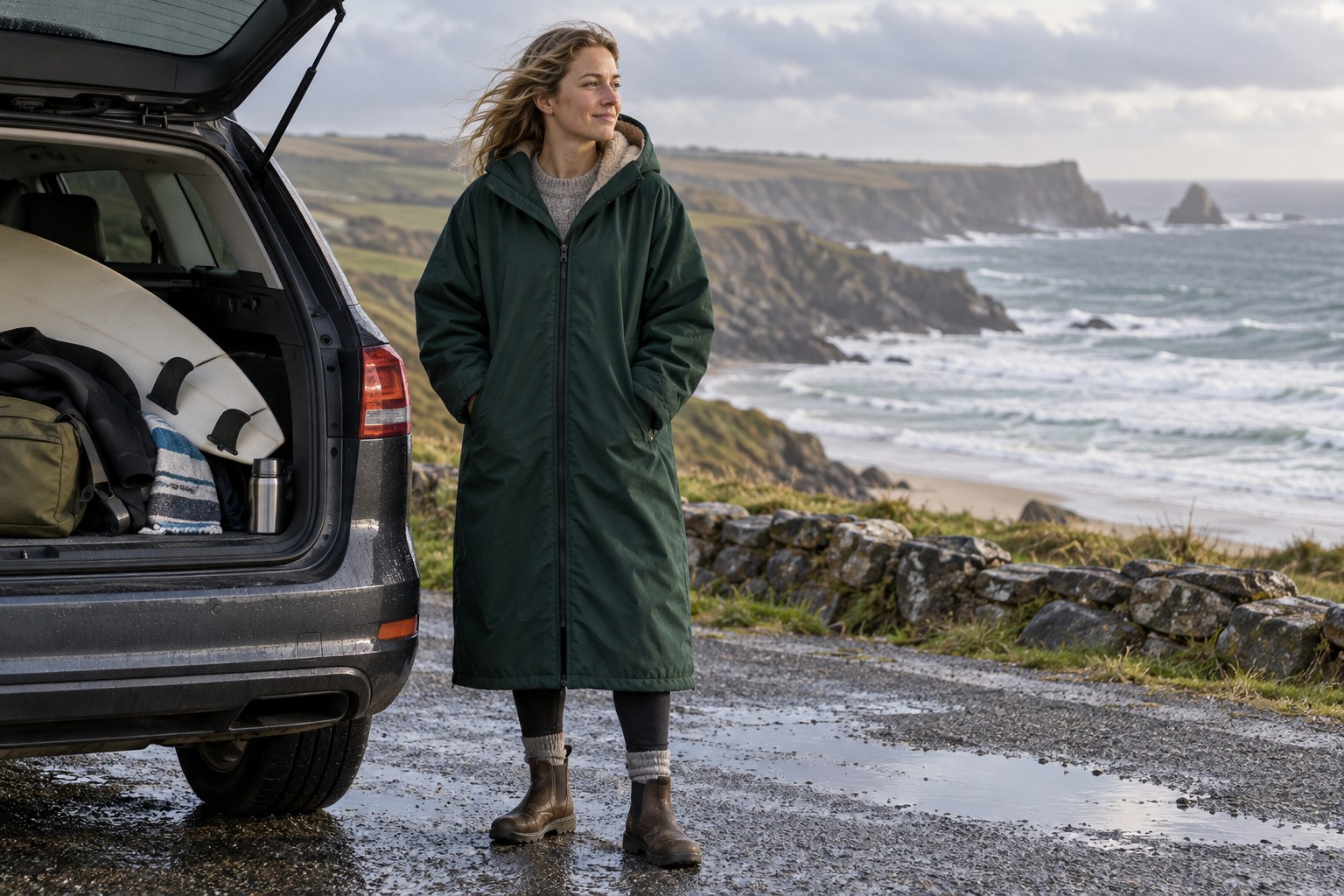
AI-generated illustration. Equipment details are illustrative; follow the instructions for your own item.
A changing robe can serve several different routines. You may use it for privacy while changing beside a parked car, wear it while waiting on shore or carry it between shared facilities and a room. Write down the main use before comparing oversized silhouettes and long feature lists. A robe chosen for one routine may be cumbersome in another.
Start with the place where you change. Is there a private cubicle, a sheltered paved area or only a shared outdoor space? Check the venue's rules and arrange privacy appropriately. A robe can be part of that arrangement, but it does not make every public location suitable for changing.
Wear the clothes you would realistically have underneath during a permitted fitting. Check whether you can draw your arms inside and move them without lifting the hem excessively or struggling against the sleeves. The room needed to change can differ from the fit you want while simply walking.
Read the maker's sizing guidance carefully. Some charts distinguish a changing fit from an everyday coat fit. Do not select a size merely because it matches your height or because a promotional photograph shows an extremely loose silhouette.
Check the length while standing and sitting. A hem that drags on the ground can become inconvenient in a car park or on steps, while a shorter robe may not provide the coverage you expected during movement. Test these points without assuming that bigger always means more useful.
If the robe has a zip, practise operating it from the positions you expect to use. A two-way closure may offer a different arrangement from a single slider, but only if you understand how to operate it. Look at whether the zip has a cover and whether any lining catches during normal use.
Check pocket placement with your arms inside and outside the sleeves. Decide what you actually need to carry. A key pocket may be useful on shore, but do not assume any pocket is waterproof or secure enough for valuables simply because the outer garment resists weather.
Look at the hood and collar while turning your head. They should not obstruct your view when moving around a car park or public path. A robe is a shore garment; use it for its intended purpose rather than taking it into the water.
Read what the manufacturer claims about the outer fabric, lining and care. 'Weatherproof', 'water-resistant' and 'waterproof' should not be treated as identical descriptions. Ask about any claim that matters to your use instead of inferring performance from a thick-looking shell.
Consider how the robe will dry after contact with wet gear. A small apartment or travel room may have limited hanging space. Check the care instructions and choose a storage arrangement you can actually provide; a large robe left bundled in a boot is not ready for the next trip.
Imagine two otherwise similar weekend trips. In one, you drive directly to a changing facility and return to the car after the lesson. In the other, you walk to an exposed meeting point and wait there for transport. The first may place more value on compact packing and ease of changing; the second creates a longer onshore waiting requirement. Describe that difference to the retailer. It is a clearer basis for choosing material and bulk than asking for the warmest-looking robe in the shop.
Ask for the packed dimensions if you are travelling with restricted luggage. Compare those dimensions with the spare space in your bag after the essential surf equipment is packed. A lighter poncho or access to a changing room may suit a particular trip better than carrying a substantial outer robe.
For frequent local use, try lifting the robe from its storage bag and putting it on with the rest of your beach kit nearby. Small inconveniences become noticeable when repeated every session. Choose the combination of fit, access, coverage and storage that matches your routine, rather than the robe with the greatest number of features.
Wetsuits & clothing
Those slash-separated numbers describe material thickness, not a complete verdict on warmth. Read them alongside the suit's construction, fit and intended conditions.
Wetsuits & clothing
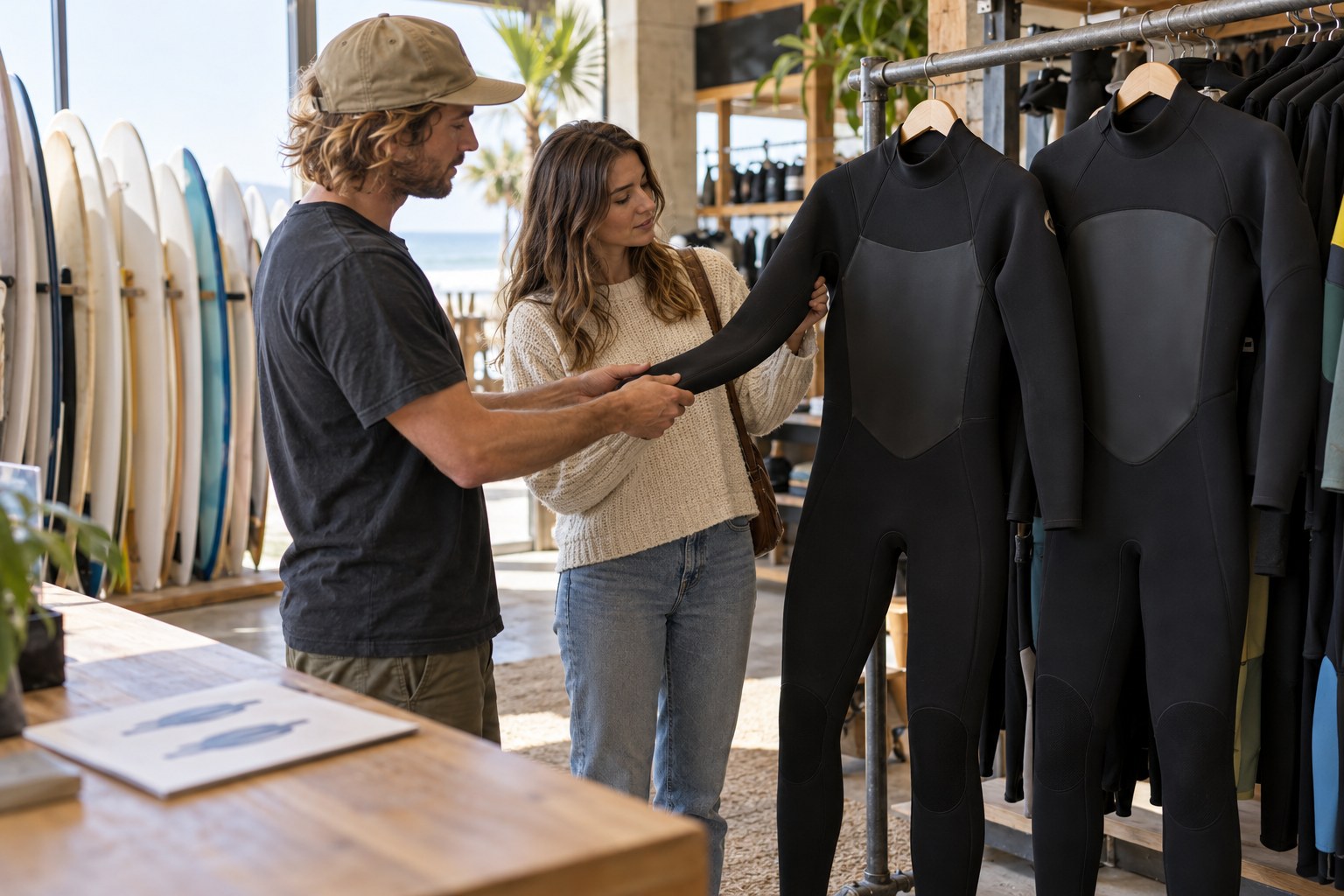
Bring the destination, season and session plan to a local shop, then compare its advice with the manufacturer guidance for the actual suit.