Boards & equipment
Soft top or hard board for your first purchase
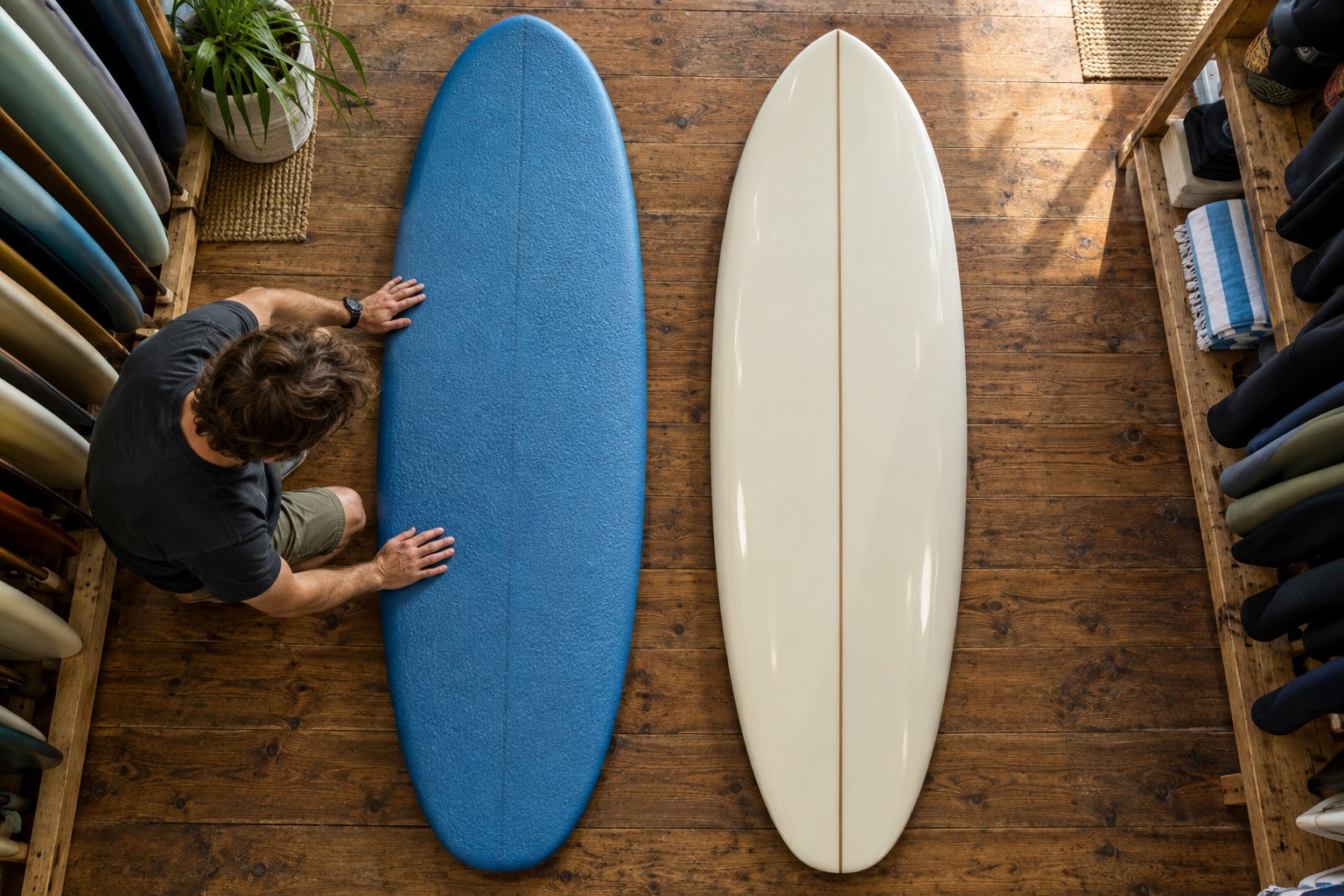
Choose construction alongside shape, condition and the way you will use the board, rather than treating a hard board as an automatic upgrade.
Boards & equipment
Use the board and leash makers' guidance to choose a suitable length, then check the rest of the specification rather than buying by colour or price alone.
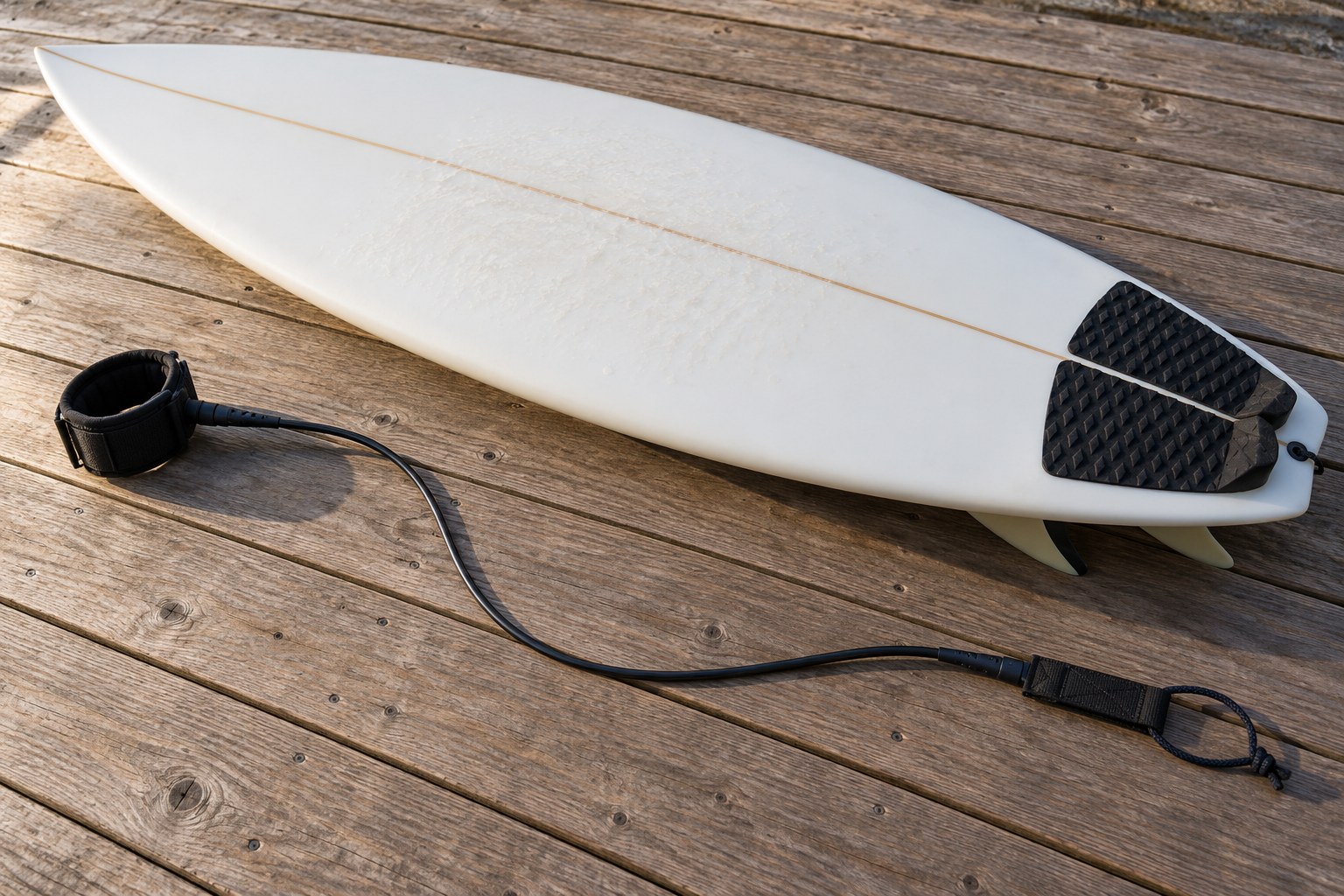
AI-generated illustration. Equipment details are illustrative; follow the instructions for your own item.
A leash listing combines several choices: length, cord construction, cuff type and intended conditions. Start with the board's length and the maker's recommendations for that model. FCS gives roughly the board's length as a general starting point for leash length, while also identifying intended wave conditions as a consideration.
That starting point is not a universal instruction to pick the nearest number. Check the specific leash range and ask a knowledgeable shop to confirm the combination for your board and use. A leash described for competition or a particular activity may have a different intended role from the one you need.
Confirm whether the stated length refers to the product as supplied and how the manufacturer describes its use. Do not compare a stretched old cord with a new product label and assume the difference is only a sizing error. An aged or damaged leash needs its own condition assessment.
Identify the cuff design and the required board attachment. If the board has an unusual or proprietary system, check the compatible parts before paying. A new leash should not lead to an improvised connection because an expected string or fitting is absent.
Ask whether the leash suits the board type and intended sessions, then save the answer with the model information. If your plans change substantially, reassess the equipment instead of assuming one purchase covers every future situation.
Have the attachment demonstrated using the manufacturer's instructions, particularly for a first board. Ask the person fitting it to explain the role of the rail saver and how the connection should sit. Do not shorten a cord with a knot or modify a component to make an unsuitable product seem workable.
Before use, inspect the whole leash and its connection, not just the length. A suitable specification does not cancel visible wear, damaged stitching or a questionable fitting. Replace or have suspect equipment assessed rather than testing it in the water.
A leash can fail and should never be treated as a substitute for swimming ability, instruction or judgement about the session. Its purchase is one part of preparing equipment. The decision about where and when to surf still needs the current conditions and your own ability considered separately.
Boards & equipment
Choose construction alongside shape, condition and the way you will use the board, rather than treating a hard board as an automatic upgrade.

Boards & equipment
Bring a record of the boards you have used and the sessions you want to your sizing conversation.