Wetsuits & clothing
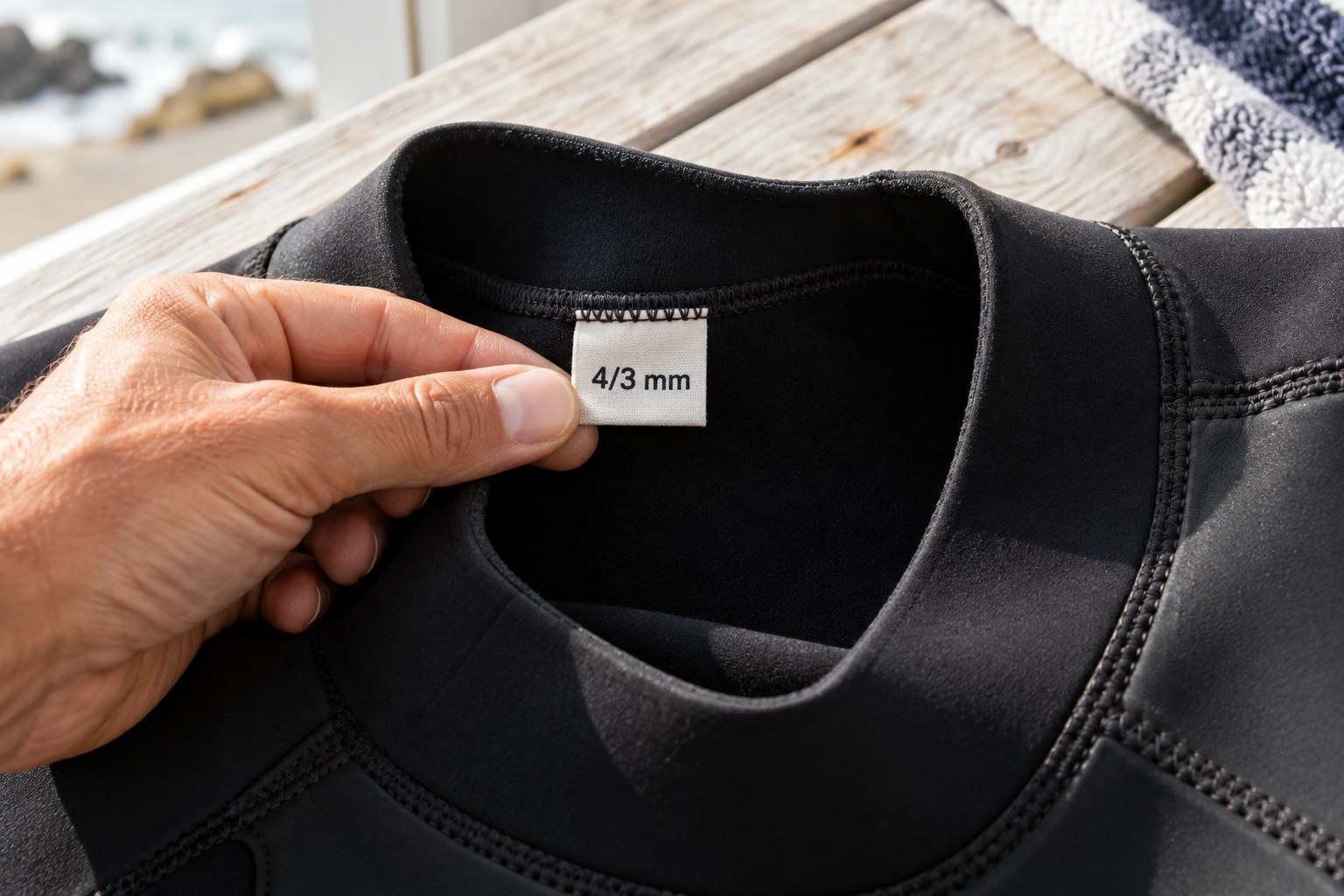
Read a wetsuit thickness label before comparing suits
Those slash-separated numbers describe material thickness, not a complete verdict on warmth. Read them alongside the suit's construction, fit and intended conditions.
Wetsuits & clothing
Look at the hat's intended water use, retention arrangement and the way the brim affects your view. An ordinary beach hat may be a different product.
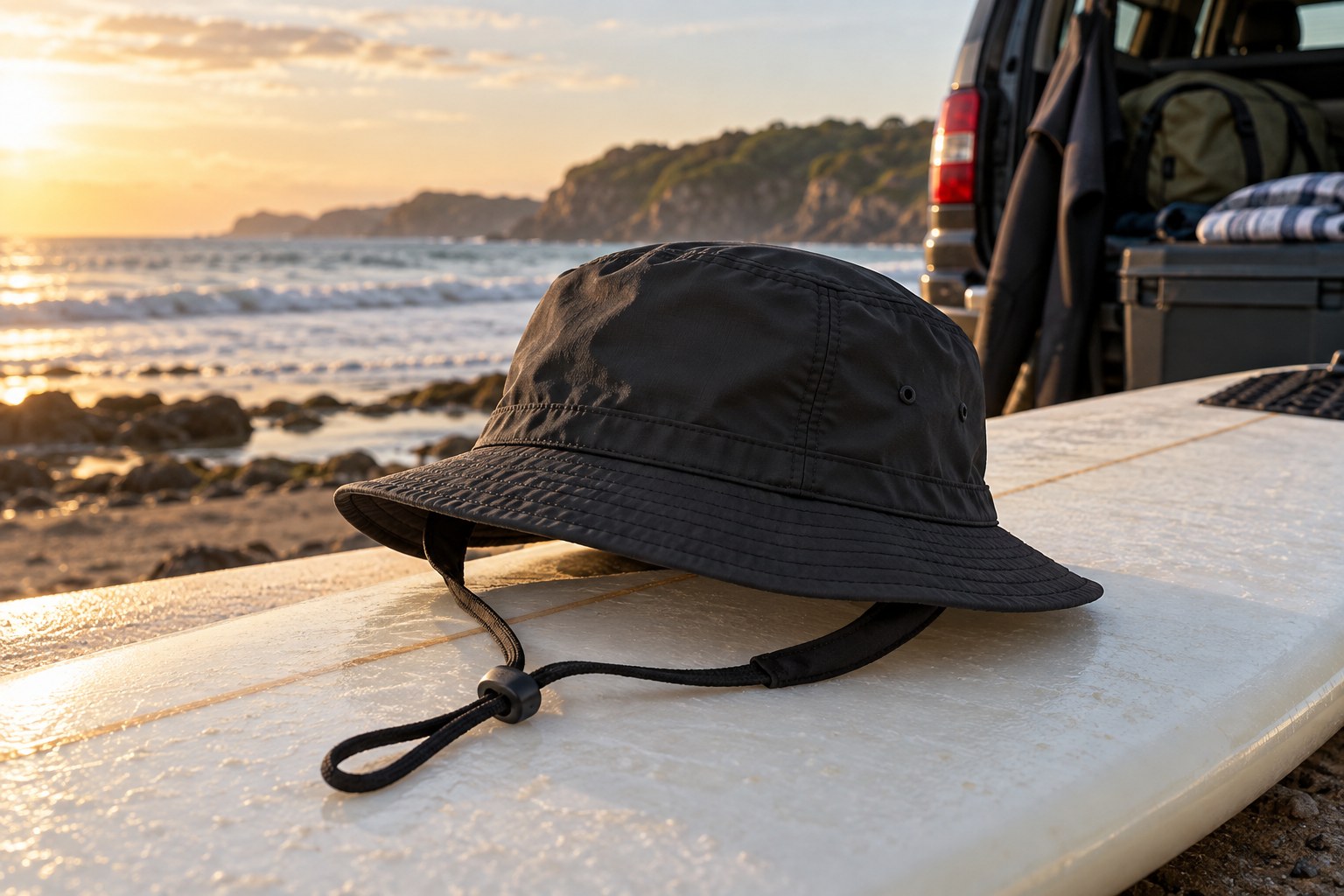
AI-generated illustration. Equipment details are illustrative; follow the instructions for your own item.
A surf hat should be evaluated for the activity it is designed to support, not only for the shade it appears to offer. Read the maker's intended-use description and adjustment instructions. A casual sun hat with an added cord is not automatically an appropriate substitute for a purpose-designed water-use model.
Ask the instructor whether the proposed hat is suitable for the lesson and equipment. If you are unfamiliar with its retention system, have the fit checked before entering the water. Do not add improvised straps, clips or attachments to compensate for a loose size.
During a dry fitting, look forward, upward and to both sides. Notice whether the brim obscures your view or changes position when you turn your head. A wide brim that is comfortable while standing on the beach may feel different in a forward-leaning posture.
Read whether the brim is intended to be adjusted and how. Do not bend or trim a component simply because it gets in the way. If the shape does not work for your use, compare another design while the item is still eligible for exchange.
Fit the hat according to the instructions and check that adjustments remain comfortable. Learn how the closure is meant to be operated. A secure feeling produced by excessive tightening is not a substitute for the correct size and design.
If you also use a hood or specialist eyewear, check the complete arrangement rather than buying each item independently. Overlapping straps or bulky sections can create a fit problem that is not visible in individual product photographs.
Read any sun-protection rating and care conditions for the actual hat. Do not assume the whole face or neck is covered because one part of the fabric has a stated rating. Use the product within its labelled limits and follow appropriate local sun-protection guidance.
After use, inspect and care for the hat as directed, including its closure. Store it so the brim is not forced into an unintended shape. A model that fits your head, preserves your view and has an understood retention system is a more useful choice than one selected only by brim size.
Wetsuits & clothing
Those slash-separated numbers describe material thickness, not a complete verdict on warmth. Read them alongside the suit's construction, fit and intended conditions.
Wetsuits & clothing
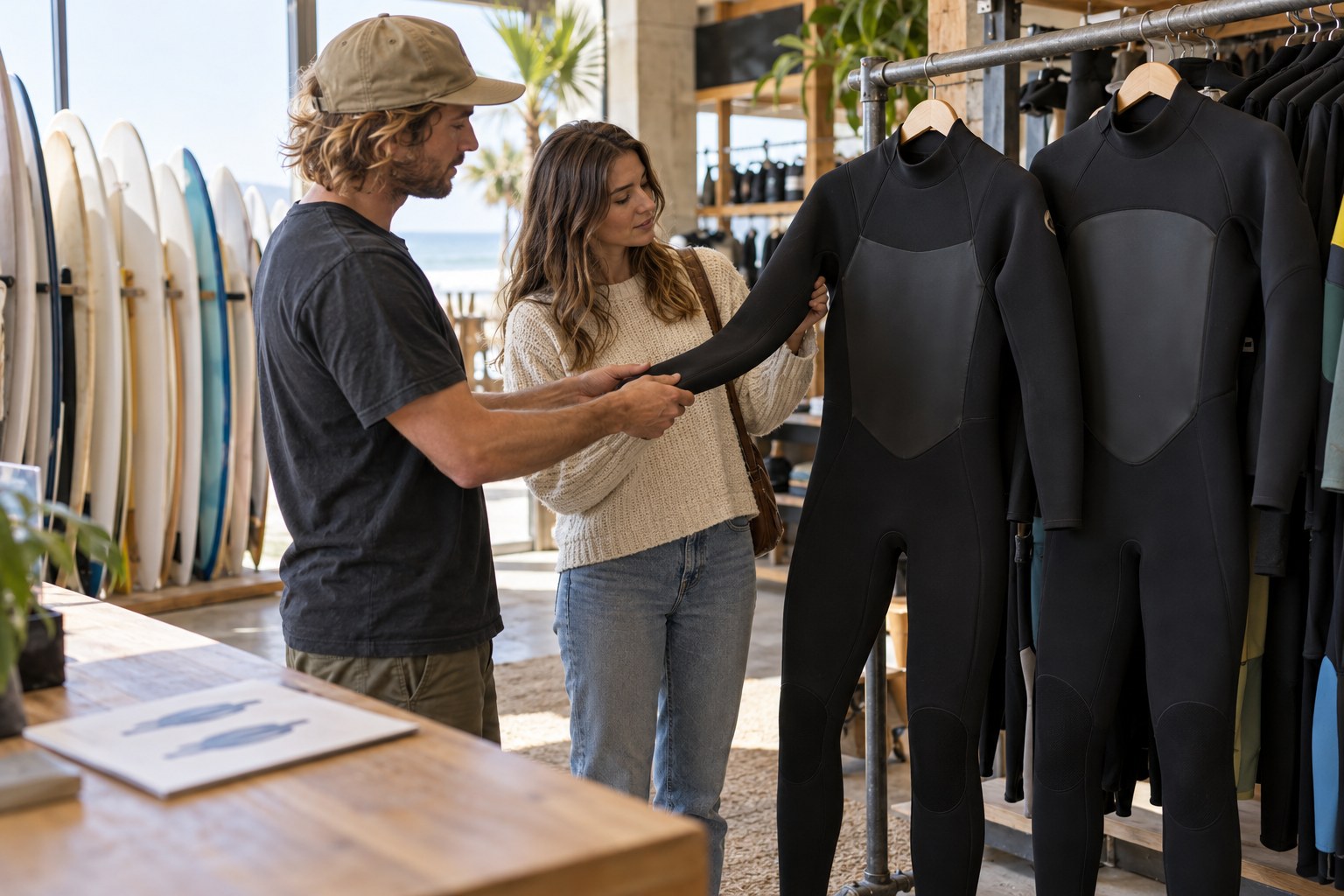
Bring the destination, season and session plan to a local shop, then compare its advice with the manufacturer guidance for the actual suit.