
Boards & equipment
Soft top or hard board for your first purchase
Choose construction alongside shape, condition and the way you will use the board, rather than treating a hard board as an automatic upgrade.
Boards & equipment
Choose surf wax by the product's water-temperature guidance and the board maker's instructions, not by wrapper colour or the afternoon air temperature.
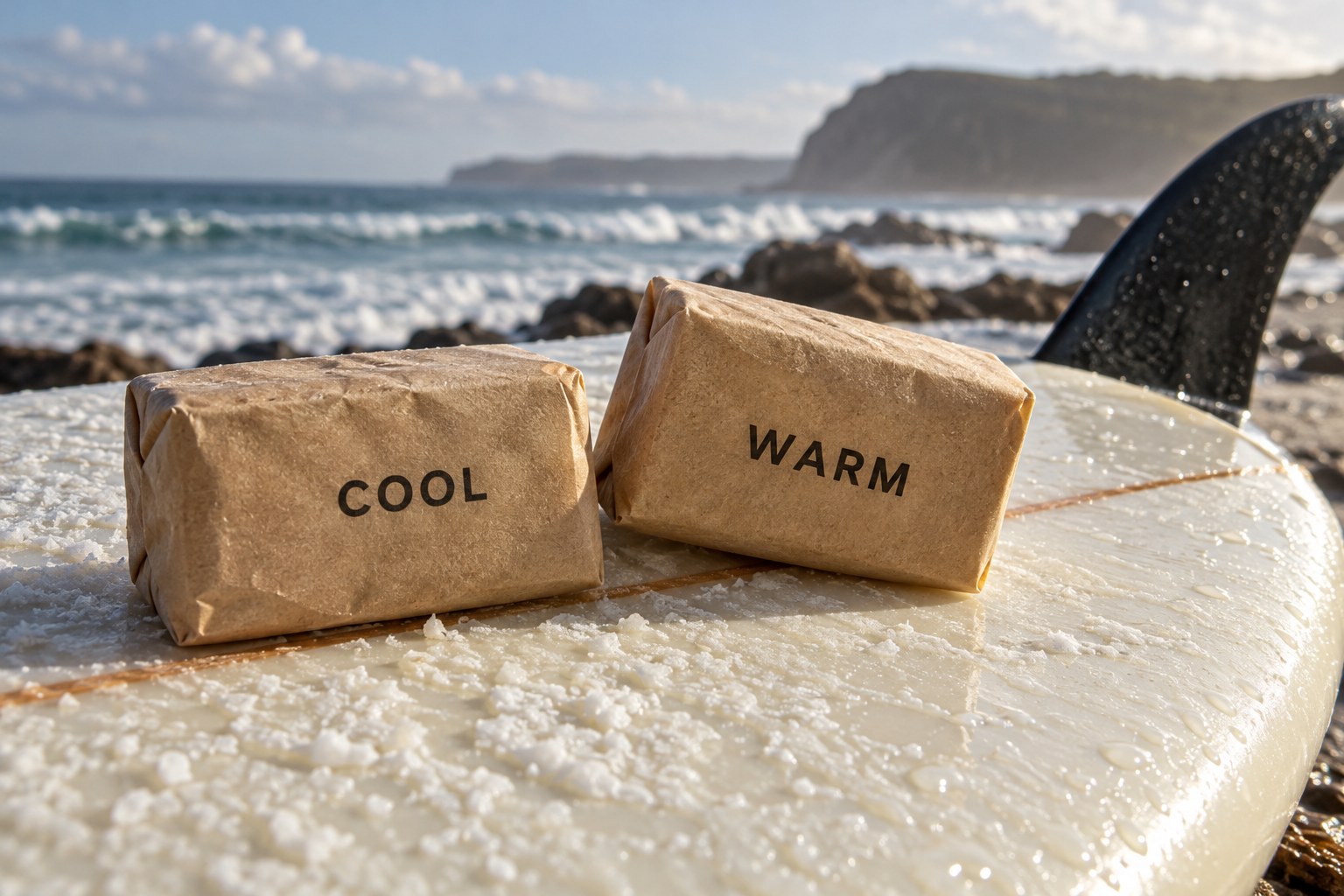
AI-generated illustration. Equipment details are illustrative; follow the instructions for your own item.
A bar of surf wax can look almost identical to another formula from the same brand. The useful information is on the label: intended water conditions, product range and whether it is being used alone or as part of a layered application. Wrapper colour is a convenient memory aid only after you have established what that particular product is.
Sexwax's Quick Humps guidance assigns temperature ranges to its formulas and distinguishes single-wax use from basecoat and topcoat combinations. Read the current guidance for the product in your hand. Do not transfer a colour code or a temperature category between brands as though it were an industry-wide standard.
Check whether the board maker calls for wax and which products are compatible with the deck. This matters when moving from a conventional hard board to a different surface construction. A wax recommendation from a friend may relate to a board unlike yours. Ask the shop to identify the appropriate product if the instructions are unclear.
Keep the wrapper until you know the formula by name. A loose white block in a bag is difficult to identify later, particularly if several people share equipment. A small labelled container keeps the product separate from clothing and makes it easier to distinguish unused wax from scraps removed from a board.
Check the water-temperature information for the place and season, then compare it with the maker's range. Confirm whether the figures are Celsius or Fahrenheit. Air temperature on a sunny car dashboard is not the water measurement the label is asking you to use.
For a trip covering different locations, ask whether your existing application remains appropriate rather than adding a random new layer. Bring the original product details to the shop. Knowing what is already on the deck makes the question more precise than saying the wax feels wrong.
Once you have selected the product, follow its application instructions and the board's care guidance. Do not use heat or solvents merely because a video shows them on a different board. If the surface is contaminated or the previous wax is unidentified, ask how to prepare it correctly. The purchase is a small one, but reading its label prevents a surprisingly common chain of guesses.
Boards & equipment
Choose construction alongside shape, condition and the way you will use the board, rather than treating a hard board as an automatic upgrade.

Boards & equipment
Bring a record of the boards you have used and the sessions you want to your sizing conversation.