Wetsuits & clothing
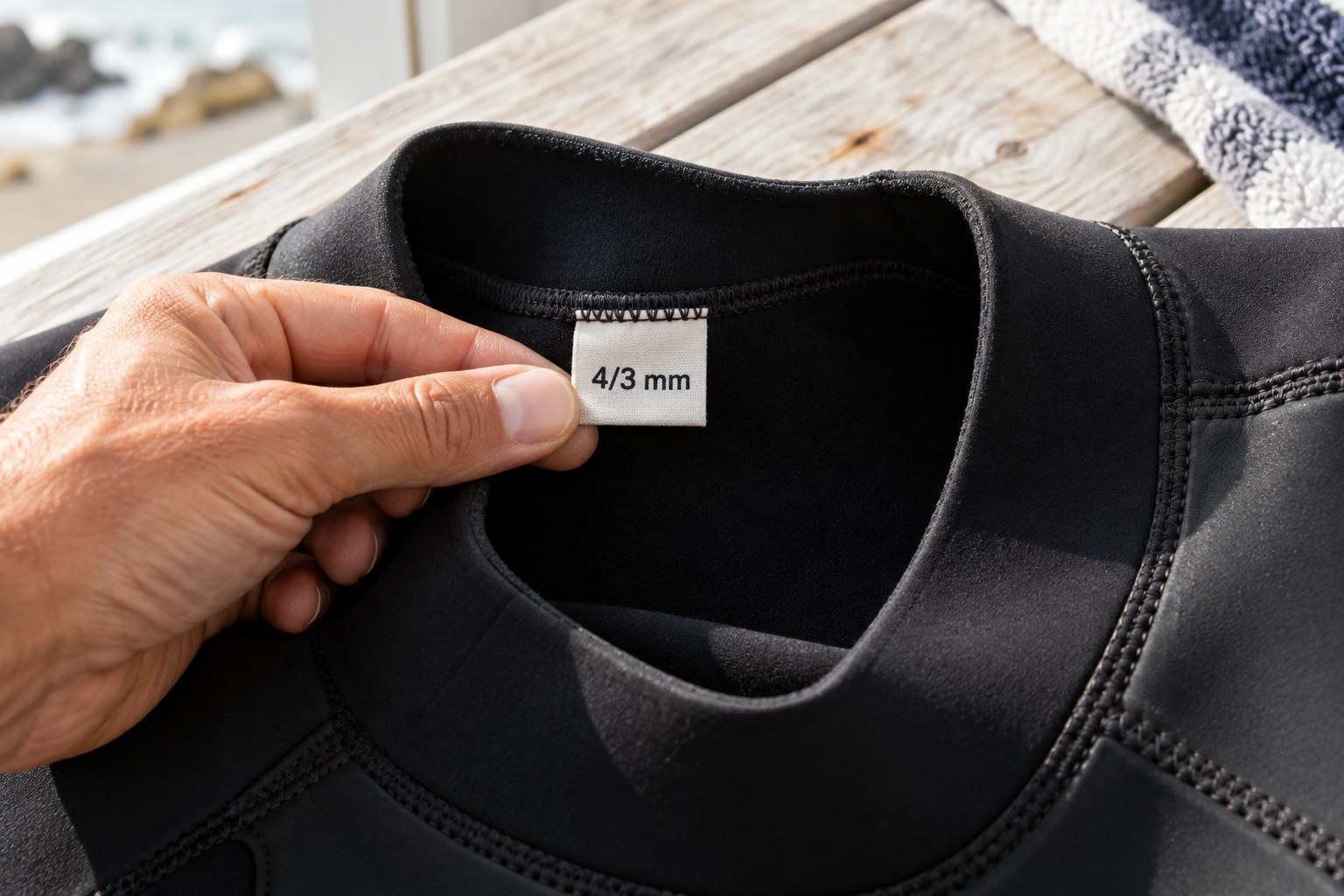
Read a wetsuit thickness label before comparing suits
Those slash-separated numbers describe material thickness, not a complete verdict on warmth. Read them alongside the suit's construction, fit and intended conditions.
Wetsuits & clothing
Pack the homeward outfit as a complete dry set, including the small items that are easy to forget after a wet lesson.
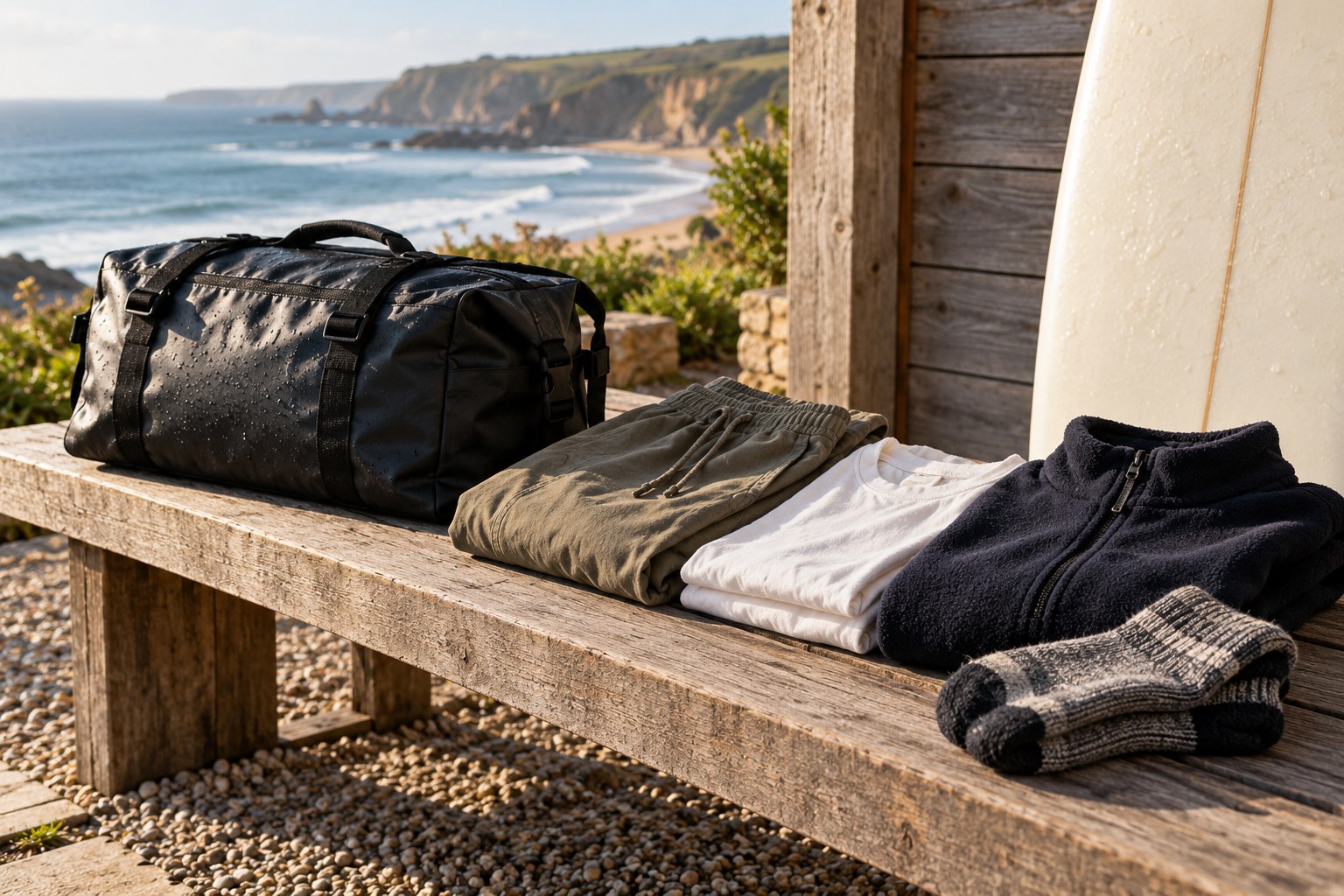
AI-generated illustration. Equipment details are illustrative; follow the instructions for your own item.
The journey home begins more comfortably when the dry outfit is ready as one bundle. Choose clothing for the actual transport and weather, then add underwear, socks and suitable footwear where needed. A spare top alone does not solve the problem if the rest of what you wore to the beach is damp.
Consider the changing facilities before choosing complicated garments. Loose, straightforward clothing may be easier to manage in a small cubicle than an outfit with several tight layers or fiddly fastenings. Keep the choice appropriate to your plans after the lesson, whether that is a direct drive home or a meal before a train journey.
Pack it separately from the wetsuit, used towel and swimwear. Use an appropriate dry compartment or protective bag and understand its limits. Put shoes where they will not press dirty soles against the clean clothes. The aim is to preserve a complete outfit, not merely keep one garment away from the most obvious water.
Include a bag for the used items so that changing does not leave you with wet clothing loose in your arms. Arrange the dry set near the top of your bag if you will need it in a public changing area. This reduces the amount of equipment spread across a shared bench.
Think through where the board and other equipment will be while you change. Ask the school about storage and collection rather than leaving items unattended because both hands are occupied. Keep the transport ticket and keys accessible in their own secure place.
If the return journey includes a long wait, choose a layer suitable for that wait as well as the vehicle. Do not assume a heated car or indoor station will be immediately available. Check the actual route and forecast when finalising the outfit.
After returning, separate unused dry clothes from anything that needs washing and unpack wet equipment promptly. Note any missing item while the inconvenience is fresh. The next trip's homeward bundle should be based on what the journey required, not a growing pile of random spare clothing.
Wetsuits & clothing
Those slash-separated numbers describe material thickness, not a complete verdict on warmth. Read them alongside the suit's construction, fit and intended conditions.
Wetsuits & clothing
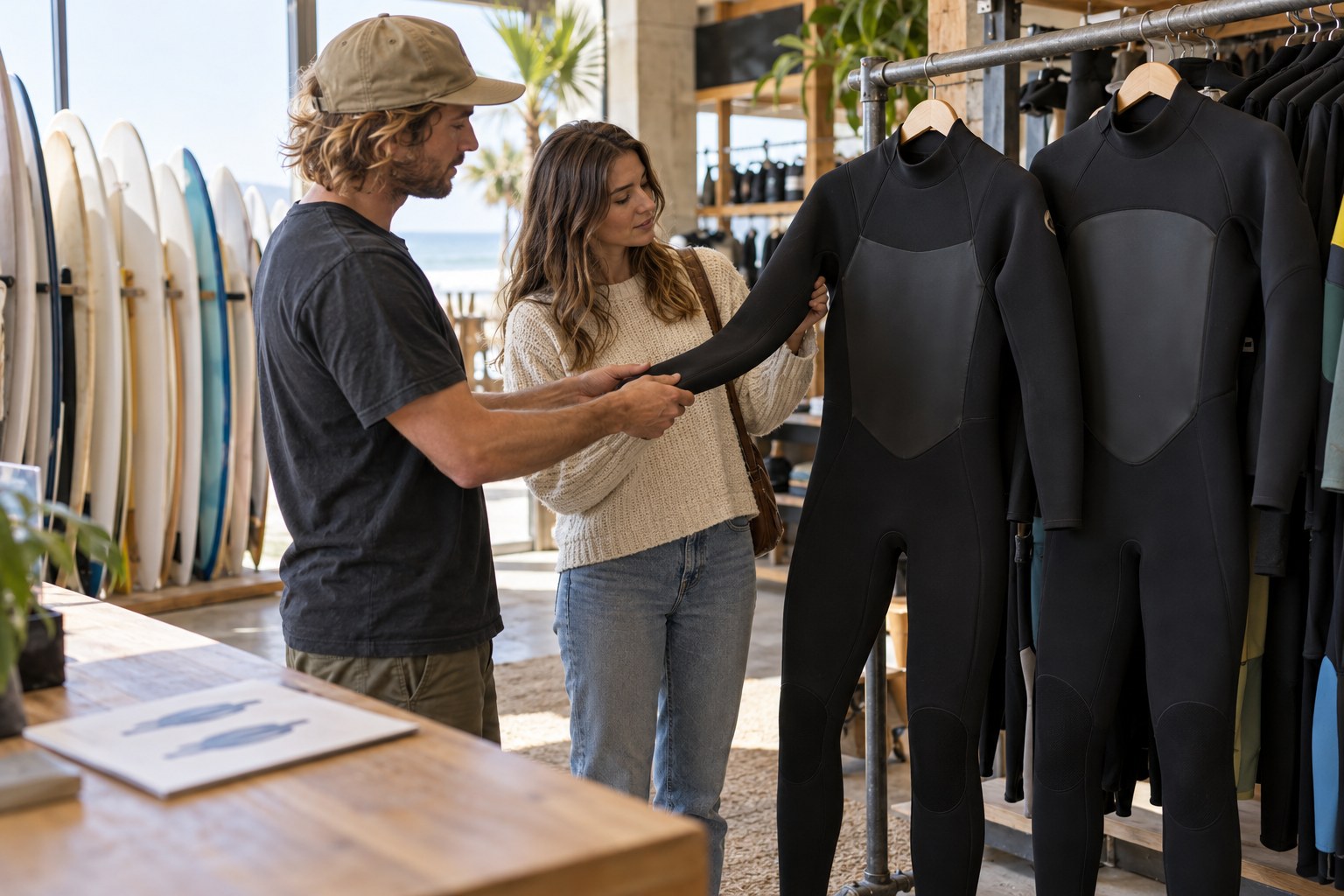
Bring the destination, season and session plan to a local shop, then compare its advice with the manufacturer guidance for the actual suit.