Boards & equipment
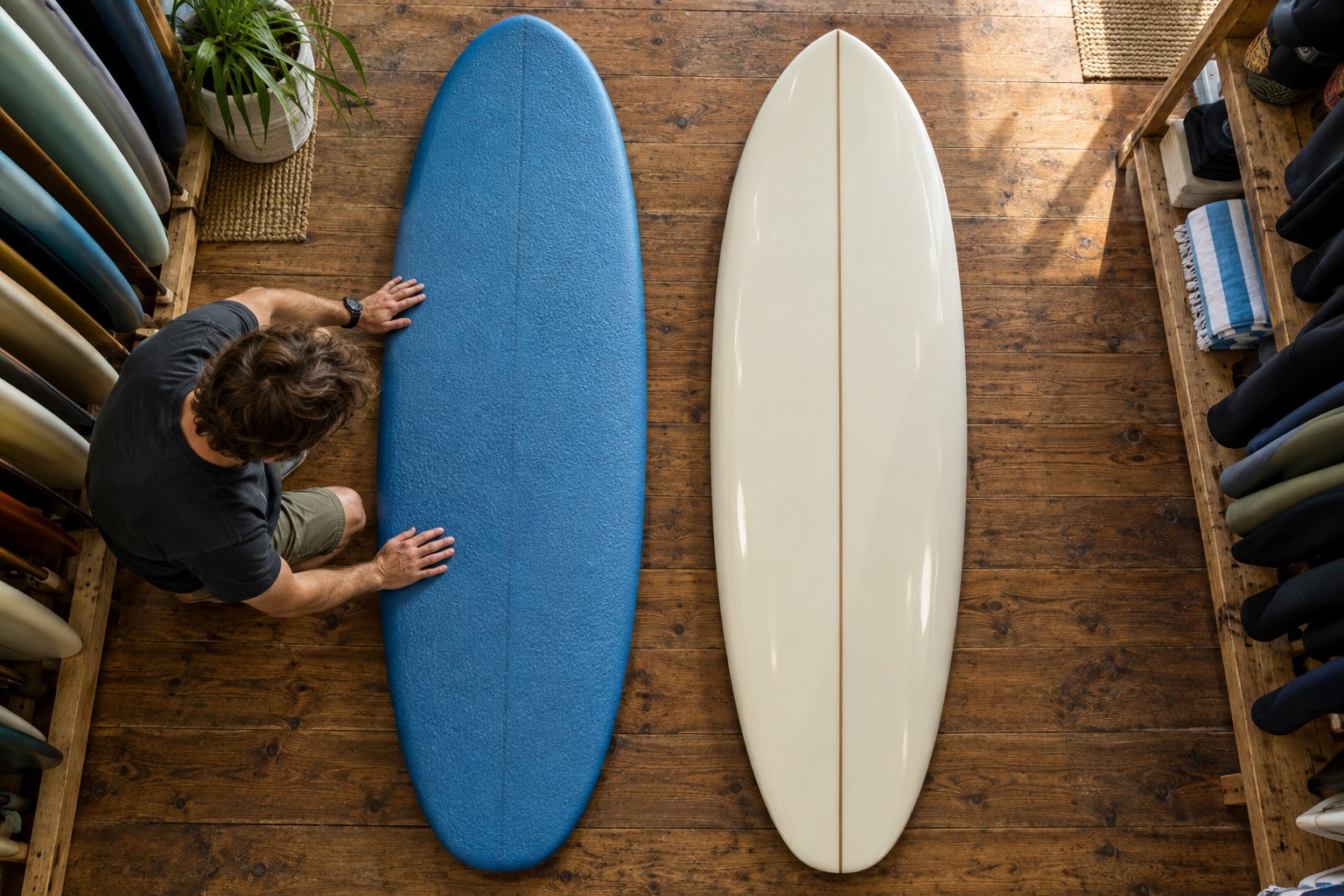
Soft top or hard board for your first purchase
Choose construction alongside shape, condition and the way you will use the board, rather than treating a hard board as an automatic upgrade.
Boards & equipment
A knitted cover and a padded day bag solve different carrying problems. Compare the journey, the board shape and where the cover will be stored.
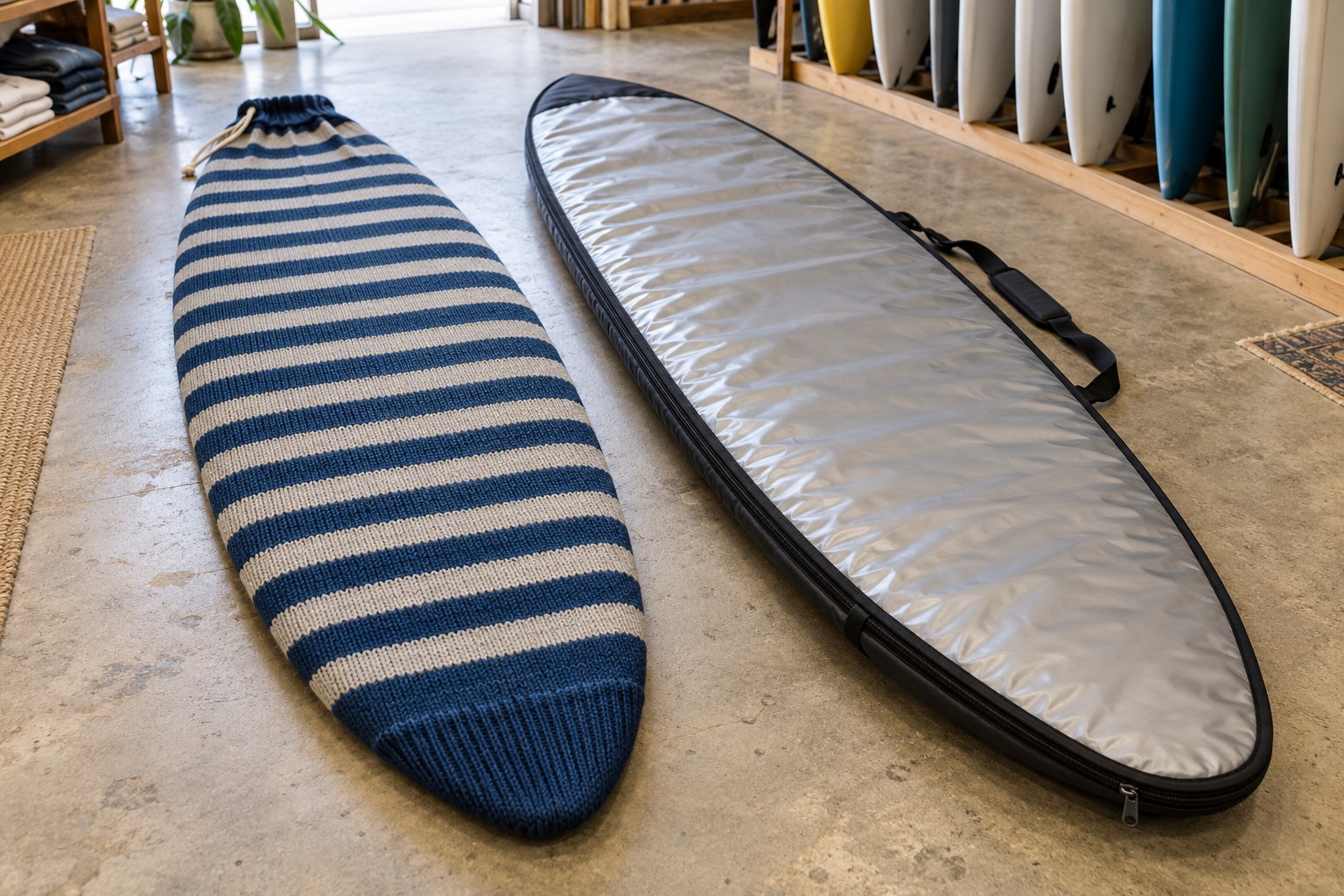
AI-generated illustration. Equipment details are illustrative; follow the instructions for your own item.
A board sock is attractive when you want a cover that packs away into a small space. A padded day bag is a more structured item, with extra bulk that must also fit in your home or vehicle. Before comparing colours, describe the actual journey: a walk from an apartment, a trip in the back of a car, or repeated loading beside other luggage.
Neither name tells you everything about protection. Read the construction details and intended use of the individual product. A lightweight sock should not be treated as an airline travel case, while a bag described as padded may still have a very different purpose from a multi-board flight bag.
Think about where the board is most likely to brush against something. A narrow hallway, a car doorway and a shared equipment cupboard create different problems. Look at how each cover encloses the nose and tail and whether the opening leaves exposed areas. A sock that continually slips back during your ordinary carry may be inconvenient even when its nominal length is right.
For a day bag, examine the closure, the inner lining and the position of the carrying handle. Check how you would slide the board inside without pressing a zip or buckle against it. If fins stay fitted, find out whether the bag is designed for that arrangement. Do not assume that a flexible end section means there is enough space for every fin setup.
If a shop permits a fitting, bring the board or its accurate dimensions. Lift the covered board using the intended handle or your normal underarm position. A bag that feels balanced empty may carry differently once the nose and tail are inside. Check whether a shoulder strap adjusts enough for you without dragging the board close to the ground.
The sock may suit a compact daily routine; the day bag may make sense when handling and separation from other objects matter more. This is a decision about your use, not an automatic progression from a cheap item to a better one. Owning both is only useful if each has a distinct role.
Allow for drying and storage after the trip. A cover that returns damp needs an appropriate place to air according to its care instructions. Measure that space before buying a bulky bag, especially in a shared flat. Avoid buying solely on the assumption that any cover will let you leave a board anywhere: the board's own storage and heat precautions still apply.
Boards & equipment
Choose construction alongside shape, condition and the way you will use the board, rather than treating a hard board as an automatic upgrade.
Boards & equipment
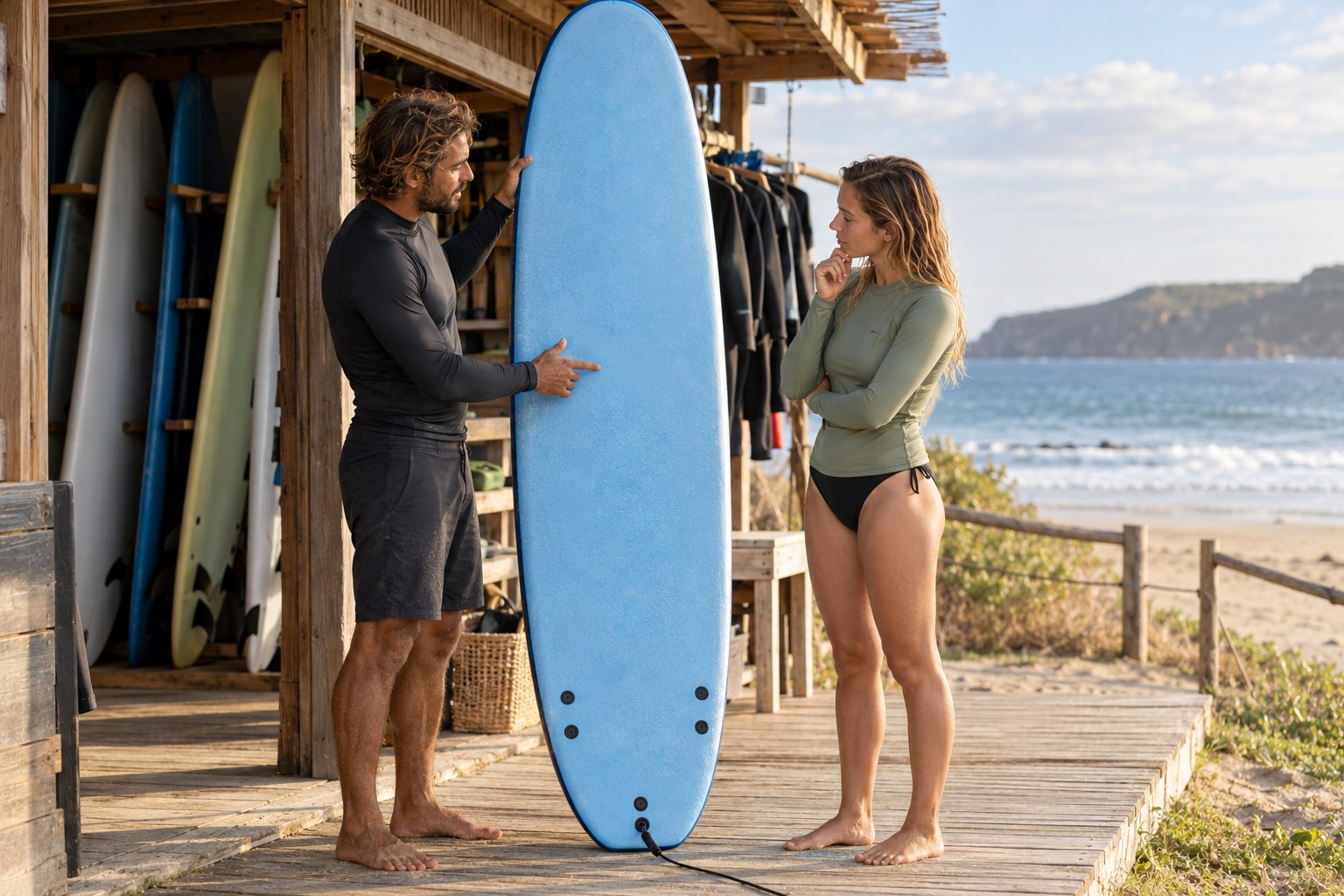
Bring a record of the boards you have used and the sessions you want to your sizing conversation.