Wetsuits & clothing
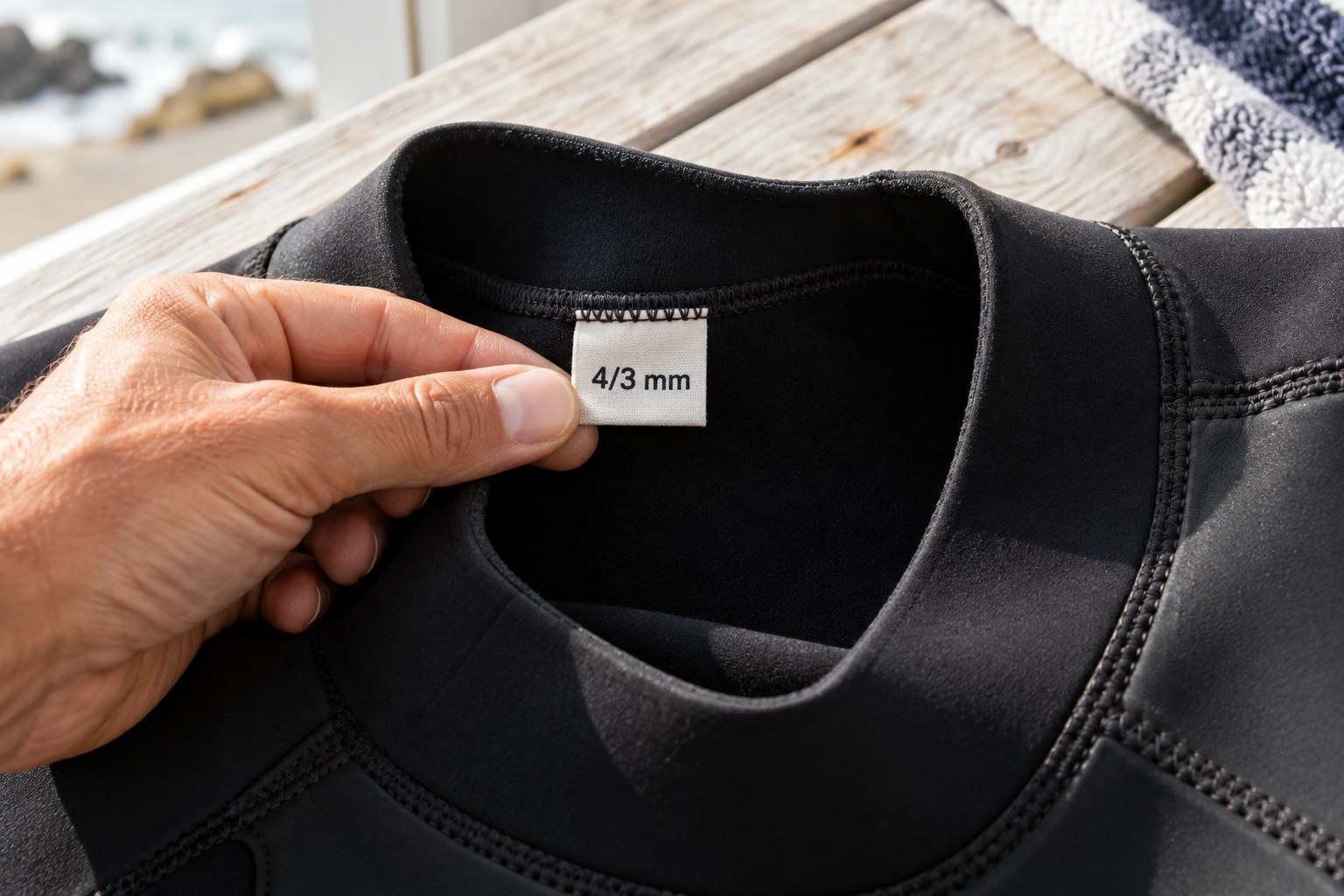
Read a wetsuit thickness label before comparing suits
Those slash-separated numbers describe material thickness, not a complete verdict on warmth. Read them alongside the suit's construction, fit and intended conditions.
Wetsuits & clothing
Finger layout affects small tasks as well as comfort. Try the intended gloves or mitts with your other equipment before deciding.
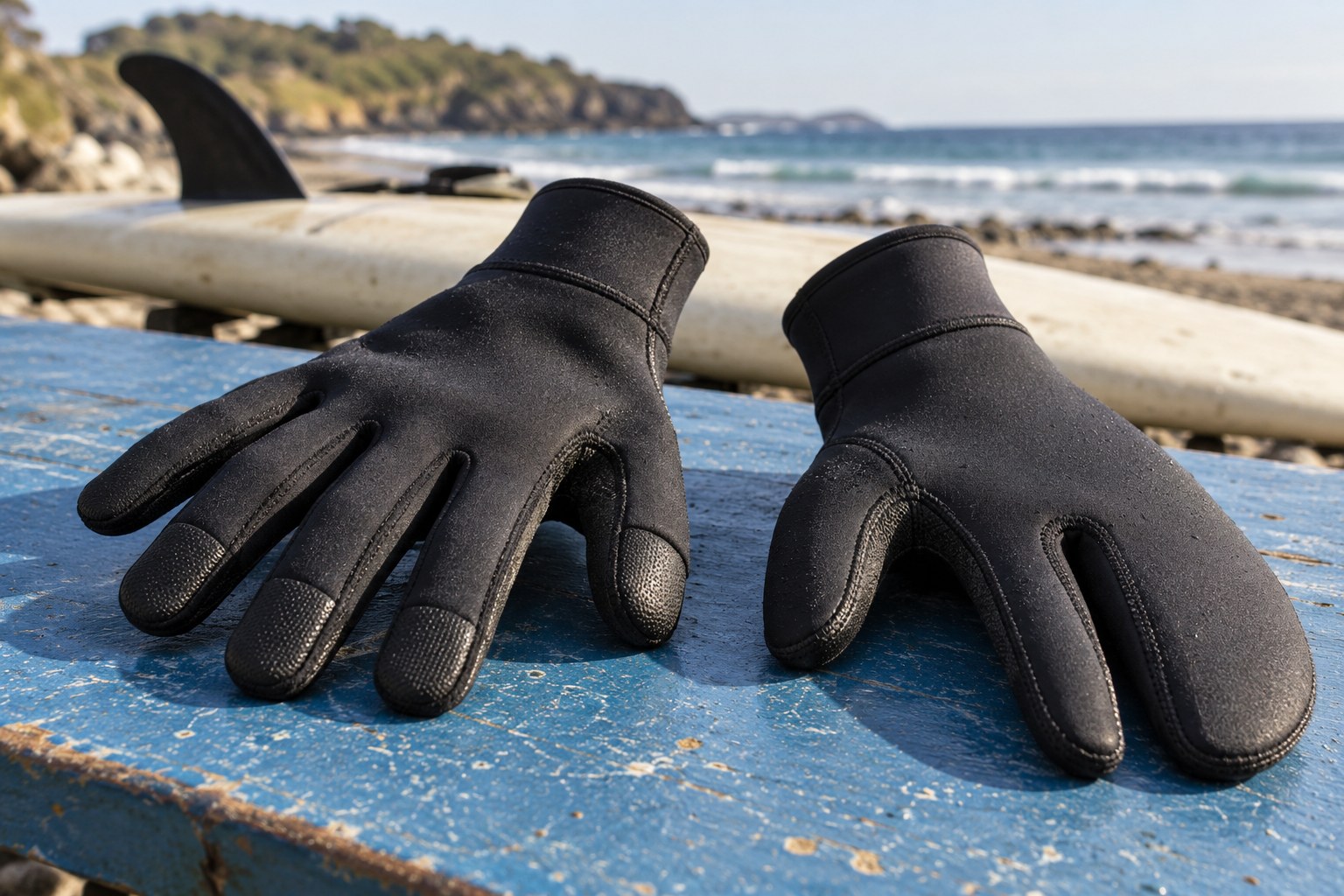
AI-generated illustration. Equipment details are illustrative; follow the instructions for your own item.
Surf gloves and mitts come in different finger arrangements, thicknesses and cuff designs. A five-finger glove, a mitten and a partly divided design will not feel the same when you operate a zip or handle a leash closure. Start with advice about equipment appropriate for your intended conditions, then compare the tasks you actually need to perform.
Read the manufacturer's size chart rather than selecting the size of your ordinary winter gloves. Measure as instructed and try both hands. Check finger length, palm fit and the way the cuff sits with the wetsuit. A model that fits the hand well may still create an awkward overlap with the sleeve.
With permission during a fitting, practise the closures you will need to use. Can you operate the intended zip pull, find a tab and grip the relevant item without forcing it? Keep this as a controlled dry check, not a test in the water with unfamiliar equipment.
Compare how the fingers sit at rest and when you make a comfortable fist. Material bunched at the palm or fingertips can make handling feel clumsy. If the size is wrong, a different finger arrangement alone may not solve the problem.
Ask how the cuff should be positioned with your suit. Do not assume every glove is worn in the same relationship to the sleeve. Follow the equipment guidance and have the combination checked if it feels bulky or restrictive.
Think through which adjustments can be completed before putting the gloves on and which must remain possible afterward. Avoid a setup that depends on removing an essential item whenever a routine adjustment is needed. A shop or instructor can help you organise that sequence for the equipment you use.
After the fitting, read the cleaning and drying instructions. Finger sections can be difficult to inspect, so make sure you know how to care for the interior without stretching or damaging the garment. Choose a labelled storage place that keeps the pair together.
Do not reduce the choice to a claim that one design is always warmer or always more dexterous. Evaluate the specific model, its fit and the complete routine. The best shortlist is the one you can narrow through observable handling differences.
Wetsuits & clothing
Those slash-separated numbers describe material thickness, not a complete verdict on warmth. Read them alongside the suit's construction, fit and intended conditions.
Wetsuits & clothing
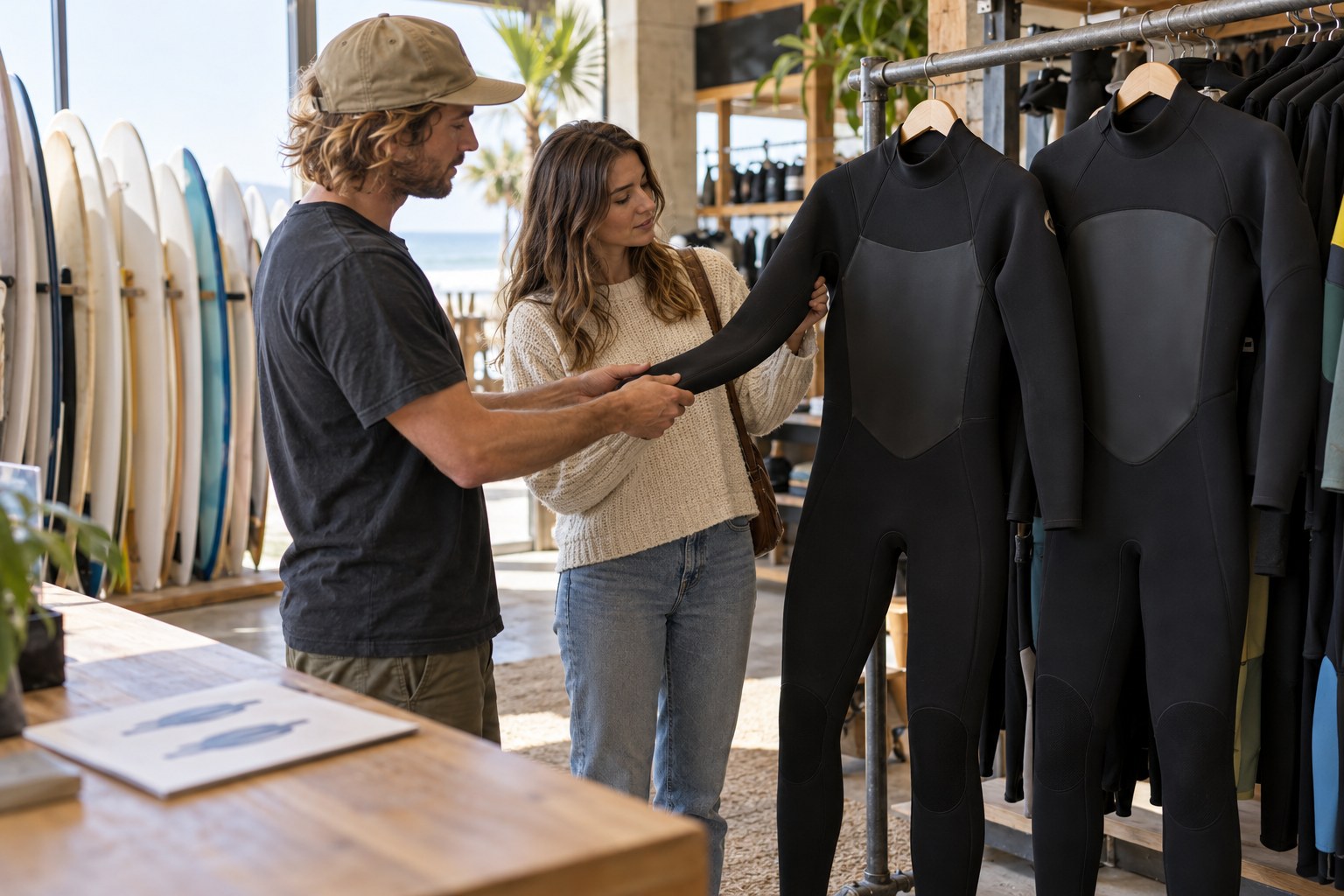
Bring the destination, season and session plan to a local shop, then compare its advice with the manufacturer guidance for the actual suit.