Wetsuits & clothing
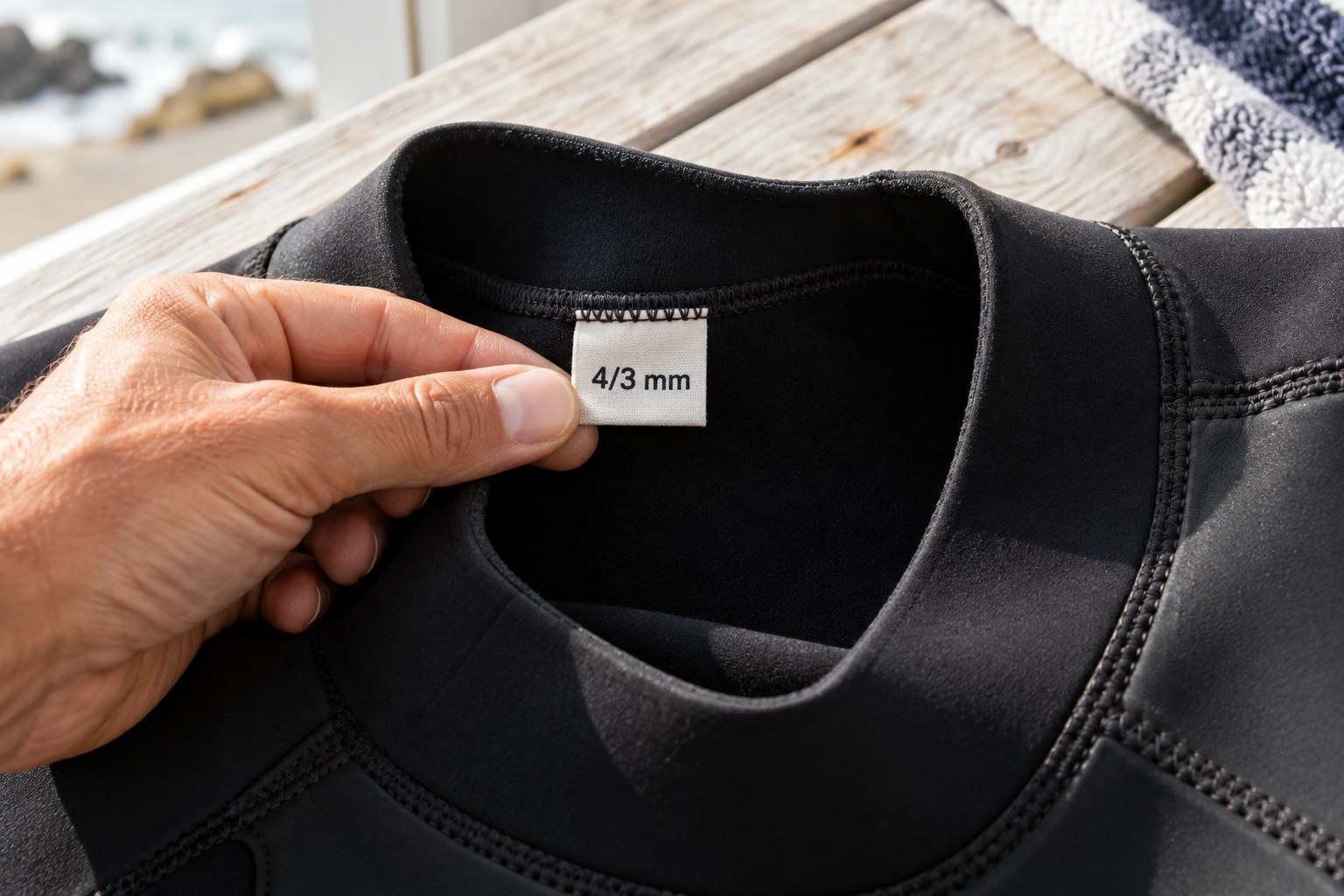
Read a wetsuit thickness label before comparing suits
Those slash-separated numbers describe material thickness, not a complete verdict on warmth. Read them alongside the suit's construction, fit and intended conditions.
Wetsuits & clothing
Compare capacity, opening shape and the manufacturer's water-resistance claim. A bag for damp kit is not automatically a waterproof case for valuables.
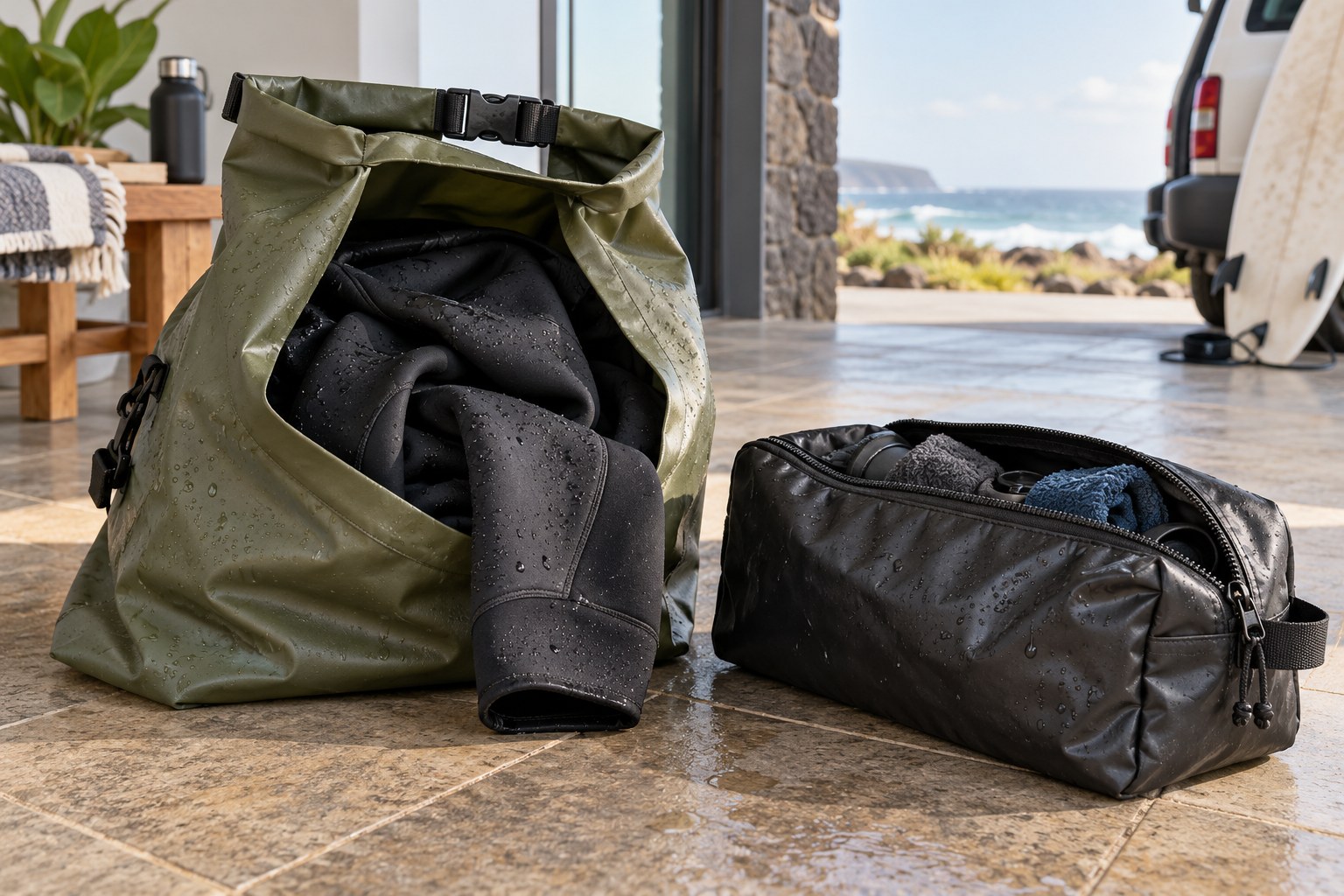
AI-generated illustration. Equipment details are illustrative; follow the instructions for your own item.
A used wetsuit is bulky, awkward to fold neatly and often accompanied by boots or swimwear. Choose a wet bag by the complete load you expect to carry, not by an empty product photograph. Check the stated capacity and internal dimensions, then consider how easily the opening will accept the suit without forcing it.
Read the exact claim about water resistance. A drawstring changing bag, a zipped wet bag and a roll-top container can have different intended uses and limits. None should be treated as a dry case for electronics merely because the name contains the word 'wet' or 'waterproof'.
With a clean dry suit during a permitted test, check whether the bag opens widely enough to pack without dragging the garment across the ground. Leave room for the closure to operate as instructed. A bag that fits only when overfilled may not function as its maker intends.
If boots and a towel travel too, decide whether they belong in the same space or separate compartments. Hard accessories and fin tools should not be loose against the suit. Keep clean travel clothing in another dry area rather than using the wet bag as an organiser for everything.
Check handles with the planned load in mind, including any maker weight limit. Consider the route from beach to transport and whether the bag must fit inside another pack. A broad changing-mat design may be convenient at the car but awkward on a bus with little floor space.
Inspect how easily the inside can be cleaned and dried according to the instructions. Seams, corners and closures should be accessible enough for the routine you can provide. A bag that is difficult to empty completely can conceal forgotten clothing after a trip.
Unpack as soon as the transport stage is over and care for the suit separately. The wet bag is a carrying tool, not long-term storage for damp equipment. Keep it open or arranged as the manufacturer directs while drying, then inspect the closure before the next use. Choosing a manageable size is only useful if the bag is also easy to maintain between sessions.
Wetsuits & clothing
Those slash-separated numbers describe material thickness, not a complete verdict on warmth. Read them alongside the suit's construction, fit and intended conditions.
Wetsuits & clothing
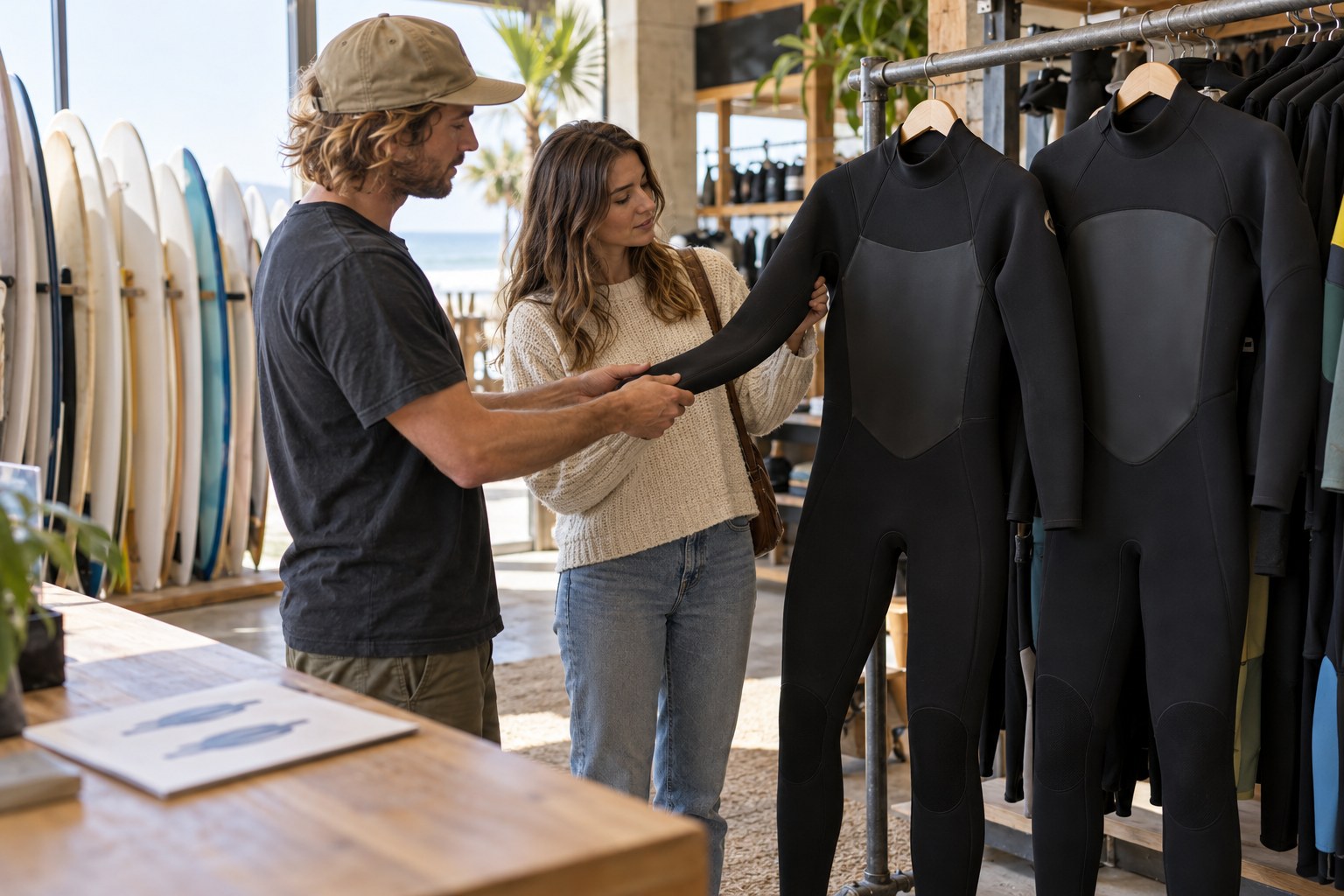
Bring the destination, season and session plan to a local shop, then compare its advice with the manufacturer guidance for the actual suit.