Surf travel
Choose a surf camp by its daily schedule
Read a sample day as a sequence of travel, instruction, meals and rest. The advertised number of lessons does not describe the whole holiday.
Surf travel
Look for an actual rinse point, a workable drying space and permission to use them; a photograph of a balcony does not answer all three questions.
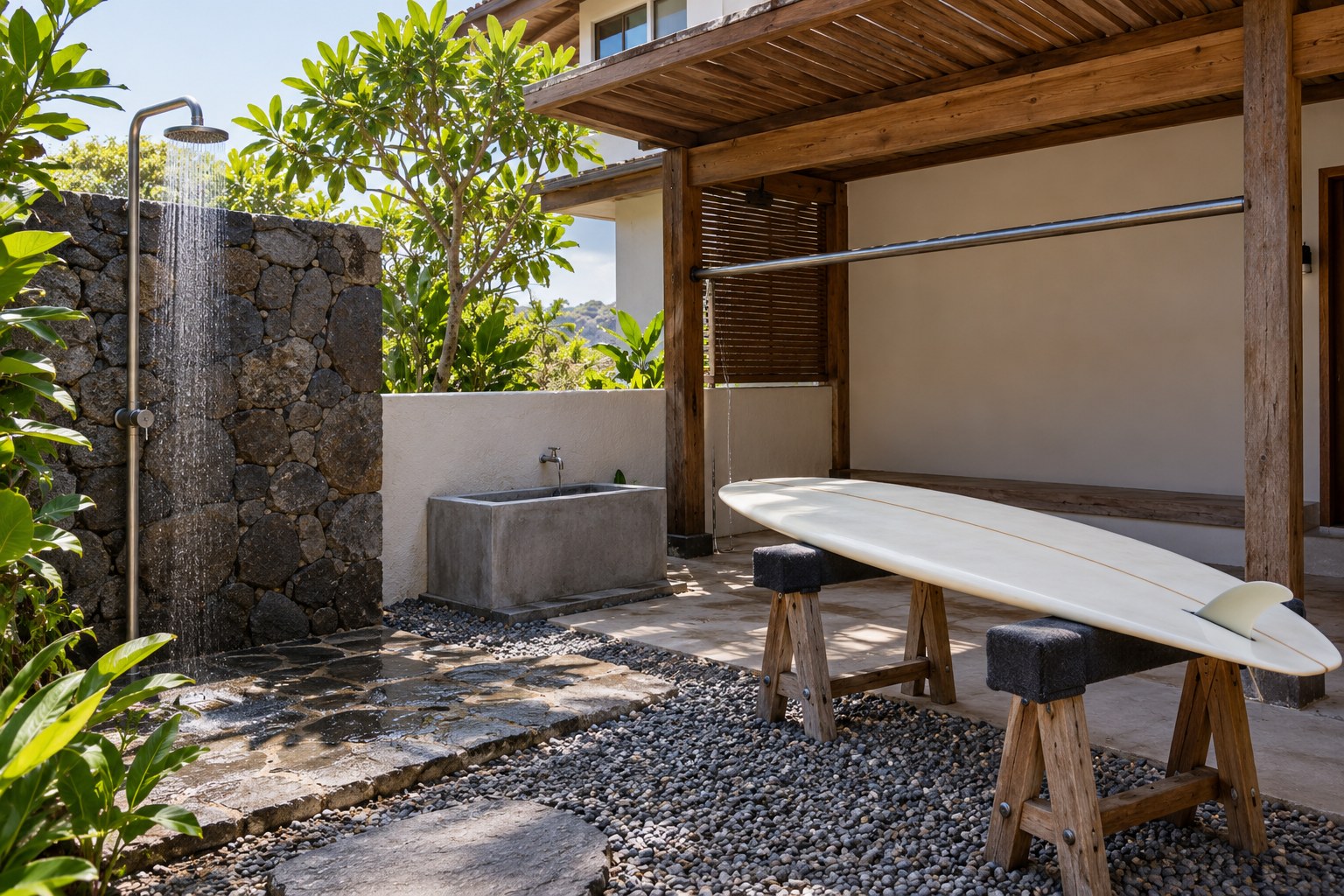
AI-generated illustration. Equipment details are illustrative; follow the instructions for your own item.
A place to sleep can be comfortable while being awkward for wet equipment. Before booking a surf stay, imagine returning with a dripping suit, sandy boots and a long board bag. Trace the route from the entrance to wherever those items will be rinsed, dried and stored. That small exercise often reveals more than a room photograph.
Separate the three jobs. A shower can provide water without being a suitable place to wash a sandy board. A balcony can have space without a permitted hanging point. A locked storage room can protect equipment while offering too little ventilation for a wetsuit to dry. Ask about each function rather than requesting 'surf facilities' as a single feature.
Describe what you will bring and how often you expect to use it. Ask whether there is a designated freshwater rinse point, where sandy items should go and whether water-use restrictions apply. Find out if the facility is private or shared and whether it has opening hours.
For drying, ask what hanging equipment is provided and whether guests may use it for wet wetsuits. A light clothes rail may not be intended for the load of several soaked suits. Do not assume that a balcony railing, fire escape or furniture is an acceptable substitute. If the host offers a shared drying room, ask how items are identified and whether it can be accessed early in the morning.
A photograph can help clarify an answer. Request a view of the actual area rather than another general room picture. You are looking for a usable arrangement, not a decorative amenity. A simple covered corner with an approved rail may be more useful than a large terrace where wet gear is prohibited.
Ask where the board stays overnight and whether the packed bag fits through the access route. A store reached by a narrow staircase can be inconvenient even if its floor area is generous. Confirm whether you will have independent access or need a staff member to unlock it.
Clarify responsibility for equipment rather than interpreting the word 'secure' as an insurance promise. Read your own cover and the property's terms. Keep valuables and travel documents separate from a communal gear store.
For a group booking, consider capacity. A facility that works for one person may become crowded when six people return at once. Ask whether other guests use the same area and whether there is a way to keep footwear, suits and bags from being piled together. A label or distinctive reusable tag can help identify your gear without marking the host's equipment.
Departure is the awkward test. You may need to check out before a final lesson, then return with wet equipment. Ask whether the rinse and changing facilities remain available after checkout and whether there is a fee or time limit. If they do not, move the last session or organise another arrangement in advance.
Compare accommodation on the whole routine: access, water, drying, storage and departure. You do not need a property marketed specifically to surfers if those practical details work. Equally, a surf-themed name is not enough when the listing leaves them unanswered.
Surf travel
Read a sample day as a sequence of travel, instruction, meals and rest. The advertised number of lessons does not describe the whole holiday.
Surf travel
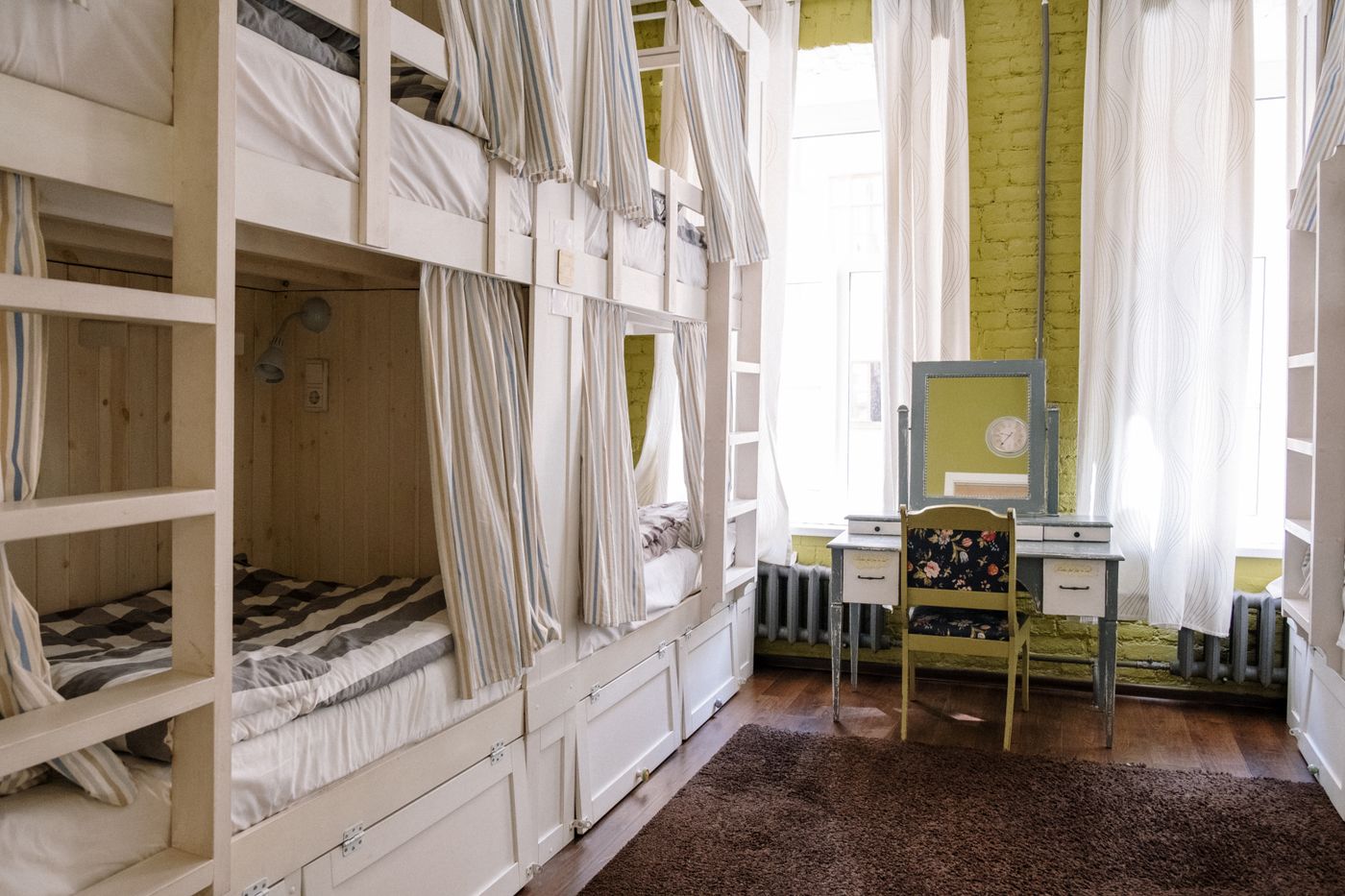
Compare the room you will actually book, the shared facilities and the distance to the camp's meeting point rather than relying on a few attractive photographs.